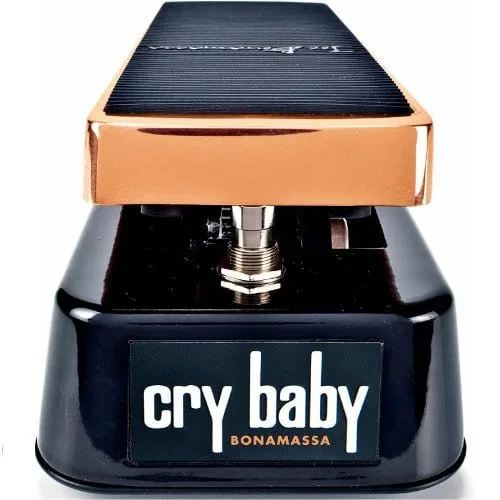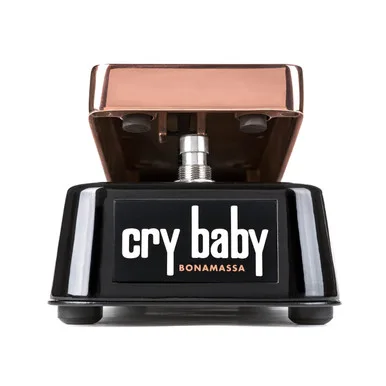


The Dunlop Joe Bonamassa signature Cry Baby Wah, model number JB95, is a wah pedal developed by Dunlop with blues-rock guitarist Joe Bonamassa. Dunlop says Bonamassa steps on a Cry Baby wah when he really wants to express himself in a solo, and the company worked with him to build a pedal that captures his distinctly vintage tone1. Premier Guitar describes the result as modeled on Bonamassa's own custom wah and packed with special modifications2.
The heart of the pedal is its inductor. Dunlop voices the JB95 with a vintage-style Halo Inductor for added harmonic content and growl, and fills the board with large, vintage-style thru-hole components1. Bonamassa himself describes the pedal as "an extension of the guitar as a human voice"3.
A Cry Baby wah with a Halo Inductor
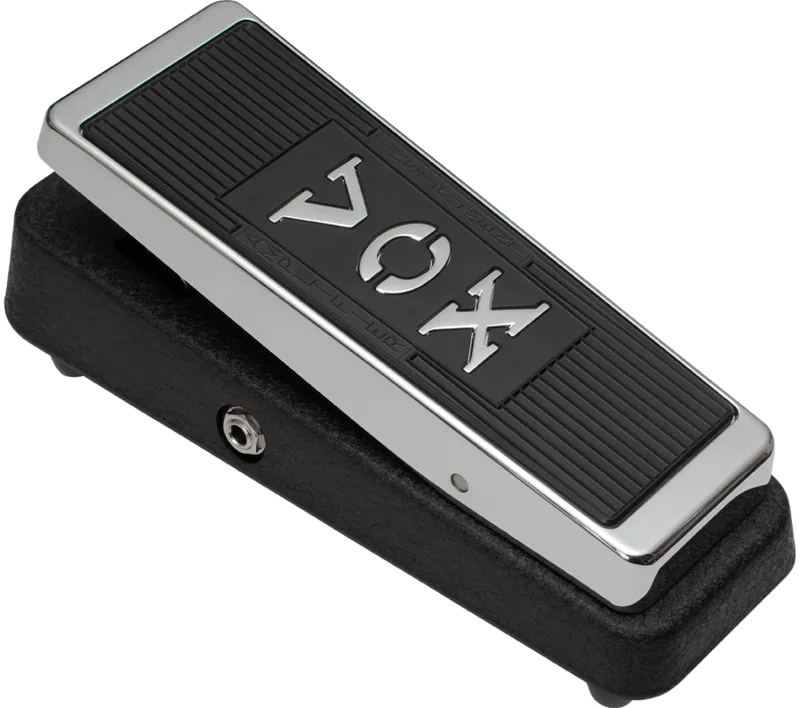
An inductor is the component at the center of a wah's filter, and it does much to define the pedal's character. The JB95 uses a Halo Inductor, a part with a direct vintage pedigree: as Premier Guitar's reviewer notes, "Halos appeared in the early Vox wahs and are considered one of the keys to their rich, vocal capability"2. Guitar World's Paul Riario likewise describes the Halo as a "haloed" component that adds the vocal-like quality found in the vintage VOX Clyde McCoy wahs6.
Dunlop's own description of what the part does for the player is concrete: the vintage-style Halo Inductor adds harmonic content and growl, and the pedal's large, vintage-style thru-hole components complete the vintage-leaning build1. Dunlop also claims a huge vocal sweep range for the pedal, calling it one of the most expressive Cry Babys ever1.
Premier Guitar's reviewer put the vintage character to the test and found it convincing2:
"the Bonamassa performs in so many of the ways that make purists long for a vintage wah, long and expressive sweeps, deep lows, and rich, high end"
Dunlop's buying guide adds one more piece of the design: an output buffer that prevents impedance imbalance5. The manual gives the figures behind that, with an input impedance of 800 kΩ and an output impedance of 10 kΩ4.
The JB95 and its launch
The pedal reached players in two steps. MusicRadar first reported in December 2011 that the Joe Bonamassa signature Cry Baby wah had been added to the guitarist's webstore, with a pre-order price of $169.99 that included a free Joe Bonamassa signature Cry Baby t-shirt, while the manufacturer held the full launch for the January NAMM show7. At NAMM 2012, Dunlop presented the pedal among four new pedals kicking off the year8, and Guitar World ran a demo video of what it called the Joe Bonamassa Signature Model Crybaby, "which incorporates some truly vintage sounds and awesome looks"9.
By the end of 2012, Guitar World's Paul Riario listed the pedal among his top five effect pedals of the year at a price of $298.686. The two published prices differ, and both are given here as stated: $169.99 as the 2011 pre-order price from Bonamassa's website7, and $298.68 as the 2012 price in Guitar World6.
| Date | Event | Price |
|---|---|---|
| December 2011 | Pre-order from Bonamassa's website, free signature t-shirt included7 | $169.99 |
| January 2012 | Full launch at NAMM8 | |
| December 2012 | Reviewed in Guitar World's staff picks6 | $298.68 |
True bypass, and why Joe prefers it off
The JB95 has an internal switch that enables true hardwire bypass, so a player can set the pedal for true bypass or non-true bypass operation14. Premier Guitar's reviewer called this "a unique truebypass toggle inside that allows you to switch the operation on and off"2.
Dunlop notes that Bonamassa keeps his own pedal in the non-true bypass setting, because it darkens the high end1. That is a deliberate tonal choice rather than an oversight: the buffered setting colors the signal in a way that suits his vintage tone, and a player who wants a completely untouched signal when the wah is off can simply flip the internal switch.
This switchable bypass is one of the things that sets the JB95 apart from other signature Cry Babys in the Dunlop line, most of which are fixed one way or the other254:
| Pedal | Bypass |
|---|---|
| JB95 Joe Bonamassa | Switchable true bypass / buffered bypass15 |
| JP95 John Petrucci | True hardwire10 |
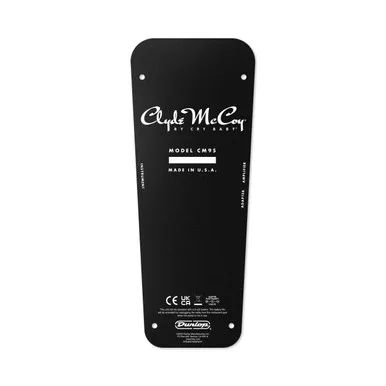
| CM95 Clyde McCoy | Hardwired11 |
| KH95 Kirk Hammett | Hardwire12 |
Joe Bonamassa and the pedal
Joe Bonamassa is the signature artist the pedal was built around. Dunlop's artist page for Bonamassa describes his signature Cry Baby as equipped with a Halo Inductor for an incredibly vocal and expressive sound, and quotes his view of the wah as an extension of the guitar as a human voice3. Premier Guitar calls him a blues-rock legend honored by Dunlop with his own signature wah2.
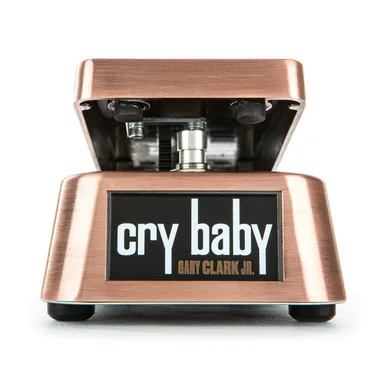
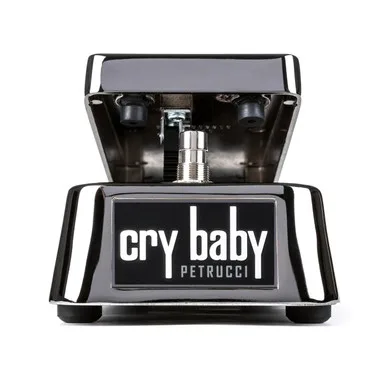
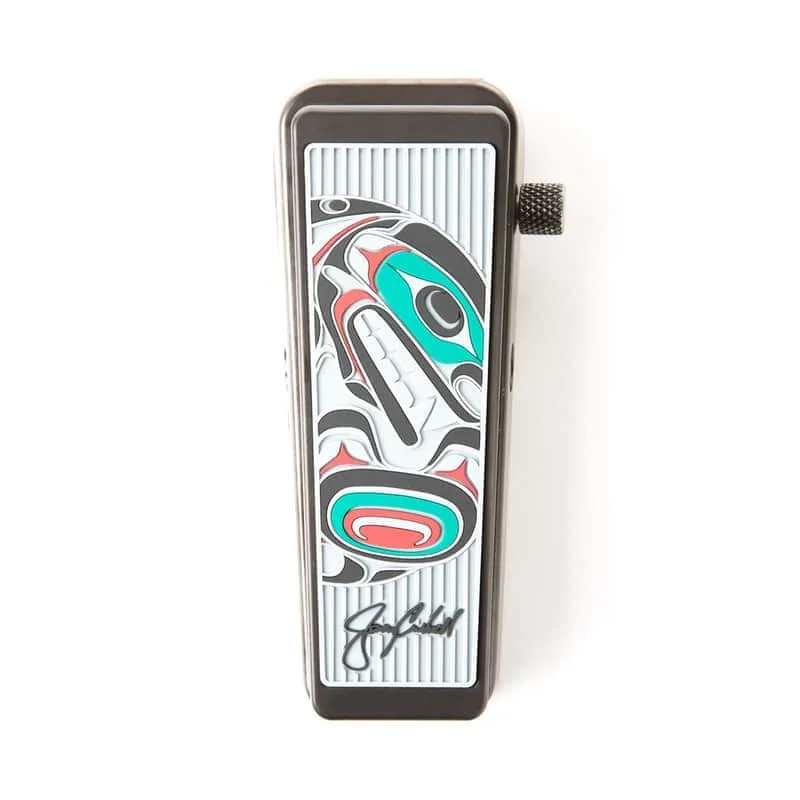
The JB95 is not the only Bonamassa pedal in the Dunlop catalog: the manual points players to the Joe Bonamassa Signature Fuzz Face as a companion piece4. Within the wider Cry Baby line, the JB95 sits alongside signature models for players such as John Petrucci1314 and Jerry Cantrell, whose own signature Cry Baby complements his sound in the same way the JB95 was voiced for Bonamassa's.
Videos
Guitar World
Sweetwater
jimdunlopusa
Questions
Is the Dunlop Joe Bonamassa Cry Baby true bypass?
It can be. Inside the pedal there is an internal switch that enables true hardwire bypass, so you can set it for true bypass or non-true bypass (buffered) operation. Joe Bonamassa himself prefers the non-true bypass setting because it darkens the high end, which suits his vintage-leaning tone.
What is the model number of the Joe Bonamassa Cry Baby wah?
The model number is JB95. It appears on Dunlop's product page for the pedal and in the Dunlop manual, which titles the unit the JB95 Joe Bonamassa Cry Baby, made by Dunlop Manufacturing, Inc.
What is a Halo Inductor in a wah pedal?
It is the inductor that voices the wah filter, and it is the component Dunlop built this pedal around. Halo inductors appeared in the early Vox wahs and are considered one of the keys to their rich, vocal capability. Dunlop says the vintage-style Halo Inductor in the JB95 adds harmonic content and growl.
Does the Bonamassa Cry Baby use vintage-style parts?
Yes. Dunlop says the pedal features large, vintage-style thru-hole components, and it is voiced by a vintage-style Halo Inductor. Premier Guitar's reviewer found it performs in many of the ways that make purists long for a vintage wah: long and expressive sweeps, deep lows, and rich high end.
What finish does the Joe Bonamassa wah have?
It sports a copper top with a smooth-finish black body. Dunlop's buying guide describes the construction as an aluminum housing with a copper rocker, and MusicRadar called the copper top finish rather attractive when the pedal was announced.
Sources (14)
- JOE BONAMASSA CRY BABY® WAH, Dunlop (www.jimdunlop.com)
- Joe Bonamassa Cry Baby Pedal JB95 Review, Premier Guitar, 2012-09-05
- Joe Bonamassa is a Dunlop Artist., Jim Dunlop (www.jimdunlop.com)
- JB95.pdf, Dunlop Manufacturing, Inc., 2019
- RANGE OF EXPRESSION: FIND YOUR CRY BABY® WAH, Dunlop (lifestyle.jimdunlop.com), 2021-10-08
- Guitar World Staff Picks: Paul Riario's Top Five Effect Pedals of 2012, Guitar World, 2012-12-17
- NAMM 2012: Joe Bonamassa signature Cry Baby wah pedal, MusicRadar, 2011-12-07
- NAMM 2012 VIDEO: four new Dunlop/MXR pedals get the demo treatment, MusicRadar, 2012-01-21
- NAMM 2012: Dunlop Crybaby Joe Bonamassa Wah Pedal Video Demo, Guitar World, 2012-01-20
- JP95.pdf, Dunlop Manufacturing, Inc., 2019
- CM95 Clyde McCoy Cry Baby Wah Wah Manual, Jim Dunlop (www.jimdunlop.com), 2021
- KH95.pdf, Jim Dunlop, 2019
- Review: Dunlop JP95 John Petrucci Signature Cry Baby Wah, Guitar World, 2016-04-29
- Six Wah Pedals for All Sizes, Prices, and Styles, Premier Guitar, 2025-01-21