
Joe Bonamassa is a blues-rock guitarist and singer-songwriter whom Dunlop calls "a charismatic blues-rock star and singer-songwriter of stylistic depth and emotional resonance"1. His relationship with effects runs unusually deep for a blues player: he has signature pedals with Dunlop and its Way Huge and MXR brands, he collects vintage overdrives and Dumble amplifiers, and in 2025 he was gifted the Rangemaster treble booster that belonged to Rory Gallagher2.
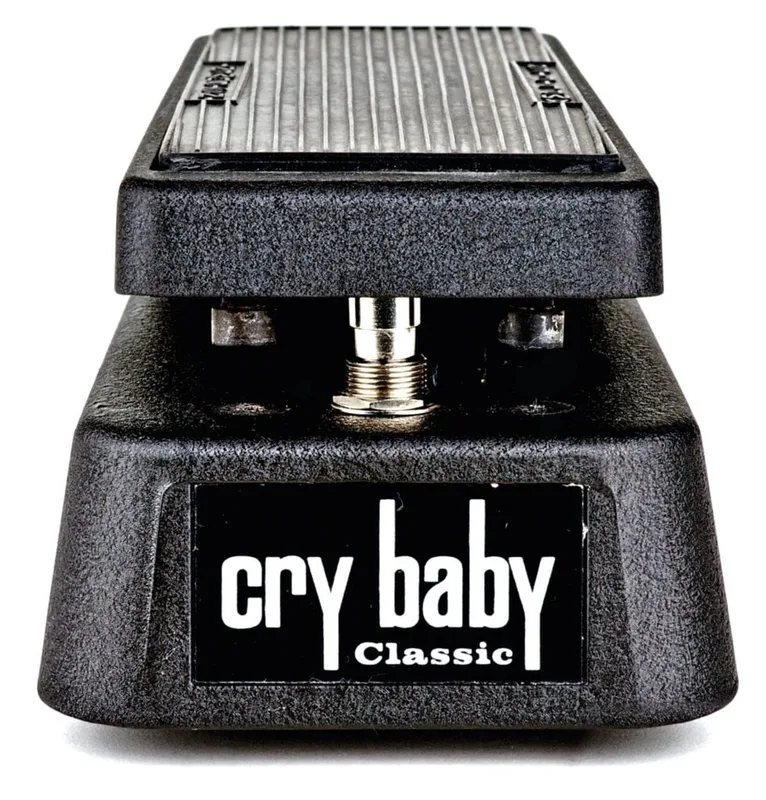
His pedal history is also a player's history in miniature. The first pedal he ever bought was a Cry Baby wah3. A 1970s Fuzz Face he found in 1995 became, in Premier Guitar's words, "an indispensible part of his arsenal"4. A Tube Screamer from 1980 or 1981 still sits on his board5. And the board around those pieces, he says, is mostly ordinary stock: "I buy them out of Sweetwater"5.
The blues-rock sound he is known for
Bonamassa's sound is built on overdriven tube amplifiers pushed by a small set of drive pedals. Dunlop describes his playing with Black Country Communion as "fiery, deep, and powerful"3, and the technical site Guitar FX Layouts says he "relies on his Fuzz Face to deliver his trademark searing leads"10.
The amplifiers matter as much as the pedals. Dumble amplifiers are, in Guitar World's words, "widely considered to be the most sought-after amps around"11. Bonamassa sold his entire Dumble collection in 2014, but has since bought eight, three of which are out on the road with him9. His three-channel live rig, detailed in late 2024, uses those three Dumbles across the channels, with channel C built around a 100-watt Super Overdrive Special head paired with an original TC Electronic Chorus pedal9.
Into those amps he pushes overdrives rather than high-gain distortion. MusicRadar's reviewer notes that Bonamassa uses the Way Huge Overrated Special "with Fender tweed amps that are already cranked," where the pedal "com[es] alive in that role, taking an already overdriven amp to the next level, adding harmonics and helping notes bloom into feedback under your fingers"12. That approach, a pedal stacked onto an amp already working, is the core of his lead sound.
His connection to effects goes back to childhood. He recalls his earliest memories of seeing MXR pedals in his father's music shop, and remembers the pride he felt in hailing from Upstate New York, the same region that was the birthplace of the MXR brand13. His pick choice has a similar story: while watching an Eric Johnson video, he spotted a red pick in Eric's hand and rushed to a local music store to find it, which is how he came to the Jazz III1.
A Cry Baby wah from the start
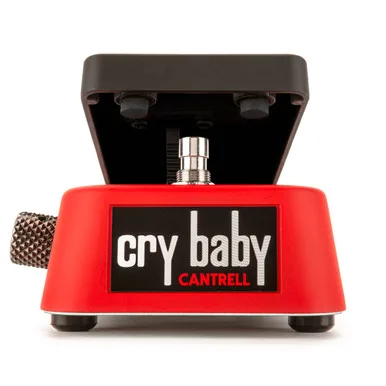
The wah is where Bonamassa's pedal life began. In his own words:
"The first pedal I ever purchased was a Cry Baby, 25 years ago," he says. "I am so honored to have my name on this pedal and hope it brings you as much fun as it brings me every night on stage."
Dunlop says that when he really wants to express himself in a solo, he steps on a Cry Baby wah, and that the company worked with him to develop a signature model "specially engineered to fit in perfectly with Joe's system, from the way it looks to the way it sounds"3. Dunlop's history of the Cry Baby notes that Bonamassa is among the guitar legends who have worked closely with the company to develop their own custom Cry Baby pedals14.
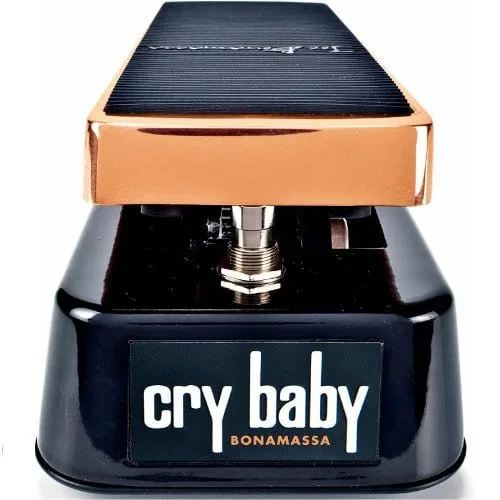
The signature model, the JB95, was first announced around Winter NAMM 2012 alongside other Dunlop releases15, and was initially offered as a pre-order from Bonamassa's own website at $169.99, including a signature Cry Baby t-shirt16. Premier Guitar's review describes it as "modeled on his custom wah and packed with special modifications to capture his distinctly vintage tone"17.
What makes the JB95 distinct among Cry Babys:
- Halo inductor. The wah is voiced by a vintage-style Halo inductor for added harmonic content and growl3. Premier Guitar's reviewer calls the halo inductor "one of the most critical components" in the pedal17.
- Vintage-style build. It features large, vintage-style thru-hole components3.
- Output buffer. An output buffer prevents impedance imbalance with vintage fuzz pedals3, a practical detail for anyone running a germanium Fuzz Face after a wah.
- Bypass switch. An internal switch selects true bypass or non-true bypass operation, and Joe prefers non-true bypass because it darkens the high end3.
- Sweep. Dunlop describes it as having a huge vocal sweep range and calls it one of the most expressive Cry Babys ever3.
Power comes from one 9-volt battery accessed via the bottom of the pedal, a Dunlop ECB003 9-volt adapter, or a Dunlop DCB10 DC Brick power supply18. The manual lists input impedance at 800 kΩ and output impedance at 10 kΩ18.
Signature pedals with Dunlop: the wah, the Fuzz Face and the rest
Bonamassa's signature relationship with Dunlop covers several pedals, from picks to pedals as the company puts it1. Beyond the JB95, the lineup includes the JBF-3 Fuzz Face and the MXR FET Driver, which MusicRadar notes is based on Bonamassa's favorite Chandler Tube Driver6.
The JBF-3 Signature Fuzz Face
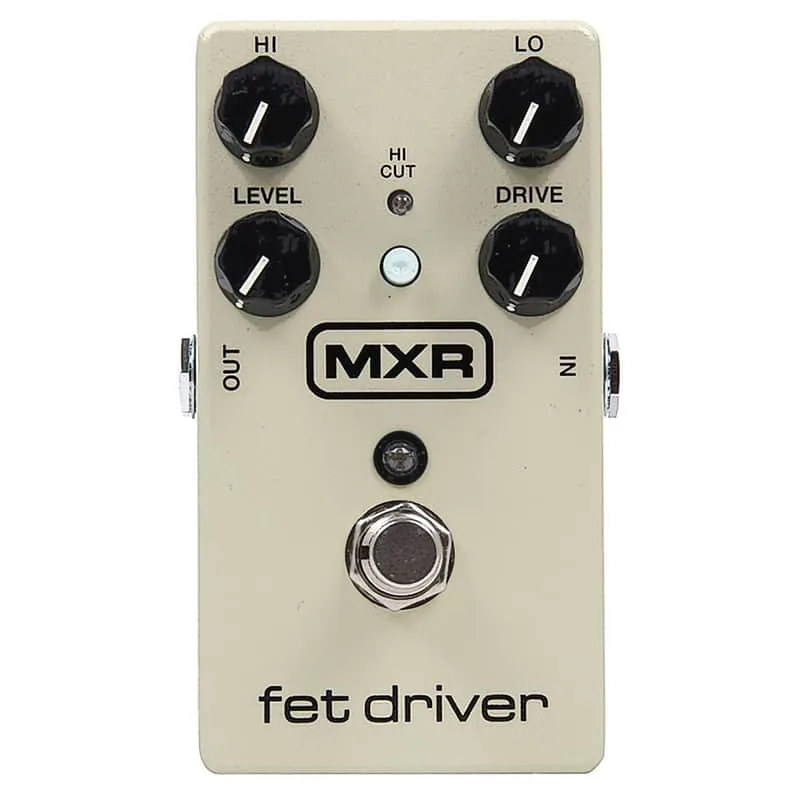
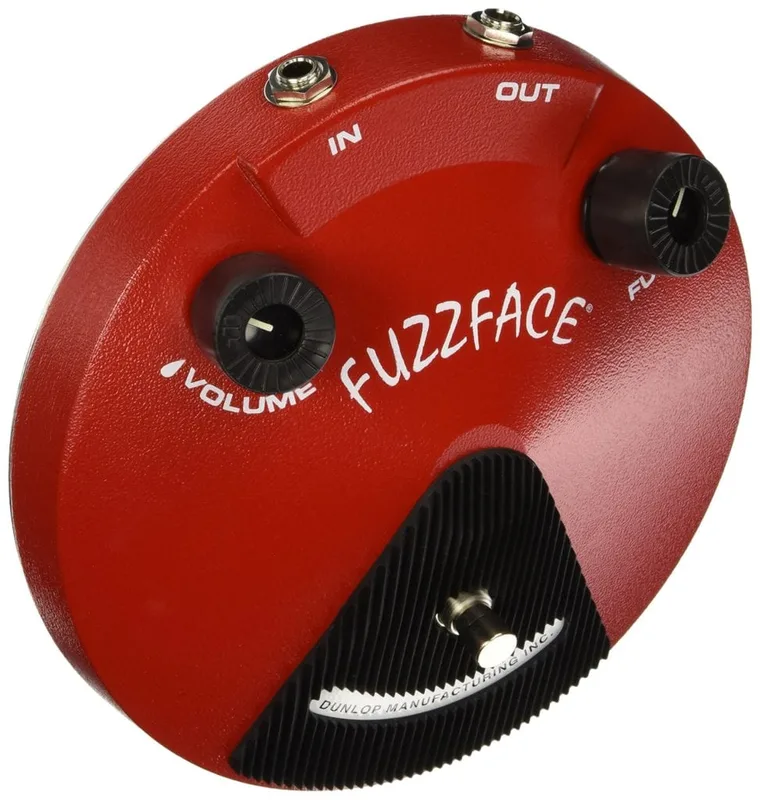
Bonamassa found his first Fuzz Face, a 1970s model, in 1995, and it became a fixture of his sound4. By 2009 his tour board carried a Fuzz Face custom-made by George Tripps19. The signature JBF-3 followed, and Joe described what he wanted from it:
Dunlop says Joe Bonamassa relies on his Fuzz Face to deliver his trademark searing leads, and the JBF-3 is the signature version of that pedal in his Dunlop and MXR signature line, alongside the JB95 Cry Baby and the CSP265 FET Driver10.
The JBF-3 is a tweaked positive-ground Fuzz Face using matched NOS Russian military germanium transistors, chosen for their characteristic warmth and growl10. It is voiced specifically for Joe's humbucker-driven tone, adding sustain and thickness for what the builder's description calls a rich, creamy fuzz10. Joe himself says it "sounds great with humbuckers," that it is "a very warm and expressive pedal, very smooth on the top end and on the bottom end," and that it is "perfect for my playing style"1. He uses it with the Volume and Fuzz controls set to maximum4.
| Feature | Detail |
|---|---|
| Circuit | Tweaked positive-ground Fuzz Face10 |
| Transistors | Matched NOS Russian military germanium10 |
| Controls | Classic Omeg pots10 |
| Finish | Polished copper, which will patina over time10 |
| Production | Limited to a single batch each year10 |
| Versions | 2013 limited edition, including a black version10 |
Premier Guitar's review of the hand-wired germanium JBF3 found it "not as forgiving, smooth, or harmonically even as many boutique pedals that claim the Fuzz Face for inspiration," but concluded "that's where the magic of this particular Fuzz Face lies"4. A DIY builder's assessment of the circuit reported that "it's especially good in front of a dirty amp like a Vox AC-15 or a Marshall"10. The pedal was also featured in That Pedal Show's video on classic fuzz tones20.
The JBF-3 is a positive-ground circuit10, which affects how it can be powered and chained, and production is limited to a single batch each year10, so availability comes and goes.
Way Huge collaborations
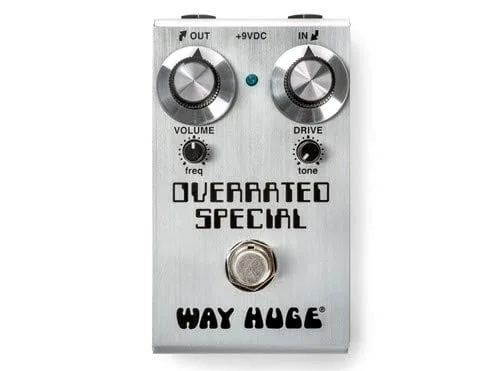
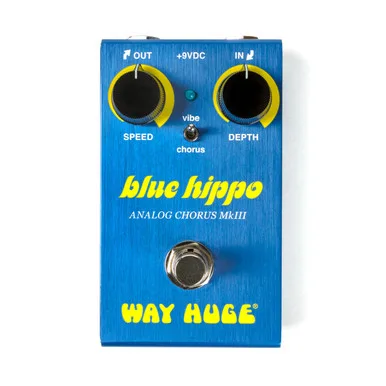
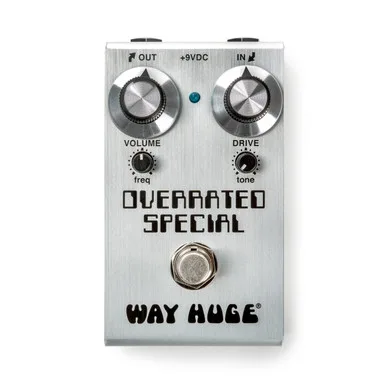
Bonamassa's work with Dunlop extends to the Way Huge brand. Two of his favorite Way Huge pedals are the Overrated Special overdrive, which he designed, and the Blue Hippo chorus21. The Way Huge Smalls Overrated Special, designed in conjunction with Bonamassa, carries Volume, Tone and Drive controls22.
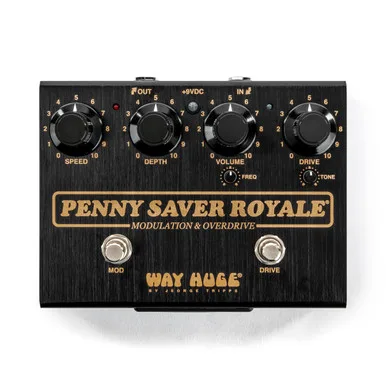
In 2021 those two favorites were combined into a single signature pedal, the Way Huge Penny Saver Royale Modulation & Overdrive, which unites the Overrated Special Overdrive and the Blue Hippo Chorus in one housing237. Bonamassa said combining the two pedals into one unit with a single power source makes them "melt more into the tone giving it a very organic yet unique sound," and that you save a penny or two with the purchase24. He also said the pedal "has changed the relationship between chorus and overdrive"24. It was sold via jbonamassa.com21.
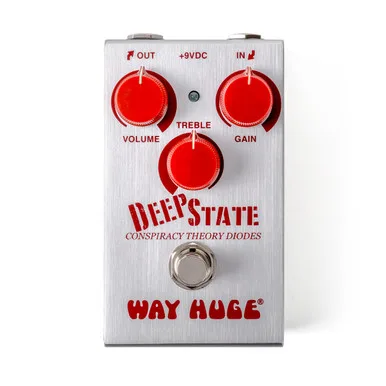
The collaboration continued with the Deep State, a limited-edition overdrive created with Way Huge and sold through Bonamassa's Reverb shop25. The pedal came out of a prototype: Dunlop's account says Tripps asked Joe to try it, and Joe loved it26. Bonamassa compared the Deep State favorably to the Klon, saying the units were "virtually identical" to the real thing; the $189 units sold out quickly5.
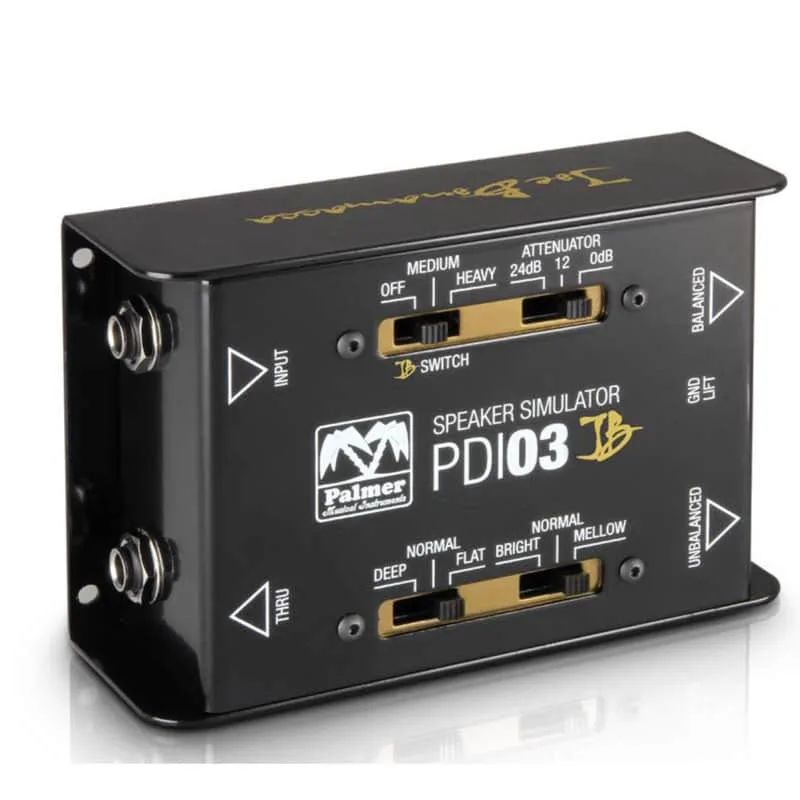
Bonamassa also has a connection to Palmer, whose PDI 03 speaker simulator and DI he uses; MusicRadar reported in 2015 that he loved the PDI 03 enough to lend his name to a signature version27.
The Tube Screamer and the current pedalboard
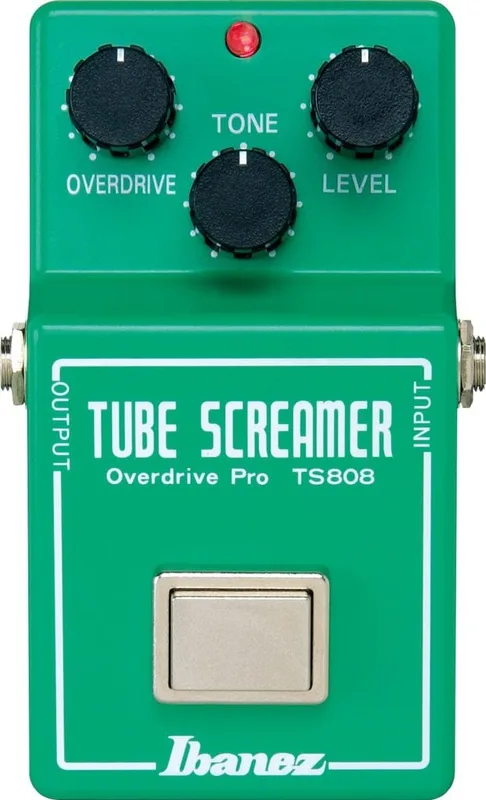
Asked by Guitarist magazine about his most-used pedal, Bonamassa was direct:
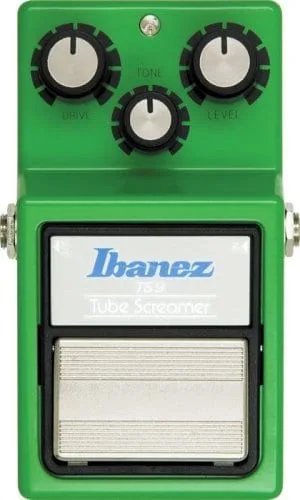
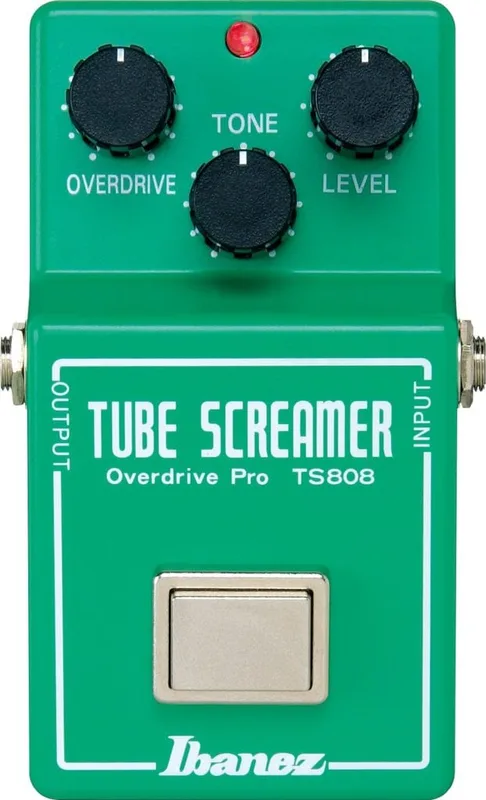
"My most-used pedal over the years has been the Ibanez Tube Screamer in both the TS9 and TS808 configurations."
A TS-9 was already on his board for a 2009 tour19, and his current board carries a Tube Screamer he describes as "either an '80 or an '81," with similar examples costing around $400 secondhand5. On the question of copies, he prefers a reissue Ibanez TS808 over the boutique Tube Screamer versions made over the years8.
His 2025 pedalboard, revealed in Guitarist, is largely off-the-shelf stock bought from Sweetwater5. The pedals he listed:
| Pedal | Notes |
|---|---|
| Ibanez Tube Screamer | An "80 or '81 example; similar ones circa $400 secondhand5 |
| Electro-Harmonix Micro Pog | $2455 |
| Fuzz Face | $170, runs through his Fender Twin amps5 |
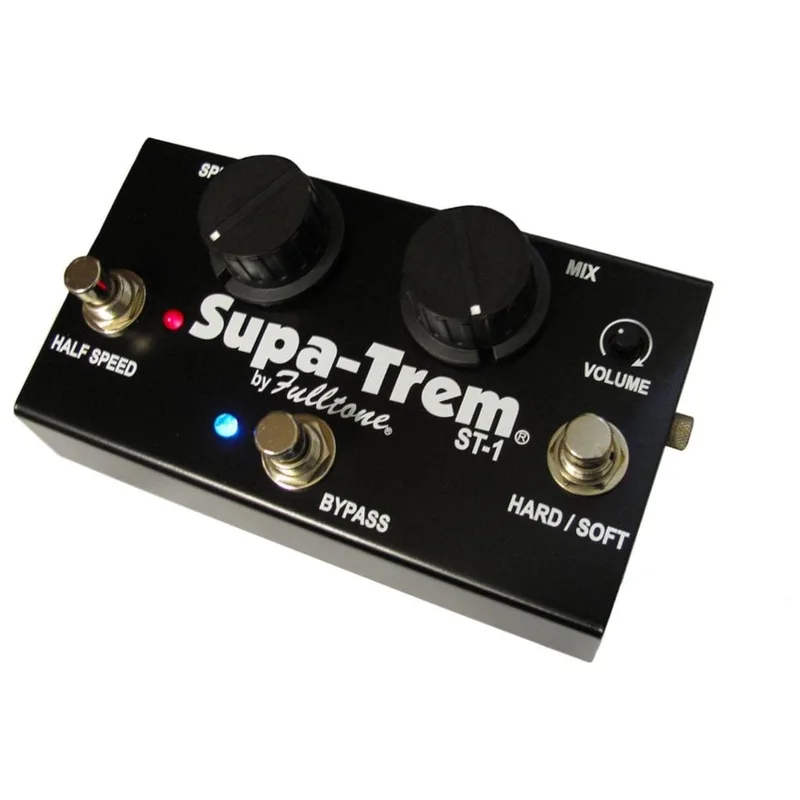
| Fulltone Supa-Trem | $2795 |
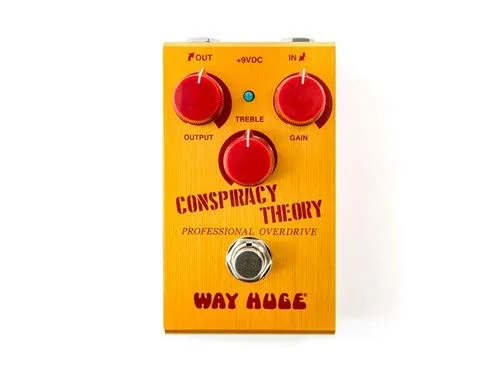
| Way Huge Conspiracy Theory | On the board5 |
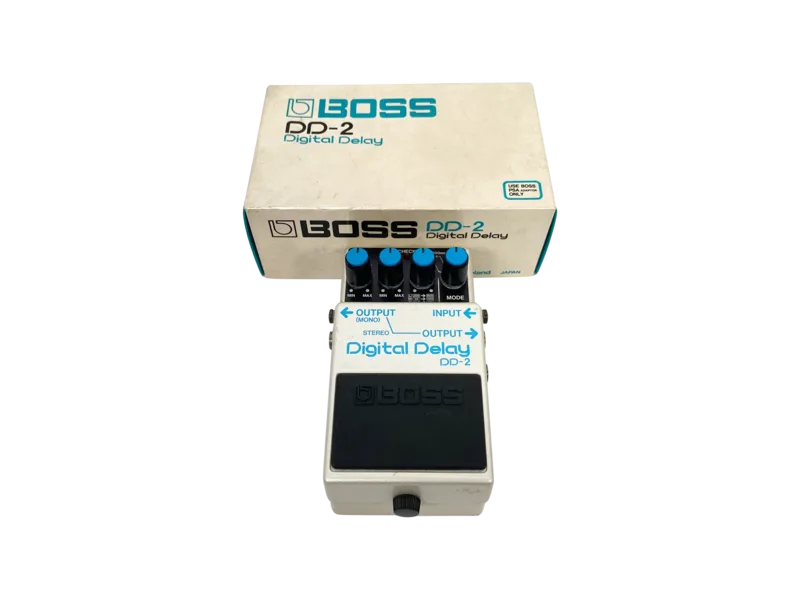
| Boss DD-2 delay | Interchangeable, circa $200 secondhand5 |
| Cry Baby wah | His signature model3 |
Around the pedals themselves, the board is mostly infrastructure: junction boxes, inputs for the amps, a junction box to get to the switcher and out, and two boxes that power everything5. His Silver Jubilee Marshall heads are partnered with a now-discontinued Hughes & Kettner Rotosphere, which he has called "a fake Leslie [speaker]"5.
Rory Gallagher's Rangemaster treble booster
In February 2025, before a show at the Beacon Theater in New York, Daniel Gallagher, with his father Donal's blessing, gifted Bonamassa the Rangemaster treble booster that was Rory Gallagher's Number 12. Bonamassa announced it himself:
"Tonight before our show @beacontheatre in New York, my friend Daniel Gallagher, with his father Donal's blessing, gifted me Rory's number 1 Rangemaster."
The Rangemaster is a treble booster of the type used by early Rory Gallagher28. Bonamassa said the pedal would be seen onstage again at the Rory Gallagher tribute shows in Cork2.
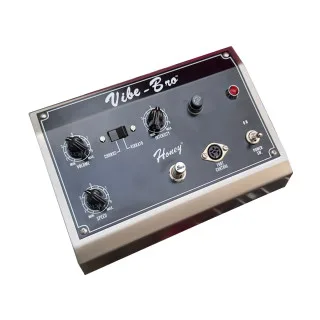
The gift connects to a wider pattern of Bonamassa receiving one-off pedals from makers. When Shin-ei announced it was shutting down pedal production, the company produced one of its very last pedals for him, a special Vibe-Bro with his picture on the cover29. His response: "Man, I am so honored you made this pedal for me. It will be in the rig this summer"30.
His influence runs the other way too. Opeth's Fredrik Åkesson credits Bonamassa for his favorite pedal31, and Bonamassa's signature designs, from the JB95 to the Penny Saver Royale, are available to any player who wants a piece of his setup.
News
Questions
What was Joe Bonamassa's first pedal?
A Cry Baby wah. He says the first pedal he ever purchased was a Cry Baby, 25 years before he made the statement, and that having his name on his own signature Cry Baby is an honor. The wah has stayed with him from that first purchase to his current live rig.
What pedal does Joe Bonamassa use the most?
The Ibanez Tube Screamer. He told Guitarist magazine that his most-used pedal over the years has been the Tube Screamer in both the TS9 and TS808 configurations. His current board carries an original 1980 or 1981 example, and he prefers the reissue TS808 over boutique copies.
Does Joe Bonamassa use a Tube Screamer?
Yes. A TS-9 appeared on his board as far back as a 2009 tour, and his current pedalboard includes a Tube Screamer he describes as either a 1980 or 1981 model. He has said he prefers a reissue Ibanez TS808 to the many boutique Tube Screamer copies on the market.
What wah pedal does Joe Bonamassa use?
His signature Dunlop JB95 Cry Baby, developed with Dunlop and modeled on his custom wah. It uses a vintage-style Halo inductor for added harmonic content and growl, large thru-hole components, an output buffer for vintage fuzz pedals, and an internal switch for true or non-true bypass, with Joe preferring non-true bypass.
Does Joe Bonamassa have a signature Fuzz Face?
Yes, the Dunlop JBF-3 Joe Bonamassa Signature Fuzz Face. It is a hand-wired, positive-ground Fuzz Face built around matched NOS Russian military germanium transistors, finished in polished copper, and produced in a single limited batch each year.
Where does Joe Bonamassa buy his pedals?
Sweetwater. In a 2025 Guitarist interview he said of his pedals, "I buy them out of Sweetwater," and described his board as standard-issue modern pedals, unmodified, with a few vintage exceptions such as his early Tube Screamer and a Boss DD-2 delay.
Does Joe Bonamassa still use Dumble amps?
Yes. He sold his entire Dumble collection in 2014 but has since bought eight, three of which travel with him on the road. His three-channel live rig includes a 100-watt Dumble Super Overdrive Special head paired with an original TC Electronic Chorus pedal for channel C.
Sources (31)
- Joe Bonamassa is a Dunlop Artist., Jim Dunlop (www.jimdunlop.com)
- Joe Bonamassa now owns Rory Gallagher's Number 1 Rangemaster, Guitar World, 2025-02-28
- JOE BONAMASSA CRY BABY® WAH, Dunlop (www.jimdunlop.com)
- Joe Bonamassa Signature Fuzz Face Pedal Review, Premier Guitar, 2010-12-21
- Joe Bonamassa buys his pedals from Sweetwater, Guitar World, 2025-06-30
- MXR CSP265 Joe Bonamassa FET Driver review, MusicRadar, 2013-11-11
- Joe Bonamassa & Way Huge Launch Penny Saver Royale, Premier Guitar, 2021-03-02
- Joe Bonamassa Reveals His Most-Used Effects Pedal of All Time, GuitarPlayer, 2022-10-04
- "Whatever the internet tells me to do, I tend to do the exact opposite." Joe Bonamassa reveals "the world's most expensive three-channel amp", GuitarPlayer (www.guitarplayer.com), 2024-11-29
- Guitar FX Layouts: Dunlop JBF-3 Joe Bonamassa Fuzz Face, tagboardeffects.blogspot.com (Guitar FX Layouts), 2026-08-10
- Universal Audio Enigmatic '82: the Dumble pedal amp to beat?, Guitar World, 2024-09-24
- Way Huge Overrated Special review, MusicRadar, 2016-10-15
- The MXR Legacy with Joe Bonamassa, Guitar Interactive Magazine, 2014-11-14
- Celebrating Fifty Years of Cry Baby, Dunlop (lifestyle.jimdunlop.com), 2017-03-14
- NAMM 2012 VIDEO: four new Dunlop/MXR pedals get the demo treatment, MusicRadar, 2012-01-21
- NAMM 2012: Joe Bonamassa signature Cry Baby wah pedal, MusicRadar, 2011-12-07
- Joe Bonamassa Cry Baby Pedal JB95 Review, Premier Guitar, 2012-09-05
- JB95.pdf, Dunlop Manufacturing, Inc., 2019
- Rig Rundown, Premier Guitar, 2009-12-11
- That Pedal Show, That Pedal Show, 2016-11-11
- Way Huge Unveils New Joe Bonamassa Signature Penny Saver Royale Modulation & Overdrive Pedal, GuitarPlayer (guitarplayer.com), 2021-03-03
- Way Huge Unveils New Smalls Overrated Special Overdrive Pedal, Guitar World, 2018-07-16
- WAY HUGE® PENNY SAVER ROYALE® MODULATION & OVERDRIVE, Dunlop (jimdunlop.com)
- Way Huge and Joe Bonamassa join forces for new Penny Saver Royale Modulation and Overdrive pedal, Guitar World, 2021-03-03
- Way Huge & Joe Bonamassa unveil the Deep State, the “ultimate Klon clone”, Guitar World, 2024-08-01
- WAY HUGE® SMALLS™ DEEP STATE™ CONSPIRACY THEORY™ DIODES OVERDRIVE, Jim Dunlop (jimdunlop.com)
- NAMM 2015: Palmer reveals PDI 03 Joe Bonamassa Signature Guitar Speaker Simulator DI, MusicRadar, 2015-01-23
- bsm-treble-boosters-2019.pdf, treblebooster.net, 2019
- Shin-ei announces it is shutting down pedal production, gearnews.com, 2021-06-29
- Shin-ei, the company behind the Uni-Vibe, announces closure, Guitar.com, 2021-06-30
- Opeth and Ghost guitarist Fredrik Åkesson reveals what's on his pedalboard, Guitar World, 2023-03-02