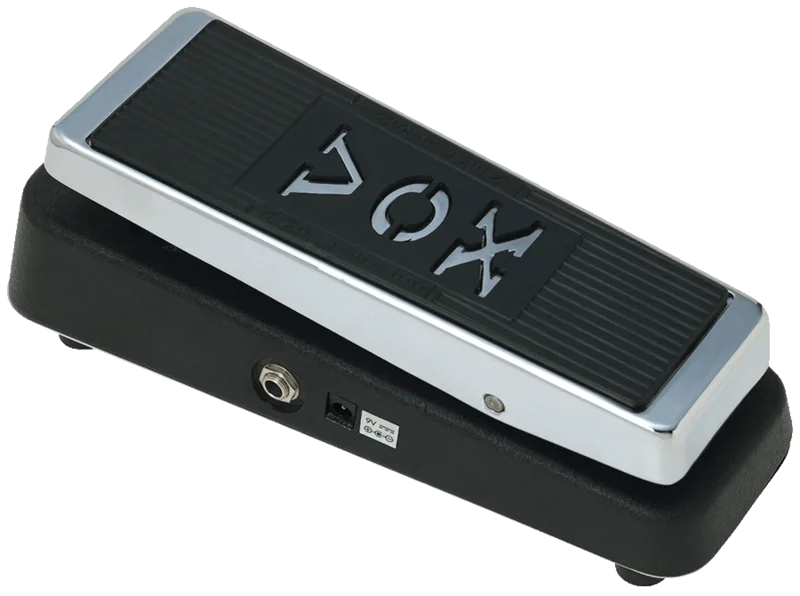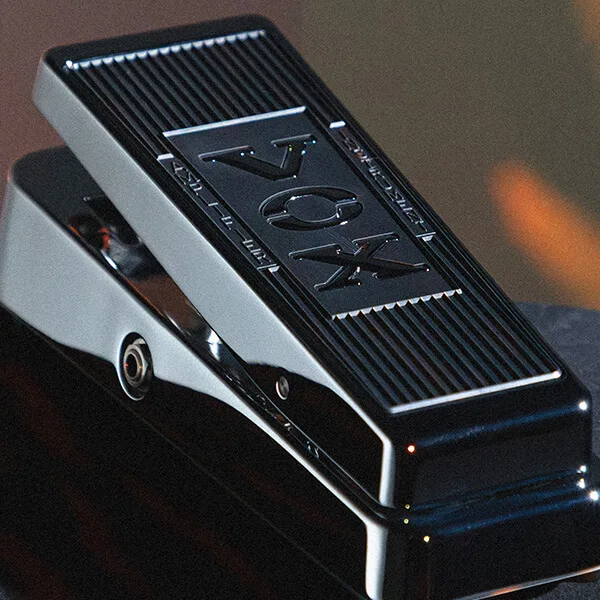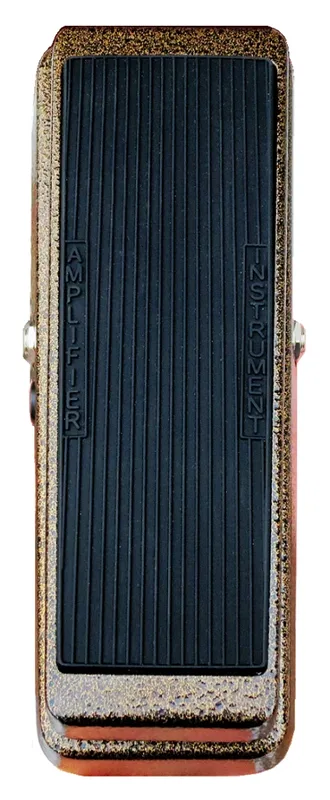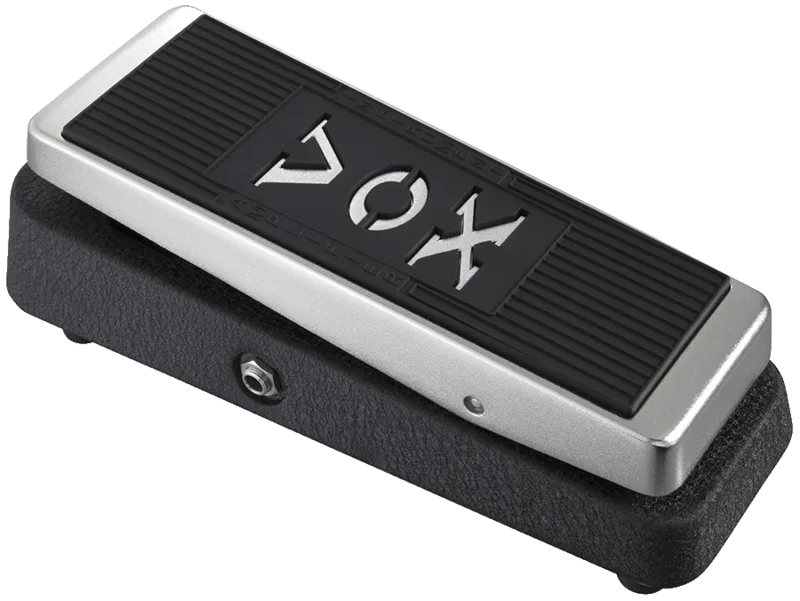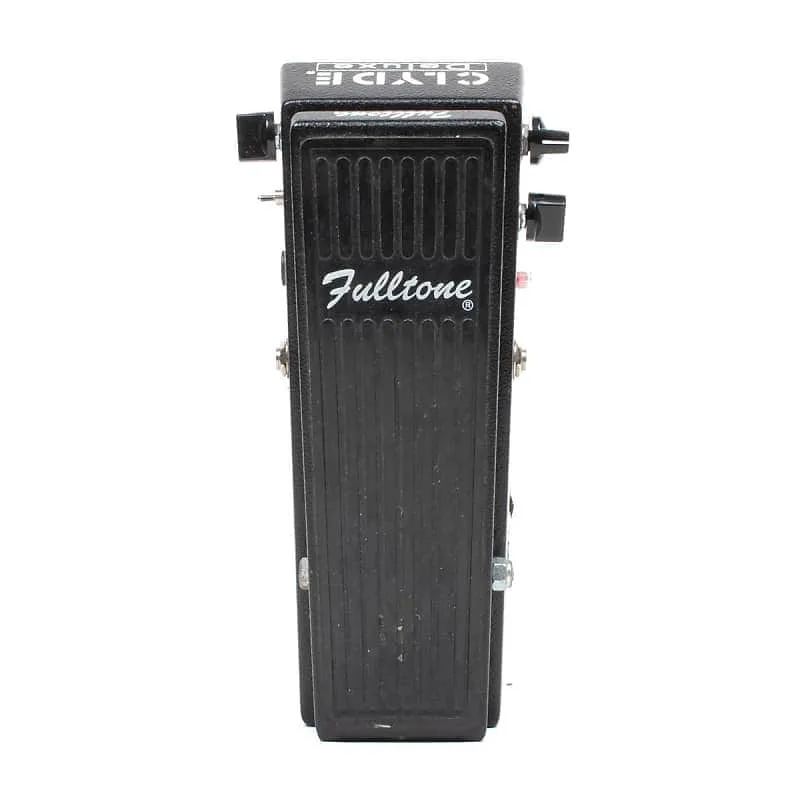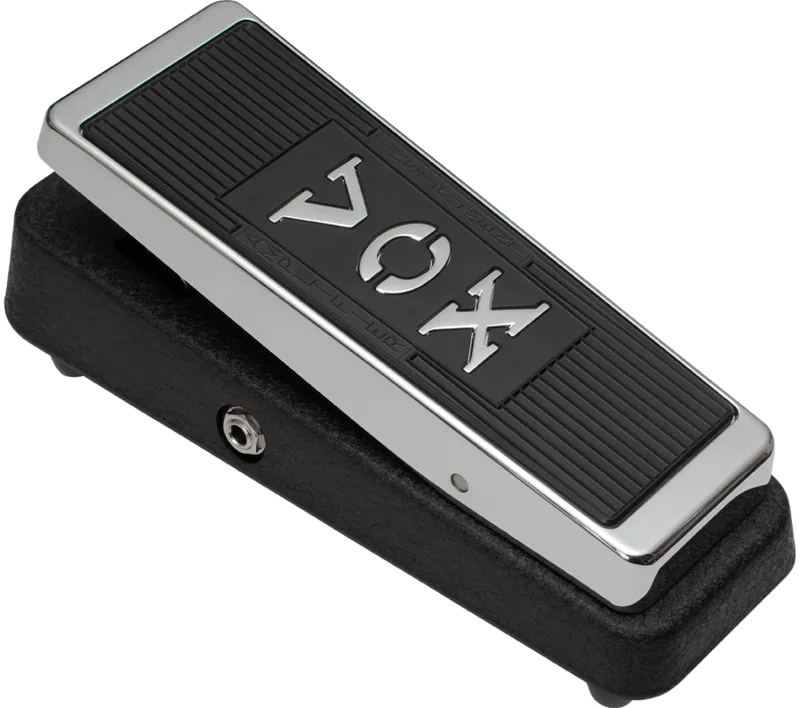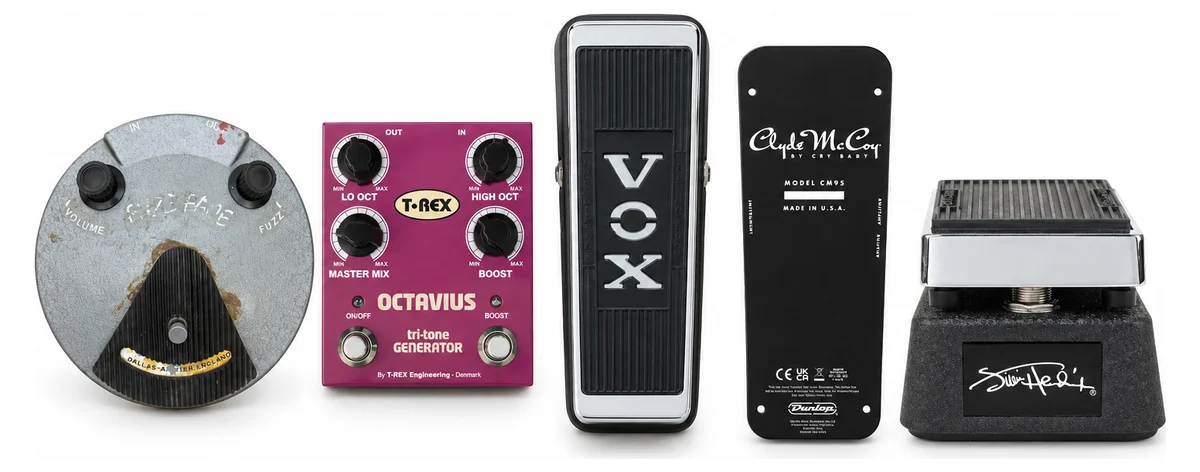


The Vox Clyde McCoy wah is the first wah pedal ever sold to the guitar-playing public, released in 1967 and named after a trumpet player who never played it. Clyde McCoy was a famous big band trumpeter known for his muting technique, and Vox built the pedal to help guitarists approximate the sound of a muted brass instrument123. The pedal that resulted, with its rocking treadle sweeping a filter across the guitar's frequency range, became the template for every wah that followed.
The name came first, in an odd way. McCoy, a jazz trumpeter well known for using a mute to create wah'd effects, had approached Vox for a device that could simulate the sound of a muted trumpet and be used with a keyboard4. Company officials initially wanted to market the resulting pedal for keyboards, until wiser voices chimed in that it should be aimed at guitarists5. McCoy himself had nothing to do with the pedal other than lending his name5.
A wah modeled on a trumpet player's mute
The circuit inside the Clyde McCoy wah was invented by design engineer Brad Plunkett in 1965 for Thomas Organ, Vox's U.S. distribution partner7. Premier Guitar describes Plunkett's mid-'60s design for the Italian Vox Clyde McCoy as "the pedal that represents quintessential wah tone" for many players10.
Manufacturing was split across two continents. A short run of Clyde McCoy units was purportedly made by Thomas Organ in California, before production was jobbed out to Jen Electronics in Italy7. The Clyde McCoy and the Cry Baby that followed both went into production in early 1967, first in Sepulveda, then at Eko in Italy9. The wahs most players encounter today were manufactured in Italy and sold by Thomas Organ in the U.S.11.
The sound that made these pedals famous comes from their inductor-based circuit. Dunlop describes the Clyde McCoy models as known for their "distinctly throaty sound and expressive sweep, which was provided by the Halo Inductor"6. Guitar World calls the original's tone "throaty, voice-like" and says the pedal "enjoys hallowed status" among players12. Geoffrey Teese, answering which stock pedal is the finest, put it plainly:
"The old Clyde McCoy."4
Analog Man's Eric Kraft, describing what the wah does to a signal, called it "just the resonance of the sound, like a sonic blender, almost"4.
Picture and Signature versions
Collectors divide the original Clyde McCoy wahs into two versions, distinguished by what is printed on the baseplate4119:
| Version | Baseplate | Notes |
|---|---|---|
| Picture wah | Clyde McCoy's face | The earliest units; dated possibly to December 1966 or January 19674 |
| Signature wah | McCoy's name in italics, no picture | Later units, dated to the middle of 19674 |
The Clyde McCoy wahs predate the Vox V846 successor, with the Picture model first, followed by the Signature model4. The Clyde models are the most sought after by collectors11.
The Clyde McCoy wah is also, by most accounts, the first signature guitar pedal ever made. JHS Pedals calls it "technically the first ever signature guitar pedal ever made, which is bonkers" since McCoy was a trumpet player who had nothing to do with the design13. Vox reportedly paid him $500, roughly $3,500 today, to put his face on the pedal13.
What reviewers said
Vintage Guitar reviewed two original Clyde McCoy wahs in 2001 alongside a Fulltone Clyde and a Dunlop Cry Baby, and their findings were a mix of reverence and honest faults8:
- Switch noise: On both original Clydes, the switches were fairly noisy and produced distinct pops8
- Volume loss: Both originals showed slight volume loss when engaged8
- Treadle noise: The Signature Clyde produced clunking sounds through the amp as the treadle hit the base in its full up or down positions8
- Pot noise: The Picture Clyde produced scratchy sounds as the pot was turned to the mid point8
The same review noted that the originals were widely used during live performances and on legendary recordings by Jimi Hendrix, Eric Clapton, Jimmy Page, and Jeff Beck8. Guitar World adds that pros and deep-pocketed collectors have hoarded the original Clyde wahs like gold, which keeps them scarce12.
For many wah enthusiasts, Clyde McCoy wahs are considered the "Holy Grail"14.
Vintage value and modern recreations
Vintage Guitar's 2012 price guide put original Clyde McCoy wahs at $700 to $1,1007. Given the collector demand, working players who want the Clyde sound have several modern options built on the original circuit.
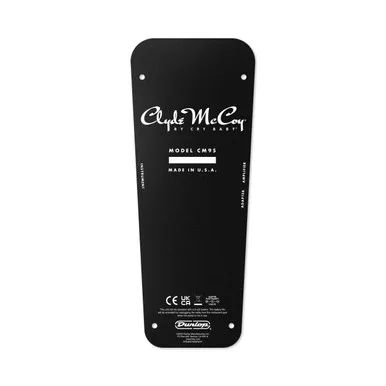
Dunlop inherited the original tooling and machinery used to design and manufacture the first Clyde McCoy pedals from Thomas Organ Company and Jen Electronica, and used it to build the Clyde McCoy Cry Baby Wah (CM95), a tribute aimed at gigging players "so vintage wahs can stay at home"1516. Vox itself has reissued the design more than once, including the V848 Clyde McCoy reissue, which carries a picture of Clyde McCoy on its bottom plate17, and the VRM-1 Real McCoy recreations of its first production wahs.
Videos
Garrett Park Guitars
Pedal Pawn
JimmyC
Questions
Why is it called the Clyde McCoy wah?
Clyde McCoy was a big band trumpet player famous for using a mute to create wah-like effects on his horn. Vox licensed his name for the pedal, which was designed to help guitarists imitate a muted trumpet. McCoy himself had nothing to do with the pedal beyond lending his name.
Who designed the Vox Clyde McCoy wah?
The circuit was invented by design engineer Brad Plunkett in 1965 for Thomas Organ, Vox's U.S. distribution partner. His mid-'60s design for the Italian Vox Clyde McCoy is considered by many players to represent the quintessential wah tone.
What is the difference between the Picture and Signature Clyde McCoy wahs?
The earliest Clyde McCoy wahs carried Clyde McCoy's picture on the baseplate, so collectors call them Picture wahs. Later units dropped the picture and carried only his signature, in italics. The Picture model came first, followed by the Signature model.
Where was the original Clyde McCoy wah made?
A short run was reportedly made by Thomas Organ in California, but production was then jobbed out to Jen Electronics in Italy, where the wahs most players know were built. They were sold in the U.S. by Thomas Organ.
How much does a vintage Vox Clyde McCoy wah cost?
Vintage Guitar's 2012 price guide put original Clyde McCoy wahs at $700 to $1,100. Guitar World noted in 2014 that pros and deep-pocketed collectors have hoarded the originals, so real-world prices can run higher.
Was the Clyde McCoy wah the first signature pedal?
Yes. JHS Pedals calls the Vox Clyde McCoy Wah Wah technically the first signature guitar pedal ever made, which is striking since Clyde McCoy was a trumpet player who had nothing to do with the pedal other than lending his name.
Sources (17)
- Voodoo Lab Wahzoo Review, Premier Guitar, 2009-01-15
- Arteffect Bonnie Wah, Vintage Guitar magazine, 2010-05-12
- Dunlop Cry Baby Bass Wah: the most recognizable effects pedal ever made?, Guitar World, 2023-04-05
- Wah Wah Pedal article, Analog Man Vintage guitar effects (analogman.com), 2015
- Vox Cry Baby, Stompbox Book, 2019-04-27
- Evolution of the Cry Baby Wah at Dunlop, Dunlop (lifestyle.jimdunlop.com), 2017-04-27
- 25 Most Valuable Effects, Vintage Guitar magazine, 2015-05-24
- Fulltone Clyde Wah, Vintage Guitar magazine, 2004-01-13
- Cry, Baby!, Vintage Guitar magazine, 2015-12-09
- Real McCoy Custom RMC8-Guitar Eqwahlyzer Pedal Review, Premier Guitar, 2010-10-20
- Wah-Wah Pedals, Vintage Guitar magazine, 2001-06-05
- Review: Dunlop Clyde McCoy Cry Baby Wah Wah, Guitar World, 2014-04-29
- HISTORY OF THE WAH PEDAL, JHS Pedals
- Xotic XW-2 Wah, Guitar World, 2024-04-10
- CM95 Clyde McCoy Cry Baby Wah Wah Manual, Jim Dunlop (www.jimdunlop.com), 2021
- CLYDE MCCOY® CRY BABY® WAH, Dunlop (www.jimdunlop.com)
- The VOX Clyde McCoy Wah: A classic wah pedal and its history, Gearnews, 2021-02-20
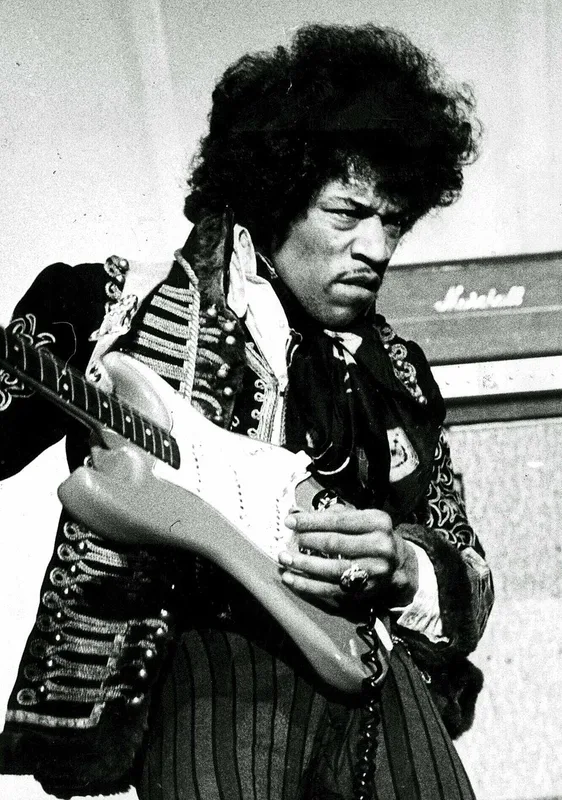 Jimi Hendrix
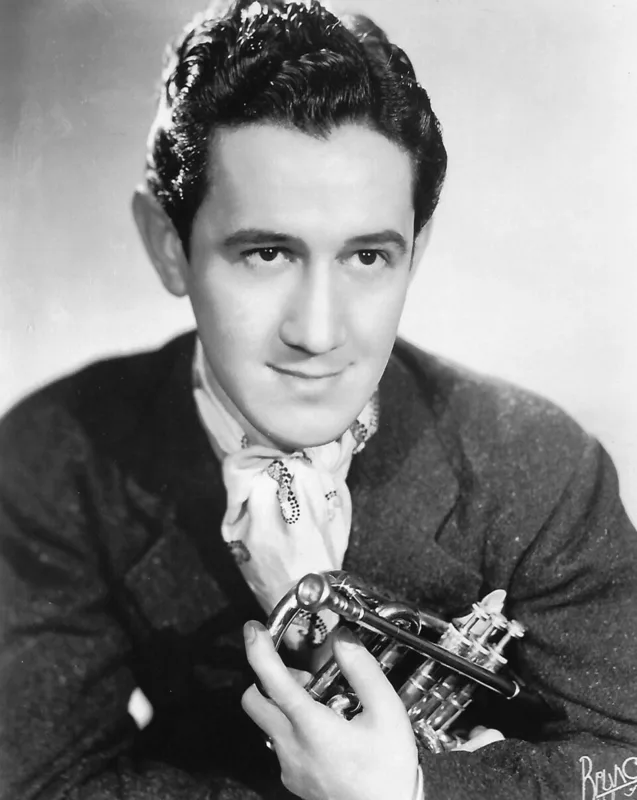 Clyde McCoy