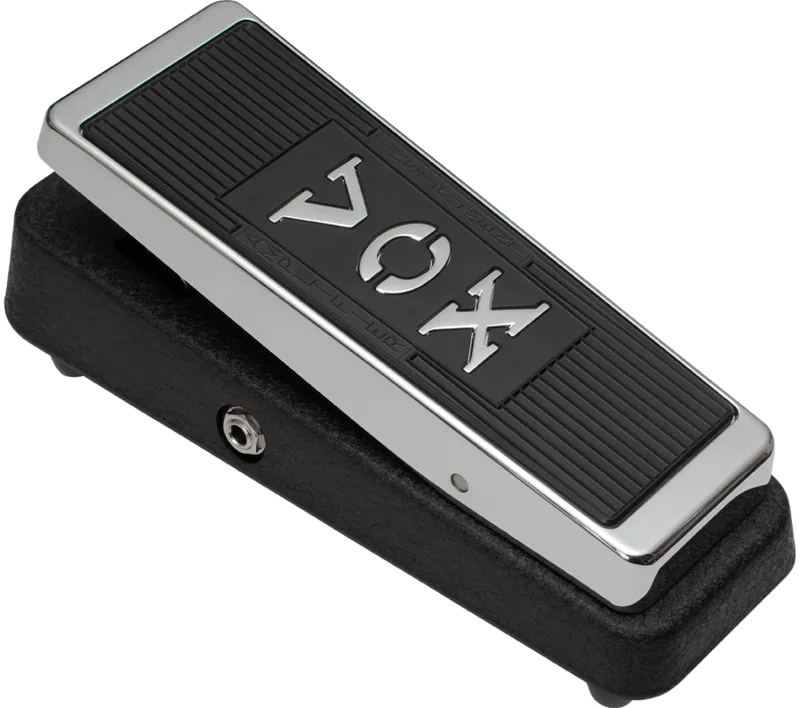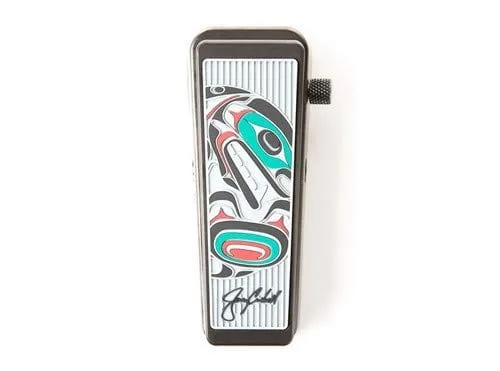


The Dunlop Joe Bonamassa Cry Baby, model number JB95, is a signature wah pedal from Dunlop, built in collaboration with blues-rock guitarist Joe Bonamassa and modeled on his own custom wah12. Dunlop positions it as one of the most expressive Cry Babys the company has made, with a huge vocal sweep range voiced by a vintage-style Halo inductor for added harmonic content and growl2. Bonamassa himself describes the wah as "an extension of the guitar as a human voice"3.
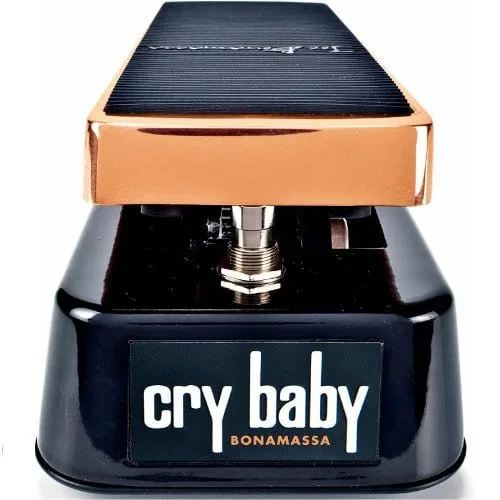
The pedal was announced at NAMM 2012 as one of four new Dunlop pedals that year4, and it stands out visually: a copper top with a smooth-finish black body2, which MusicRadar called "a rather attractive copper top finish, which we reckon could prove desirable enough to entice non-Bonamassa fans too"5.
What the JB95 does: a wide, vocal sweep with a Halo inductor
A wah pedal is a bandpass filter whose center frequency you move with your foot, and the component that shapes that sweep is the inductor. The JB95 is voiced by a vintage-style Halo inductor, which Dunlop says adds harmonic content and growl2. Halo inductors appeared in the early Vox wahs and are considered one of the keys to their rich, vocal capability1. Guitar World's Paul Riario described it as a "haloed" component that adds the vocal-like quality found in the very desirable vintage Vox Clyde McCoy wahs7.
Dunlop's own buying guide sums up the design: the Halo inductor is "perfect for when you're pushing a tube amp into the gritty zone"8. The pedal also uses large, vintage-style thru-hole components rather than the smaller parts found in standard production wahs2.
Premier Guitar's reviewer found the sweep delivers what vintage-wah purists look for:
"the Bonamassa performs in so many of the ways that make purists long for a vintage wah, long and expressive sweeps, deep lows, and rich, high end."
The same review described the sweet, high-end range of the sweep as having "the pleasing whine and longing tones of a permed and SG-wielding Clapton," and noted the heel position "plummets deep into a cavernous low end that turns in a throaty bellow with overdrive or a saturated tube amp"1. Guitar World's reviewer similarly found "such a wide and lively sweep that it sounds almost vintage in character"7.
The manual gives the filter's measured range:
| Position | Frequency range | Maximum gain |
|---|---|---|
| Toe down | 290 Hz ~ 310 Hz (low pass) | +16.5 dB6 |
| Heel down | 1400 Hz ~ 1510 Hz (high pass) | +16.5 dB6 |
Controls and setup
There are no knobs. The only player-facing control is the standard wah treadle, and Premier Guitar listed "no additional tone-tweaking controls beyond standard wah treadle" as the pedal's one drawback1. Setup is a matter of running a shielded instrument cable from the guitar to the Input Instrument jack, and another from the Amplifier jack to the amp6. To turn the pedal on and off, you push the toe of the pedal down until you feel a click6.
Switchable true bypass and the output buffer
Inside the pedal are two features that set the JB95 apart from a standard Cry Baby: an output buffer and a true-bypass switch. Dunlop says the output buffer prevents impedance imbalance with vintage fuzz pedals2, and Premier Guitar notes the wah "was designed with an output buffer so it would work better with fuzzes (and Fuzz Faces in particular)"1.
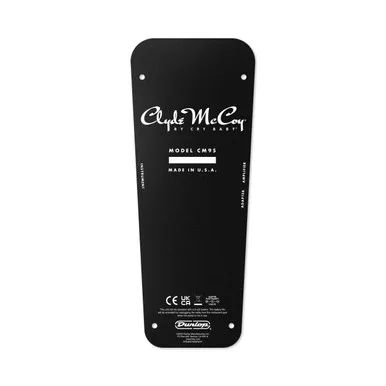
The bypass switch is also internal: the manual instructs you to remove the bottom plate to access it, and it enables true hardwire bypass6. The two settings sound different:
- True bypass: gives the tone a touch more high end, which Premier Guitar's reviewer found worked fine with a Big Muff but was "a bit brittle for the already trebly Fuzzrite"1.
- Non-true bypass (buffered): darkens the high end, and lets you engage the on/off switch almost noiselessly12.
Joe Bonamassa runs his own JB95 in non-true-bypass mode because it darkens the high end2. Guitar World's Paul Riario reported the same preference, noting Joe "likes to set it for non-true bypass to smooth the top end"7. If you want his sound, that is the setting to use.
Working with fuzz
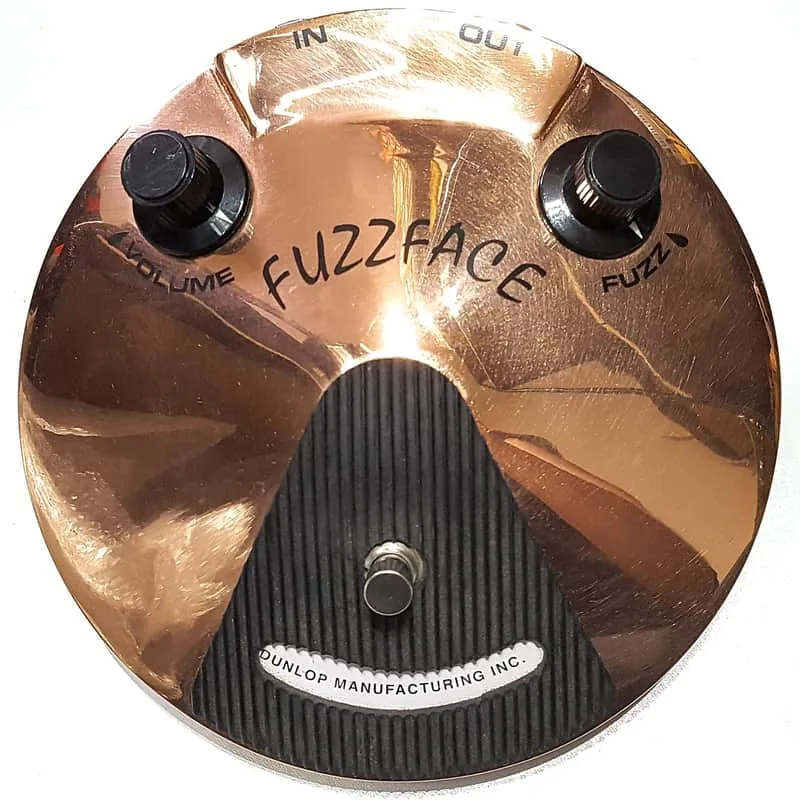
The buffer exists because vintage fuzz circuits, Fuzz Faces in particular, are sensitive to what feeds them. In Premier Guitar's testing, "both a NYC Big Muff and Fuzzrite clone retained their respective voices and the JB95's sweep-accentuating frequencies in a manner that seemed to work hand in hand with the fuzz"1. Bonamassa also has a signature Fuzz Face with Dunlop, the JBF-3, which shares the copper look9, and Premier Guitar noted the JB95's shiny copper rocker matches it1.
Power
The JB95 runs on one 9V battery accessed via the bottom of the pedal, a Dunlop ECB003 AC adapter (ECB003E in Europe), or a Dunlop DCB10 DC Brick power supply6. Dunlop's product page also lists the DC Brick, Iso-Brick, and Mini Iso-Brick supplies as compatible, none included2. Premier Guitar adds that a standard barrel adapter may also be used1. Current draw is a very low 1.35µA6, so a battery lasts a long time.
Built from Joe Bonamassa's custom wah
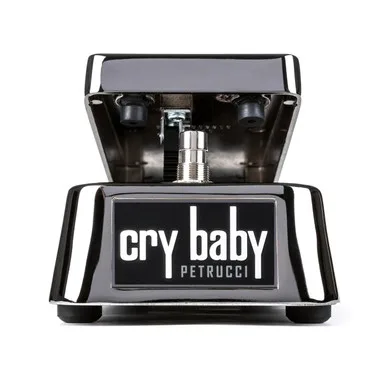
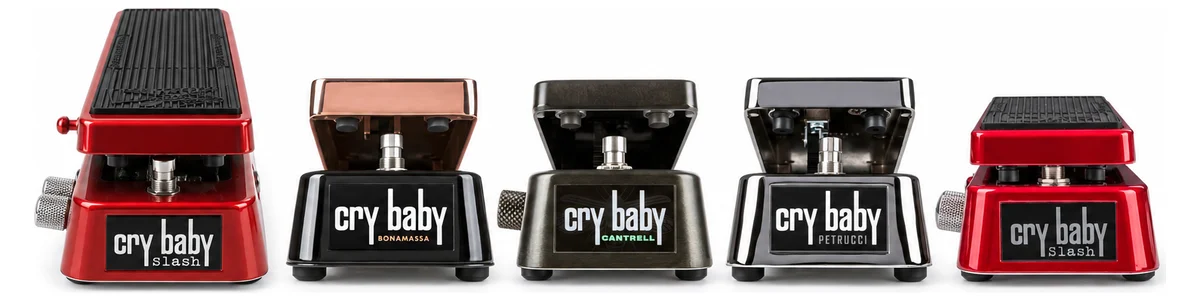
Dunlop developed the JB95 with Bonamassa, who uses the Cry Baby wah in his solos, and the production pedal is modeled on his custom wah with special modifications aimed at his vintage tone21. The company says it was "specially engineered to fit in perfectly with Joe's system, from the way it looks to the way it sounds"2. It sits in a long line of Dunlop signature Cry Babys alongside models for players like Jerry Cantrell and John Petrucci, which share the same power options210.
What reviewers said
Premier Guitar's review was positive on the essentials, listing "wide, expressive sweep" and "sweet, low and high end" among the pros, and finding the pedal "seemed at home and capable regardless of the amp/guitar combination"1. On value, the reviewer wrote that "given the quality, the brilliant tones, and what you could pay for a vintage unit or high-end clone, the Bonamassa Cry Baby is a bargain" at its $169 street price1. The build also drew praise: "It's a hefty unit on the whole... this one feels built to last twice as long" as a regular Cry Baby1. The single listed con was the absence of any tone-tweaking controls beyond the treadle1.
Guitar World's Paul Riario picked the Bonamassa wah among his top five effect pedals of 2012, praising its elegant copper-topped looks and wide, lively, almost vintage sweep7.
Videos
Guitar World
Sweetwater
jimdunlopusa
Questions
Does the Joe Bonamassa Cry Baby work with a Fuzz Face?
Yes. The JB95 was designed with an output buffer specifically so it would work better with fuzzes, and Fuzz Faces in particular, by preventing the impedance imbalance that vintage fuzz pedals can have with wahs. Premier Guitar's reviewer found both a Big Muff and a Fuzzrite clone kept their voices through it. Joe Bonamassa also has his own signature Fuzz Face from Dunlop.
Which bypass setting does Joe Bonamassa use?
Joe prefers the non-true-bypass setting, because it darkens the high end. The switch is inside the pedal: you remove the bottom plate to reach it. Leaving it in non-true-bypass mode also lets you engage the on/off switch almost noiselessly, according to Premier Guitar's review.
Does the Bonamassa wah have any knobs besides the treadle?
No. The only control on the surface is the standard wah treadle, and Premier Guitar listed the lack of additional tone-tweaking controls as a con. Everything else, including the true bypass/non-true-bypass switch, lives inside the pedal under the bottom plate.
What is a Halo inductor in a wah pedal?
It is the component that voices the wah's filter sweep. Halo inductors appeared in the early Vox wahs and are considered one of the keys to their rich, vocal capability. Dunlop describes the JB95's vintage-style Halo inductor as adding harmonic content and growl, and Guitar World's reviewer connected it to the vocal quality of the vintage Vox Clyde McCoy wahs.
Is the Dunlop Joe Bonamassa Cry Baby true bypass?
It is switchable. An internal switch, reached by removing the bottom plate, enables true hardwire bypass or non-true-bypass (buffered) operation. True bypass gives the tone a touch more high end; the buffered setting darkens the top end, which is the setting Joe Bonamassa prefers.
What is the model number of the Joe Bonamassa Cry Baby wah?
The model number is JB95. It is one of Dunlop's signature Cry Baby wahs, announced at NAMM 2012 and modeled on Joe Bonamassa's own custom wah, with a copper top finish over a gloss-black body.
Sources (10)
- Joe Bonamassa Cry Baby Pedal JB95 Review, Premier Guitar, 2012-09-05
- JOE BONAMASSA CRY BABY® WAH, Dunlop (www.jimdunlop.com)
- Joe Bonamassa is a Dunlop Artist., Jim Dunlop (www.jimdunlop.com)
- NAMM 2012 VIDEO: four new Dunlop/MXR pedals get the demo treatment, MusicRadar, 2012-01-21
- NAMM 2012: Joe Bonamassa signature Cry Baby wah pedal, MusicRadar, 2011-12-07
- JB95.pdf, Dunlop Manufacturing, Inc., 2019
- Guitar World Staff Picks: Paul Riario's Top Five Effect Pedals of 2012, Guitar World, 2012-12-17
- RANGE OF EXPRESSION: FIND YOUR CRY BABY® WAH, Dunlop (lifestyle.jimdunlop.com), 2021-10-08
- Guitar FX Layouts: Dunlop JBF-3 Joe Bonamassa Fuzz Face, tagboardeffects.blogspot.com (Guitar FX Layouts), 2026-08-10
- JOHN PETRUCCI CRY BABY® WAH, Dunlop (www.jimdunlop.com)
 Joe Bonamassa