

The Effectrode Leveling Amplifier is a valve-powered compressor pedal, part of a range MusicRadar describes as unique and superbly made, with a place in some of the most revered signal chains in the world1. Effectrode markets it as a studio grade compressor2.
What a leveller does
In recording studios, a leveller is a sort of crossover between a compressor and a limiter: it reduces dynamic range like a compressor does, but with the gentler, more even action of a levelling amp rather than the hard clamping of a limiter1. Effectrode has put that studio function in a pedal, using tubes rather than transistors to do the compressing12.
Controls
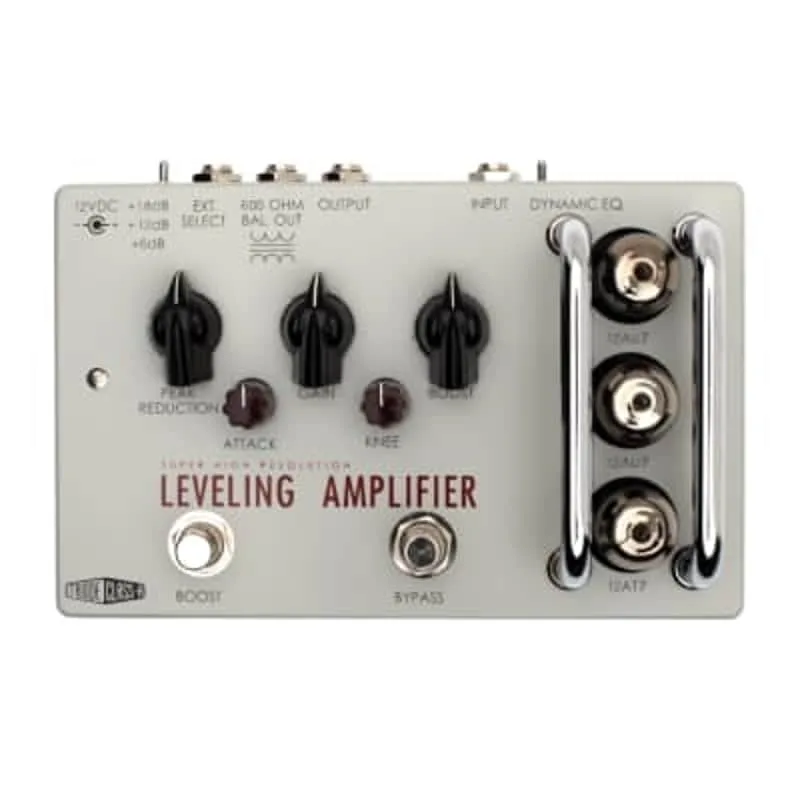
The front panel mixes three large knobs with two smaller red pots and a pair of switches1.
| Control | What it does |
|---|---|
| Peak Reduction | Sets the amount of compression applied to the signal1 |
| Gain | Sets the level1 |
| Boost | Footswitchable boost, adds up to around 6dB when needed1 |
| Attack | One of two smaller red pots that influence how the Leveling Amplifier compresses the signal1 |
| Knee | Makes the compression subtler and more transparent if needed1 |
| Dynamic EQ switch | A toggle that dynamically restores the high frequencies lost when the pedal is compressing; the heavier the compression, the harder it works to restore higher frequencies1 |
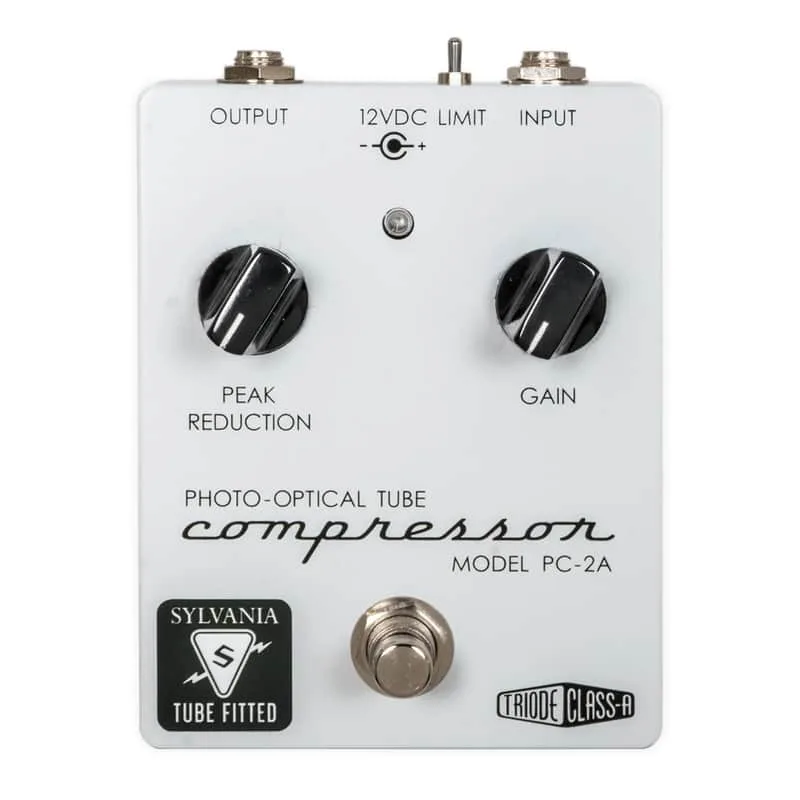
The Peak and Knee controls have a studio pedigree: they were requested by David Gilmour's tech, also called Phil Taylor, as a mod on the Effectrode PC-2A compressor1.
The review sample carried an optional trio of Philips NOS valves, available as an upcharge over the regular JJ valves while stocks last1.
Recording straight to a desk
The transformer-isolated balanced output is aimed at the best direct-to-desk quality, so the pedal can feed an interface or console directly without losing anything on the way1. That, plus the tube circuit, positions it as much as a recording front end as an effects pedal.
What reviewers said
MusicRadar's reviewer, Trevor Curwen, tried the pedal on a variety of instruments with impressive results, particularly on a lap steel, where the Effectrode added sustain and evened out imperfect picking for a very pro-sounding recording1. On price, he noted that like all Effectrode products it is not cheap, but that it is unique and superbly made1.
Videos
Mike Hermans
Electric Mojo Guitars
MeesterDavidGitaar
Questions
Is the Effectrode Leveling Amplifier a tube pedal?
Yes. MusicRadar's review describes it as one of Effectrode's valve-powered pedals, and notes that like the SR-71 it carries three dual triode valves inside. The review sample was fitted with an optional trio of Philips NOS valves, available as an upcharge over the regular JJ valves while stocks last.
What is a leveling amplifier compared with a compressor?
In recording studios, MusicRadar's reviewer explains, a leveller is a sort of crossover between a compressor and a limiter: it reduces dynamic range like a compressor does, but it is aimed at evening out a performance rather than squashing peaks hard. Effectrode markets the pedal as a studio grade compressor.
Does the Effectrode Leveling Amplifier have a balanced output?
Yes. The Leveling Amplifier features a transformer-isolated balanced output, which MusicRadar cites as delivering the best direct-to-desk quality, so you can record with it straight into an interface or console without a microphone.
What does the Dynamic EQ switch do?
The Dynamic EQ switch dynamically restores the high frequencies that are lost when the Leveling Amplifier is compressing the signal. The heavier the compression, the harder it works to restore the higher frequencies.
How much boost does the Boost knob add?
The Boost knob is footswitchable and adds up to around 6dB when needed, according to MusicRadar's review. It sits alongside the Peak Reduction and Gain knobs as one of the pedal's three large controls.
Sources (2)
- Effectrode SR71 Leveling Amplifier review, MusicRadar, 2017-06-01
- Leveling Amplifier Studio Grade Compressor, Effectrode