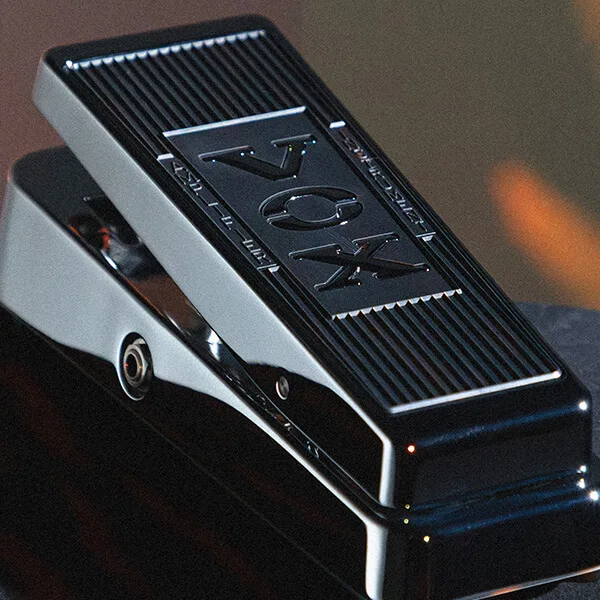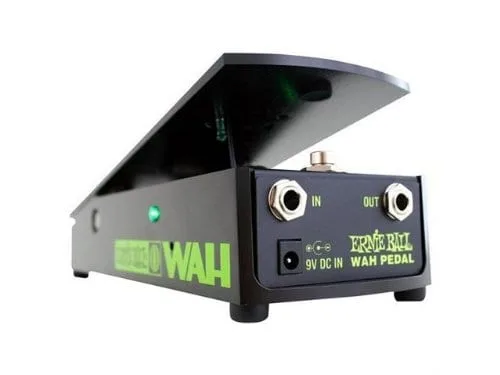
What a wah does
A wah is a filter you play with your foot. Technically, it is a band-pass filter that rolls off both treble and bass and creates a resonance peak that you sweep up and down as you rock the pedal1. Vox describes the effect as a shifting band-pass filter with a highly resonant peak2. JHS puts it more plainly: a wah is a variable mid-frequency equalizer with a boost attached3.
The sound was not originally aimed at guitar. The wah was made to replicate the sound of a trumpet, and its inventor intended it for trumpet players34. On guitar it produces the vocal, crying sweep heard all over funk and rock records. One of the first recordings of the effect on electric guitar was "Burning of the Midnight Lamp" by the Jimi Hendrix Experience, released in 19675.
Mechanically, most wahs since the late '60s have used the same idea: a rocking footbed attached to a potentiometer, running the signal through a capacitor to attenuate the high end6. You rock the pedal with your foot to sweep the frequency, which is why the design borrowed an organ's volume pedal from the start7.
Where a wah goes in the signal chain
The near-universal advice is to put the wah early in the chain:
- JHS: put your wah pedal first, then all your other pedals after it3.
- BOSS: place this filter effect directly after the tuner and before the drive section, so the signal frequency is optimized before overdrive, distortion or fuzz pedals shape it8.
- Guitar World: a standard wah pedal generally sounds best in the very front of the signal chain, with a pitch shifter or harmonizer placed in front of it if you use both9.
Most wah pedals have an inductor in their circuitry, and an inductor is essentially a coil of wire that can act like an antenna. Morley advises not placing a wah above or next to a power supply10.
Who invented the wah pedal
The wah was an accident. The Wah-Wah pedal was invented in November 1966 by Lester Kushner and Brad Plunkett, working at Warwick Electronics, a division of Whirlpool that owned Thomas Organ Company and Vox11. Vox's own history says the effect was discovered during the design of the VOX Super Beatle amplifier in 19662.
The commonly told version: in 1965, engineer Brad Plunkett was reworking a Vox amp to make it cheaper to produce, and while replacing the amp's midrange boost switch with a potentiometer he found that sweeping the frequency created a dramatic "wah" tone7. His solution was to adapt an organ's volume pedal to control the circuit with a foot, and the first wah pedal was born7. JHS dates the invention to 1966, with Vox producing it as a product in 196712.
Wah on bass
Wah is not just a guitar effect. Wah has been popular with both funk and rock bassists since the early 70s, when Bootsy Collins and Geezer Butler turned players on to it13. Several makers now build dedicated bass wahs:
| Pedal | What the maker says |
|---|---|
| Dunlop Cry Baby Bass Wah | "The first wah pedal designed by bass players for bass players."4 |
| Caline CP-72 Bass Wah/Vol | A wah response tailored for bass plus a volume function, usable in clean or gain settings14 |
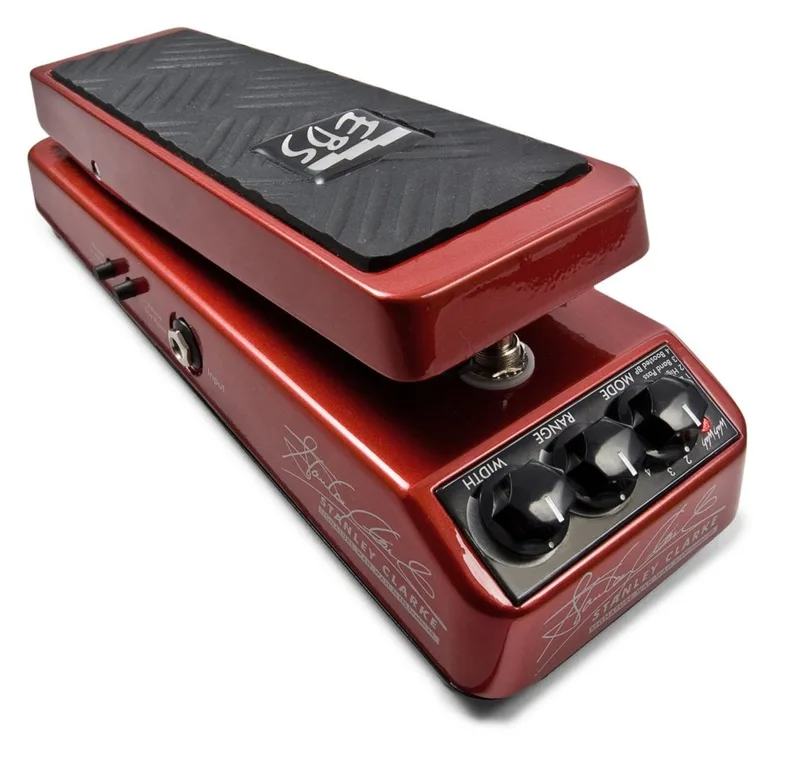
| EBS Stanley Clarke Wah/Tone Filter | A signature wah/tone filter that can also be used as a volume pedal |
JHS's buying advice cuts against the combination units: don't buy a device that does wah and volume, because you end up with a "jack of all trades, master of none" situation; buy a dedicated wah3.
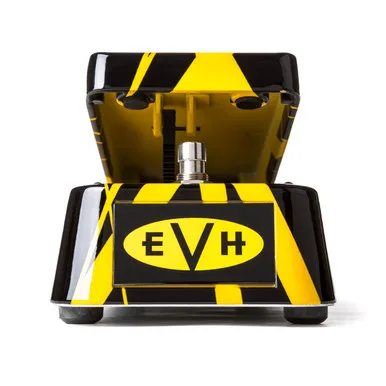
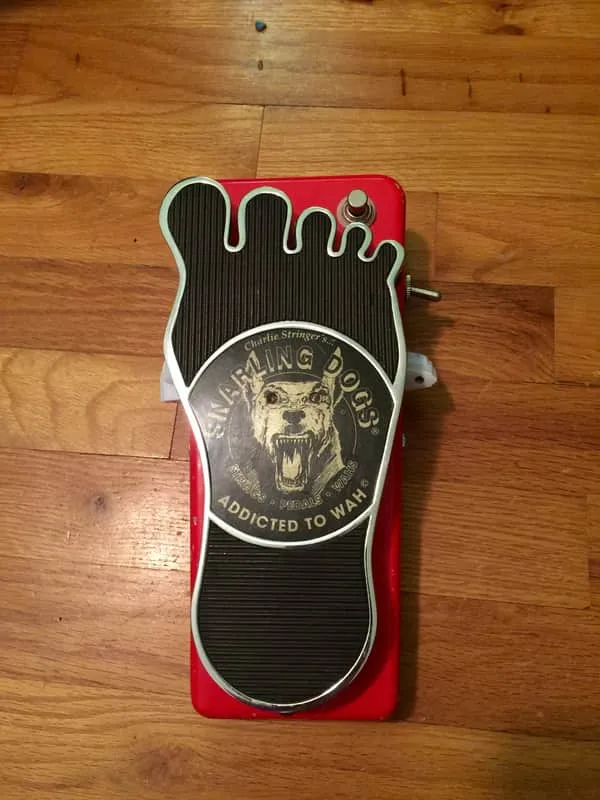
For more on specific models, see the Dunlop EVH-95 Eddie Van Halen Signature Wah Wah, the Snarling Dogs Super Bawl Whine-O Wah and the Vox Wah Wah, or browse all bass pedals.
Questions
Where should a wah pedal go in the signal chain?
Most advice puts the wah at the very front of the chain, directly after the tuner and before your drive pedals. JHS recommends putting the wah first with everything else after it, and BOSS says placing it after the tuner and before the drive section optimizes signal frequency before distortion shapes it. One practical warning: most wah circuits contain an inductor that can act like an antenna, so keep the pedal away from power supplies.
Who invented the wah pedal?
The wah was invented in November 1966 by Lester Kushner and Brad Plunkett, engineers at Warwick Electronics, a division of Whirlpool that owned Thomas Organ Company and Vox. Plunkett discovered the effect while reworking a Vox amplifier circuit, and the design was finished by adapting an organ volume pedal so a player could sweep the frequency with a foot.
Is a wah pedal used on bass?
Yes. Wah has been popular with funk and rock bassists since the early 70s, when players like Bootsy Collins and Geezer Butler made it part of the sound. Several makers build dedicated bass wahs, including the Dunlop Cry Baby Bass Wah, described by Dunlop as the first wah designed by bass players for bass players.
Sources (14)
- All About… Wah, Guitar.com, 2015-11-30
- The VOX Amps Wah Wah Pedal Story, Vox Amps (voxamps.com), 1966
- 5 REASONS TO WAH, JHS Pedals
- CRY BABY® BASS WAH, Dunlop (www.jimdunlop.com)
- NEXI Celebrates Wah Pedal's 50th Anniversary with New Analog Wah, Guitar World, 2017-03-21
- Electro-Harmonix Crying Bass Review, Premier Guitar, 2014-09-01
- The Best Wah Wah Pedals for Iconic Guitar Tones: Cry Baby and Beyond, gearnews.com, 2025-08-18
- The Ultimate Guide to Guitar Effects Pedal Order and Signal Chain, BOSS (articles.boss.info), 2023-03-01
- Guitar pedal order: how to arrange your pedalboard, Guitar World, 2019-09-24
- How to get rid of Hum, Morley
- Dunlop CryBaby GCB-95 Cicuit Analysis, GuitarPCB, 1966
- HISTORY OF THE WAH PEDAL, JHS Pedals
- Dunlop CBM105Q Cry Baby Bass Mini Wah Review, Guitar.com, 2017-10-04
- CP-72 Bass Wah/Vol 2 in 1 by Caline, RockBoard PedalPedia, 2026