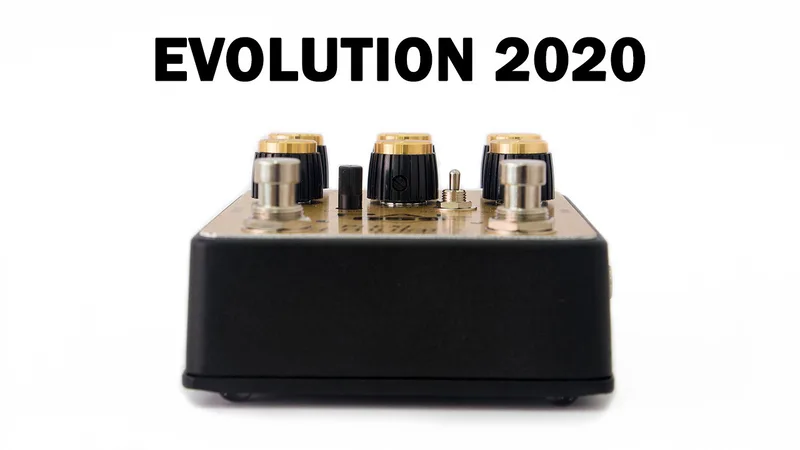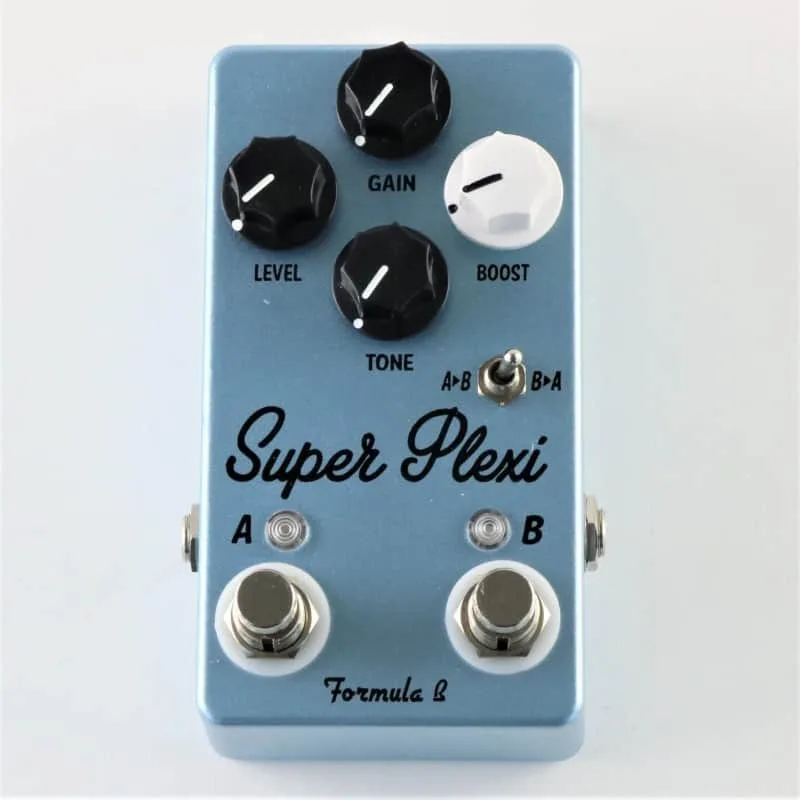



The Formula B Super Plexi Overdrive is a two-channel overdrive pedal with a clean boost on one side and a Marshall JTM45 emulation on the other. Each channel has its own footswitch, so the two halves work on their own or stacked, and a SPLIT toggle on the front sets which one comes first in the chain when both are running1.
What sets it apart from most overdrives is how it gets its Plexi character. Rather than the opamp-and-diodes approach common in overdrive pedals, Formula B built it with the JTM45 circuit in mind, replacing the tubes with transistors chosen to mimic the character of the tubes1.
The two channels
Channel A is the overdrive side, the Plexi-tone voice of the pedal. Its controls are simple: a Level knob sets the output level1.
Channel B is a clean boost with a single knob that increases the volume without touching the tone, so it can push an amp or the overdrive channel harder without adding color of its own1.
| Channel | What it does | Controls | Footswitch |
|---|---|---|---|
| A: Overdrive Plexi-Tone | JTM45-style overdrive | Level (output level) | Own footswitch12 |
| B: Clean Boost | Volume increase with no tone change | Single volume knob | Own footswitch1 |
Because each channel is standalone, you can use the boost alone as a straight volume lift for solos, run the overdrive alone, or combine them1.
The SPLIT switch
The SPLIT toggle chooses the order of the two channels when both are engaged, and it changes the result more than you might expect from a simple routing switch1:
- B channel (Clean Boost): A single knob increases the volume without touching the tone1.
- Power: The pedal runs on a standard DC 9v supply with a negative tip1.
- Reception: The pedal is getting some positive reviews from YouTubers, with videos featured on the maker's page1.
For a player, that means the same two channels give two different stacked sounds: a louder, pushed overdrive in one direction, and a hotter input hitting the drive circuit, changing how it responds to picking dynamics, in the other1.
The Marshall JTM45 circuit it is based on
The JTM45 is the head version of the amp behind the Blues Breaker sound, as That Pedal Show's Mick and Dan put it when surveying Marshall-style overdrive pedals3. Its lineage goes back further: the circuit was based on the '59 Fender Bassman, which Jim Marshall used as the template for the first Marshall amps4.
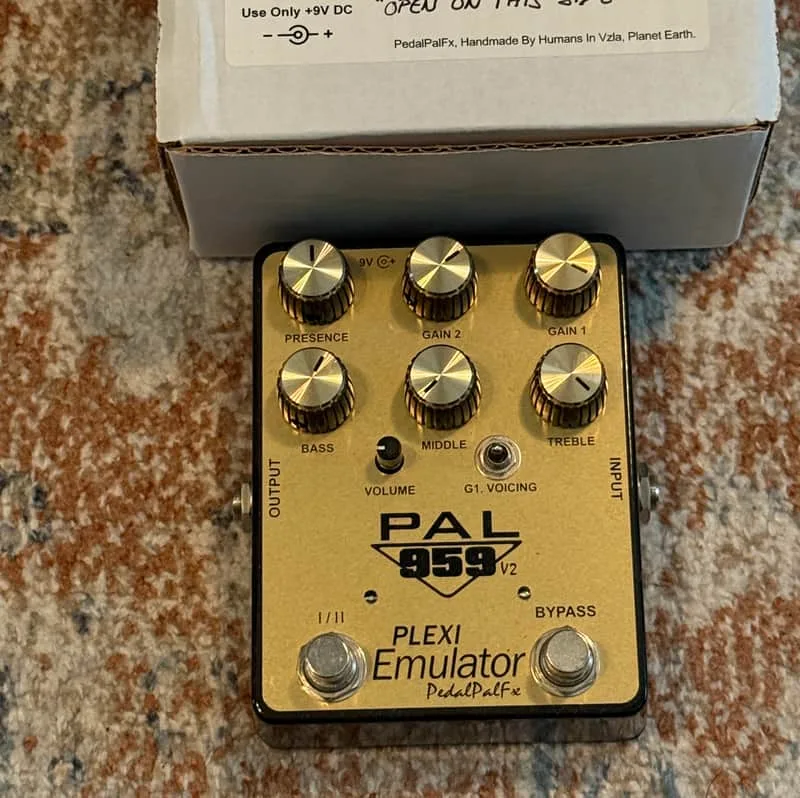
A pedal built around that circuit is aiming at the voice of those first Marshall heads rather than the later higher-gain models. The Super Plexi Overdrive takes the circuit and swaps the tubes for transistors, an approach other makers have taken as well: PedalPalFx describes its PAL959 PLEXI Emulator as using especially selected transistors instead of vacuum tubes5, and Delicious Audio noted the same approach there in 20186.
What is a Plexi-style pedal?
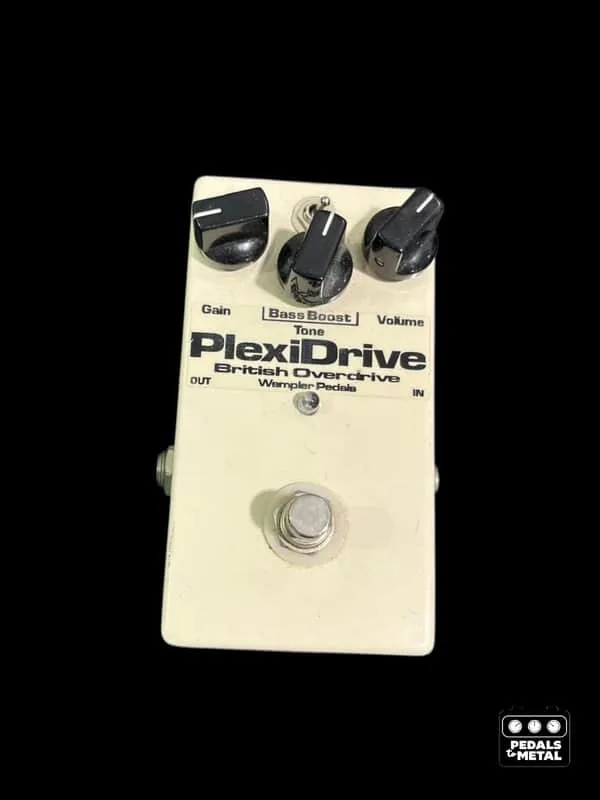
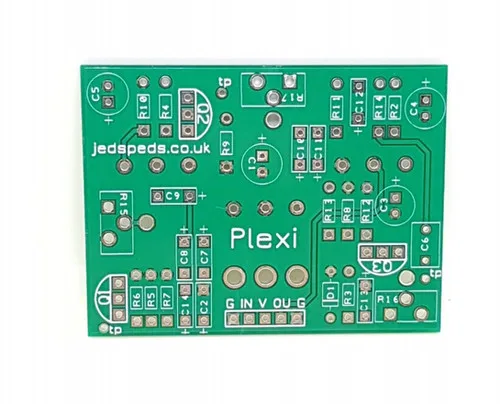
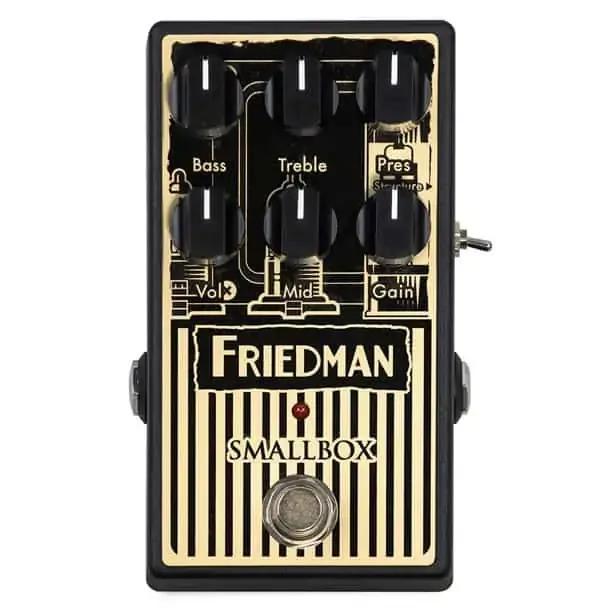
"Plexi" in pedal names refers to classic Marshall tones, and the JTM45 is the usual reference point. Jeds Peds, for instance, sells its Jeds Peds Plexi as a JTM45 styled "Plexi in a box" overdrive2. Pedals in this family include the PedalPalFx PAL 959 Plexi Emulator Overdrive, the PedalPalFx PAL959 PLEXI Emulator, the PedalPalFx PAL959-V2 PLEXI Emulator, the PedalPalFx PAL987 PLEXI CARRERA, the Friedman Smallbox Plexi Overdrive and the Wampler Plexi British Overdrive. Delicious Audio included the Super Plexi Overdrive in its guide to the best Plexi-style pedals1.
Power and bypass
The pedal runs on a standard DC 9V supply with a negative tip, the center-negative arrangement used by most modern pedals and pedalboard power supplies1. Switching is true bypass, so with both channels off the guitar signal passes through without the circuit in the way1.
The negative-tip 9V DC requirement means the pedal is built for a standard pedalboard power supply rather than a battery.
Reception
Delicious Audio reported in September 2020 that the pedal was getting some positive reviews from YouTubers, with demo videos featured alongside its write-up1.
Videos
Pete Thorn
Formula B pedals
AndyDemos
Questions
What does the SPLIT switch do on the Formula B Super Plexi Overdrive?
The SPLIT toggle sets the order of the two channels when both are on. In the A>B position the overdrive gets boosted by the clean boost, which suits solos. In B>A the signal is boosted first and then hits the overdrive, fattening the tone and making it more touch sensitive. The switch has no effect when only one channel is engaged.
Is the Formula B Super Plexi Overdrive true bypass?
Yes, the pedal uses true bypass switching, so with both channels off the signal passes through without the circuit coloring it.
Can the two channels be used separately?
Yes. The two channels are standalone: channel A is the Plexi-tone overdrive and channel B is a clean boost, and each channel has its own footswitch, so you can run either one on its own or both together.
Does the Super Plexi Overdrive use tubes or transistors?
It uses transistors. The circuit was built with the Marshall JTM45 in mind, replacing the tubes with transistors chosen to mimic the character of tubes, rather than using opamps as most overdrive pedals do.
What polarity does the Super Plexi Overdrive need?
It runs on a standard 9V DC supply with a negative tip, the same center-negative arrangement most pedalboard power supplies use.
What is a Plexi-style pedal?
A Plexi-style pedal is an overdrive or distortion pedal built to recreate the sound of classic Marshall amps, in particular the JTM45 and later Plexi-panel heads. The JTM45 itself traces back to the 1959 Fender Bassman circuit, which Jim Marshall used as the template for his first amps.
Sources (6)
- Formula B Super Plexi Overdrive, Delicious Audio, 2020-09-29
- Plexi | DIY Guitar Effects Pedal Kits, Jeds Peds
- Marshall Blues Breaker Style Overdrive Pedals: The Current Faves, That Pedal Show, 2018-12-07
- ZVEX Effects Releases the Vertical Vexter '59 Sound, Premier Guitar, 2018-03-02
- PedalPalFx, PedalPalFx
- PedalPalFX PAL 959 Plexi Emulator Overdrive, Delicious Audio, 2018-05-09