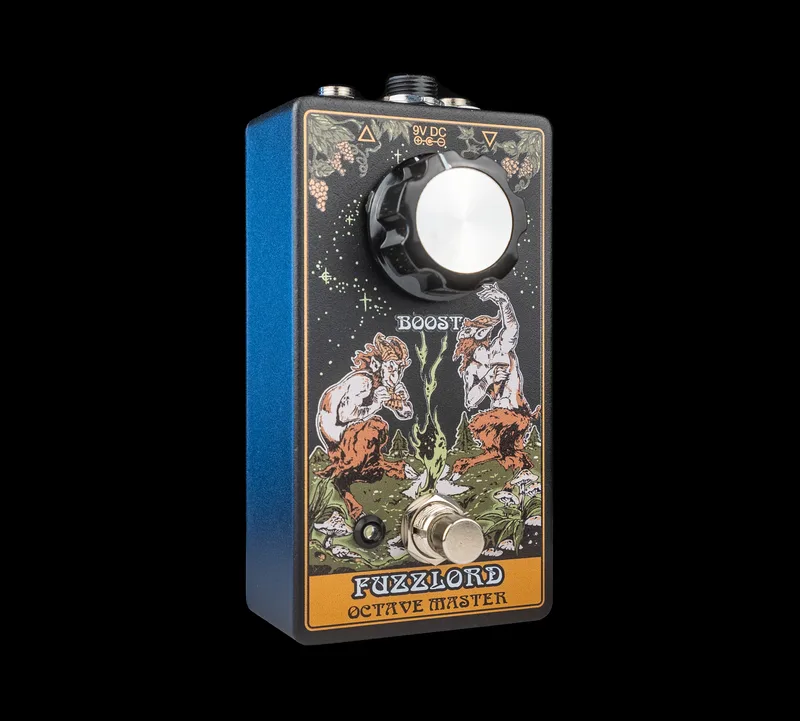


The Fuzzlord Effects Octave Master is an all-analog octave up boost pedal, a single-knob unit that doubles your note an octave up and pushes your amp or the pedals after it at the same time. Fuzzlord describes the heart of the pedal as "a ring-modulated analog octave-up effect," and the maker positions it both as a standalone octave voice and as a dirty boost engineered to complement fuzz, distortion and overdrive pedals1. It belongs to the broader family of octave and pitch pedals and, on the boost side, boost pedals.
What it does to your sound
An octave-up circuit takes the note you play and generates a second note one octave above it, so single-note lines come out with a bright, doubled edge. RockBoard's PedalPedia says the Octave Master is dialed in to provide "the most analog octave up available in this style of pedal," and RockBoard's listing describes it as a true bypass analog octave up dirty boost2. On bass, the maker's claim is that "it unlocks synth-like overtones and gives you razor-sharp definition without sacrificing low-end mass"1, which puts it in the same territory players reach for with bass pedals built around octave-up textures.
The single control is the BOOST knob, which Fuzzlord describes as the overall boost control to adjust how hard you drive the octave circuit1. That makes the pedal a two-in-one by intent: back the knob off and you get the octave effect on its own; push it and the pedal becomes a boost driving whatever comes after it. RockBoard summarizes the two roles as "whether used standalone for spine-tingling octave tones or as a driving force for your other Fuzz/Distortion/Overdrive p[edals]"2.
The Green Ringer circuit behind it
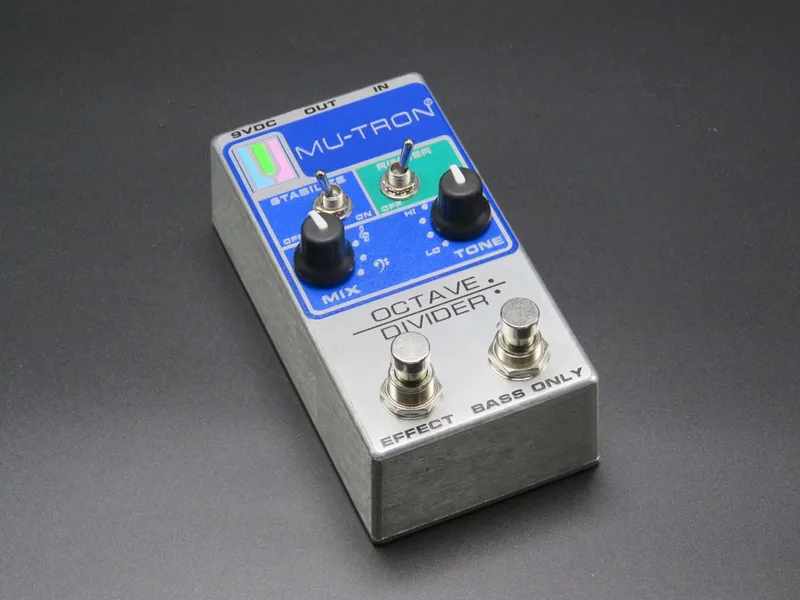
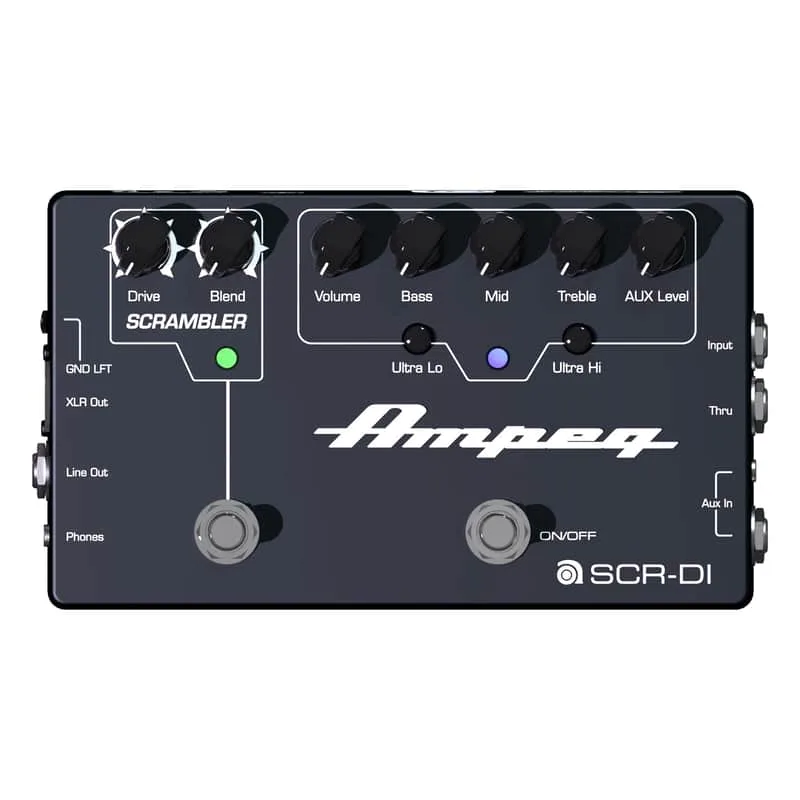
The Octave Master's circuit is an all-analog boost with vintage-inspired octave-up modulation, according to Fuzzlord Effects1. It draws on the Green Ringer, a vintage analog octave-up effect whose name may be a trademark of Dan Armstrong Effects, an unaffiliated company3. The Green Ringer has been described as a ring modulator4, and it has its own lineage: in a review of the Mu-FX Octave Divider, Premier Guitar notes "the Green Ringer circuit, itself 'inspired' by the earlier Ampeg Scrambler"5. A Coda Effects technical write-up calls it "a small, but efficient analog octaver circuit"6.
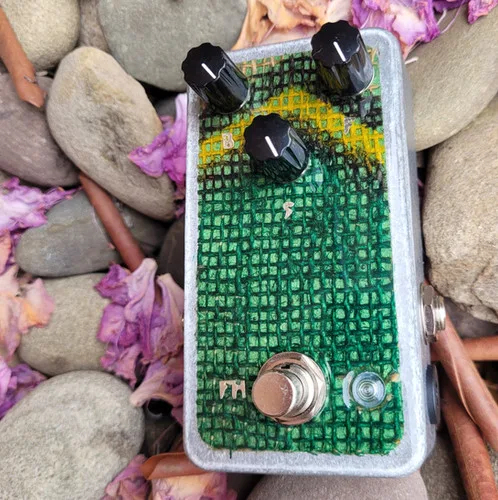
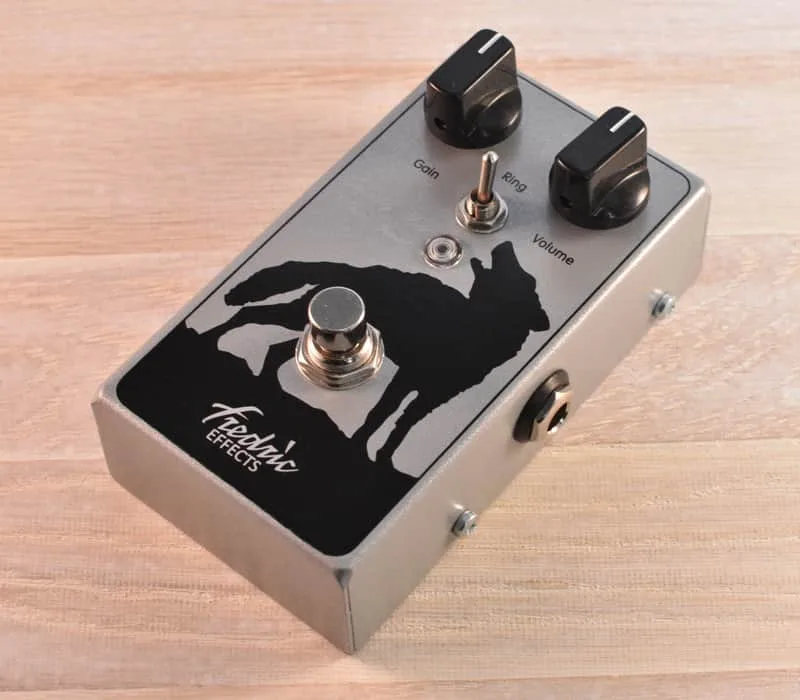
That lineage explains what the Octave Master is and is not. It is not a polyphonic pitch shifter that tracks chords; it is a small analog octave-up circuit in the Green Ringer tradition, where the octave note is generated by the interaction of the input signal with itself, which is why the effect behaves most musically on single notes. Fuzzlord's own description of the topology, "a ring-modulated analog octave-up effect," points at the same mechanism1. Other builders work in the same territory: FuzzHugger, for instance, sells its own frequency doubler in this family and notes that it "does not own the name 'Green Ringer,' which may be a trademark of Dan Armstrong Effects, an unaffiliated company"7.
Controls, power and switching
The Octave Master keeps the control set to one knob, which is typical of Green Ringer-style designs where the octave content is fixed by the circuit and the player shapes only the drive into it12.
| Control | What it does |
|---|---|
| BOOST | Overall boost control to adjust how hard you drive the octave circuit1 |
Power and switching details from the maker and RockBoard:
- Power: 9V DC, center negative, 2.1mm connector; Fuzzlord specifies an isolated power supply1
- Current draw: 30mA2
- Circuit type: Analog2
- Switching: True bypass soft switching1
Fuzzlord specifies an isolated 9V center negative supply for the Octave Master1. With a 30mA draw2, give it its own output on your power supply rather than sharing one, and note that the maker's page does not list battery operation.
The enclosure carries a durable powder coat finish with UV printed artwork, and the pedal has been offered in Black and Bronze color options1.
Availability
The Octave Master is a small-builder product from Fuzzlord Effects, so production tends to appear in runs rather than continuously. Its analog circuit draws about 30mA1.
Videos
Fuzzlord Effects
Fuzzed Drones
PedalTVchannel
Questions
Is the Fuzzlord Octave Master true bypass?
Yes. Fuzzlord specifies true bypass soft switching on the Octave Master, and RockBoard's PedalPedia listing describes it as a true bypass analog octave up dirty boost. With the effect disengaged, the pedal passes your guitar signal without loading it, which matters on a crowded board where long cable runs and multiple buffers can dull the top end.
What power does the Fuzzlord Effects Octave Master need?
The Octave Master runs on a 9V DC center negative supply with a 2.1mm connector, and Fuzzlord specifies an isolated power supply. RockBoard lists the current draw at 30mA. There is no mention of battery power, so plan a dedicated isolated output on your power supply rather than a daisy chain.
Can the Octave Master be used as a boost into other pedals?
Yes. Fuzzlord says the pedal is engineered to complement fuzz, distortion and overdrive pedals, and the Boost knob adjusts how hard you drive the octave circuit. RockBoard describes it as usable standalone for octave tones or as a driving force for other fuzz, distortion and overdrive pedals.
Is the Fuzzlord Octave Master based on the Dan Armstrong Green Ringer?
RockBoard's PedalPedia entry says the Octave Master draws inspiration from the legendary Dan Armstrong Green Ringer. The Green Ringer is a vintage analog octave-up circuit that combines distortion with a ring modulator-like effect, itself inspired by the earlier Ampeg Scrambler, so the Octave Master sits in that same small analog octaver lineage.
Sources (7)
- Octave Master Boost, Fuzzlord Effects, 2022-03-28
- Octave Master by Fuzzlord Effects, RockBoard PedalPedia, 2026
- Dan Armstrong stomp boxes, MusicRadar, 2008-02-21
- Builder Profile: The Mu-tron Story, www.premierguitar.com, 2013-09-12
- Mu-FX Octave Divider Review, Premier Guitar, 2015-06-09
- Coda Effects, Coda Effects, 2017-01
- FuzzHugger Upper frequency doubler / octave up, FuzzHugger Effects