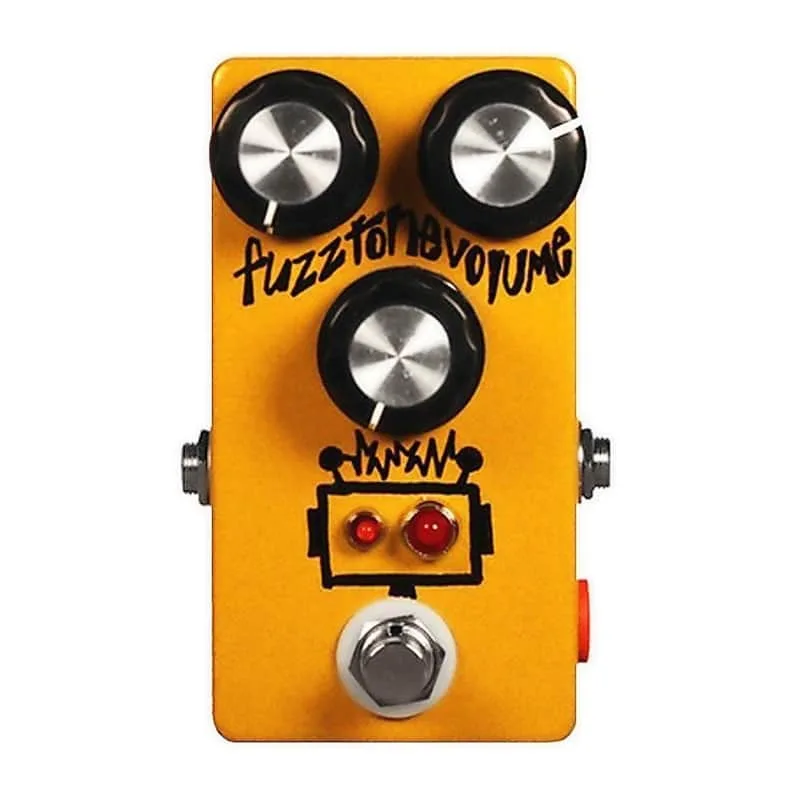


The Hungry Robot [fz] Fuzz is a fuzz pedal from Hungry Robot Pedals, and it is not a copy of anything. The maker's product page states plainly: "Not a muff, not a fuzzface, not a clone of any kind. It is a truly original fuzz design"1. Pedal of the Day's 2017 review reached the same conclusion, calling it "Definitely not your everyday Muff or Fuzzface clone" and "a totally unique fuzz circuit that isn't based on anything"2. For a player tired of the two fuzz families that dominate the market, that is the whole point of the pedal.
The [fz] also has a family history inside Hungry Robot's own range. The maker lays out the line this way: "First came the [lg], then the [hg], and now The Hungry Robot [fz]"1. The [hg+lg] model takes the two earlier circuits, replicates them, and combines them3, so the [fz] is the third step in a series rather than a one-off. The circuit was designed, in the maker's words, "from the ground up without trying to imitate a specific fuzz tone"1.
The controls
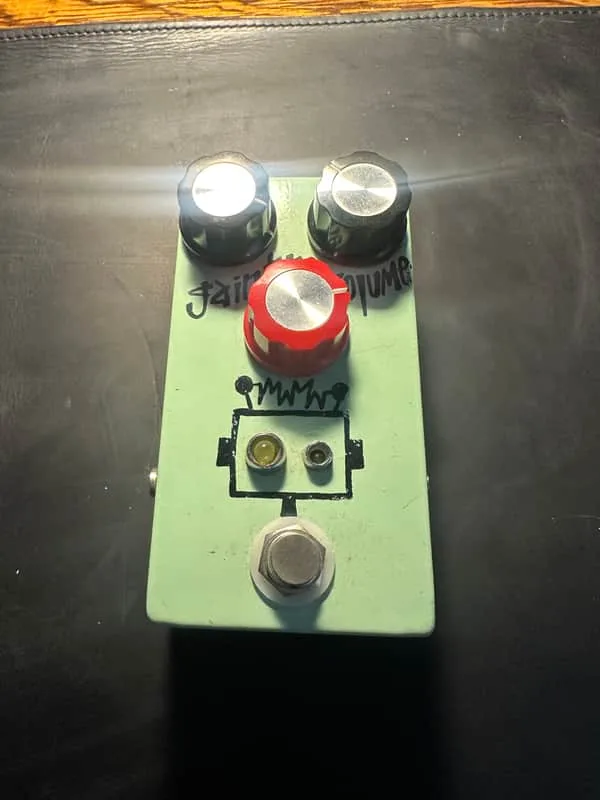
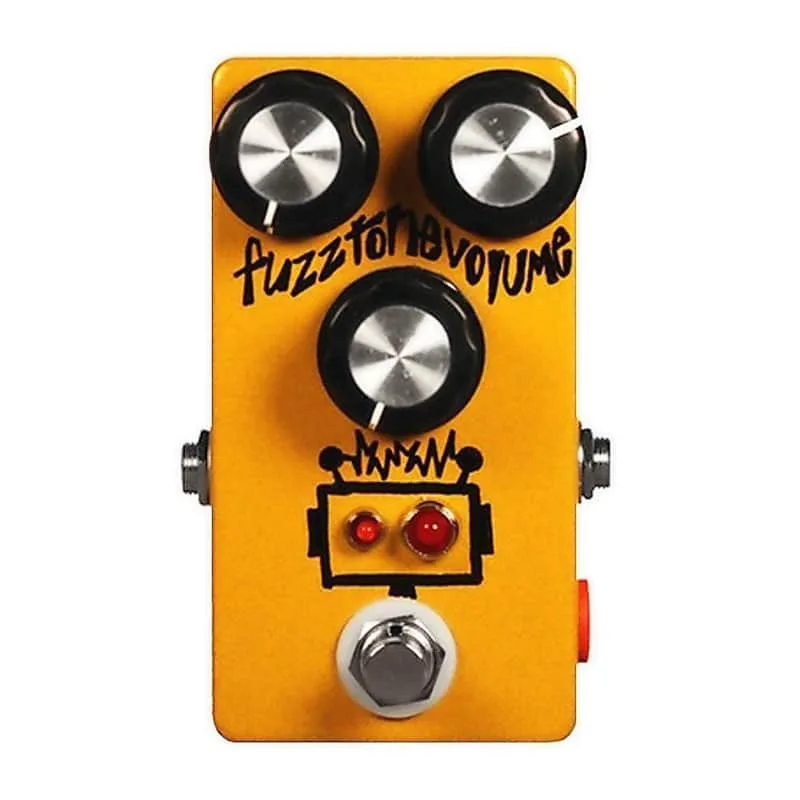
On the outside, the [fz] is deliberately simple. Hungry Robot describes it as having "narrowly focused, predictable external controls (fuzz,tone,volume)"1, and Pedal of the Day found the same three knobs, "with Fuzz, Tone and Volume popping up as the usual suspects"2.
| Control | What it does |
|---|---|
| Fuzz | Sets the amount of fuzz1 |
| Tone | Shapes the pedal's tone1 |
| Volume | Sets the output level1 |
The maker's phrase "narrowly focused, predictable" is worth reading closely: the external panel behaves the way you expect a fuzz to behave, and the deeper shaping happens elsewhere1.
The six internal dipswitches
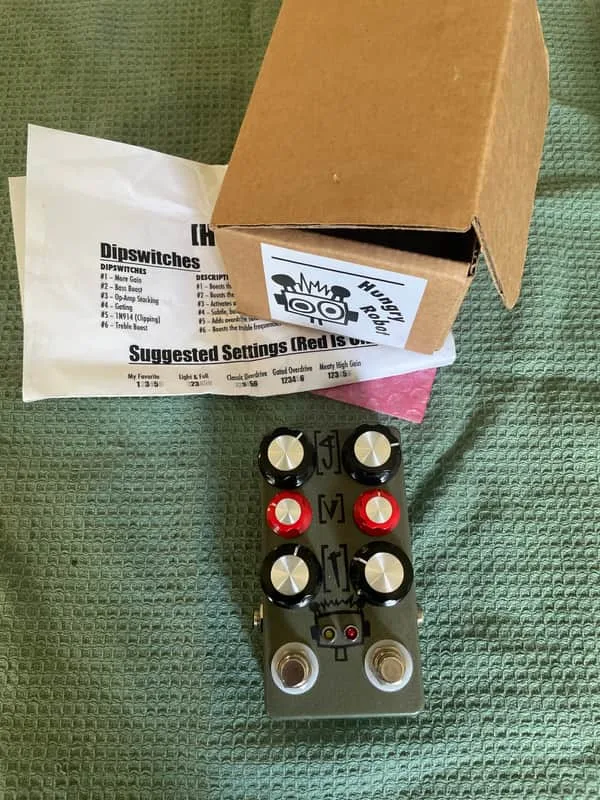
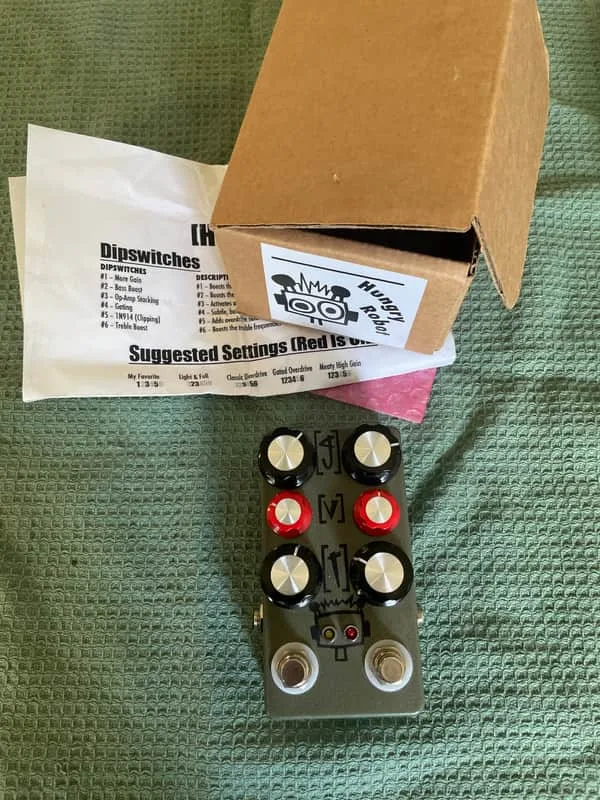
The real flexibility is inside. Hungry Robot says the pedal has "6 internal dipswitches for tone shaping that allows you to fine-tune the fuzz to match your mo[od]"1. The idea comes from the earlier models: on the original Hungry Robot, "the key to The Hungry Robot's versatility comes from the six internal dipswitches. Each dipswitch modifies a section of" the circuitry4. Pedal of the Day found the same approach on the [fz]: "Six internal dipswitches allow you to completely customize the sounds that pour out of the [fz]"2.
The switches are named for what they change2:
- More Fuzz
- Tame Harmonics
- Dark Clipping
- Upper Mids Boost
- Bright Clipping
- Compression
The dipswitches are internal, so changing them means opening the pedal. If you like to reshape your sound between songs, the external knobs are what you get on the fly; the dipswitches are set-and-forget voicing choices.
If that sounds like a lot of combinations to explore, the manual helps: Pedal of the Day notes that "The manual even comes with a few examples to help get you going, offering up 5 different settings"2.
What reviewers said
Pedal of the Day's review is the main published verdict. On the character of the fuzz, the reviewer found it "creating warm and bold tones without any harsh side effects or overly treble-y tones"2. The same review is candid about noise: "it has some power and hiss hidden inside, and is not a pedal for anyone who needs it quiet"2. Players who need a silent rig should weigh that against the tone; players who accept fuzz hiss as part of the effect will find the trade spelled out clearly.
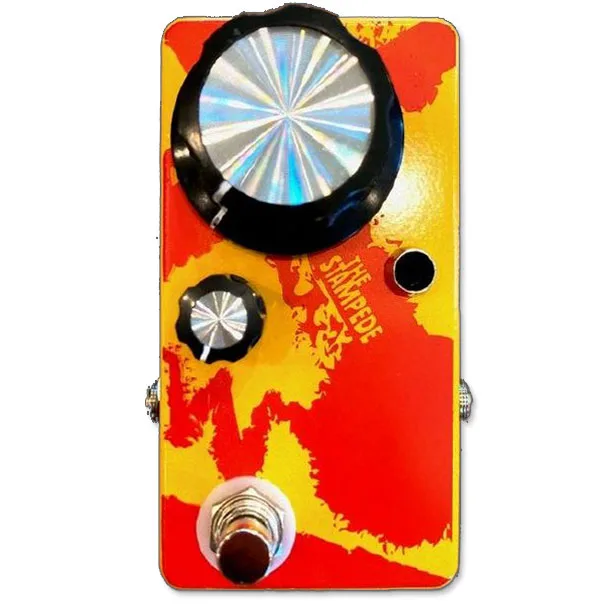
The [fz] is not the only fuzz in the current Hungry Robot range: the maker also offers The Collective and The Stampede. For how the [fz] sits among fuzz designs generally, see Fuzz Pedals.
Videos
Eirik Stordrange
Sean Gibson
JJ Tanis
Questions
Is the Hungry Robot [fz] based on a Big Muff or Fuzz Face?
No. Hungry Robot describes the [fz] as "not a muff, not a fuzzface, not a clone of any kind", and Pedal of the Day's review likewise calls it an original fuzz circuit that isn't based on anything. The designer says the circuit was built from the ground up without trying to imitate a specific fuzz tone, so it sits apart from the familiar Muff and Fuzz Face families.
What do the dipswitches do on the Hungry Robot [fz]?
There are six internal dipswitches, and each one modifies a section of the circuitry for tone shaping. According to Pedal of the Day, the switches control More Fuzz, Tame Harmonics, Dark Clipping, Upper Mids Boost, Bright Clipping and Compression. Together they let you fine-tune the fuzz well beyond what the three external knobs reach.
Is the Hungry Robot [fz] noisy?
Pedal of the Day's review found that the [fz] has some power and hiss hidden inside, and is not a pedal for anyone who needs it quiet. The same review describes its tones as warm and bold, without harsh side effects or overly trebly character, so the noise sits alongside a full-sounding fuzz rather than a harsh one.
Does the manual include dipswitch settings to start from?
Yes. Pedal of the Day notes that the manual comes with example settings, offering five different dipswitch configurations to show exactly what the pedal can do. That gives you a set of starting points before you begin dialing in your own combinations.
Sources (4)
- Hungry Robot FZ, Hungry Robot
- Hungry Robot Pedals fz Hungry Robot Fuzz, Pedal of the Day, 2017-06-26
- Hungry Robot HG+LG, Hungry Robot
- Hungry Robot LG, Hungry Robot