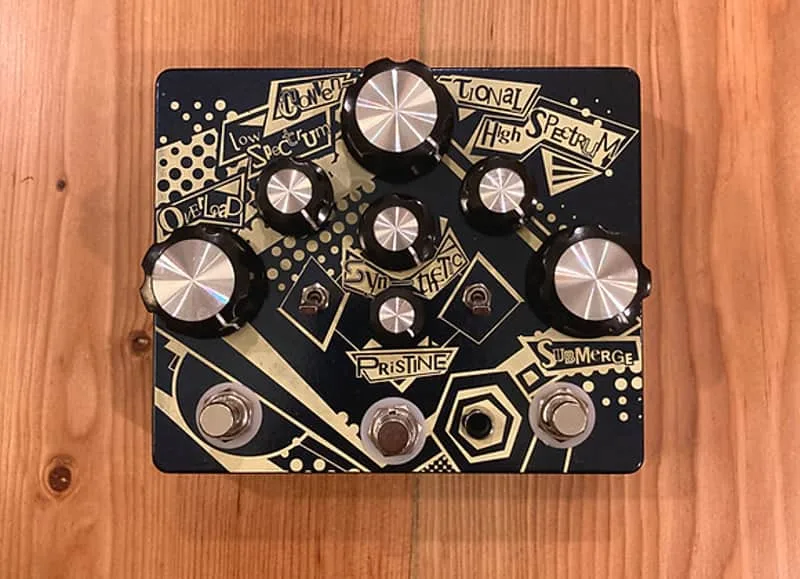


The Collective is a fuzz pedal from Hungry Robot that puts three fuzz circuits in one box. A conventional fuzz runs through a two-band filter and sits in parallel with two synth-like CMOS fuzzes, one of which is a sub-octave, so a single stompbox can cover everything from a bread-and-butter fuzz tone to gated, glitchy synth textures12.
Three fuzz circuits in one box
The heart of the pedal is a conventional fuzz whose output feeds a two-band State-Variable Filter, running in parallel with two CMOS-based fuzzes2. Hungry Robot describes the Conventional knob as a traditional sounding fuzz, meant to balance out the more chaotic fuzz tones and provide a bread-and-butter sound1. The Synthetic knob is a logic based CMOS fuzz, and the maker says its tones can be described as "velcro-ey, synth-ey, gate-ey, and glitch-ey"1.
The third circuit, Submerge, is a monophonic sub-octave fuzz. It is also CMOS-based, so it produces similar gated, unstable tones an octave down1.
On top of the fuzzes sit two more tools for shaping the sound:
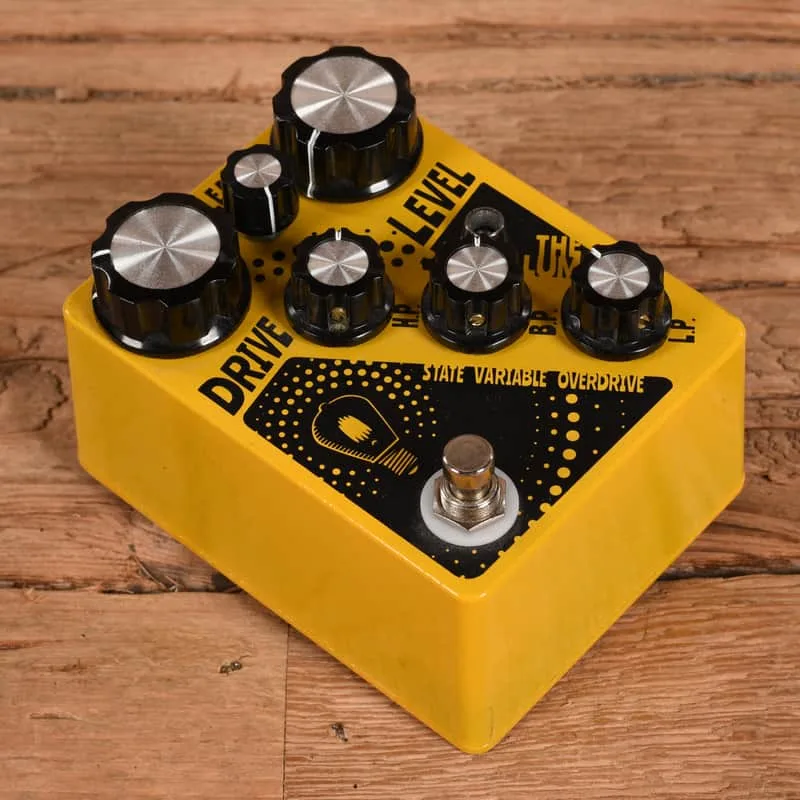
- State-Variable Filter: the Low Spectrum and High Spectrum knobs are part of an active State-Variable Filter, similar to the one found on Hungry Robot's The Lumen13.
- Pristine knob: blends in your clean signal when you need a bit of pureness to balance out the craziness1.
- Overload feedback loop: the output of the fuzz is fed back into the input, causing self-oscillation and what the maker calls "some gnarly textures"1.
The controls and footswitches
| Control | What it does |
|---|---|
| Conventional | Adjusts the volume of the Conventional Fuzz1 |
| Submerge | Sets the amount of the monophonic sub-octave fuzz sent to the output1 |
| Overload | Controls how much feedback is looped back into the front end when Overload is active1 |
| Low Spectrum / High Spectrum | Two bands of the active State-Variable Filter13 |
| Pristine | Blends in the clean signal1 |
| Latching toggle next to Overload | Latches the Overload effect ON when up; when down, the effect is bypassed1 |
The pedal has three footswitches. The middle one is master bypass1. The footswitch below Overload gives momentary control of the Overload effect, doing the opposite of what the toggle mode is set to, and the footswitch below Submerge does the same for the Submerge effect1. As Griffin Jennings put it in Delicious Audio's fuzz buying guide, "The left footswitch triggers self-oscillation, and the right one adds the sub-octave - they can both be set in momentary" or latch-on modes2.
The feedback loop can also be engaged without the footswitch. Gearnews noted that "if you prefer, you can latch the feedback loop permanently on by flipping the toggle switch upwards"3.
At the time the pedal was announced, its list price had not been confirmed: the published specification sheet gives the RRP as "TBC"3.
Power and size
The Collective runs on 9V DC with a negative center 2.1mm barrel connector and draws 97 mA1. That draw is high enough that a low-current daisy-chain output may not be enough on its own. The enclosure measures 5.7" x 4.7"1.
Where it sits in Hungry Robot's range
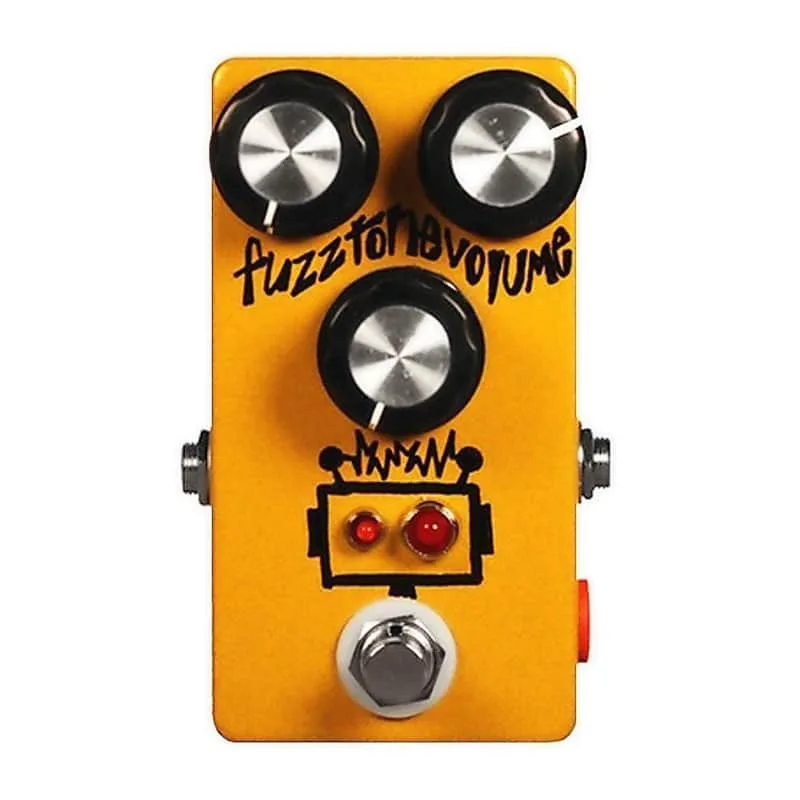
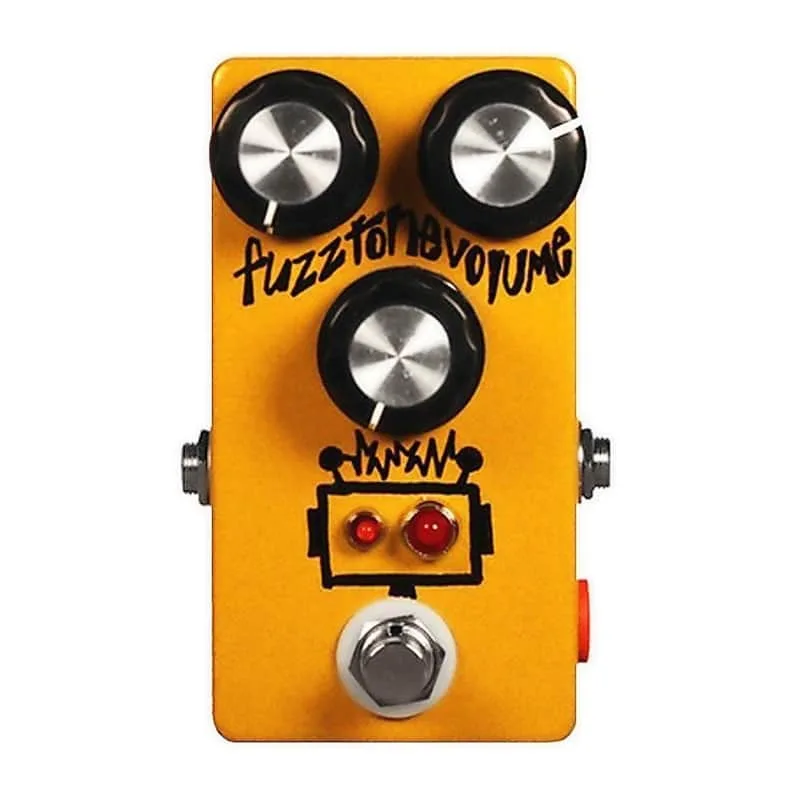
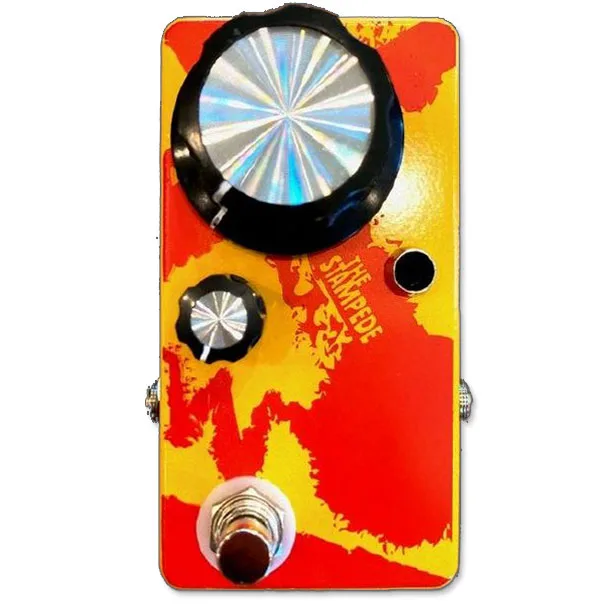
The Collective's CMOS side shares its character with other Hungry Robot fuzz designs. The maker's earlier FZ was an original fuzz circuit, and The Stampede is a two-knob glitchy square-wave CMOS fuzz in the same family of gated, unstable tones2. If the Collective's synthetic side appeals but you want something smaller, The Stampede is the simpler take on that idea.
Videos
Guy Incognito
Guy Incognito
Guy Incognito
Questions
What are the three fuzzes in the Hungry Robot The Collective?
The Collective holds three fuzz circuits in one box. The Conventional knob is a traditional sounding fuzz meant to balance out the more chaotic tones. The Synthetic knob is a logic based CMOS fuzz with gated, unstable character. The Submerge knob controls a monophonic sub-octave fuzz that is also CMOS-based, so it shares that gated, unstable quality an octave down.
What does the Overload footswitch do on The Collective?
The footswitch below Overload gives momentary control of the Overload effect, doing the opposite of whatever the latching toggle next to it is set to. The Overload circuit feeds the fuzz's output back into its input, causing self-oscillation, and the Overload knob sets how much feedback is looped back when the effect is active.
How much current does The Collective draw?
Hungry Robot lists the current draw at 97 mA. The pedal runs on 9V DC with a negative center 2.1mm barrel connector, so it needs its own supply output or a daisy chain with enough headroom rather than a low-current supply.
Does The Collective have a sub-octave?
Yes. The Submerge circuit is a monophonic sub-octave fuzz, CMOS-based like the Synthetic fuzz, so it produces similar gated, unstable tones an octave below your playing. The Submerge knob sets how much of that sub-octave signal is sent to the output.
Can the footswitches on The Collective work in momentary mode?
Yes. The footswitches below the Overload and Submerge sections give momentary control of their effects, each doing the opposite of what its latching toggle is set to. Delicious Audio notes that the left footswitch triggers self-oscillation and the right one adds the sub-octave, and that both can be set in momentary or latch-on modes.
Sources (3)
- The Collective, Hungry Robot Pedals
- The Best Crazy, Weird, And Unusual Fuzz Pedals In 2024, Delicious Audio, 2024-10-24
- Hungry Robot teases The Collective: A new Fuzz-tastic pedal, gearnews.com, 2021-11-25