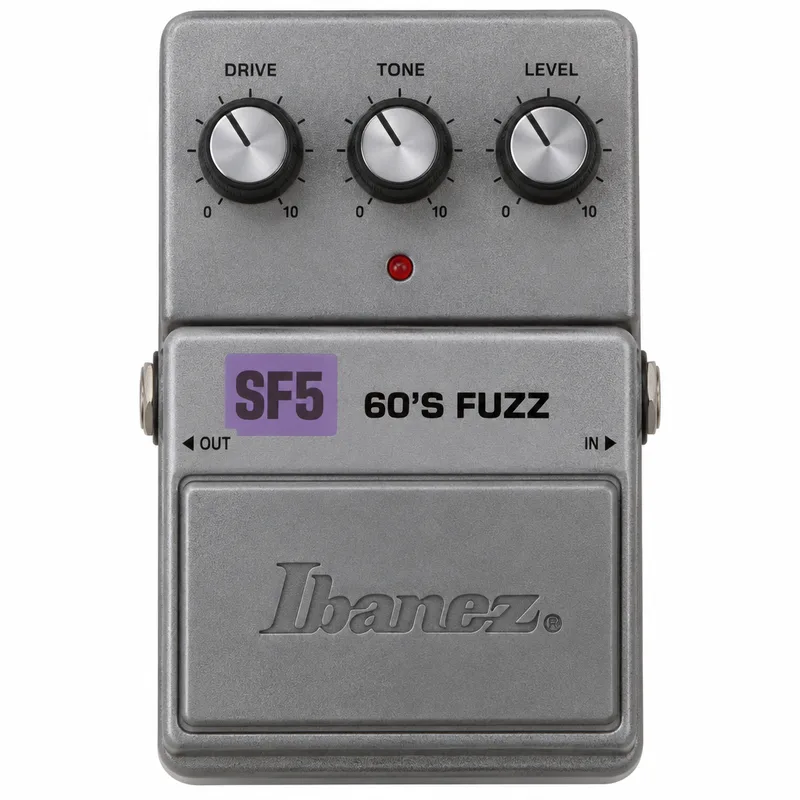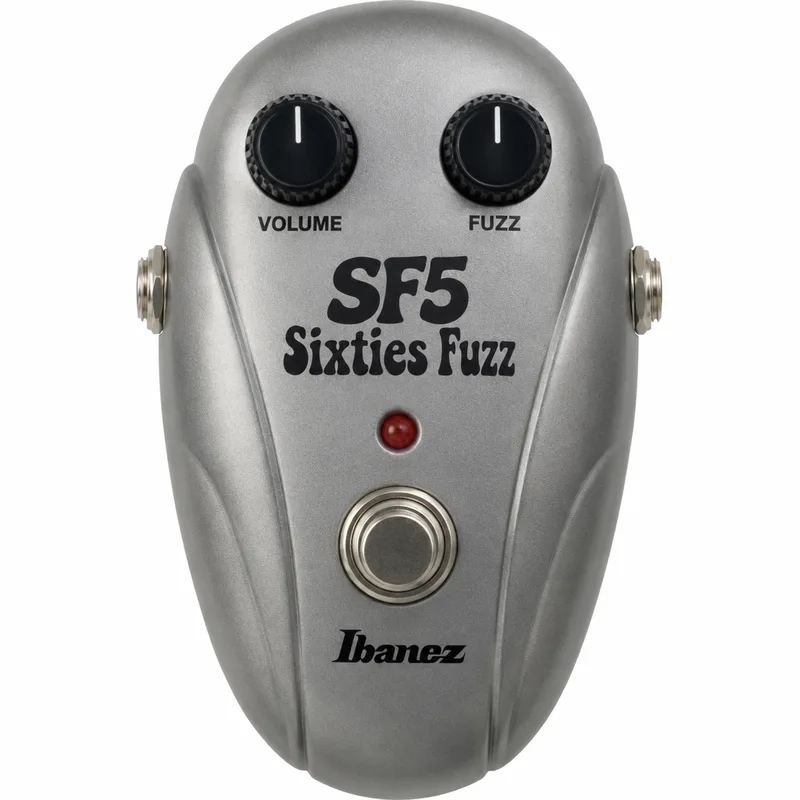


The Ibanez SF5 Sixties Fuzz is a fuzz pedal from Ibanez's 5 Series Soundtank line. TONEHOME describes it as "just a kind of Big Muff in disguise with a different tone circuit giving it more mids", and places its circuit lineage "somewhere between a Colorsound Jumbo Tone Bender, a BMP and an Ibanez OD850"1. Kit Rae, writing a history of Big Muff clones, adds that "the distortion section of the circuit is similar to the Maxon D&S first edition, and sounds nearly identical"2.
What it does to your sound
The SF5's selling point against a Big Muff is the tone circuit. The different tone circuit gives it more mids, and TONEHOME's verdict is that "it could do with slightly more output but the added mids make it very usable with an already crunching amp"1. In other words, where a Big Muff's mid scoop can disappear in a band mix, the SF5 sits forward a little more.
Kit Rae's take on the pedal is blunter: "The Ibanez SF5 60'S FUZZ was the 'poor mans OD-850'"2. His history also notes the pedal "includes a FETT electronic bypass circuit and buffer and momentary switch, similar to the OD-850 third edition/OD-801 third edition"2, so switching behavior follows the same electronic bypass approach as those Ibanez pedals of the era.
Metal-case originals and plastic-case reissues
The SF5 came in two versions, and the difference is the enclosure:
| Version | Years | Enclosure | Notes |
|---|---|---|---|
| Original | 1989 to 1990 | metal case | collectibility rated high1 |
| Reissue | 1992 to 1998 | plastic case | Soundtank economy line1 |
The dates line up roughly with Kit Rae's account, which dates the Soundtank SF5/FZ5 to circa 1990 to 1999 in two versions2. Of the Soundtank line generally, he writes that it "was the Ibanez economy line, housed in cheap plastic, beetle shaped enclosures, although the circuits were many of the same designs"2.
TONEHOME rates the metal case original's collectibility as high and the pedal's availability as rare1. A plastic case reissue is the more realistic find for a player who wants the circuit without a collector's price.
What it cost when new
TONEHOME lists a 1991 list price of 98 DM1, the German mark, from the pedal's original era. No US dollar list price is given.
Where it sits among Ibanez fuzzes
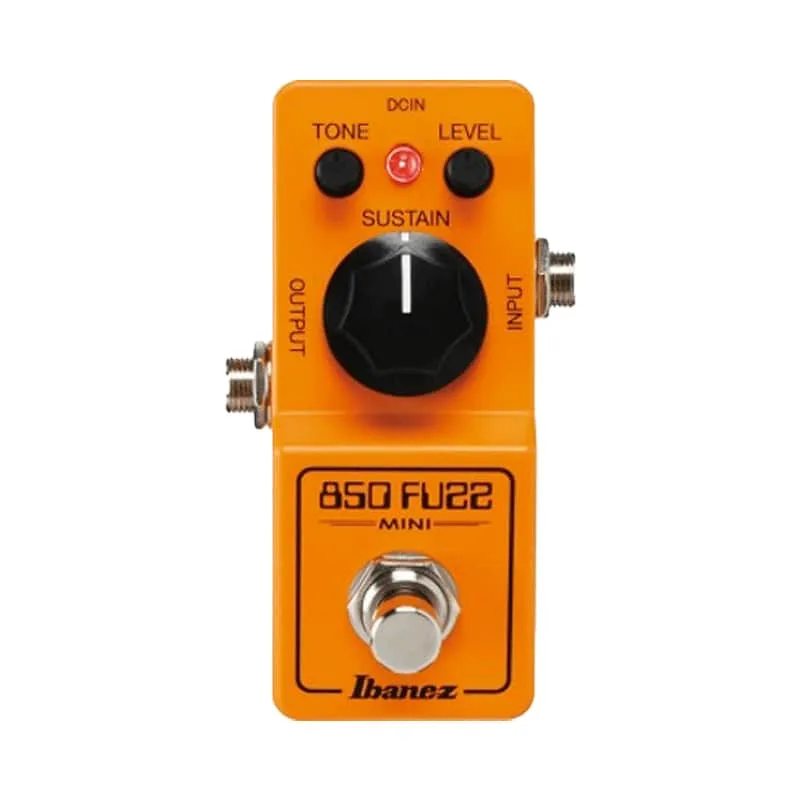
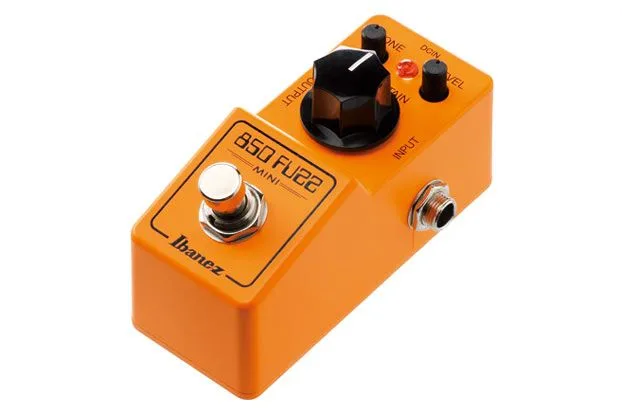
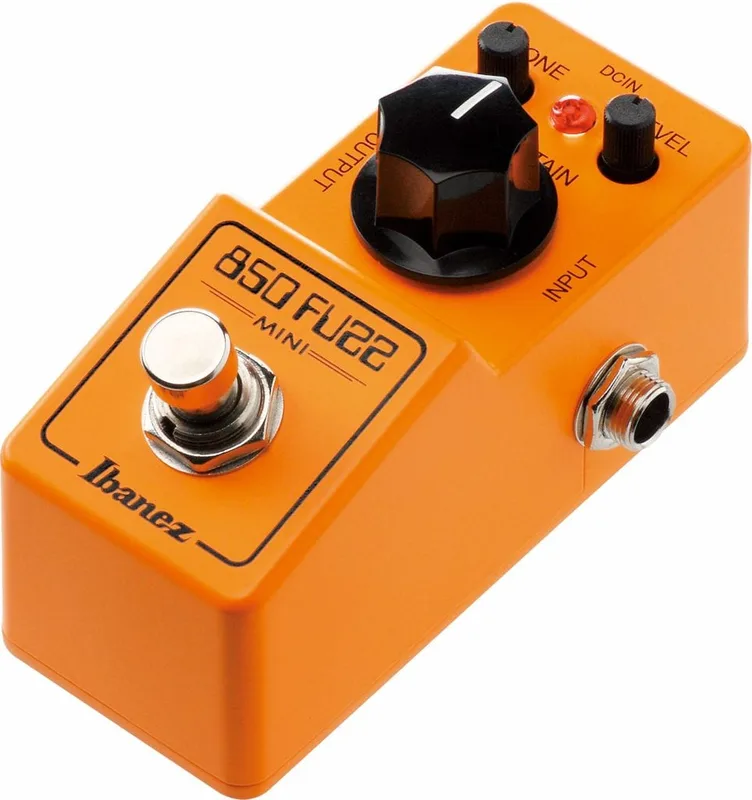
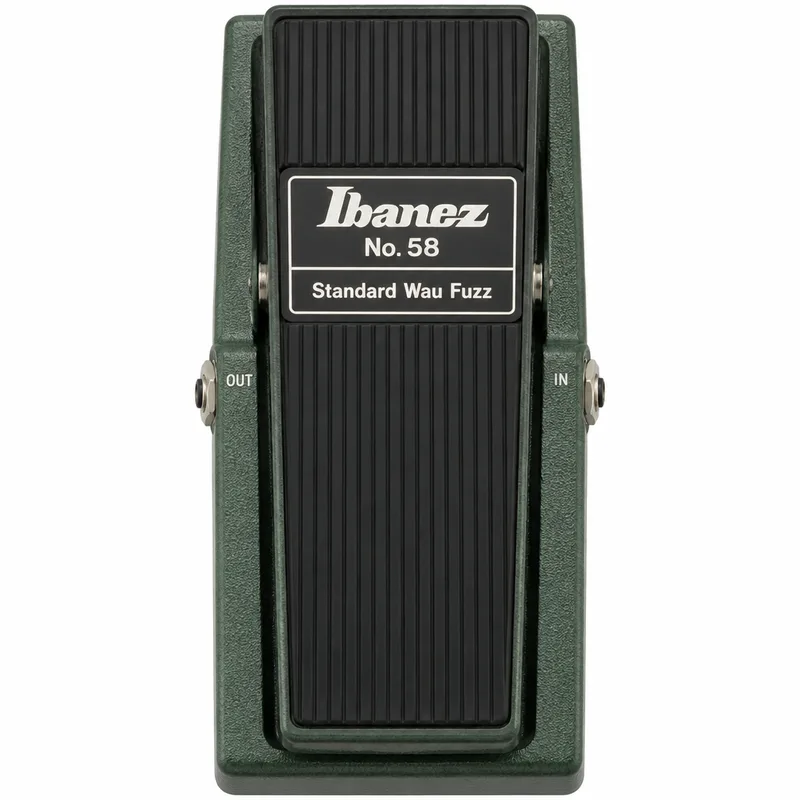
The SF5 belongs to the same family of Ibanez fuzz designs covered on the Ibanez SF5 60'S FUZZ page, and its circuit sits alongside the OD850 lineage Kit Rae describes21. Players interested in how Ibanez later revisited the Big Muff formula can look at the Ibanez Standard Fuzz, the Ibanez 850 Fuzz Mini and the Ibanez FZMINI, or browse the wider field on the Fuzz Pedals page.
Videos
Lost Groove Music
Agus Martin
Questions
Is the Ibanez SF5 a Big Muff clone?
TONEHOME describes the SF5 as just a kind of Big Muff in disguise with a different tone circuit giving it more mids. Kit Rae places its circuit lineage somewhere between a Colorsound Jumbo Tone Bender, a Big Muff Pi and an Ibanez OD850, and notes the distortion section is similar to the Maxon D&S first edition and sounds nearly identical.
What is the difference between the metal and plastic case SF5?
The original production run used a metal case, dated 1989 to 1990 by TONEHOME, and that version carries a high collectibility rating. Ibanez reissued the pedal from 1992 to 1998 in a plastic case as part of the Soundtank economy line, which Kit Rae describes as cheap, beetle shaped enclosures, although the circuits were many of the same designs.
How rare is the Ibanez SF5 Sixties Fuzz?
TONEHOME rates the SF5's availability as rare, and the metal case original as highly collectible. The pedal was produced for only a short window in each of its two versions, which is why players hunting one today generally have to look at the used market.
Does the SF5 add midrange compared with a Big Muff?
Yes. TONEHOME attributes the pedal's character to its different tone circuit, which gives it more mids than a Big Muff, and finds that the added mids make it very usable with an already crunching amp. Kit Rae called it the poor man's OD-850.
Sources (2)
- TONEHOME, TONEHOME, 1991
- The Big Muff History, www.kitrae.net, 2017-01