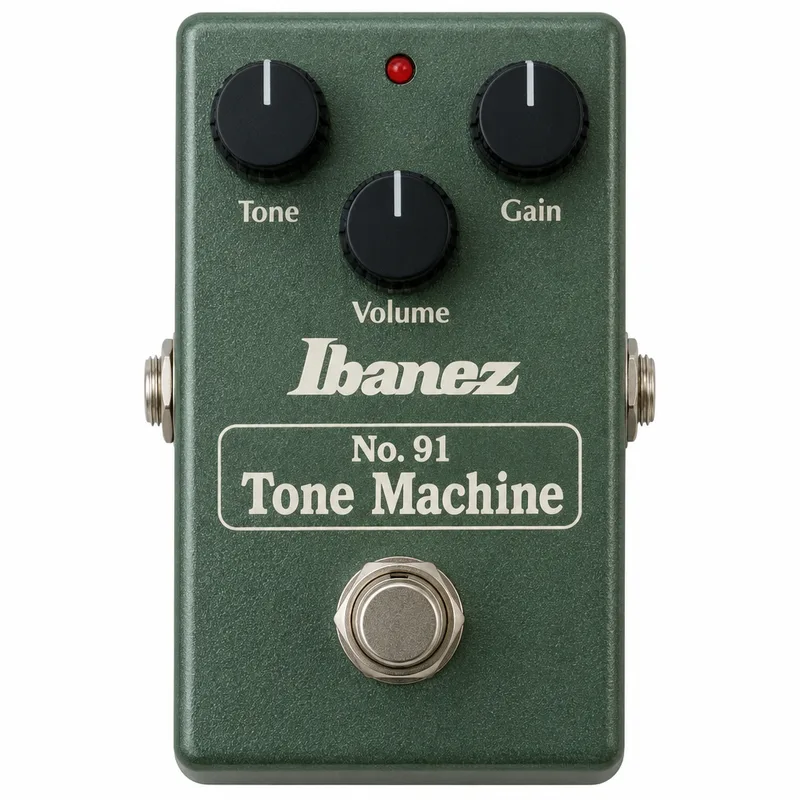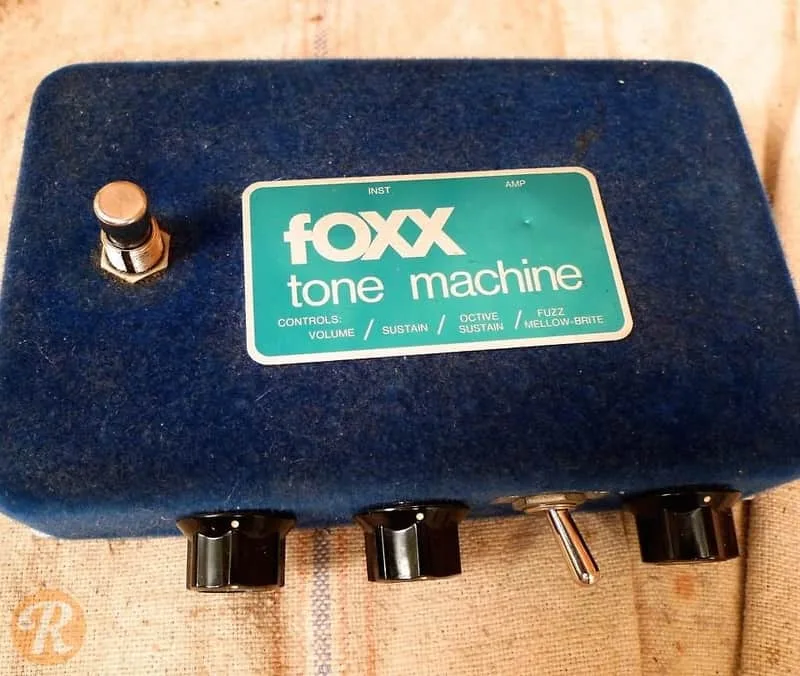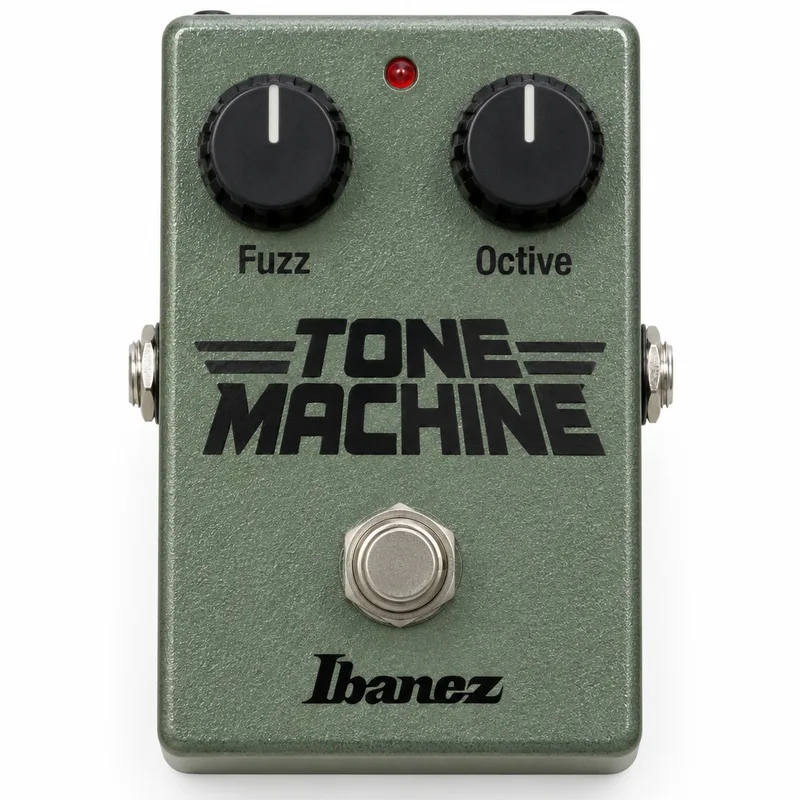
The Ibanez Tone Machine is an Ibanez-branded version of the fOXX Tone Machine, an octave-up fuzz pedal made in California by fOXX, probably in 1975 to 19761. It is not a Japanese Ibanez product: TONEHOME describes it as an "Ibanez" branded fOXX Tone Machine, made in USA1. It offers Fuzz and Octave in one box, with the octave control labeled "Octive"1.
The pedal underneath the Ibanez name is one of the better-known American fuzzes of the 1970s. RockBoard's PedalPedia classifies the Tone Machine as a fuzz octaver and calls it "one of the most expressive and more extreme" fuzz boxes of its era2. Players reach it today mostly through clones and reissues, because the Ibanez-branded units are among the rarest vintage pedals there are.
This is a collector's piece, not a working pedal you can buy new. Only very few samples were produced in 1975/76, and five existing Ibanez Tone Machines are known to TONEHOME1. Gearnews described the 2019 sale of one prototype as "just for well-heeled collectors and freaks"4.
What it does and how it is controlled
The Tone Machine is an octave-up fuzz: a fuzz circuit with a switch that moves from standard fuzz to an octave-up fuzz, adding a note an octave above the fundamental3. Guitar Player's Barry Cleveland, reviewing the 2005 reissue, explained the effect as "octave as in adding an octave above the fundamental tone, a la 'Purple Haze,' which you do by flipping a sturdy" metal toggle switch5.
The Ibanez version carries the same feature set: Fuzz and Octave controls, with the octave control spelled "Octive" on the enclosure1. Gearnews called the circuit "super simple"4.
| Control | What it does |
|---|---|
| Fuzz | Sets the amount of fuzz1 |
| Octive (Octave) | Sets the octave-up effect, labeled "Octive" on the Ibanez version1 |
| Mode switch | Switches from standard fuzz to octave-up fuzz3 |
Who made it, and where it came from
The design traces to Steve Ridinger Associates. The original fOXX Tone Machine dates to 1971, made by Ridinger Associates Inc of Chatsworth, California, and produced through the early to mid 70s, with a reissue in the 2000s36. The Ibanez Tone Machine was made in California by fOXX, probably 1975 to 19761.
Gearnews reported in 2019 that there are apparently four prototype pedals labeled with the Ibanez brand instead of Foxx, and that a deal must have fallen through, so the Ibanez-branded version never got off the ground4. At the time, the shop Overkill music was selling one of them on Reverb4.
Ibanez itself is the brand of the Hoshino Trading Company, which Kit Rae's history of fuzz clones notes began having clones of Gibson and Fender guitars made in Japanese factories and distributed worldwide7. The Tone Machine, though, is an American-built OEM product rather than one of those Japanese-made Ibanez effects.
The Ibanez No. 91 Tone Machine
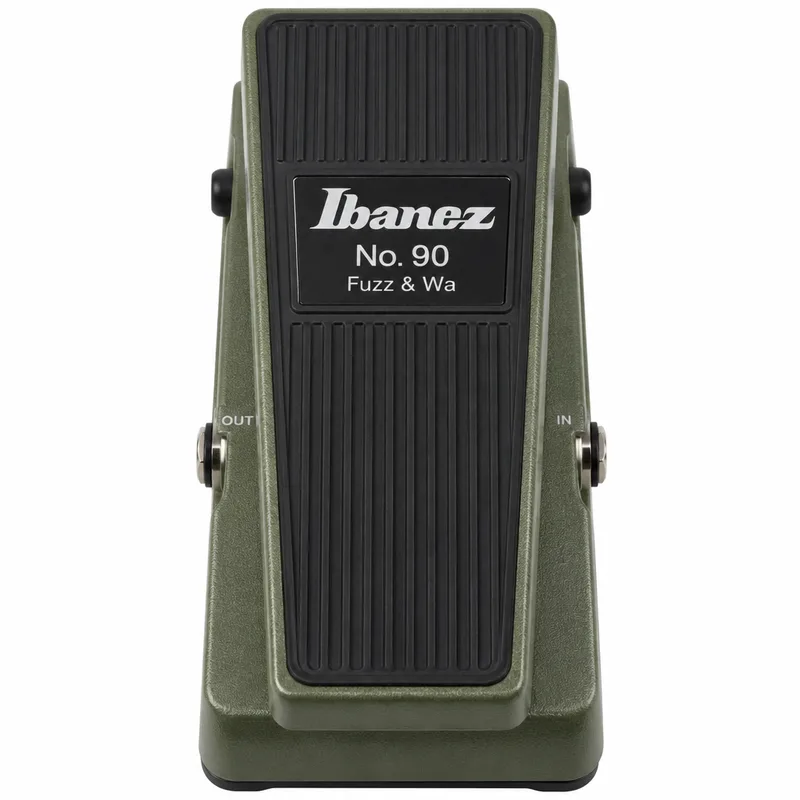
A closely related pedal is the Ibanez No. 91 Tone Machine, made by fOXX in California in 1974 to 19758. TONEHOME identifies it immediately as a Steve Ridinger Associates made fOXX Tone Machine with a mere OEM branding, and notes that it is listed as a regular production model by the full name of "Ibanez No. 91 Tone Machine"8. It and its siblings, the Ibanez No. 90 Fuzz & Wa and a Wah & Volume model, are described as being as rare as hens' teeth today8.
How it differs from the Foxx original
The circuit is the same; the difference is branding and rarity. The Foxx original came in a big range of colors, with purple, blue and red the most popular and white and US stars-and-stripes versions the rarest of all3. The Ibanez-branded units are rarer still, with five known to TONEHOME1.
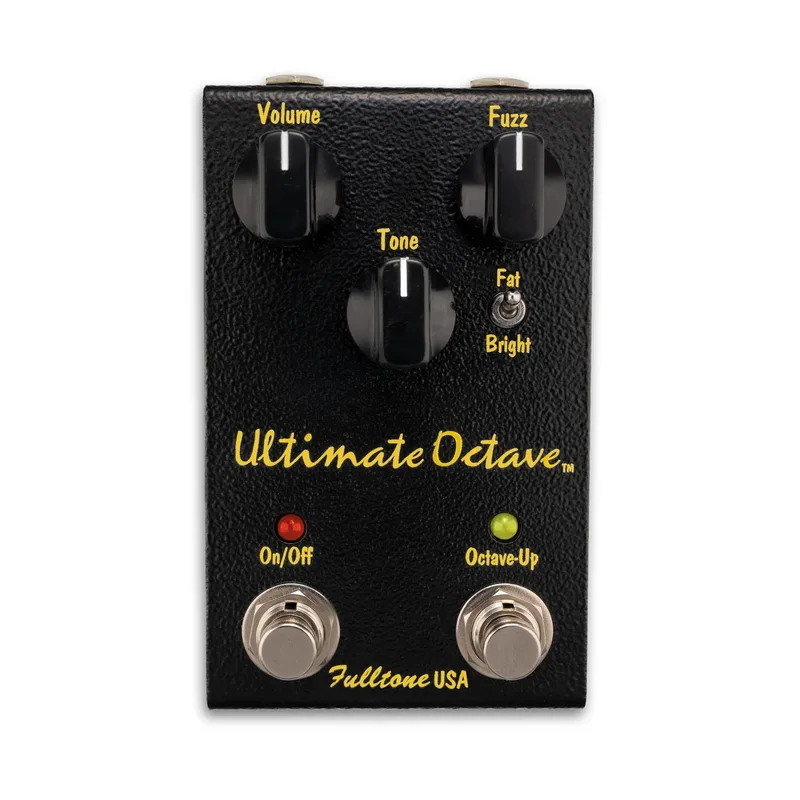
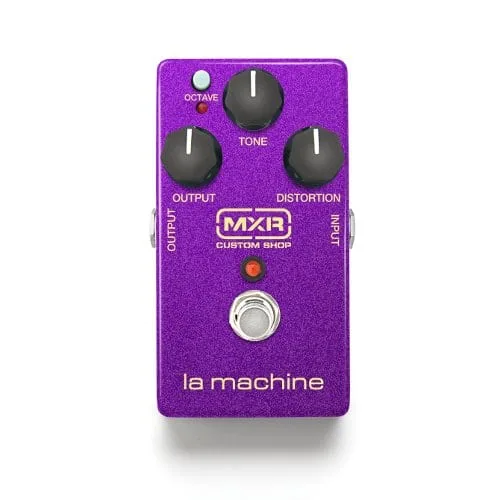
The Tone Machine's influence outlasted the original. Premier Guitar's reviewer noted that the circuit has been cloned or near-cloned many times, with subsequent incarnations including the Prescription Electronics Experience, Fulltone Ultimate Octave, MXR La Machine, Greer Super Hornet, and many DIY clone kits9. Aion FX sells a DIY project based on it10. Pedal of the Day notes it was used in the early 70s by Billy Gibbons and Peter Frampton11, and Dave Hunter's Guitar Player history names Peter Frampton, Billy Gibbons and Adrian Belew as players associated with the Tone Machine11.
Prices, then and now
| Version | Price | Date |
|---|---|---|
| Foxx Tone Machine, launch | $49 | 1970s12 |
| fOXX Tone Machine, retail | $59.95 | 19743 |
| Foxx reissue | $249 retail, $199 street | October 20055 |
| Ibanez prototype, Reverb listing | $20320.55 (£15394.95 or €17700), plus $50 shipping | January 20194 |
The 2019 asking price for the Ibanez-branded prototype is in a different category from any production fuzz. Gearnews framed it plainly: "For the ridiculous price of $20320.55"4. For most players, the circuit is reachable through the reissue or the many clones rather than an original.
Questions
How many Ibanez Tone Machines exist?
TONEHOME reports that only very few samples were produced in 1975/76 and that five existing Ibanez Tone Machines are known to the author. Gearnews reported in 2019 that there are apparently four prototype pedals labelled with the Ibanez brand instead of Foxx, one of which was for sale on Reverb at the time.
Who actually made the Ibanez Tone Machine?
Not Ibanez's own factories. The pedal is an Ibanez-branded fOXX Tone Machine, made in California by fOXX, probably in 1975 to 1976. The underlying design comes from Steve Ridinger Associates, the California firm behind the original fOXX Tone Machine.
What is the difference between the Foxx Tone Machine and the Ibanez version?
The circuit is the same Steve Ridinger Associates design; TONEHOME describes the Ibanez No. 91 as a fOXX Tone Machine with a mere OEM branding. The differences are the name on the enclosure and rarity: the Foxx original was produced through the early to mid 70s in a range of colors, while only a handful of Ibanez-branded units exist.
Was the Ibanez Tone Machine ever sold in stores?
The Ibanez-branded prototypes appear never to have reached regular retail. Gearnews reported that a deal must have fallen through and the Ibanez-branded version never got off the ground. The related Ibanez No. 91 Tone Machine was listed as a regular production model, but TONEHOME calls it and its siblings as rare as hens' teeth today.
How much does an Ibanez Tone Machine cost?
When one prototype was listed on Reverb in 2019, Gearnews reported the asking price as $20320.55, or £15394.95 or €17700, with $50 shipping from the States. For comparison, the Foxx original retailed at $59.95 in 1974, and the 2005 reissue carried a $249 retail and $199 street price.
Sources (12)
- TONEHOME, TONEHOME - the World of Vintage Guitar Effect Pedals
- Tone Machine by Foxx, RockBoard (rockboard.de PedalPedia), 2026
- TONEHOME, TONEHOME - the World of Vintage Guitar Effect Pedals, 1974
- Ibanez 'Foxx' Tone Machine, gearnews.com, 2019-01-26
- FUZ-1 | Guitar Player (October 2005) | Demeter Amplification, Guitar Player, 2005-10
- The Foxx Tone Machine Was the Fuzz of Choice for Peter Frampton, Billy Gibbons, and Adrian Belew, GuitarPlayer (www.guitarplayer.com), 2021-11-15
- The Big Muff History, www.kitrae.net, 2017-01
- TONEHOME, TONEHOME
- Orange Fur Coat Review, Premier Guitar, 2018-02-13
- Obscura Octave Blend / Prescription Electronics COB, Aion FX, 2023-09-08
- Warm Audio Foxy Tone Box Octave Fuzz, Pedal of the Day, 2021-02-18
- 3699 fUZZ™, Danelectro Guitars, 1970