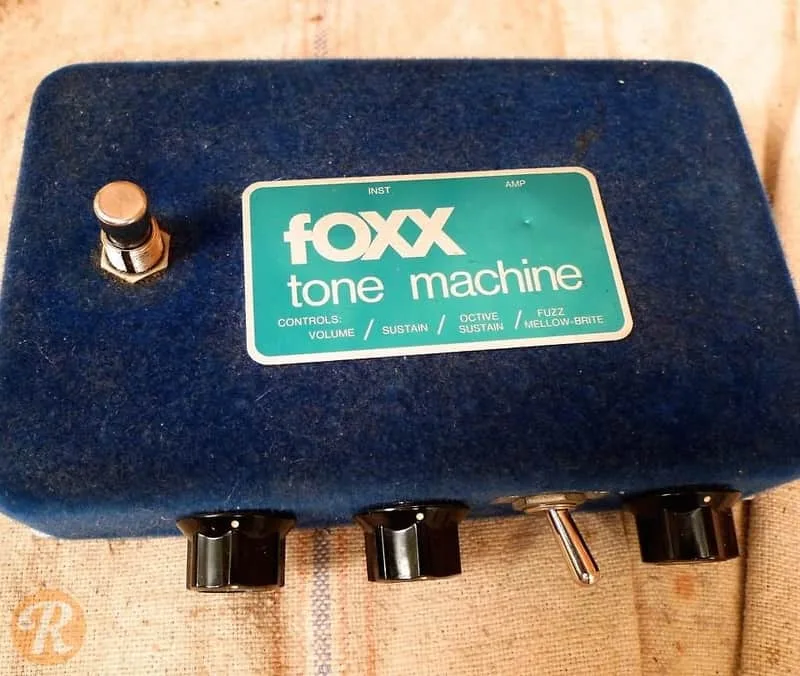


The Foxx Tone Machine is a fuzz pedal with a switchable octave-up mode, first released in 1971 by Steve Ridinger's Foxx company, then operating as Ridinger Associates Inc in Chatsworth, California1. It runs on an analog circuit of four transistors, and a toggle switch takes it from a standard fuzz to an octave-up fuzz23. RockBoard's PedalPedia entry calls it "one of the most expressive and more extreme" of the great fuzz boxes of its era2.
The pedal is best known today for its velour, or flocked, housing, its aggressive octave fuzz, and a long line of reissues and clones. Dave Hunter, writing in Guitar Player, noted that its circuit "was a relatively complex affair that offered more control than the average Fuzz Face or Maestro clone," and that its octave-up effect "performed better than many other octave and octave-fuzz units on the market"3. Billy Gibbons used one in the early seventies4.
An octave-up fuzz from the 1970s
The Tone Machine's octave-up sound comes from its circuit topology: it uses a phase splitter with diode rectifiers to produce the octave-up effect7. The phase splitter generates two opposite halves of the waveform, and the diodes fold them together so the doubled frequency rides on top of the fuzz. With the octave switch off, the pedal works as a straight fuzz.
Guitar Player's Art Thompson described it as "a fierce-sounding pedal, with volume, sustain and fuzz (tone) controls, a toggle switch to turn the octave on and off"8. The enclosure got a unique velour treatment on the housing, in red, black and purple, which was reportedly a pain to apply8. General Guitar Gadgets, whose founder built a clone, calls it "one of my favorite of the old-time fuzz tones (1965-1975 era). I love the long sustain capabilities"9.
The controls
The original pedal carries three knobs and a toggle:
| Control | What it does |
|---|---|
| Volume | Sets the output level |
| Tone (Fuzz) | Shapes the fuzz character and top-end bite |
| Sustain | Sets the amount of fuzz and sustain |
| Octave toggle | Turns the octave-up effect on and off |
TONEHOME lists the three knobs as Tone, Gain and Volume1, while Guitar Player's Art Thompson describes them as volume, sustain and fuzz (tone)8. The octave toggle was misspelled "Octive" on the control panel, though corrected in the brochures3. The 2005 reissue kept a plastic Fuzz Mellow-Brite knob, with the Tone control varying the amount of top-end bite10.
History, colors and rebadged versions
Steve Ridinger created the Foxx pedal line in the 1970s and priced the Tone Machine at $496. Very early units were made in North Hollywood, with most made in Chatsworth from the summer of 1972 onward8. Production ran from 1971 to 1978, and the pedal is long out of production5.
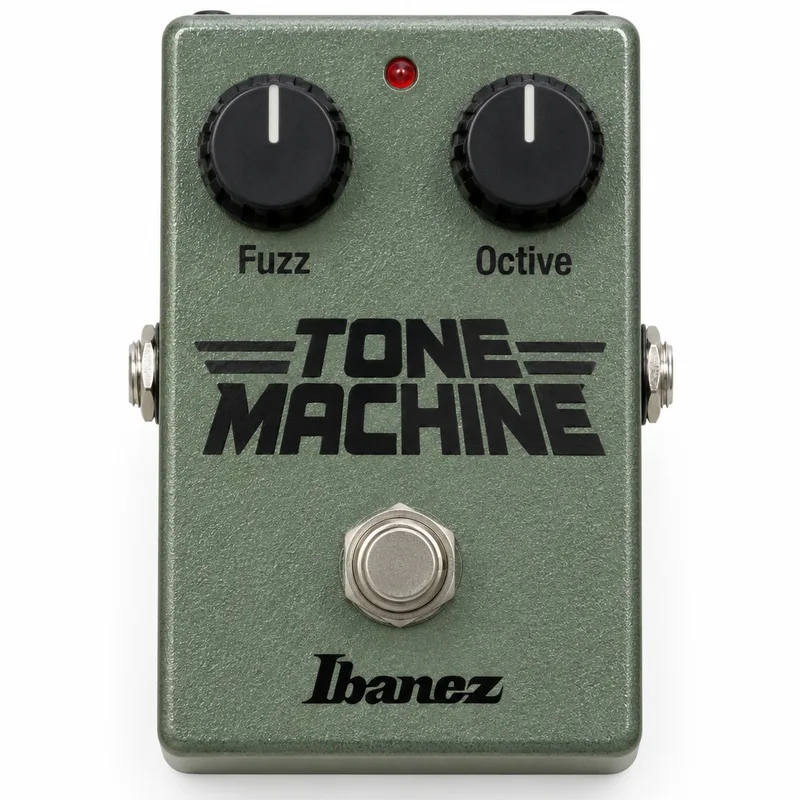
The pedal came in a big range of colors: purple, blue and red are the most popular, while white and US Stars and Stripes versions are the rarest of all1. The Stars and Stripes unit from 1972, in red-white-and-blue flocking, is among the rarest3. It was also sold under other brand names, including Turtle, Sears Roebuck & Co., Nashville, Paraclete and Emmons1, and an Ibanez-branded Tone Machine, made in USA, exists as a rare prototype11. In 2019 one of four alleged Ibanez-labeled prototypes was listed on Reverb for $20,320.55 (£15,394.95 or €17,700)12.
FOXX and TONE MACHINE are trademarks of Mark Simonsen, who is not affiliated with Danelectro6.
Reissues and clones
The Tone Machine was reissued in the 2000s3. An official reissue followed in 2005, when the brand was revived in its original battery-only, flock-covered form, at $249 retail and $199 street; Guitar Player's Barry Cleveland called it "an authentic re-issue of the early-'70s original"1013. That reissue added a footswitch for the octave effect, previously on a toggle switch13.
The circuit has since been revived several times:
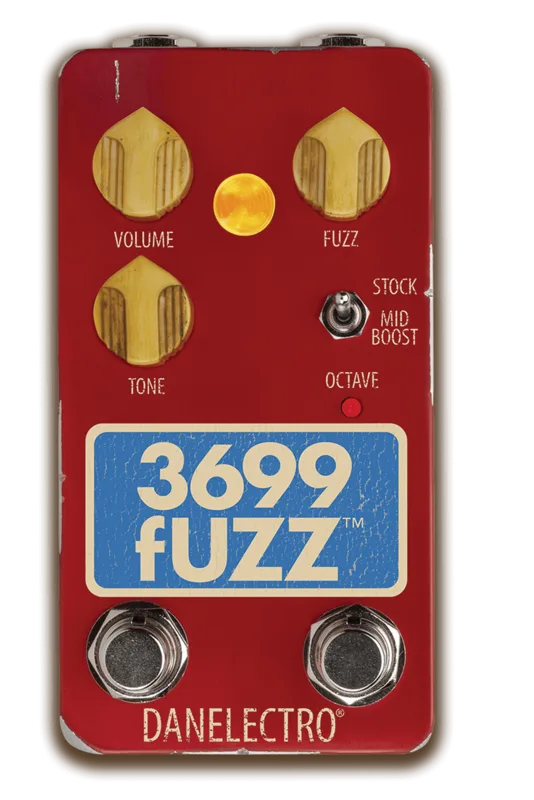
- Danelectro 3699 Fuzz (2020): FOXX® and TONE MACHINE® are trademarks of Mark Simonsen, who is not affiliated with Danelectro®6. The original it draws on was created by Danelectro's owner Steve Ridinger in 1972, when it cost just $4914.
- The original Foxx Tone Machine is long out of production1513, and its octave effect originally lived on a toggle switch1513.
- The original's housing carried a unique velour treatment that came in red, black and purple and was, reportedly, a pain to apply8.
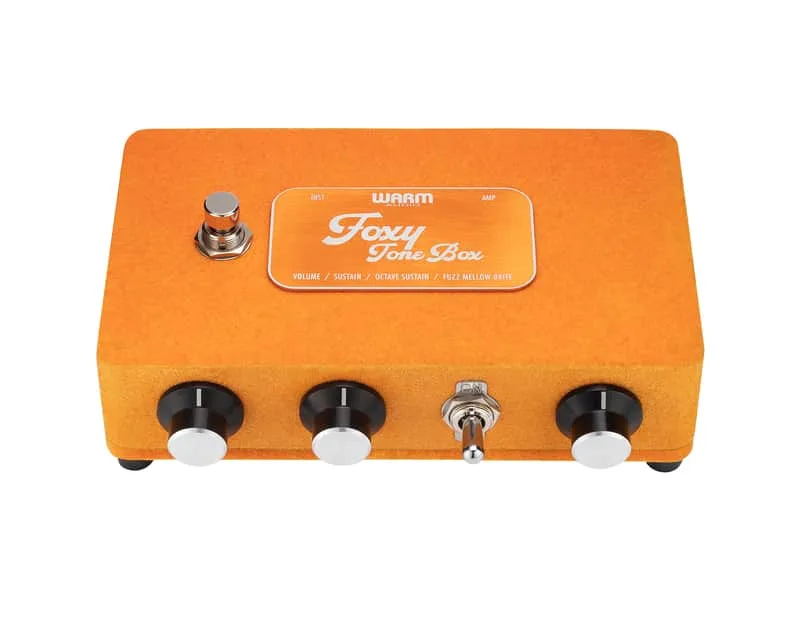
On JHS Pedals' YouTube channel, Josh Scott and Bryce Young of Warm Audio discussed the Foxy Tone Box as "a replica of a long out of production fox tone machine"15.
What originals cost today
Originals sell for $600 or more today, according to Danelectro6, a figure Pedal of the Day repeated in 202116. For comparison, the pedal launched at $496, and a 1974 retail price was $59.951.
Videos
Coolpapabear
Coolpapabear
sonicstate
News
Questions
How does the Foxx Tone Machine make its octave-up sound?
The circuit uses a phase splitter with diode rectifiers to produce the octave-up effect. The two halves of the waveform are folded together, doubling the frequency, and a toggle switch turns the octave on and off so the pedal works as a standard fuzz when it is disengaged. Dave Hunter in Guitar Player found the octave-up effect performed better than many other octave and octave-fuzz units on the market.
How much is an original Foxx Tone Machine worth?
Originals sell for $600 or more today, according to Danelectro and Pedal of the Day. When new, the pedal launched at $49, and a 1974 retail price was $59.95. Rare versions, such as the red-white-and-blue Stars and Stripes unit from 1972, command more, and an Ibanez-branded prototype was listed in 2019 for $20,320.55.
Was the Foxx Tone Machine reissued?
Yes. A Foxx-branded reissue appeared in the 2000s, and an official reissue was released in 2005 in the original battery-only, flock-covered form, at $249 retail and $199 street. Danelectro later revived the circuit in its 3699 Fuzz, adding a footswitchable octave and a mid-boost toggle.
Does the Foxx Tone Machine take a battery?
The 2005 reissue ran battery-only in its original flock-covered form. RockBoard lists the pedal's power as 9V DC, center negative, and the General Guitar Gadgets clone kit uses a 9 volt battery, which is not included in the kit.
What clones of the Foxx Tone Machine are there?
The circuit has been widely copied. Danelectro's 3699 Fuzz is a recreation with a footswitchable octave and mid boost, Warm Audio's Foxy Tone Box is a reproduction using NOS Fairchild transistors, and Orange's Fur Coat is a vintage fuzz based on the Tone Machine with an added octave mode. Kit builders also offer clones, such as the General Guitar Gadgets project designed by JD Sleep.
Sources (16)
- TONEHOME, TONEHOME - the World of Vintage Guitar Effect Pedals, 1974
- Tone Machine by Foxx, RockBoard (rockboard.de PedalPedia), 2026
- The Foxx Tone Machine Was the Fuzz of Choice for Peter Frampton, Billy Gibbons, and Adrian Belew, GuitarPlayer (www.guitarplayer.com), 2021-11-15
- Warm Audio Foxy Tone Box Fuzz, Delicious Audio, 2022-11-17
- Marsling Octafuzzdrive: Interstellar Audio's New Gear, Premier Guitar, 2023-04-04
- 3699 fUZZ™, Danelectro Guitars, 1970
- Wolfshirt.pdf, madbeanpedals.com, 2024-04-25
- Danelectro 3699 Fuzz review, GuitarPlayer (www.guitarplayer.com), 2020-08-13
- Foxx™ Tone Machine™ Clone: Octave Fuzz Kit, PCB & Schematic, General Guitar Gadgets, 2014-05-18
- FUZ-1 | Guitar Player (October 2005) | Demeter Amplification, Guitar Player, 2005-10
- TONEHOME, TONEHOME - the World of Vintage Guitar Effect Pedals
- Ibanez 'Foxx' Tone Machine, gearnews.com, 2019-01-26
- Danelectro 3699 Fuzz review, Guitar World, 2020-09-09
- Guitar Pedal X, Guitar Pedal X, 2024-11-12
- Warm Audio Pedal Clones (Foxey Tone Box, ODD Box, Warmdrive, Mutation Phasor 2, Centavo, Jet Phaser), JHS Pedals (YouTube), 2023-07-13
- Danelectro 3699 fUZZ Octaver, Pedal of the Day, 2021-02-08