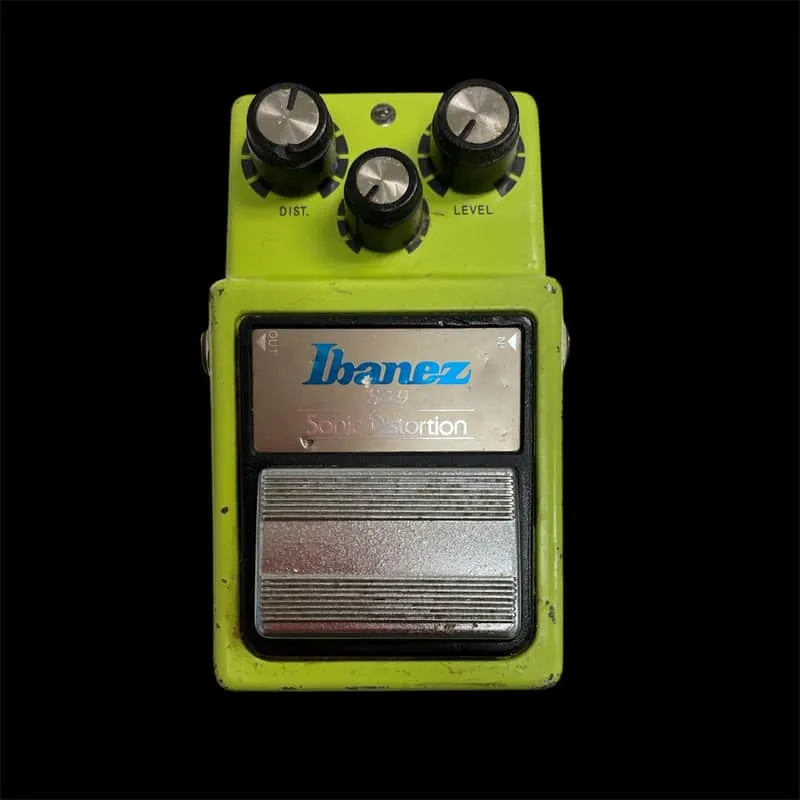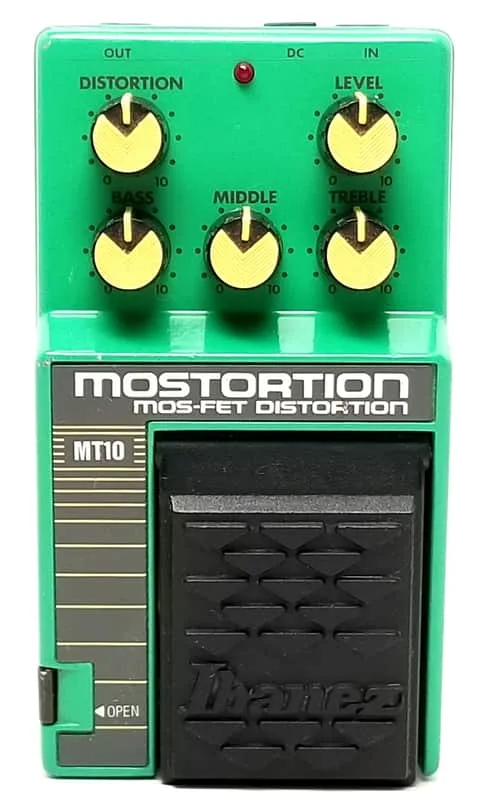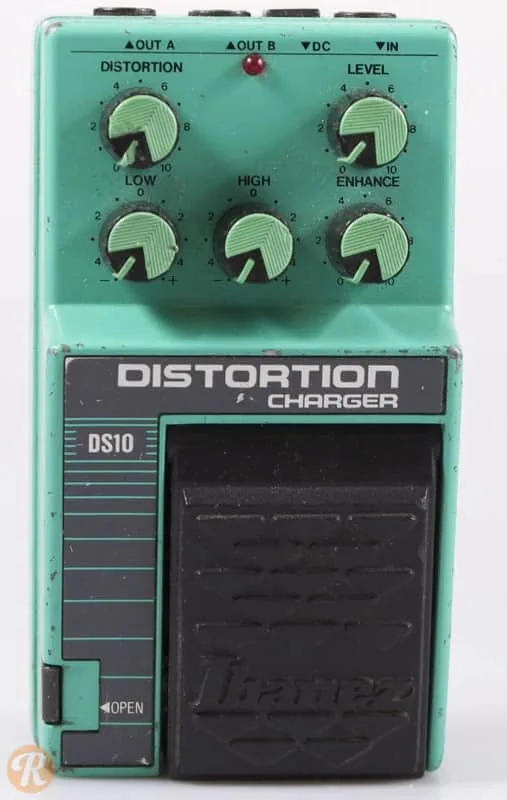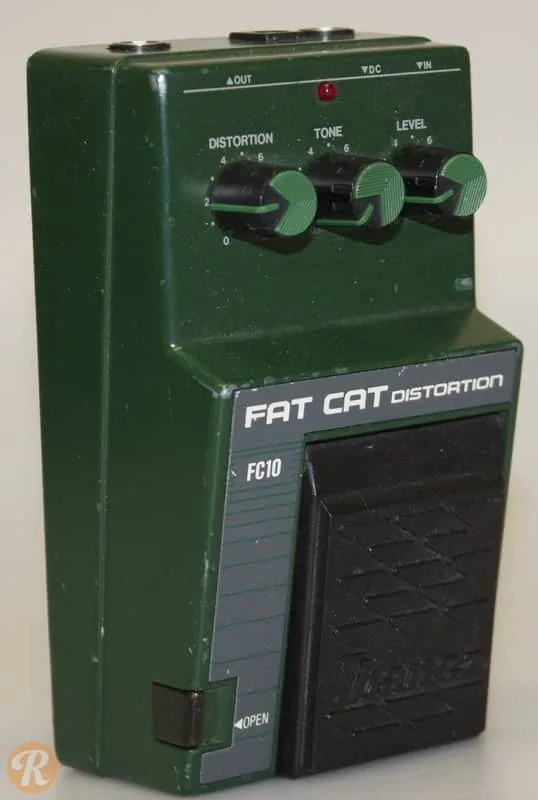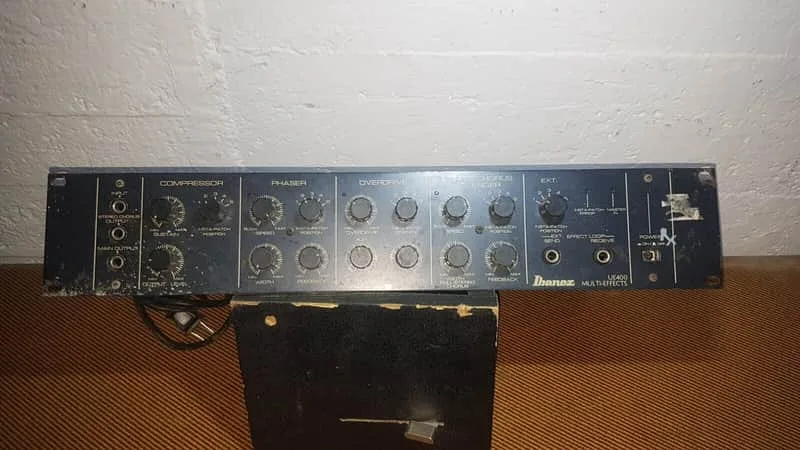


The Ibanez UE 400 is a multi-effects unit made by Ibanez, produced from 1980 to 19841. Unlike a single stompbox, it combines several effects in one enclosure, and its gain stage is the heart of the unit: the first version carried a distortion circuit, while the later versions carried an overdrive circuit1. For a player, it sits in the same family as Ibanez's better-known drive pedals of the era, such as the Ibanez SD-9 Sonic Distortion or the Ibanez MT10 Mostortion, but packaged as a multi-effects floor unit.
The three versions
Ibanez built the UE 400 in three versions over its production run, and the differences are easy to spot once you know what to look for. The first version, from 1980/81, carried a distortion stage. The 1982 second version moved to an overdrive stage. The third version, from 1983/84, kept the overdrive stage and changed the hardware: a copper footswitch board with 9-series switches instead of the black board and 0-series switches of the earlier units1.
| Version | Years | Gain stage | Footswitch board | Switches |
|---|---|---|---|---|
| v1 | 1980/81 | Distortion | Black | 0-series |
| v2 | 1982 | Overdrive | Black | 0-series |
| v3 | 1983/84 | Overdrive | Copper | 9-series |
Price and production years
The unit was listed in the United States at $495 USD in early 1980, rising to $545 USD late in the same year1. In Germany, the 1983 list price was 1.150 DM1. Production ran from 1980 to 1984, after which the unit was discontinued1.
Collectibility and availability
TONEHOME rates the UE 400's collectibility as high1. It has never been reissued1, so any example on the market today is a vintage original from the 1980 to 1984 run. At the same time, availability is rated as good1, meaning players hunting for one can reasonably expect to find examples without an extended search, though the three versions mean a buyer should check which version they are looking at, since the distortion-stage v1 and the overdrive-stage v2 and v3 are different circuits under the same model name.
Videos
Fluxson Music
Iodine74
SmallTownMusic1997
Questions
When was the Ibanez UE 400 made?
The Ibanez UE 400 was produced from 1980 to 1984. It appeared in three versions over that run: v1 from 1980/81, v2 from 1982, and v3 from 1983/84. The first version carried a distortion stage, while the second and third carried an overdrive stage.
How much did the Ibanez UE 400 cost?
In the United States, the list price was $495 USD in early 1980 and $545 USD late in the same year. In Germany, the 1983 list price was 1.150 DM.
Has the Ibanez UE 400 been reissued?
No. The Ibanez UE 400 has not been reissued, according to the reference site TONEHOME. The unit was discontinued in 1984 and remains a vintage-only piece.
What is the difference between the three Ibanez UE 400 versions?
Version 1 (1980/81) has a distortion stage, a black footswitch board and 0-series switches. Version 2 (1982) switched to an overdrive stage but kept the black footswitch board and 0-series switches. Version 3 (1983/84) kept the overdrive stage and moved to a copper footswitch board with 9-series switches.
Is the Ibanez UE 400 collectible?
Yes. TONEHOME rates the unit's collectibility as high. It has not been reissued since production ended in 1984, which adds to its appeal among collectors of vintage Ibanez gear.
Is the Ibanez UE 400 easy to find?
Availability is rated as good by TONEHOME, so players looking for one can expect to find examples on the used market despite the unit's age and collectible status.
Sources (1)
- TONEHOME, TONEHOME