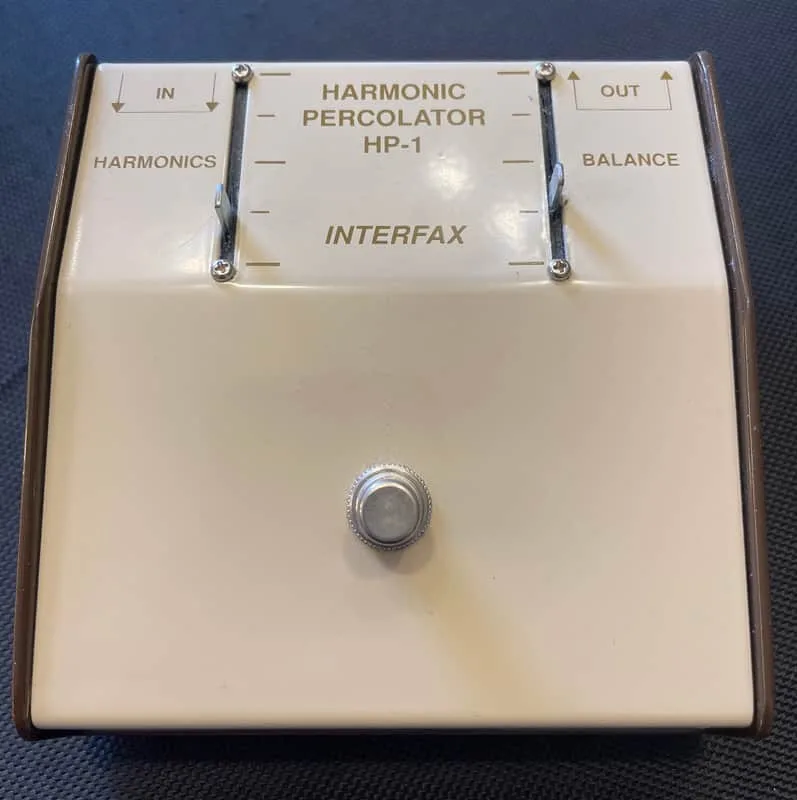
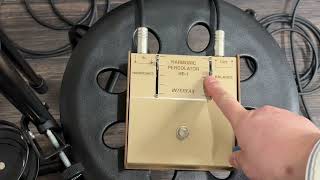


The Interfax HP-1 Harmonic Percolator is a fuzz/overdrive unit from the mid-1970s, an extremely rare and highly sought-after pedal made in Milwaukee, Wisconsin by Ed Giese1. It is a hybrid fuzz circuit: a PNP germanium transistor paired with an NPN silicon, running in a standard negative-ground configuration, and it uses clipping diodes, unlike most germanium fuzzes1. Guitar Pedal X identifies the original transistors as a 2N404 germanium and a 2N3565 silicon2, and Delicious Audio's Paolo De Gregorio notes that the HP-1 "produces a distinctive sound" from its silicon and germanium transistor circuit3.
Ed Giese and the Milwaukee origins
The HP-1 came out of a small electronics repair business in Milwaukee, WI, established by a man named Ed Giese5. Delicious Audio dates the invention to the early 70s in Milwaukee, Wisconsin6, Aion FX describes the pedal as from the mid-1970s1, and Guitar Pedal X calls it "the late 70's Ed Giese designed pedal"2. The original units were physically large: Guitar Pedal X describes the enclosure as "absolutely ginormous", an oversized original format, with tan-and-brown cases and a dual-slider layout24. One of the sliders was for "Harmonics", the input gain2.
Part of the pedal's mystique is that its exact circuit is hard to pin down. Aion FX notes that "the transistors and some of the components were gooped or obscured in the original"1.
Steve Albini and the clone industry
The Harmonic Percolator's modern reputation rests heavily on famed producer Steve Albini: JHS Pedals, quoting Land Devices, call it "famed producer Steve Albini's favorite distortion box"7. Guitar.com's Richard Purvis writes that Albini's endorsement of the HP-1 "sparked a whole sub-industry" of clones and tributes8.
Albini's own unit matters to builders for a technical reason. Aion FX explains that when it was examined, "it was found to have several different values than others that had been traced. His is the only known unit to use these"1. Because "there were several circuit changes made throughout the run"1, builders recognize two known versions of the circuit:
| Version | What distinguishes it |
|---|---|
| Stock | The standard traced circuit1 |
| Albini | Several different component values than other traced units; the only known unit with these values1 |
Clones and modern takes
The original is hard to find. JHS Pedals, quoting Land Devices, call it "one of the rarest pedals on the face of the Earth: the Interfax Harmonic Percolator HP-1... They're incredibly hard to find"7. Even so, Pedal of the Day observed in 2024 that "the HP-1 Harmonic Percolator is still a bit of an under-the-radar effect"5.
The gap between rarity and demand has been filled by builders. Guitar Pedal X counts "around 40 or so regularly available variants of this circuits - mostly from tiny boutique builders"2. Named clones include:
- Paperboy Pedals Harmonic Percolator clone5
- Nine of Swords Headache5
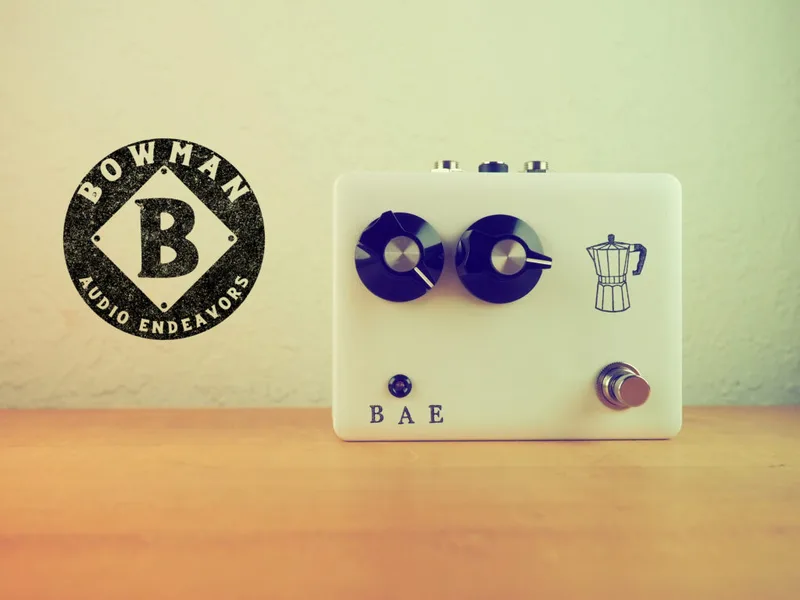
- Bowman Audio Endeavors Harmonic Percolator5
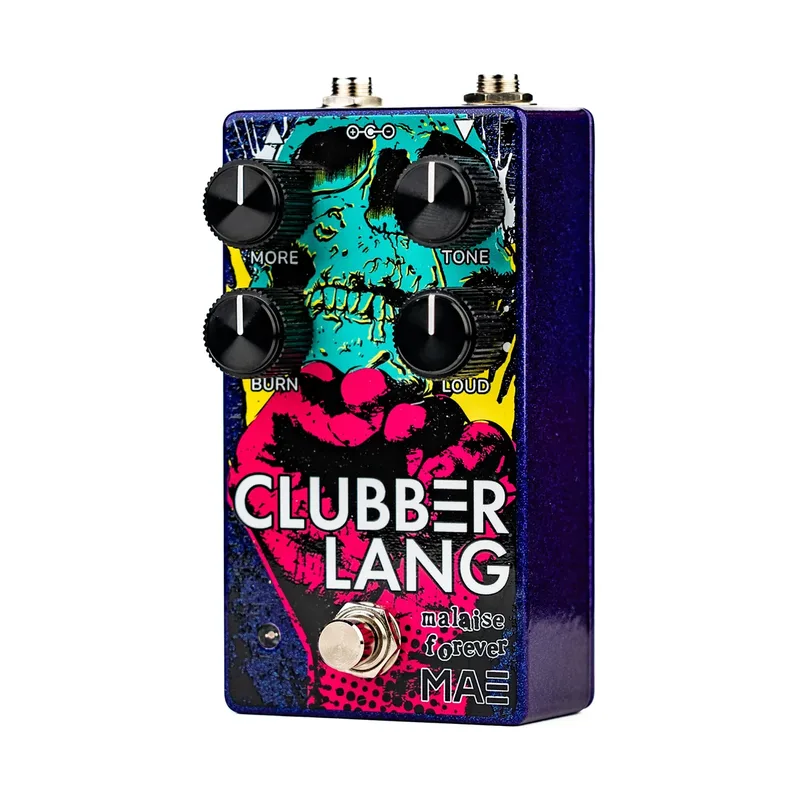
- Malaise Forever Clubber Lang5
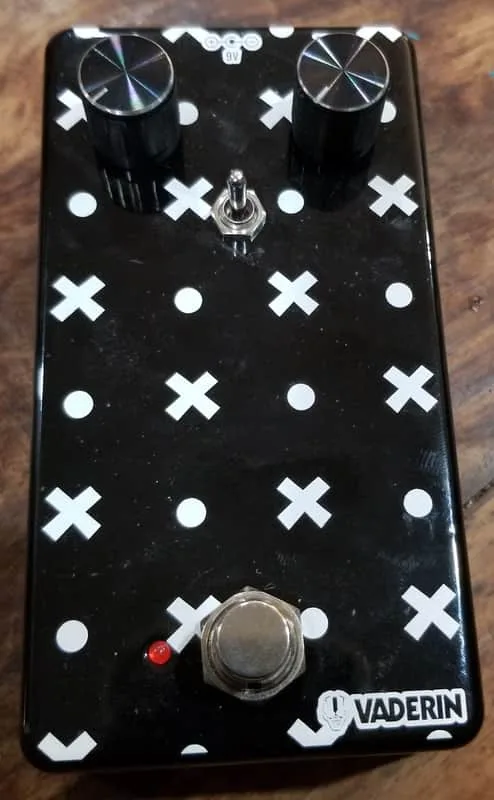
- Vaderin Pedals HP-X5
Videos
eye white
sublow326
SeventhHarmonic
Questions
Who made the Interfax Harmonic Percolator?
The HP-1 was made in Milwaukee, Wisconsin, by Ed Giese, who ran a small electronics repair business there. Sources place its invention in the early 1970s, with the pedal described as a mid-1970s fuzz/overdrive and, by Guitar Pedal X, as a late 1970s Ed Giese designed pedal. Original units came in tan-and-brown cases with a dual-slider layout and are now extremely rare and highly sought after.
What transistors are in the Harmonic Percolator?
The original circuit is a hybrid fuzz using a rare mix of silicon and germanium transistors. Guitar Pedal X identifies them as a 2N404 germanium and a 2N3565 silicon transistor, paired so the circuit runs in a standard negative-ground configuration. It also uses clipping diodes, unlike most germanium fuzzes. In the original units the transistors and some components were gooped or obscured.
What is the Albini version of the Harmonic Percolator?
Producer Steve Albini owned a Harmonic Percolator whose circuit was found to have several different component values than other traced units, and his is the only known unit to use those values. Because there were several circuit changes made throughout the pedal's production run, builders now recognize two known versions, generally called the stock version and the Albini version.
What pedals are clones of the Harmonic Percolator?
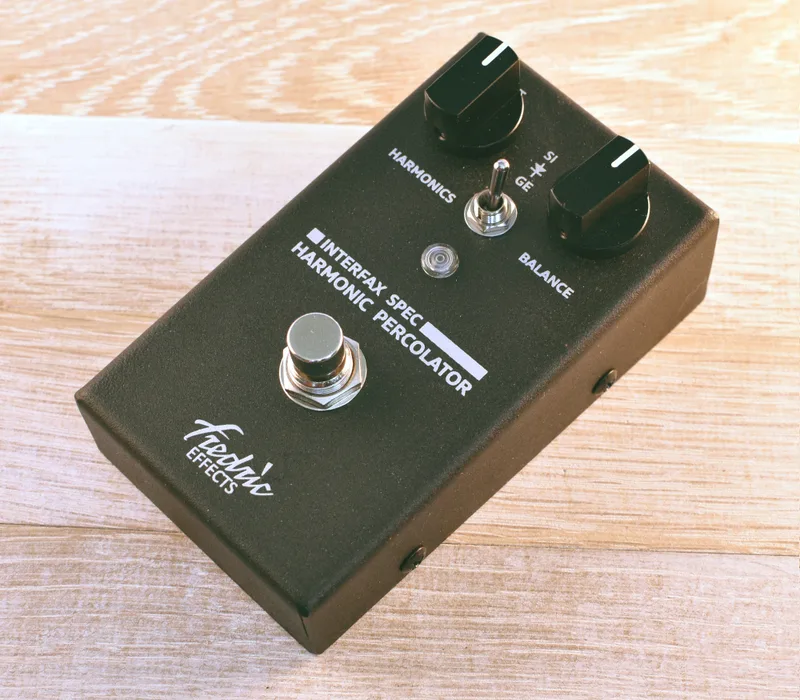
Guitar Pedal X counts around 40 or so regularly available variants of the circuit, mostly from tiny boutique builders. Pedal of the Day names the Paperboy Pedals Harmonic Percolator clone, the Nine of Swords Headache, one from Bowman Audio Endeavors, the Malaise Forever Clubber Lang and the Vaderin Pedals HP-X. Catalinbread's Karma Suture and Fredric Effects' Utility Perkolator are also based on the circuit.
Sources (8)
- Particle Vintage Fuzz / Interfax Harmonic Percolator, Aion FX, 2021-02-19
- Guitar Pedal X, Guitar Pedal X, 2024-05-13
- The 3 Best Fuzz Pedals Per Type, In 2023, Delicious Audio, 2022-09-15
- EHX Percolator: Based on '70s Harmonic Percolator, gearnews.com, 2026-06-17
- Paperboy Pedals Harmonic Percolator Clone, Pedal of the Day, 2024-02-08
- 9 Best Harmonic Percolator Fuzz Clones & Evolutions In 2023, Delicious Audio, 2023-05-03
- WHAT IS A LAND DEVICE?, JHS Pedals
- Zander Circuitry Cafetiere review: A brilliantly tweakable take on the InterFax Harmonic Percolator, Guitar.com, 2022-06-14
 Steve Albini