| Circuit type | Two-transistor fuzz/overdrive, hybrid germanium and silicon1 |
| Original maker | Interfax Electronics, Milwaukee, Wisconsin2 |
| Designer | Ed Giese276 |
| Original release | 1970s, described as late 70s61 |
| Original controls | Harmonics and Balance, no dedicated gain or tone control4 |
| Status | Originals extremely rare; circuit widely cloned89 |
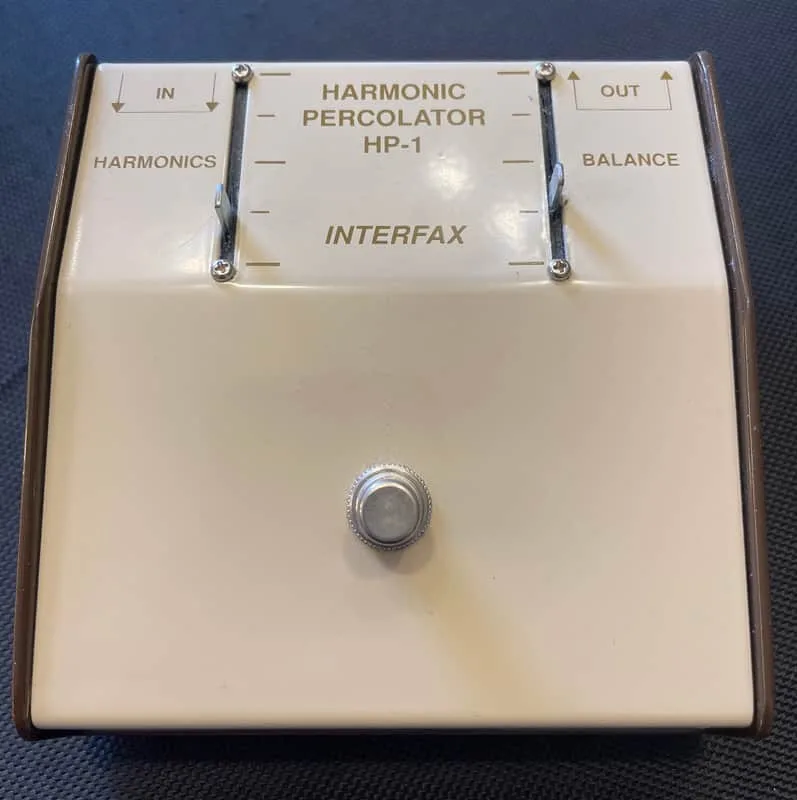
The Harmonic Percolator is a two-transistor fuzz/overdrive circuit that came out of a small electronics repair shop in Milwaukee, Wisconsin in the 1970s. Built as the Interfax HP-1 by Ed Giese, owner of Interfax Electronics, it is an extremely rare and highly sought-after pedal whose basic idea has been rebuilt by dozens of boutique makers and DIY builders12. Not many production units were made in its short life-span, and the transistors and some components in originals were gooped or obscured, which kept the circuit mysterious for years1.
What makes it stand out among vintage fuzzes is its hybrid transistor pair: a PNP germanium device working with an NPN silicon device, plus clipping diodes, which most germanium fuzzes do not use1. The result is a signature even-order harmonics saturation with a dry, husky edge rather than creamy, hot-tube-saturation drive34. Premier Guitar's reviewer described the original's voice plainly:
"the basic voice has a dry, husky edge"4
The circuit has seen a massive surge in popularity over the last few years, helped along by its association with Steve Albini, and Guitar Pedal X counts around 40 or so regularly available variants, mostly from tiny boutique builders56.
Where it came from: Ed Giese and the Interfax HP-1
The HP-1 was invented in Milwaukee, Wisconsin in the early 70s by Ed Giese, who ran a small electronics repair business called Interfax Electronics25. Delicious Audio notes that the original "came out of a Milwaukee repair shop in the '70s"10. Guitar Pedal X dates the Ed Giese designed pedal to the late 70s and describes its enclosure as "absolutely ginormous" compared with modern pedalboard formats6.
Production was small. Madbean's documentation for its Pepper Spray projects calls the Harmonic Percolator "a very rare and mysterious fuzzbox" and notes that not many Interfax production units were made in its short life-span911. The transistors and some of the components were gooped or obscured in the original, a common practice for protecting proprietary circuits, which contributed to the guesswork around its history. Delicious Audio calls the Electro-Harmonix Percolator a "re-elaboration of a circuit so legendary that most of its history is still guesswork"10.
Even with all the clones, Pedal of the Day noted in 2024 that the HP-1 "is still a bit of an under-the-radar effect"2.
How it works: a germanium and silicon transistor pair
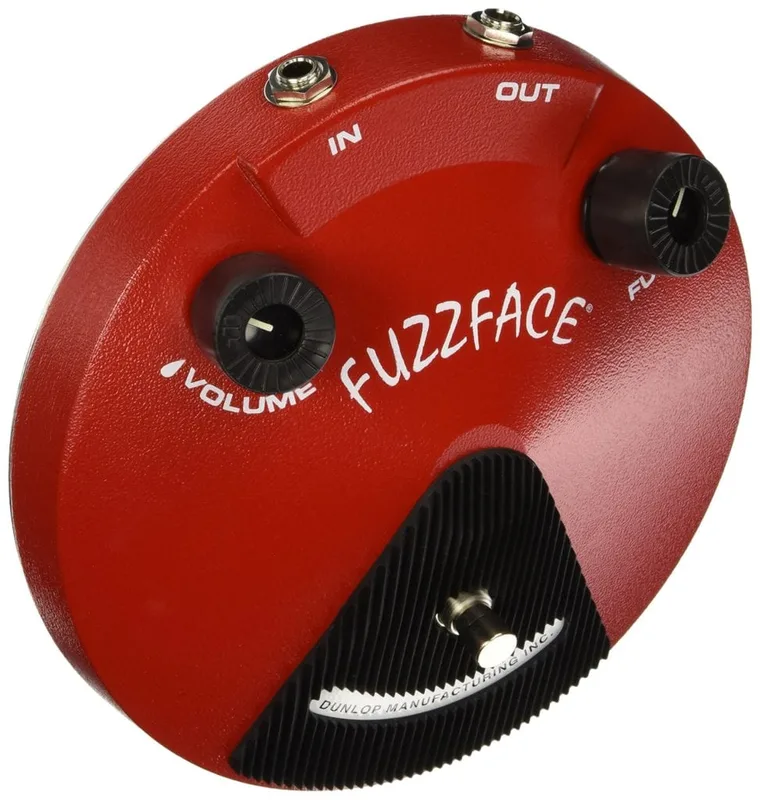
The core of the circuit is its hybrid topology. Aion FX describes it as a two-transistor fuzz using a PNP germanium transistor paired with an NPN silicon, which allows it to run in a standard negative-ground configuration1. That is a practical difference from classic all-germanium designs like the Fuzz Face, which typically need a positive-ground supply. Guitar Pedal X confirms the original circuit featured 2N404 germanium and 2N3565 silicon transistors6.
The hybrid pairing also has a stability benefit that aNaLoG.MaN explains in its Hybrid PNP FuzzCard documentation: a silicon transistor in the first position prevents the temperature sensitivity germanium is known for, while a germanium transistor in the second position retains the germanium sound12.
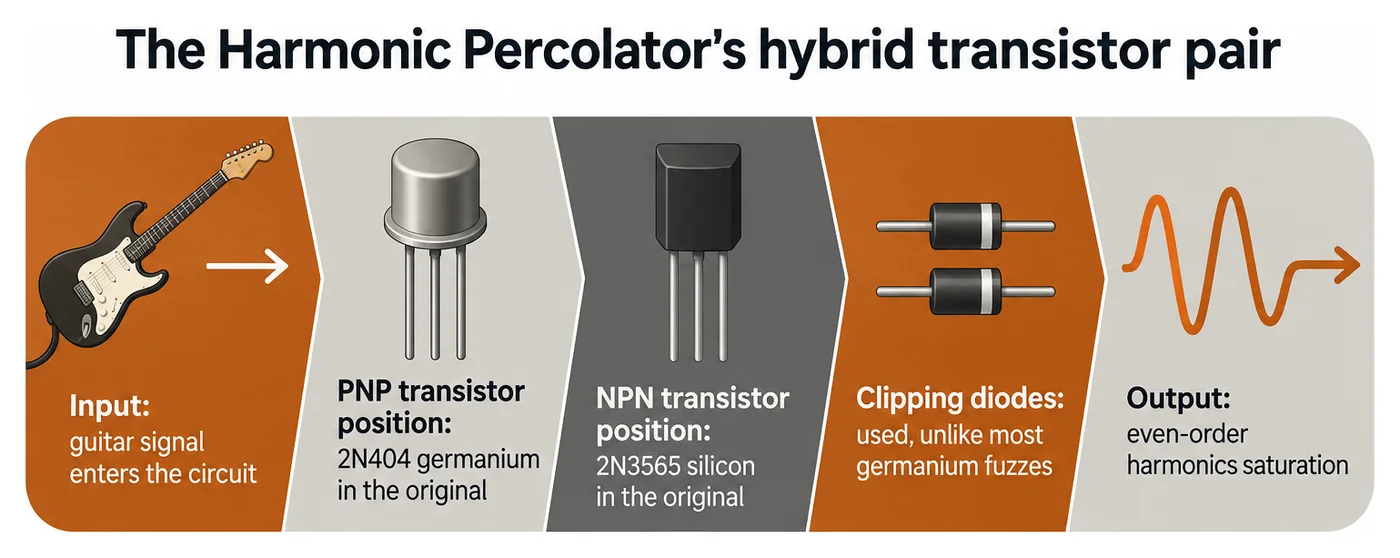
The circuit also uses clipping diodes, which Aion FX points out is unlike most germanium fuzzes1. Combined with the even-order harmonics saturation Pedal of the Day attributes to the original circuit, this gives the Percolator its own voice rather than a copy of any earlier fuzz3.
Two controls: Harmonics and Balance
The original HP-1 keeps it minimal: just two controls, Balance and Harmonics, with no dedicated gain or tone control4. Premier Guitar's review of the Electro-Harmonix version explains how they function:
"The balance and harmonics knobs, the only ones on an original HP-1, are effectively a master volume and an input gain control (which functions more or less like a guitar volume knob)"4
| Control | What it does |
|---|---|
| Harmonics | Input gain; clockwise adds saturation and distortion13 |
| Balance | Output level, a master volume410 |
Electro-Harmonix describes its own Harmonics knob the same way: it controls the gain at the input, and turning it clockwise makes the signal more saturated and distorted13. Delicious Audio sums up the range as "from mild overdrive to full destruction"10.
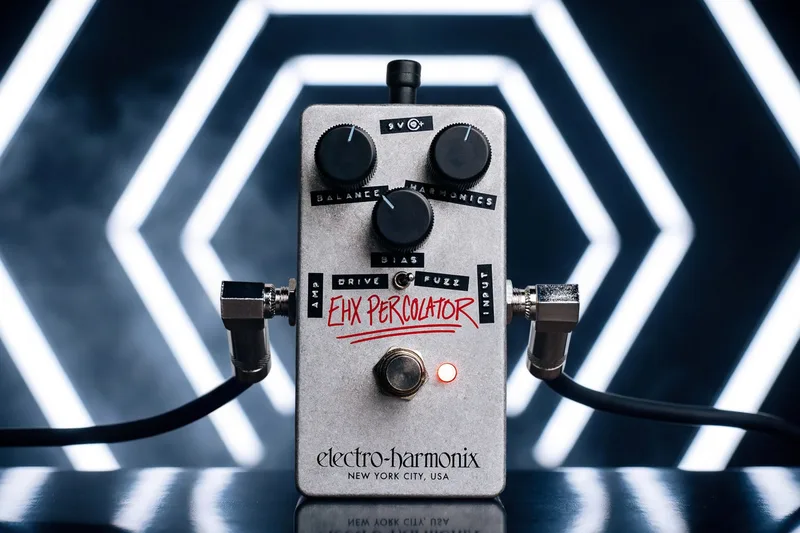
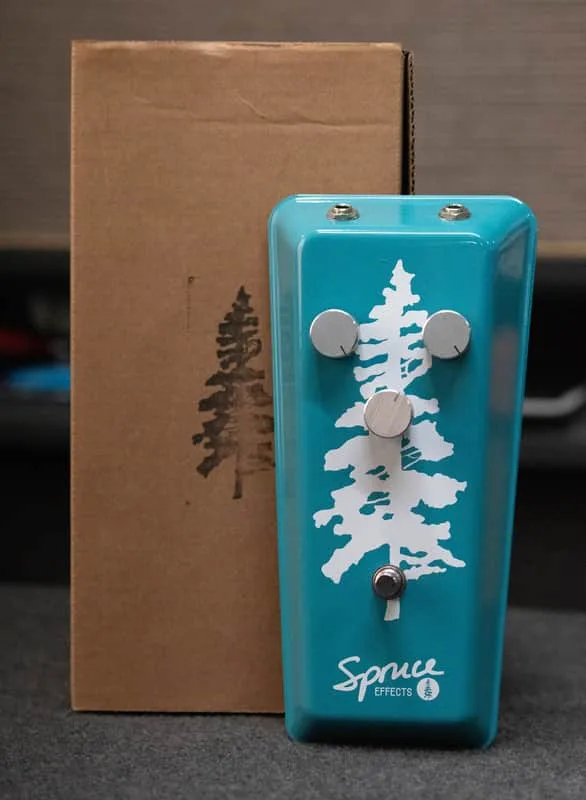
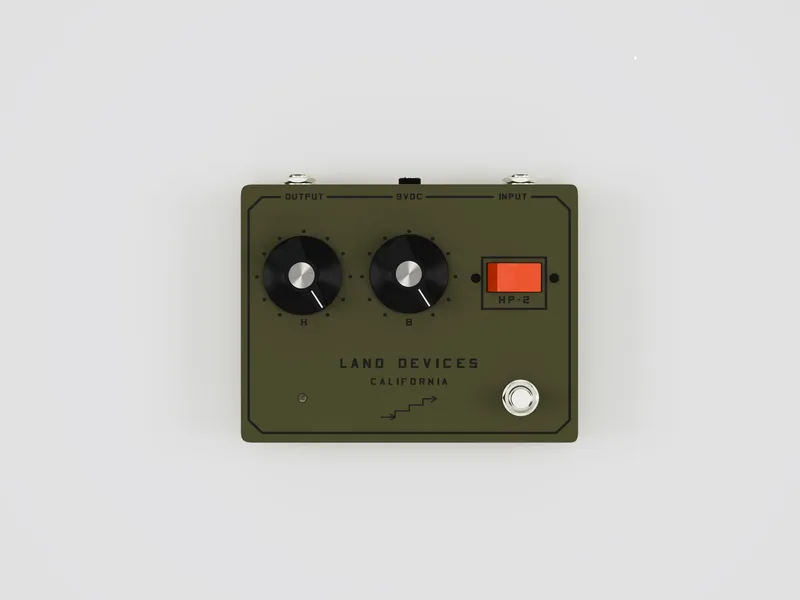
That two-knob format is part of the circuit's identity, and most clones keep it. Land Devices' HP-2 uses a left knob for harmonics and a right knob for output, with its B knob described as setting "your output level, letting you tame or unleash the chaos"1415. Some builders add controls: the EHX Percolator adds Bias and a Gain Range switch16, and Spruce Effects' Percolator Fuzz adds an Input Depth control billed as a tone control6.
No single stock version
One thing every builder tracing the circuit agrees on: there is no single stock Harmonic Percolator. Madbean's documentation states it directly119:
"The Percolator does not seem to have one 'stock' design. Slight changes were made in component values over its life-cycle."9
Aion FX identifies two known versions, "stock" and "Albini"1. The Albini version matters because Steve Albini's actual unit was traced and found to have several different component values than other traced units, and his is the only known unit to use these values1. Madbean's 2018 Pepper Spray documentation describes the difference in playing terms: the Albini version is smoother and more controlled, with a slightly over-compressed fuzz tone when the Harmonics control is all the way up, and it is more aggressive than a Fuzz Face while keeping unique characteristics11.
This variation is why two original HP-1s can sound noticeably different, and why clone makers have to choose which version to follow11117.
Steve Albini and the circuit's popularity
Steve Albini, the Nirvana and Pixies engineer and Big Black and Shellac frontman, is closely tied to the Harmonic Percolator's modern reputation: Delicious Audio credits him with the circuit's massive surge in popularity over the last few years5. Guitar Pedal X's tribute roundup of 23 fuzzes he helped popularize leads with the Interfax HP-1618.
Albini's influence shows up in the clones too. Seward Park Electric's Arabica Harmonic Percolation takes the classic circuit and enhances it with additional controls while maintaining the character, influenced by the Albini modifications19.
Pedals based on the Harmonic Percolator
The clone field is large. Delicious Audio's buying guide tracks nine HP-1 clones and evolutions206, and Guitar Pedal X counts around 40 regularly available variants, mostly from tiny boutique builders6. A sample of the approaches:
| Builder and pedal | Approach |
|---|---|
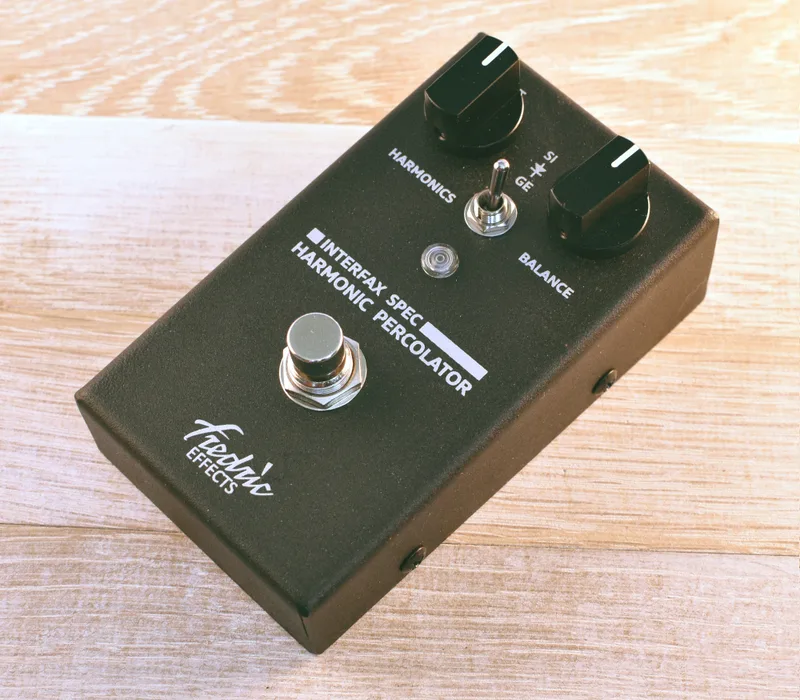
| Fredric Effects Harmonic Percolator Interfax Spec | 100% accurate clone built to the verified correct schematic, using NOS 2N404 germanium and 2N3565 silicon20 |
| Fredric Effects Silicon Harmonic Percolator | Part-for-part clone of the original with entirely silicon transistors made 40 years ago in the former East Germany21 |
| Recovery Effects Single Fire | Classic circuit with a new-old-stock SFT306 germanium and a vintage BC10822 |
| Land Devices HP-2 | A "harmonic percolator equivalent" with a toggle for the original circuit or a doom mode1514 |
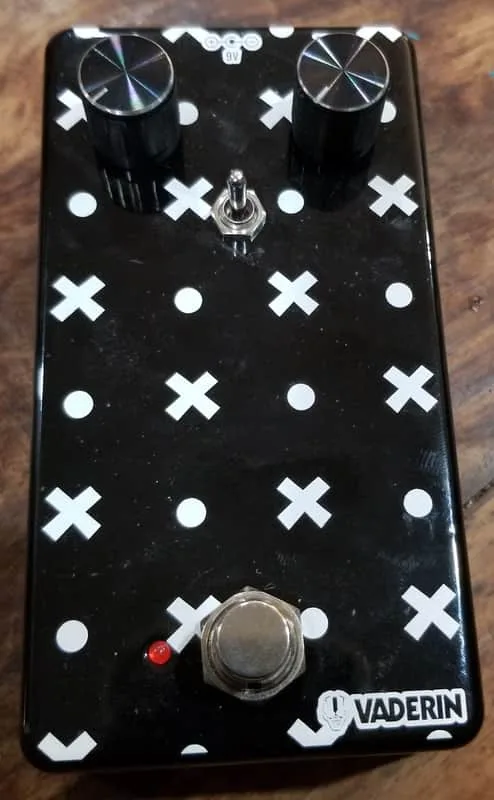
| Vaderin Pedals HP-X | The original circuit modernized, with silicon transistors in the PNP position instead of the classic germanium3 |
| JedsPeds Doggy Style | A modern take on the classic circuit23 |
| Paperboy Pedals Harmonic Percolator Clone | A clone of the Interfax HP-12 |
| Buzzing Bugs BB02 Percolator Fuzz | The builder's take on the classic circuit24 |
| Drolo Lilac Cloud | A fuzzy overdrive that started as a Harmonic Percolator, then tweaked, expanded and de-mojoed25 |
| Zander Circuitry Cafetiere | A torn-down, rebuilt and expanded take on the HP-126 |
| GUP Tech MOKA Pot and Lab #61 | Based on the classic schematic, built with modern and available parts2728 |
The Vaderin HP-X shows how builders handle the germanium question: Pedal of the Day notes it uses silicon transistors in the PNP position instead of the classic germanium, describing it as "a vintage circuit, modernized for today's differing climates"3. Land Devices' HP-2 adds a switch that lets you choose between the stock tone and a louder but less compressed one, with switch left for the original circuit and switch right for doom15.
The Electro-Harmonix Percolator
In 2026 Electro-Harmonix released the EHX Percolator, which it calls a Harmonic Saturator and "a fuzz pedal based on the 1970s Harmonic Percolator"13. Guitar Pedal X describes it as "a budget take on the Interfax HP-1 Harmonic Percolator, with two extra controls"16. Those extra controls are Bias, for character and texture, and a Gain Range switch choosing between Drive and Fuzz, alongside the Balance and Harmonics knobs16.
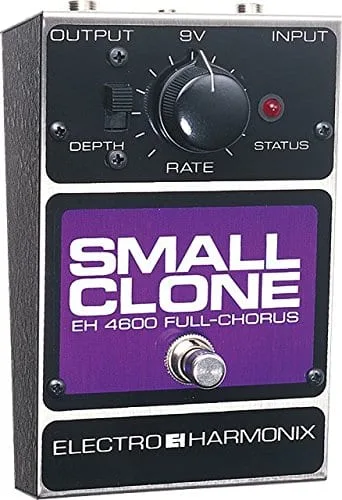
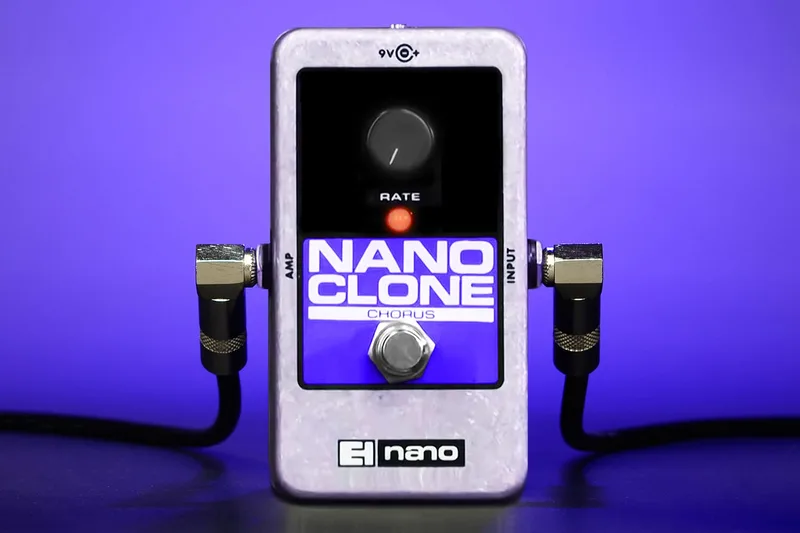
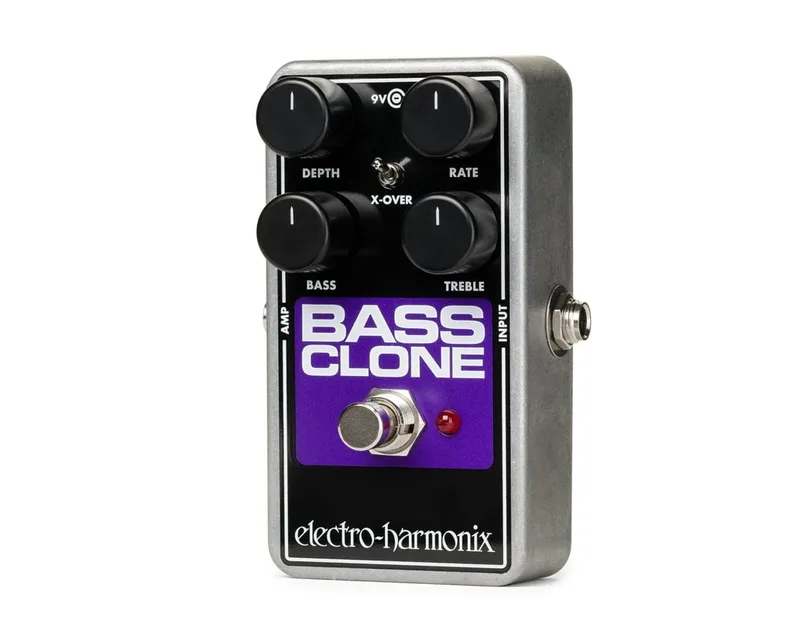
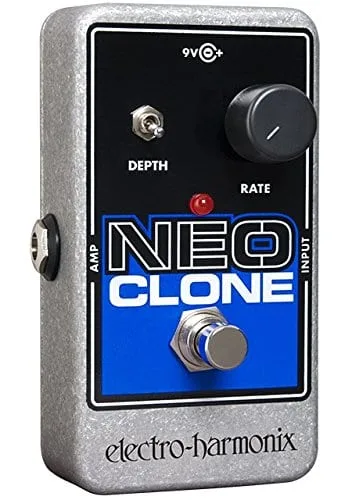
Premier Guitar reviewed it as an attempt to "make the HP-1 a little more accessible"4. It is a re-elaboration rather than a part-for-part copy, unlike Fredric's Interfax Spec build1020. For context on how Electro-Harmonix handles circuit lineage, its Small Clone chorus has similarly been reissued in economy versions like the Nano Clone and Neo Clone, and adapted for bass as the Bass Clone29.
DIY layouts and the Harmonic Jerculator
The circuit is also a DIY staple. Tim Escobedo's Harmonic Jerculator is an adaptation of the Interfax Harmonic Percolator, published as vero (stripboard) and tagboard layouts on the Guitar FX Layouts blog30. The layout has practical notes for builders: Q2 must be a PNP transistor such as the 2N3906 shown in the layout, and a 2N3904 will not work30.
In sound, the Jerculator behaves like the parent circuit: at lower gain it does a half-overdrive, half-fuzz thing, and there is quite a bit of oscillation on super high gain settings30. Madbean's Pepper Spray and Pepper Spray 2018 are printed circuit board projects based on the Interfax Harmonic Percolator for builders who prefer PCBs over stripboard911.
Fuzz, overdrive, or something in between
The Harmonic Percolator resists a tidy category. Aion FX calls it a fuzz/overdrive1, Fredric Effects calls the original an oddball overdrive/distortion pedal from the 1970s20, and the Jerculator's half-overdrive, half-fuzz behavior at low gain30 sits alongside Delicious Audio's description of the EHX version's range from mild overdrive to full destruction12030. Zander Circuitry's Custom Shop Cafetiere, in its Low Gain transistor pairing, aims for a more open and overdriven fuzz sound closer to the gain level of the original circuit18.
Whatever you call it, the combination of even-order harmonics, clipping diodes, and a hybrid germanium/silicon pair gives it a voice distinct from the classic fuzz circuits it shares era and rarity with3131.
Pedals on this page
News
Questions
What transistors are in the original Harmonic Percolator?
The original Interfax HP-1 paired a 2N404 germanium transistor with a 2N3565 silicon transistor in a hybrid two-transistor circuit. The germanium device sat in the PNP position and the silicon device in the NPN position, which let the pedal run on a standard negative-ground supply rather than the positive ground most germanium fuzzes need.
Why did Steve Albini use the Harmonic Percolator?
Albini, the Nirvana and Pixies engineer and Big Black and Shellac frontman, used an Interfax HP-1 whose traced component values differ from every other known unit. His co-sign is credited with the circuit's surge in popularity, and his specific unit's smoother, more controlled, slightly over-compressed fuzz became its own sought-after version.
Why do original Harmonic Percolators sound different from each other?
There was no single stock design. Interfax changed component values slightly throughout the production run, and Albini's unit is the only known one with its particular values. Add the natural variation of germanium transistors and the gooped, obscured components in originals, and no two surviving HP-1s are guaranteed to match.
Is the Electro-Harmonix Percolator a Harmonic Percolator clone?
It is a budget take on the Interfax HP-1 rather than a part-for-part copy. Electro-Harmonix calls it a fuzz pedal based on the 1970s Harmonic Percolator, and it adds two extra controls, Bias and a Gain Range switch, over the original's two knobs.
Where was the Interfax Harmonic Percolator made?
Milwaukee, Wisconsin. Ed Giese built the HP-1 in his small electronics repair business, Interfax Electronics, in the 1970s. Not many production units were made during its short life-span, which is part of why originals are so rare today.
Is the Harmonic Percolator a fuzz or an overdrive?
It sits between the two. Aion FX describes it as a fuzz/overdrive, and builders of clones describe everything from half-overdrive, half-fuzz at low gain to full destruction at high gain. Unlike most germanium fuzzes it uses clipping diodes, and its even-order harmonic saturation gives it a dry, husky voice rather than creamy tube-style saturation.
Sources (31)
- Particle Vintage Fuzz / Interfax Harmonic Percolator, Aion FX, 2021-02-19
- Paperboy Pedals Harmonic Percolator Clone, Pedal of the Day, 2024-02-08
- Vaderin Pedals HP-X Harmonic Percolator, Pedal of the Day, 2021-10-21
- Electro-Harmonix EHX Percolator Review, Premier Guitar, 2026-09-19
- 9 Best Harmonic Percolator Fuzz Clones & Evolutions In 2023, Delicious Audio, 2023-05-03
- Guitar Pedal X, Guitar Pedal X, 2024-05-13
- Zander Circuitry Cafetiere review: A brilliantly tweakable take on the InterFax Harmonic Percolator, Guitar.com, 2022-06-14
- WHAT IS A LAND DEVICE?, JHS Pedals
- PepperSpray.pdf, madbeanpedals.com, 2024-06-07
- Electro-Harmonix Percolator, Delicious Audio, 2026-07-02
- PepperSpray2018.pdf, madbeanpedals.com, 2018
- Captain Coconut, from aNaLoG.MaN, aNaLoG.MaN (analogman.com), 2020
- EHX Percolator, Electro-Harmonix (ehx.com)
- HP-2 - Percolator - Land Devices, Land Devices
- Land Devices HP-2 Harmonic Percolator, Delicious Audio, 2023-07-31
- Guitar Pedal X, Guitar Pedal X, 2026-06-18
- Emerald Ox FX Chimeric Percolator - Pedal of the Day, pedal-of-the-day.com, 2022-11-25
- Custom Shop Cafetiere, Zander Circuitry, 2024-11-22
- Arabica- Harmonic Percolation by Seward Park Electric, RockBoard PedalPedia, 2026
- Interfax Spec Harmonic Percolator, Fredric Effects, 1970
- Silicon Harmonic Percolator, fredric.co.uk
- VERDIGRIS AND SINGLE FIRE (Choose Your Fuzz), Recovery Effects and Devices
- Doggy Style, JedsPeds
- BB02 Percolator Fuzz by Buzzing Bugs Audio Devices, RockBoard PedalPedia, 2026
- Lilac Cloud, drolofx.com
- Cafetiere, Zander Circuitry, 2024-01-01
- MOKA Pot (Percolator Original Tribute), GUP Tech (guptech.ca)
- Lab #61 - Percolator, GUP Tech
- Bass Clone, Electro-Harmonix
- Guitar FX Layouts: Escobedo Harmonic Jerculator, Guitar FX Layouts (tagboardeffects.blogspot.com), 2013-04-01
- The 3 Best Fuzz Pedals Per Type, In 2023 | Delicious Audio, Delicious Audio, 2022-09-15