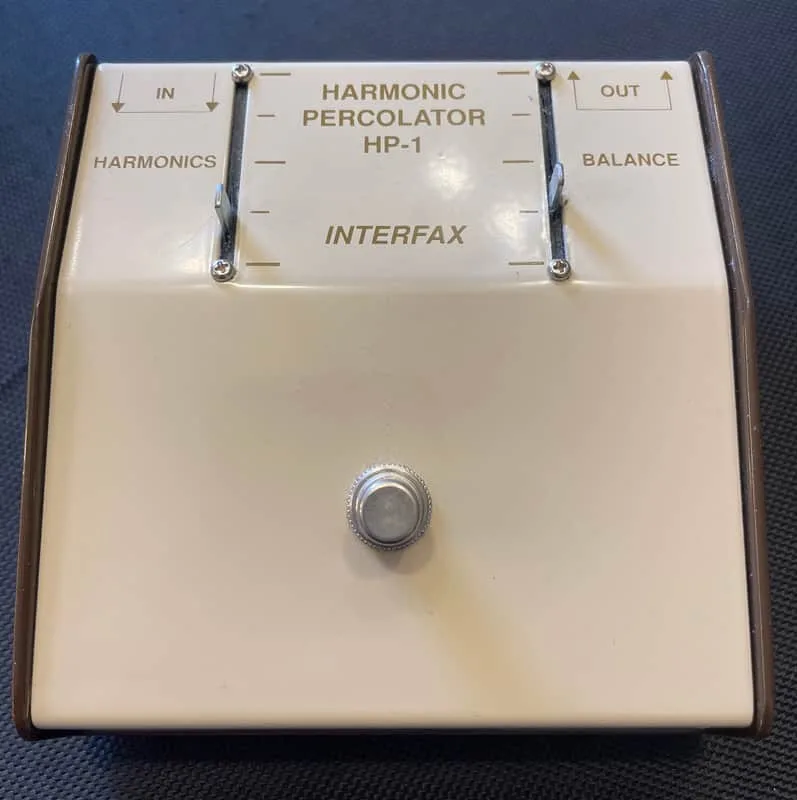


The Interfax Harmonic Percolator is an extremely rare and highly sought-after fuzz and overdrive from the mid-1970s, made in Milwaukee, Wisconsin by Ed Giese1. Originals turn up so seldom that Premier Guitar's reviewer, writing about the circuit in 2026, put it plainly: "Like just about everyone, I've never played an original"2. What has kept the pedal alive is its unusual circuit, a two-transistor design that mixes germanium and silicon, and its famously minimal two-slider control panel.
The pedal sits between fuzz and overdrive territory. Fredric Effects, whose own versions are traced to the original, describes it as "an oddball overdrive/distortion pedal from the 1970s"3, while Aion FX calls it a fuzz/overdrive1. Its signature, according to Pedal of the Day, is "the original circuit's signature even-order harmonics saturation"4.
A rare hybrid silicon and germanium fuzzbox
The Harmonic Percolator's circuit is its main claim to fame. It uses a PNP germanium transistor paired with an NPN silicon, allowing it to run in a standard negative-ground configuration1. The transistors identified in traced units are a 2N404 germanium and a 2N3565 silicon73. That pairing matters to players: most classic germanium fuzzes need a positive-ground supply and can be fussy about power, while the Percolator's hybrid arrangement works like a normal modern pedal1.
The circuit also uses clipping diodes, which Aion FX notes is unlike most germanium fuzzes1. Jack Orman's technical analysis at AMZ identifies it as another commercial example of PNP transistors operated off a positive supply, an unusual arrangement for its era8.
Part of the pedal's long-running mystery was deliberate. In the originals, "the transistors and some of the components were gooped or obscured," according to Aion FX, which kept the exact circuit hidden for years1. The builder behind it, Ed Giese, "built a unique circuit using a rare mix of silicon and germanium transistors," as Gearnews put it when covering a modern reissue9.
There is no single definitive version to copy. The Percolator "does not seem to have one 'stock' design," according to the madbean pedal documentation, which notes that slight changes were made in component values over its life-cycle5. Aion FX's research found several circuit changes throughout the run, with two known versions: "stock" and "Albini"1. The Albini version, named for the unit owned by recording engineer Steve Albini, "was found to have several different values than others that had been traced. His is the only known unit to use these values"1. The madbean documentation describes the Albini version as "smoother and more controlled," with "a slightly over-compressed fuzz tone when the Harm is all the way up," and more aggressive than a FuzzFace with unique characteristics10.
The controls: Harmonics and Balance
The original Interfax HP-1 kept its interface to two sliders: Harmonics and Balance6. There is no dedicated gain or tone control, as Premier Guitar's reviewer noted2. That two-knob format is carried through almost every modern version.
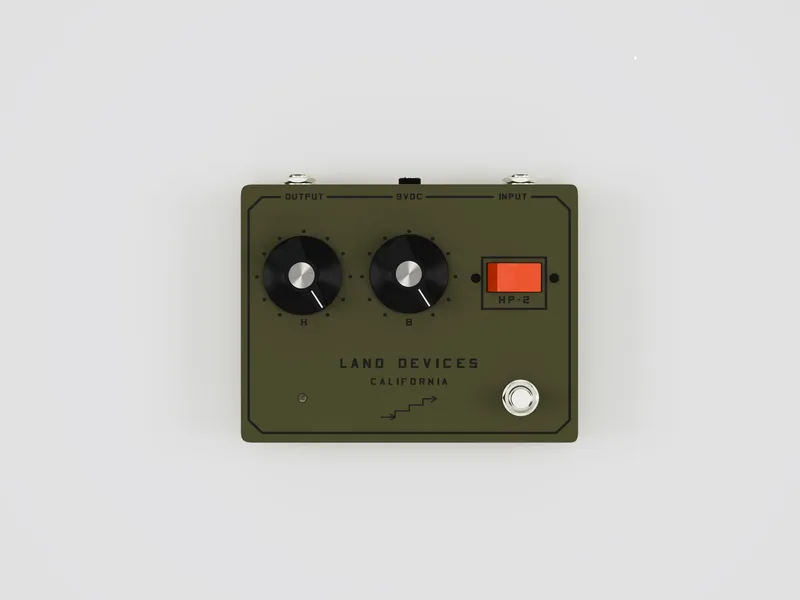
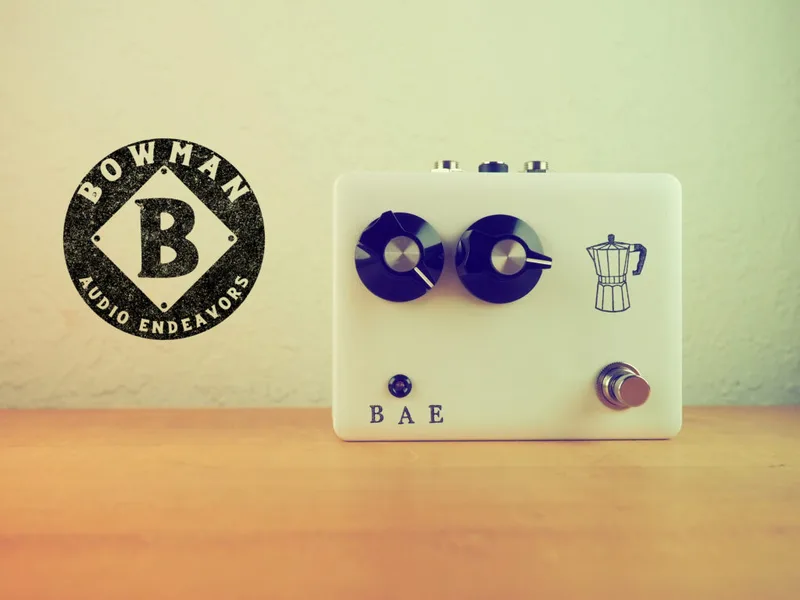
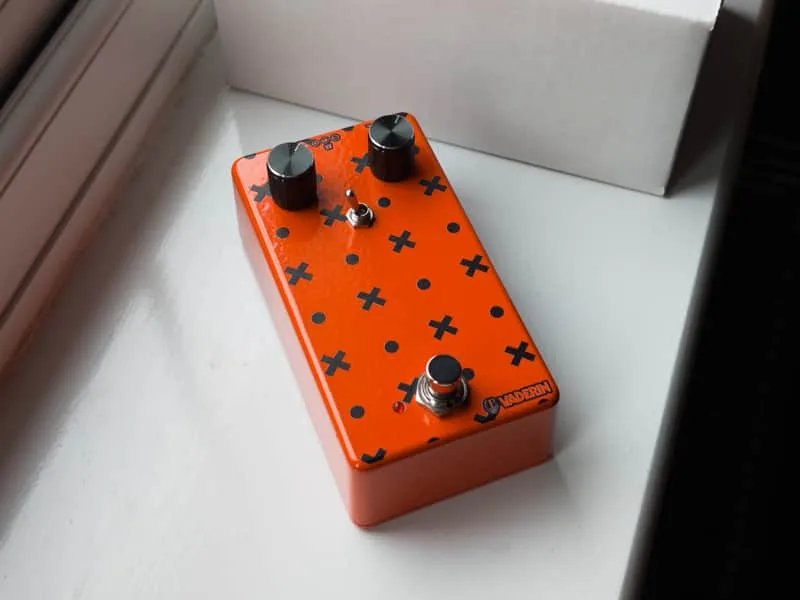
How those two controls behave is described consistently across builders' versions. On the Vaderin Pedals HP-X, "Balance (volume)" and "Harmonics (distortion)" are the two controls4. On the Land Devices HP-2, "the right one controls the output" and "the left knob controls harmonics"12. Pedal of the Day, reviewing the Bowman Audio Endeavors version, observed that "Balance and Harmonics are the only controls, but there's a wide sonic spectrum just waiting to be explored"13.
Why originals are hard to find
Not many Interfax production units were made in the pedal's short life-span5. Combined with the gooped, obscured components that kept the circuit from being easily traced1, scarcity has made the HP-1 a collector's item. Guitar Pedal X counted "around 40 or so regularly available variants of this circuit, mostly from tiny boutique builders"7, which tells you both how sought-after the design is and how few people can actually buy an original.
Modern versions and clones
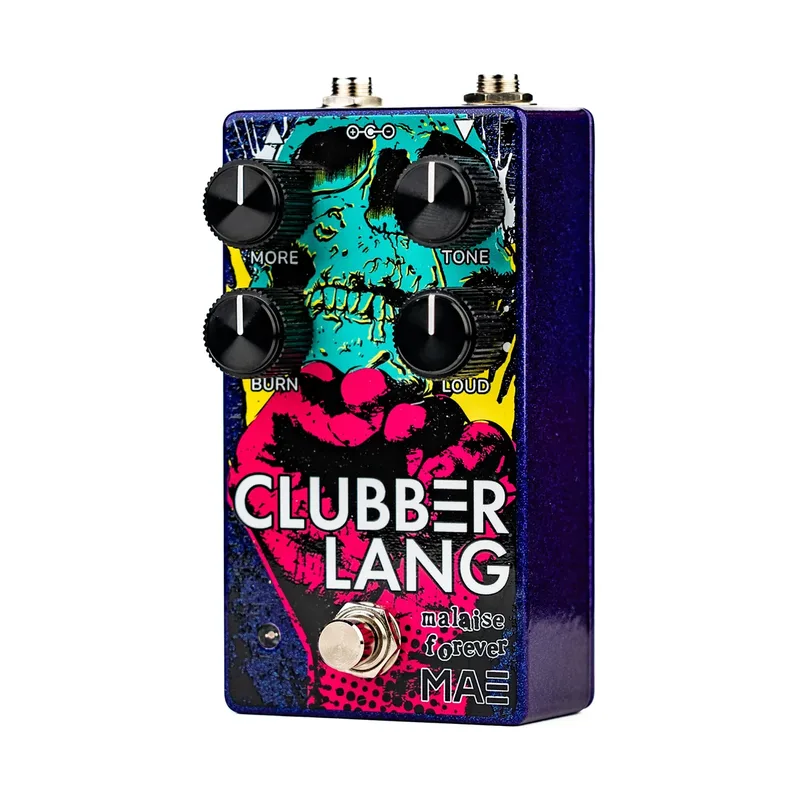
The Harmonic Percolator has one of the larger clone ecosystems of any vintage fuzz. Named versions from boutique builders include the Nine of Swords Headache, the Bowman Audio Endeavors Harmonic Percolator, the Malaise Forever Clubber Lang, and the Vaderin Pedals HP-X11. Moreland Magnetics' 202a is "Moreland Magnetics' take on the inimitable Interfax Harmonic Percolator"14, and Paperboy Pedals builds a clone in a white enclosure11. Aion FX offers the circuit as a DIY project, the Particle Vintage Fuzz15.
The most established modern builder is Fredric Effects, which has been making versions of the circuit for over a decade31617:
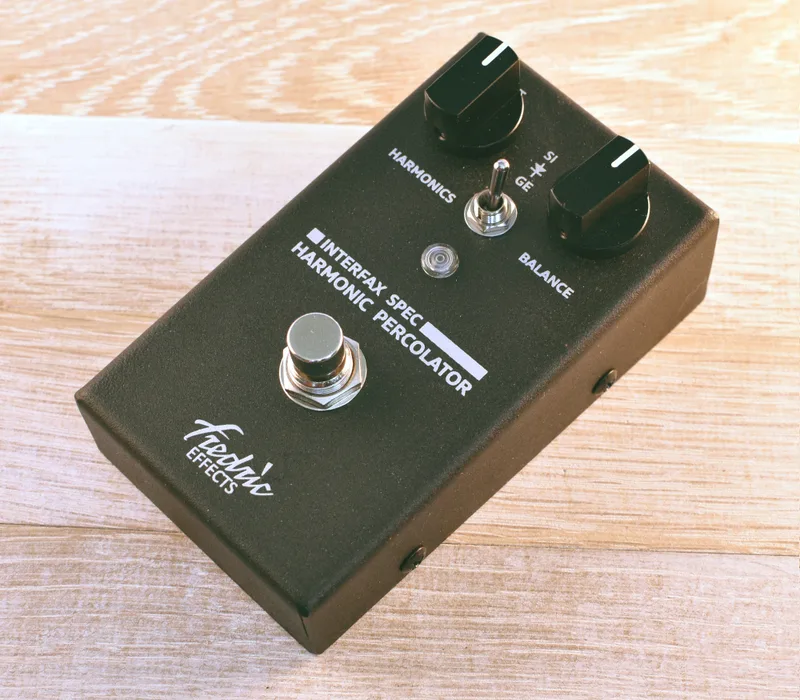
- Harmonic Percolator (Interfax Spec): an exact clone using NOS 2N404 germanium and 2N3565 silicon transistors, with normal rotary pots instead of sliders, plus a switch offering three different clipping options3.
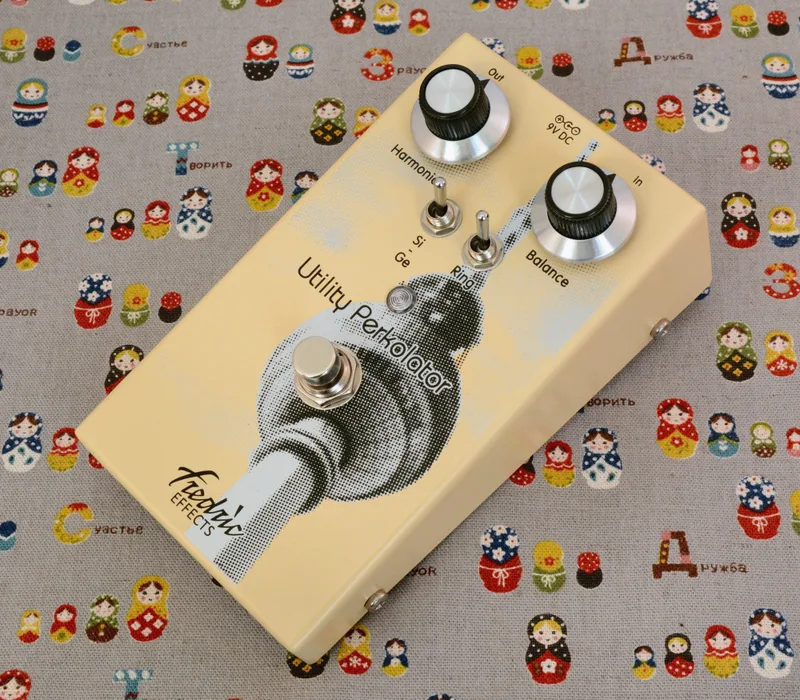
- Utility Perkolator: Fredric Effects' own improved version of the hybrid silicon/germanium circuit, first announced in 2014 as "our latest version of the fabled Interfax Harmonic Percolator from the 1970s"1716.
- Silicon Harmonic Percolator: a part-for-part clone of the original circuit but built with entirely silicon transistors manufactured 40 years ago in the former East Germany18. Guitar Pedal X's Stefan Karlsson described its control set as "Gain, Volume, Diode On/Off"19, while Delicious Audio lists Volume, Harmonics (tone shaping), and Drive knobs20.
The Fredric Effects versions differ from the original in ways a buyer should know: the Interfax Spec uses rotary pots rather than the original sliders and adds a clipping switch3, and the Silicon version swaps the germanium transistor for East German silicon18.
The Percolator does not seem to have one "stock" design: slight changes were made in component values over its life-cycle510. The Harmonic Percolator is also available from Aion FX as the Particle Vintage Fuzz1510, and the Albini version is smoother and more controlled, with a slightly over-compressed fuzz tone when the Harm control is all the way up1510.
Videos
gearwire
Geeztown
tonefiend by joe gore
Questions
What is the Interfax Harmonic Percolator?
A rare fuzz and overdrive pedal from the mid-1970s, made in Milwaukee, Wisconsin by Ed Giese. It runs a PNP germanium transistor paired with an NPN silicon transistor in a two-transistor circuit that also uses clipping diodes, which sets it apart from most germanium fuzzes. Its two slider controls are Harmonics and Balance.
Where was the Interfax Harmonic Percolator made?
In Milwaukee, Wisconsin, in the 1970s, by Ed Giese. Not many production units were made during the pedal's short life-span, which is a large part of why originals are so hard to find today.
Does the Harmonic Percolator use germanium transistors?
Yes, but only in part. The circuit is a hybrid: a 2N404 germanium transistor in the PNP position paired with a 2N3565 silicon transistor in the NPN position. That mix lets it run in a standard negative-ground configuration, unlike many all-germanium fuzzes.
Is there a modern version of the Harmonic Percolator?
Yes, many. Fredric Effects builds several versions, including the Utility Perkolator and an exact-spec clone with the original transistors, and Electro-Harmonix announced a $99 Percolator in 2026. Around 40 boutique variants of the circuit are regularly available from small builders.
Why are Interfax Harmonic Percolators hard to find?
Few were made during a short production run in the 1970s, and the transistors and some components in the originals were gooped or obscured, which kept the circuit mysterious for years. Reviewers note that almost nobody has ever played an original, which adds to the demand.
Sources (20)
- Particle Vintage Fuzz / Interfax Harmonic Percolator, Aion FX, 2021-02-19
- Electro-Harmonix EHX Percolator Review, Premier Guitar, 2026-09-19
- Interfax Spec Harmonic Percolator, Fredric Effects, 1970
- Vaderin Pedals HP-X Harmonic Percolator, Pedal of the Day, 2021-10-21
- PepperSpray.pdf, madbeanpedals.com, 2024-06-07
- DS Custom Audio Electronics Harmonious Perc, Pedal of the Day, 2025-02-16
- Guitar Pedal X, Guitar Pedal X, 2024-05-13
- Positive Power for the PNP Fuzzface, AMZ Guitar Effects Blog (muzique.com), 2002-03-12
- EHX Percolator: Based on '70s Harmonic Percolator, gearnews.com, 2026-06-17
- PepperSpray2018.pdf, madbeanpedals.com, 2018
- Paperboy Pedals Harmonic Percolator Clone, Pedal of the Day, 2024-02-08
- Land Devices HP-2 Harmonic Percolator, Delicious Audio, 2023-07-31
- Bowman Audio Endeavors Harmonic Percolator, Pedal of the Day, 2020-12-12
- Moreland Magnetics 202a Harmonic Percolator, Pedal of the Day, 2026-08-10
- Calliope Vintage Fuzz / Catalinbread Karma Suture, Aion FX, 2021-02-19
- Fredric Effects Silicon Harmonic Perc, Premier Guitar, 2025-07-25
- Fredric Effects Releases the Utility Perkolator, Premier Guitar, 2014-09-09
- Silicon Harmonic Percolator, fredric.co.uk
- Guitar Pedal X, Guitar Pedal X, 2025-07-21
- New Pedal: Fredric Effects Silicon Harmonic Percolator, Delicious Audio, 2025-07-15