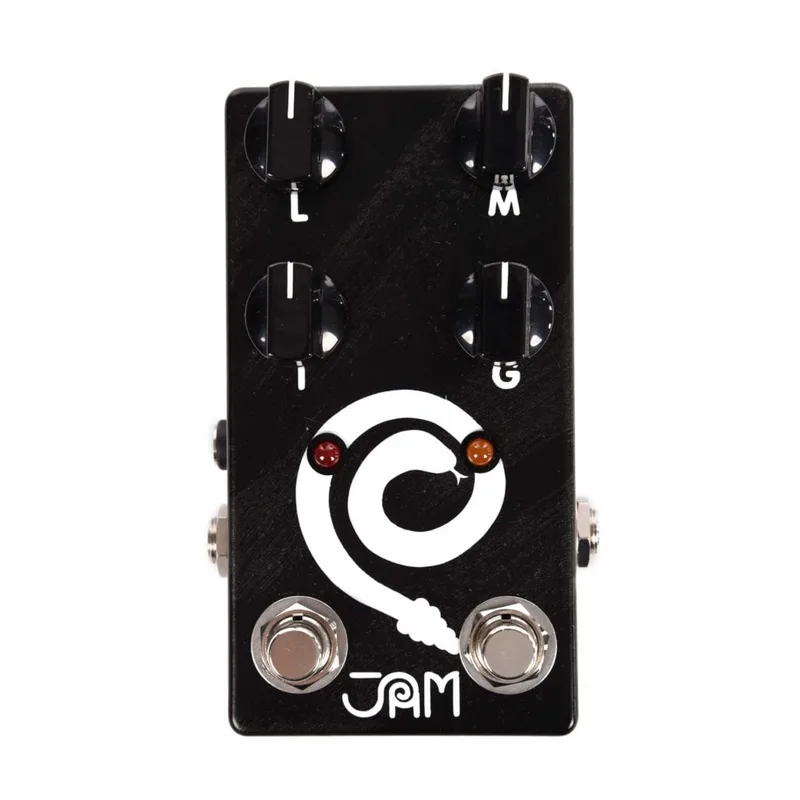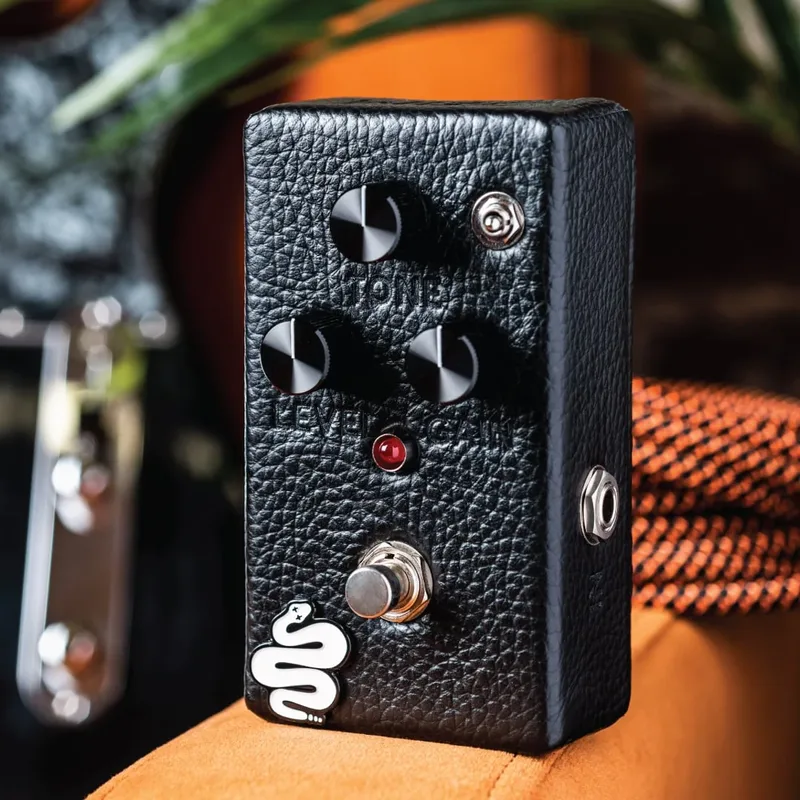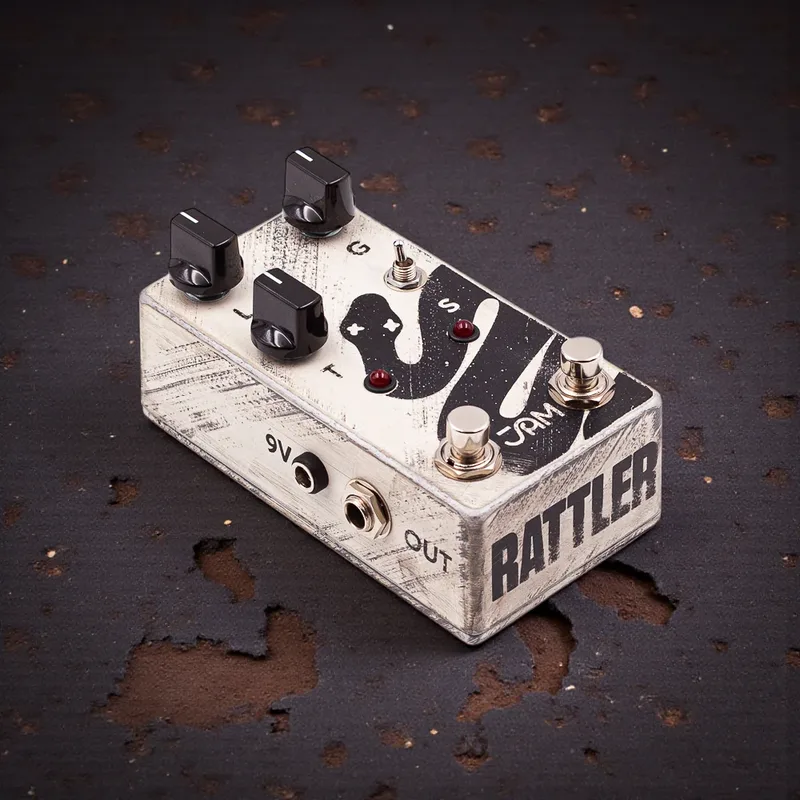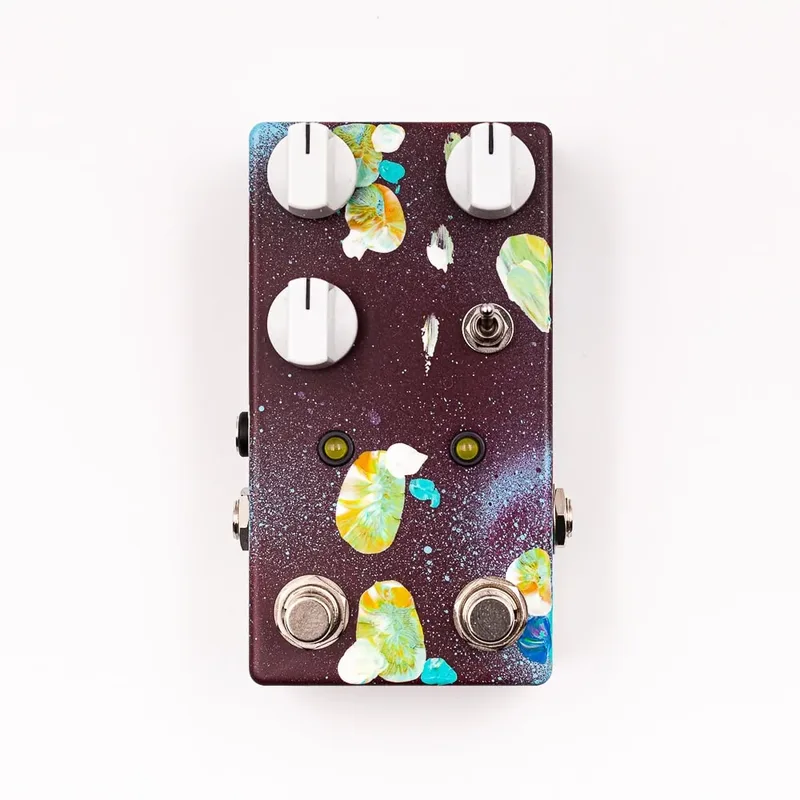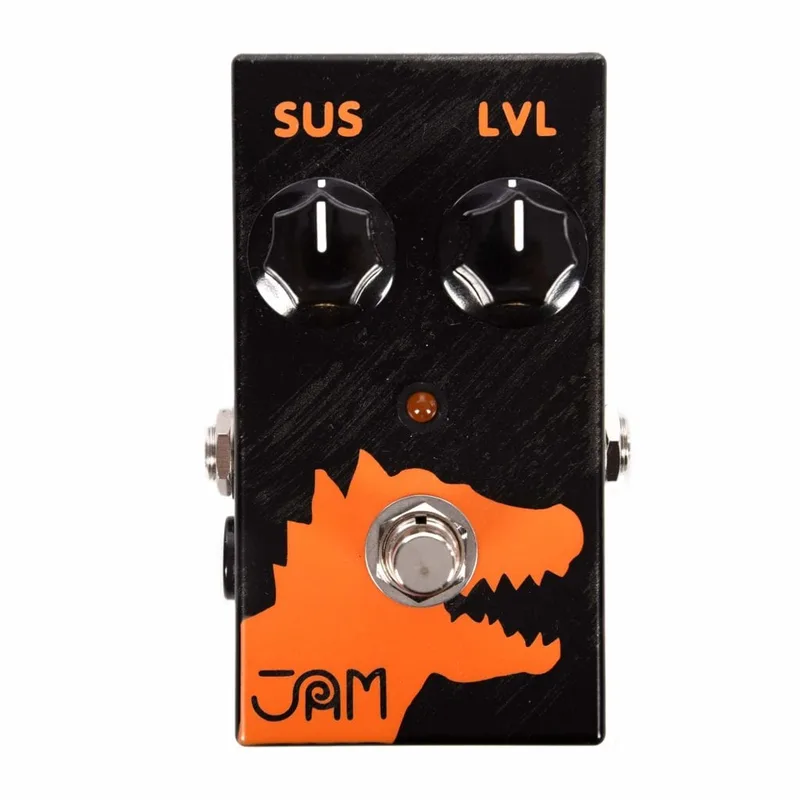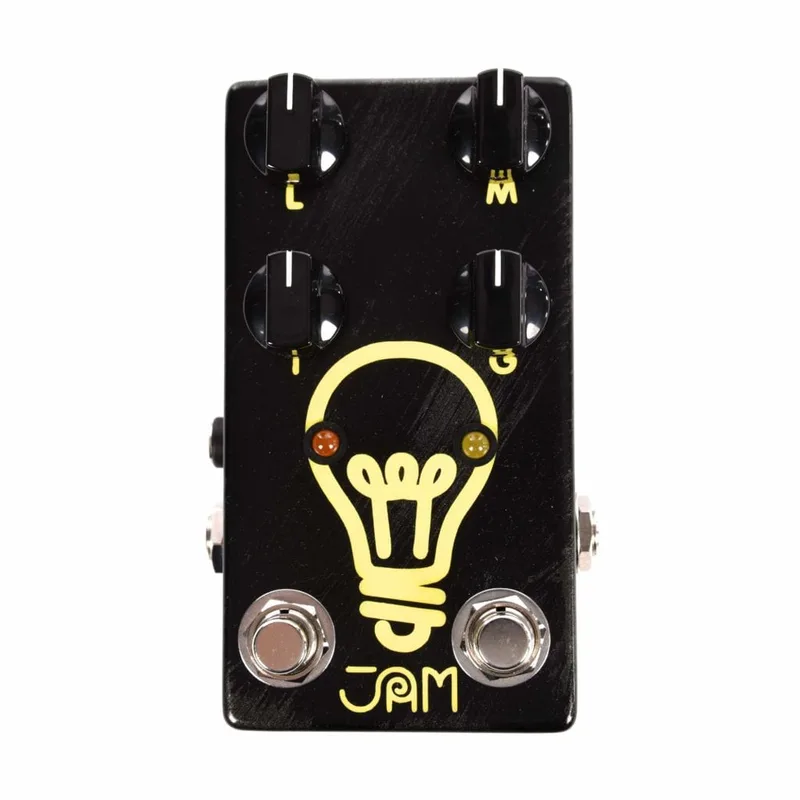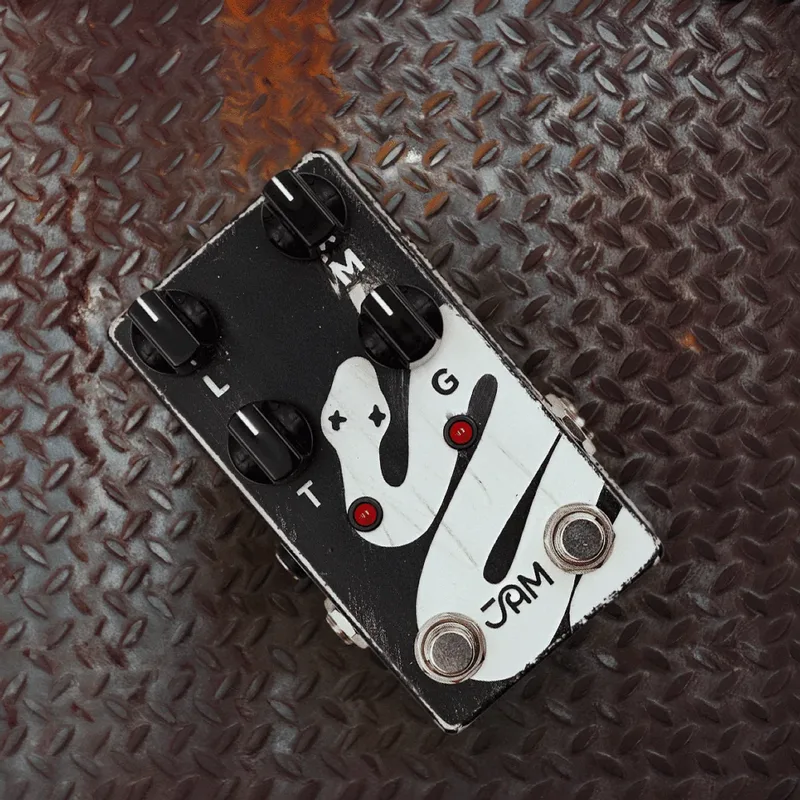


The JAM Pedals "Relic" Rattler Bass is a bass distortion pedal: a limited-edition, hand-painted version of the JAM Pedals Rattler Bass. JAM Pedals describes it as delivering "fat, creamy bass distortion with the headroom, articulation and low-end authority modern players" need, and the key feature that separates it from a guitar distortion is a clean blend, so your low end survives at heavy gain1.
The circuit is built around a custom discrete-component op-amp that JAM Pedals developed to preserve the open, dynamic, tube-amp-like response associated with the discontinued LM308 chip, the part behind the classic early-'80s distortion circuits the Rattler line channels12.
A bass distortion with a clean blend
The core idea of the pedal is simple: distortion circuits tend to thin out a bass signal, so the Rattler Bass keeps your dry signal in parallel with the distorted one. JAM Pedals says the Mix control "sets the ratio of clean and distorted signals, retaining low-end impact and note definition at heavier gain settings"1. In practice that means you can push the Gain knob hard for an aggressive grind while your fundamental stays underneath it, which is what keeps a distorted bass audible in a mix.
The circuit itself is a custom discrete-component op-amp design. JAM Pedals developed the proprietary op-amp to preserve the open, dynamic and tube-amp-like feel associated with the LM308, the op-amp used in the classic early-'80s distortion circuits that the Rattler family is modeled on, and which has since been discontinued. On the bass version, that core is joined by a second gain stage and the clean blending12.
The guitar version, the JAM "Relic" Rattler, shares the same approach: JAM Pedals calls it "a bold, open and dynamic distortion pedal that channels the fat, creamy voice of classic early-'80s circuits through a custom discrete-component op-amp"2. The bass model adds the blend and the high-gain footswitch described below.
The controls
Four knobs handle the sound, and JAM Pedals summarizes their jobs in one line: "Level sets output, Gain controls saturation, Tone shapes the response and Mix blends clean and distorted signals"1.
| Control | What it does |
|---|---|
| Level | Sets the output volume |
| Gain | Controls the amount of saturation |
| Tone | Shapes the frequency response |
| Mix | Blends the clean and distorted signals |
The one that matters most for bass players is Mix. Run it low for a mostly clean tone with a hint of grit on top, or higher to let the distorted character dominate while still keeping some of your dry low end in the blend1.
The footswitches and saved startup states
The pedal has two footswitches. The right one is the standard effect on/off. The left one is a dedicated HIGH GAIN switch: JAM Pedals says it "activates a higher-gain stage for instant bursts of added saturation," aimed at heavier sections and lead moments1.
Both states are programmable at power-up. The effect and high-gain startup states can each be saved independently by reconnecting power while holding the corresponding footswitch1. So if you always want the pedal to come up with the effect engaged, or with the high-gain stage already on, you can set that once and it will be the default every time you power your board.
Saving a startup state is done by reconnecting power while holding the footswitch. The effect state and the high-gain state are saved separately, so you can program each one on its own1.
Switching is clickless, which JAM Pedals points to alongside the programmable startup states as making the pedal "as stage-friendly as it is expressive"1.
The LM308 lineage and the hand-painted Relic edition
The Rattler name comes from its lineage: the original Rat-style distortion circuits of the early 1980s were built around the LM308 op-amp, a chip that has since been discontinued. Rather than substitute a modern op-amp with a different character, JAM Pedals developed its own discrete-component op-amp to preserve the open, dynamic feel associated with the original LM308-based circuit1. The guitar Rattler uses the same proprietary op-amp for the same reason2.
The "Relic" part of the name is the artwork. Every limited artwork pedal is a one-of-a-kind hand-painted piece, and JAM Pedals notes that the pedal you receive will differ in detail from the photos shown1. That makes each unit unique, and it also means the edition is limited by nature: once the hand-painted run is gone, the standard Rattler Bass carries what JAM Pedals describes as the same sound with different artwork3.
For context on the wider line, the Relic editions share their circuit approach with the standard Rattler and Rattler Bass: a proprietary discrete-component op-amp developed to preserve the open, dynamic and tube-amp-like response associated with the discontinued LM308 chip4. Like the other custom artwork pedals, each Relic Rattler Bass is a one-of-a-kind hand-painted piece, and the pedal you receive will differ in detail from the photos shown2.
Buying and returns
The Relic Rattler Bass is listed at a regular price of £294.00, tax included1. For UK orders, JAM Pedals ships free with all duties and 20% UK VAT included, delivered DDP with no extra charges on delivery1. The maker offers a 30-day money-back guarantee with a no-questions-asked refund on return1.
Videos
BassTheWorld.com
Patrick Hunter
Chris Kollias
Questions
Is the JAM Relic Rattler Bass true bypass?
Yes. JAM Pedals lists the Rattler Bass as true bypass, so with the effect off your signal passes through without active buffering. Switching is also clickless, which keeps the pedal quiet to engage on stage.
How much current does the Relic Rattler Bass draw?
The maker lists a current draw of 40 mA at 9V DC, center negative. That is modest by modern standards, but it is worth accounting for on a crowded power supply alongside your other pedals.
What does the Mix knob do on the Rattler Bass?
Mix blends your clean bass signal with the distorted signal. Setting it partway keeps your low-end impact and note definition intact while running heavier gain settings, which is the main reason to choose a bass distortion with a blend over a guitar pedal.
Is the Relic Rattler Bass still available?
The Relic Rattler Bass is a limited, one-of-a-kind hand-painted artwork edition, so availability depends on stock at any given time. The standard Rattler Bass carries the same sound with the regular artwork.
How do you save the startup state on the Rattler Bass?
Hold the footswitch for the state you want to save, either the effect on or off or the high-gain stage on or off, and reconnect power while holding it. Each of the two startup states is saved independently.
What is the difference between the Rattler Bass and the Rattler Bass MKII?
The Relic Rattler Bass is a variant of the Rattler Bass with the same sound and different, hand-painted artwork. JAM Pedals also released an updated Bass Rattler MKII in July 2024, which is a separate product in the line.
Sources (4)
- “Relic” Rattler Bass, JAM Pedals (www.jampedals.com)
- “Relic” Rattler, JAM Pedals (www.jampedals.com)
- Rattler Bass, JAM Pedals (www.jampedals.com)
- Jam Pedals Rattler MKII: The Boutique Classic Just Got An Upgrade!, gearnews.com, 2024-07-19