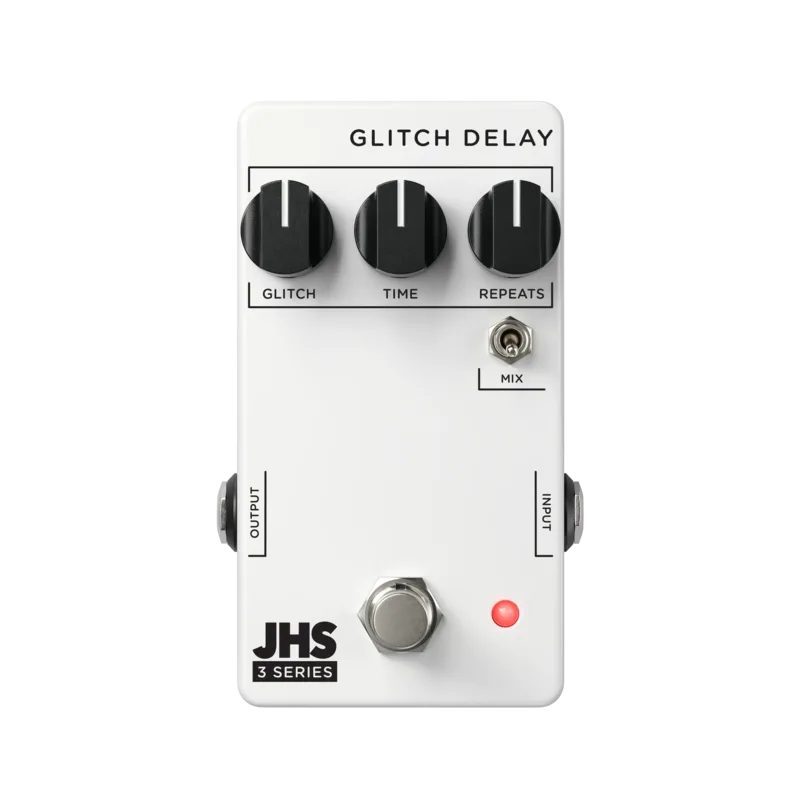


The JHS 3 Series Glitch Delay is a digital delay pedal built around what JHS calls "one singular obsession: time-based glitching"1. It holds your core delay time in place while a randomized glitch event alters the playback speed in real time, bending, dragging and warping the repeats inside the feedback loop1. With the Glitch knob fully counterclockwise, none of that happens: JHS describes it as "a warm, musical delay pedal. No glitch, just classic delay tones"1.
It launched in May 2026 alongside the 3 Series Bit Crusher and Ring Modulator, three knobs and a toggle each, priced at $99 and made in Kansas City2. JHS built only 45 of each, so it is a limited run rather than a permanent catalog item2.
How the glitching works
The idea is simple but unusual: the delay time you set stays fixed, and on a random schedule the pedal momentarily changes the playback speed of the repeats already circulating in the feedback loop. The result is repeats that bend, drag and warp rather than echo back cleanly1.
The Glitch knob sets the probability of a glitch event. Fully counterclockwise, the probability is zero and you have a straight delay. Full clockwise, a glitch becomes up to 50 percent likely, and the LED flashes in sync with each event3. On the JHS demo video, Josh is explicit about what the light means:
"the LED doesn't blink to the time you're setting. It blinks when a glitch happens."2
Because the events are randomized, the same setting never produces the same stutter twice, which is the point: it is an unpredictable effect, not a programmable one1.
The controls
| Control | What it does |
|---|---|
| Time | Sets delay time, from 20 ms to 980 ms4 |
| Glitch | Sets glitch probability, from classic delay up to 50%4 |
| Repeats | Sets the number of echoes, up to infinite; adds musical modulation as the setting increases24 |
| Mix (toggle) | Sets delay level: down is 35% effect, up is 80% effect24 |
Two details are worth knowing as a player:
- Infinite repeats are designed in. Josh explains that "the way this is designed is to let you turn that repeats knob all the way up and let it be this kind of like infinite"2. An internal limiter keeps the endless feedback from getting out of control4, so you can hold a wash of repeats without runaway self-oscillation.
- The Mix switch is coarse, not continuous. You get two levels, 35 percent and 80 percent2, rather than a blend knob. For a subtle ambient wash the 35 percent setting is the starting point; the 80 percent setting pushes the warped repeats well forward.
The Repeats control also adds musical modulation as you increase it4, so higher repeat settings darken and move rather than simply multiplying.
Where it came from: the Line 6 DL-4 and Bill Frisell
JHS says the pedal is "inspired by the legendary Line 6 DL-4 and the ambient, smearing delay work of Bill Frisell"1. Pedal of the Day repeats the same framing3.
The DL-4 connection is personal for JHS's founder. On the demo video, Josh says of the DL-42:
"I had it on my board for years and years and it was like you'd always discover something in it."2
The DL-4 earned its reputation among experimental players: Premier Guitar notes that "forward-thinking artists like Bill Frisell, Mary Halvorson, Battles, Lightning Bolt, and Reggie Watts used this green box" from the mid 2000s onward51. Frisell's ambient, smearing delay work is the other half of the inspiration1.
Circuit-wise, the Glitch Delay is not a clone of anything. Josh says JHS "did not start with any particular topology. We built it out from scratch without anything it didn't need"2. In texture, he compares it to "the early 2000s, late '90s Ibanez digital pedals" in the way the repeats fall off in frequency2.
What reviewers said
Published reaction to the pedal has been brief but consistent about where it sits.
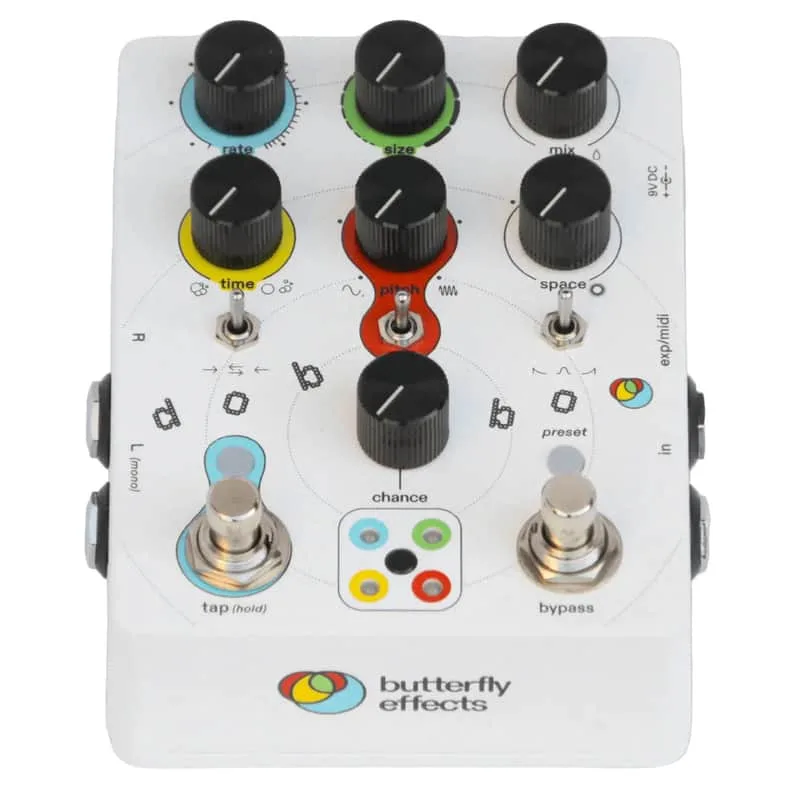
- Guitar.com (Jason Mays, October 2026) placed it in a review of the Butterfly Effects Dobbo, writing that the Glitch Delay is "considerably simpler than something like Dobbo, but that's also part of its appeal," and calling it suited to ambient players on a budget6.
- Pedal of the Day (May 2026) framed it around the same obsession as the maker: "a delay pedal built around one singular obsession: time-based glitching"3.
- Gearnews (May 2026) highlighted the practical details: the 20 ms to 980 ms time range, the internal limiter for endless feedback, and the warm, classic delay behavior with the Glitch control fully counterclockwise4.
The JHS demo also shows all three of the May 2026 3 Series pedals on bass, synth and drum machines as well as guitar2, so the glitch effect is not guitar-specific in use.
How it compares in the JHS delay lineup
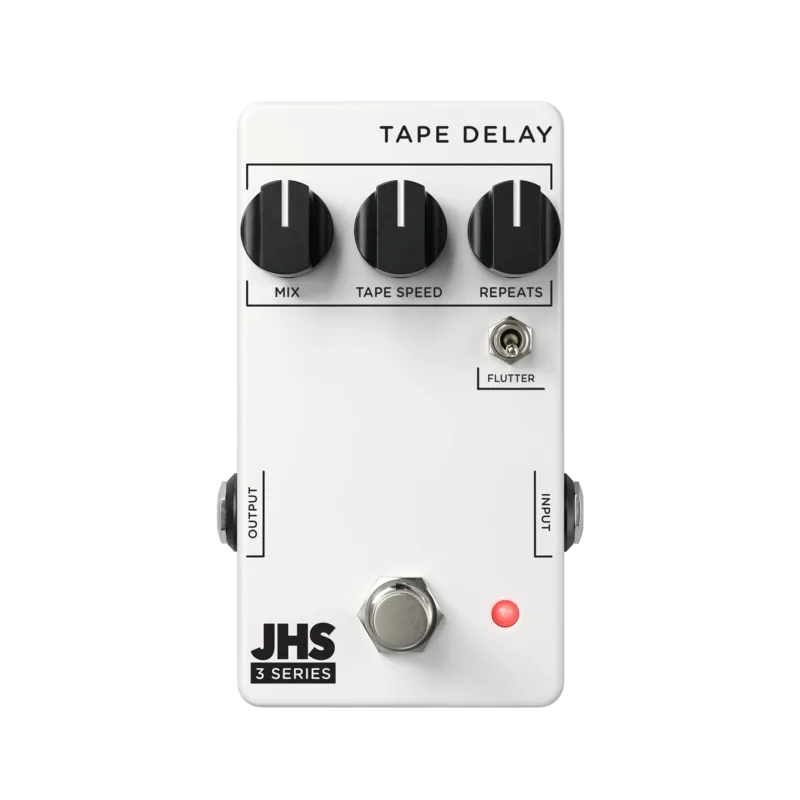
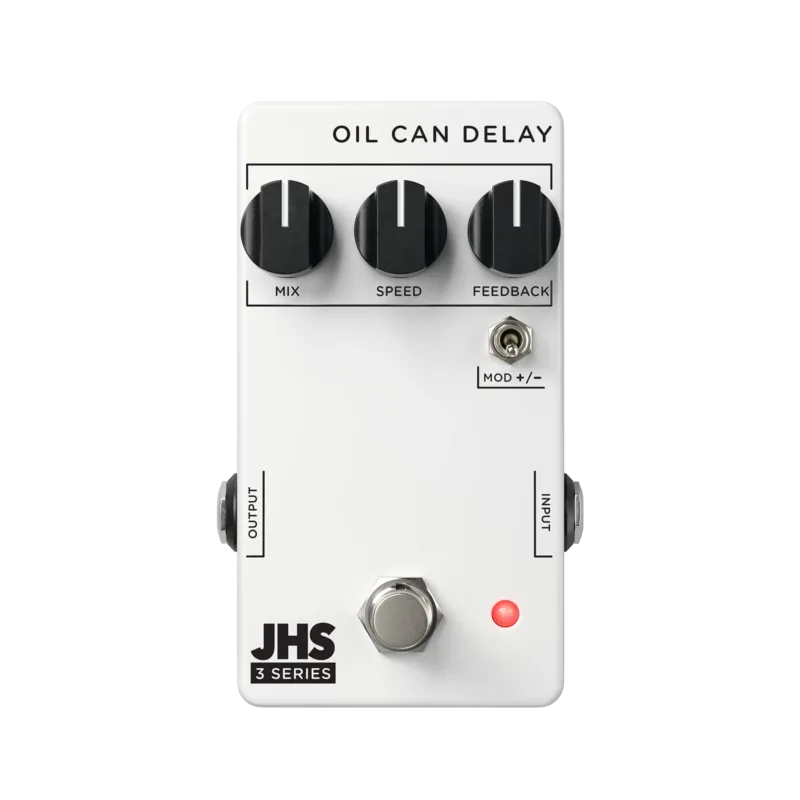
JHS already sells several delays at the same $99 price in the 3 Series, and the Glitch Delay is the experimental end of that range. The regular JHS 3 Series Delay covers straightforward echo duty, while the Glitch Delay is the one built for randomized warping. If you want a delay that behaves predictably every time, this is not it; if you want the DL-4 school of happy accidents in a small, cheap box, that is the niche it fills123.
Videos
JHS Pedals
JHS Pedals
Shaun Dawson
Questions
What does the LED on the JHS Glitch Delay show?
The LED is a glitch indicator, not a tempo or time indicator. It blinks each time a glitch event happens, so you can see when the pedal is about to warp your repeats. On the JHS demo, Josh notes it does not blink to the delay time you are setting.
Can the JHS 3 Series Glitch Delay do infinite repeats?
Yes. The Repeats knob can be turned all the way up for infinite repeats, and an internal limiter is designed to keep the endless feedback from getting out of control, so you can hold a wash of repeats without the pedal self-oscillating wildly.
Can you use the Glitch Delay as a normal delay?
Yes. With the Glitch knob fully counterclockwise the pedal is a warm, musical delay with no glitching at all, just classic delay tones. JHS describes this setting as a regular delay, so it works as an everyday delay pedal when you do not want the effect.
What is the delay time range of the JHS Glitch Delay?
The Time control runs from 20 ms to 980 ms, covering everything from tight slapback to nearly a full second of ambient echo. The core delay time stays locked in place while the glitch events alter playback speed around it.
How much current does the JHS 3 Series Glitch Delay draw?
It draws 65mA on 9V DC center negative power, according to JHS Pedals. That is modest for a digital delay, but it is enough that you should plan for it on a small isolated power supply rather than assuming it is negligible.
Sources (6)
- 3 SERIES GLITCH DELAY, JHS Pedals
- 3 New JHS 3 Series Pedals : Bit Crusher, Glitch Delay, Ring Modulator, JHS Pedals (YouTube channel), 2026-05-06
- JHS Pedals 3 Series Ring Modulator / Glitch Delay / Bit Crusher, Pedal of the Day, 2026-05-28
- JHS Pedals Destroy Your Tone with 3 Series Bit Crusher, Ring Modulator, & Glitch Delay, gearnews.com, 2026-05-08
- Line 6 DL4 MkII Guitar Effects Pedal Review, Premier Guitar, 2022-08-04
- Butterfly Effects Dobbo review: “a wonderfully creative reward”, Guitar.com