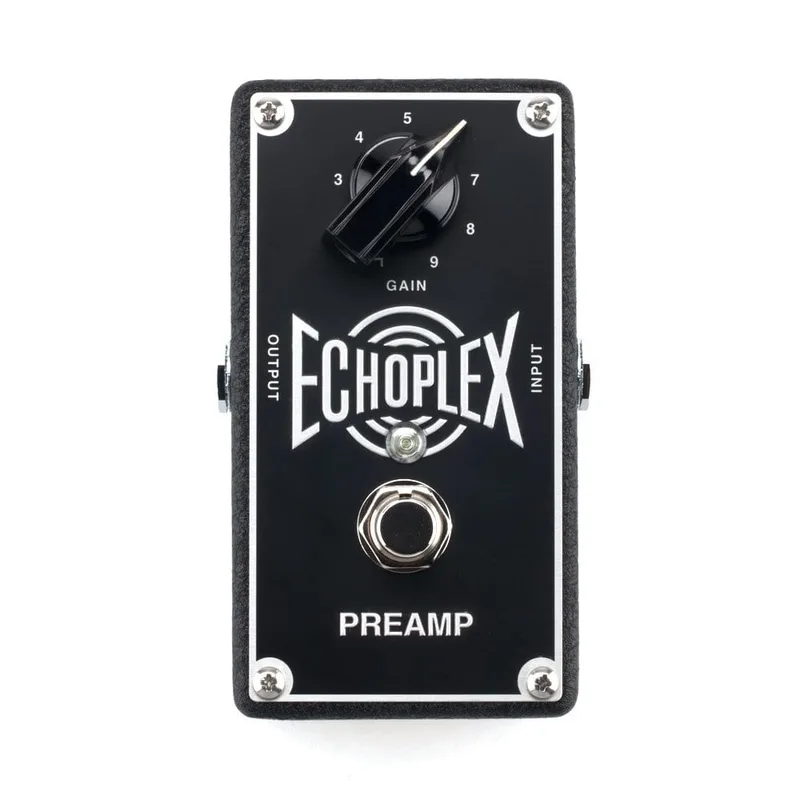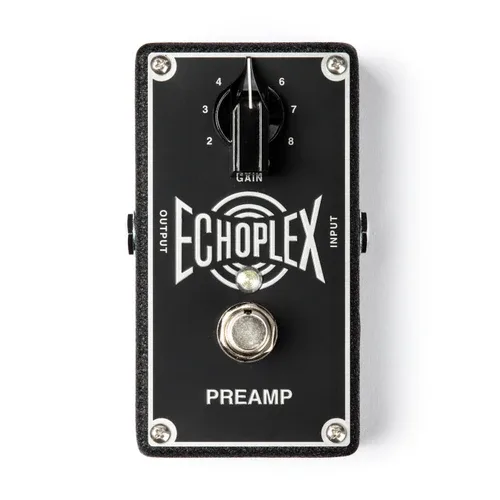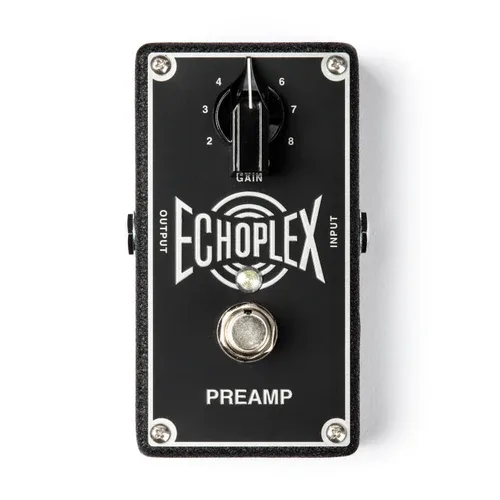


The Jim Dunlop EP101 Echoplex Preamp is a compact preamp pedal from Dunlop that recreates the preamp front end of the Maestro Echoplex EP-3 tape echo, the unit many players ran their signal through in the 1970s whether or not they used its delay1. It is a tapeless recreation of the EP-3: no tape loop, no repeat controls, just the preamp stage that guitarists came to prize2. Dunlop announced it at NAMM in January 2014, with shipping in February 2014 at an MSRP of $171.411.
The pedal has a single control, a Gain knob with a replica EP-3 knob on it, and it adds up to +11 dB of gain to your signal13. At higher settings the circuit produces light asymmetrical clipping, which Dunlop describes as a bit of nice organic grit1. Premier Guitar's reviewer later summed up its place in the Dunlop lineup simply: "MXR has a solution in the form of the EP101 Echoplex preamp pedal"4.
The EP-3 preamp in a pedal
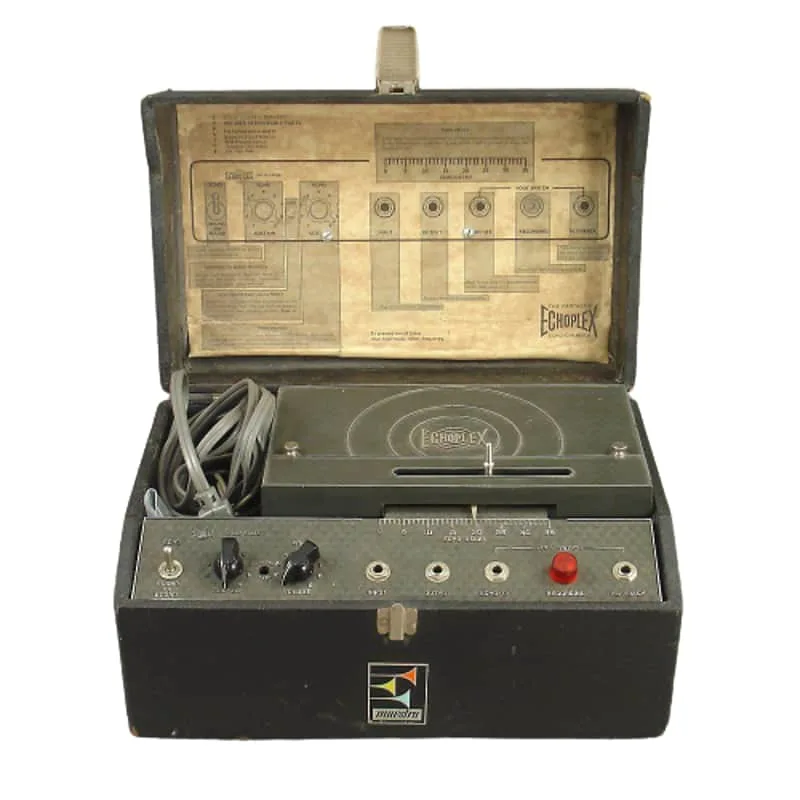
The original Echoplex EP-3 was a tape echo unit, but a large part of its reputation rests on its preamp. Guitar World's review of the later EP103 noted that "most guitarists prefer the EP-3 for its preamp (which Dunlop recently duplicated with the EP101 Echoplex Preamp pedal)"3. The EP-3's preamp gave the unit quiet performance and enhanced sound quality of its delay signal, cleaner and brighter than the tube echo units3.
The EP101 takes that preamp stage and puts it in a stompbox. Dunlop's product page describes it as recreating "the magic of the EP-3's front end, featuring a Field-effect Transistor (FET) just like the original"8. The FET is the key to the circuit's character: the same transistor type as the original EP-3 preamp, following the same front-end design18.
One difference from the original is the supply voltage. The original EP-3 preamp ran on a 20V supply, according to Aion FX's documentation of the vintage circuit9. The EP101 runs on standard 9-volt power instead1, which is what makes it practical on a modern pedalboard.
For players coming to the pedal today, the appeal is straightforward: the EP-3 preamp sound without hauling around a tape machine. MusicRadar's history of the Echoplex put it this way: "Today, Dunlop offer hardware-heads a solution in the form of the EP101 Echoplex pedal, a tapeless recreation of the EP-3"2.
The Gain control: up to +11 dB
The EP101 has exactly one control, the GAIN knob, which controls the amount of gain added to the signal5. It uses the same style knob found on an Echoplex, a replica EP-3 part17.
What the knob does depends on where you set it:
| Gain setting | What happens |
|---|---|
| Low positions | Clean boost, up to +11 dB of gain83 |
| Position 7 and above | Light overdrive clipping begins5 |
| Higher settings | Light asymmetrical clipping, which Dunlop calls organic grit18 |
Dunlop's manual describes the pedal's sound as "Warm, light overdrive at higher levels"5. So while the EP101 is not a dedicated overdrive pedal, it crosses into that territory when the Gain knob is pushed. Guitar World's demo review noted that it "features only a gain control (with the same style knob found on an Echoplex) that provides up to 11dB of boost"7.
The measured specifications from Dunlop's manual:
| Specification | Value |
|---|---|
| Max gain | +11 dBV5 |
| Max input level | -5 dBV5 |
| Max output level | +5.5 dBV5 |
| Noise floor | -95 dBV A-weighted, Gain at maximum5 |
Power and bypass
The EP101 runs on standard 9-volt power1. Specifically, it is powered by one 9-volt battery, installed by removing the bottom plate, or by a 9-volt AC adapter such as the Dunlop ECB003 or ECB003E, or a DC Brick power supply5. RockBoard's product listing gives the voltage as 9V DC, center negative8.
The pedal contains power management circuitry that Dunlop says guarantees constant headroom performance throughout the normal life of a 9-volt battery1. In other words, the preamp's behavior does not fade as the battery drains.
Bypass is true bypass, with a status LED showing whether the pedal is engaged13. With the pedal off, your signal passes through untouched.
Size and housing
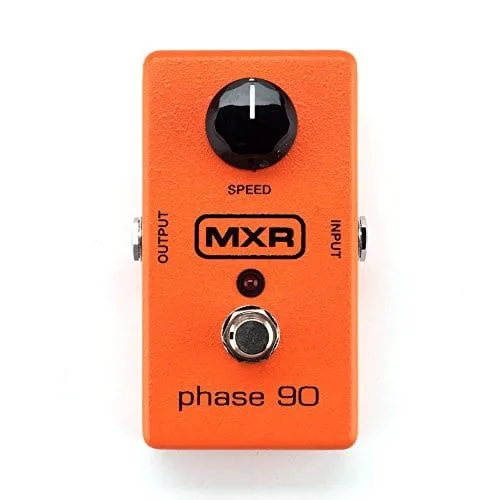
The EP101 comes in a heavy-duty Phase 90-sized housing1, the same compact enclosure Dunlop uses for the MXR Phase 90. That puts it in the small-pedal class, easy to fit on a board. Guitar World's demo review confirmed it "operates either with a nine-volt battery or optional adapter"71.
Where it sits in the Dunlop range
Dunlop later expanded the Echoplex line. Premier Guitar's 2021 review of the EP103 Echoplex Delay treated the EP101 as the established preamp option in the family, "a solution in the form of the EP101 Echoplex preamp pedal"4. The EP101 remains listed on Dunlop's own artist pages as the "ECHOPLEX PREAMP EP101 guitar effects pedal"6.
Videos
Guitar World
Rob Chapman
Chuck's Guitar Geekery
Questions
Does the Dunlop EP101 Echoplex Preamp have true bypass?
Yes. The EP101 uses true bypass switching, so with the pedal off your signal passes through without the preamp circuit in the path. It also has a status LED so you can see at a glance whether it is engaged.
Does the EP101 run on a 9V battery?
Yes. The pedal is powered by one 9-volt battery, which you install by removing the bottom plate. It can also run on a 9-volt AC adapter such as the Dunlop ECB003 or ECB003E, or a DC Brick power supply. Power management circuitry keeps headroom constant through the battery's normal life.
Does the EP101 work as an overdrive?
Partly. It is a preamp, not a dedicated overdrive pedal, but starting at position 7 on the Gain knob it produces light overdrive clipping. Dunlop describes the result as warm, light overdrive at higher levels, with light asymmetrical clipping for organic grit.
What does the EP101 have in common with the Echoplex EP-3?
It recreates the preamp front end of the Echoplex EP-3 tape echo, using a Field-effect Transistor (FET) just like the original. It carries a replica EP-3 knob, and it is a tapeless pedal, so you get the EP-3's preamp character without the tape delay mechanism.
How big is the EP101 pedal?
It comes in a heavy-duty Phase 90-sized housing, the same compact enclosure Dunlop uses for the MXR Phase 90. That makes it easy to fit on a small pedalboard alongside other mini-format MXR and Dunlop pedals.
Sources (9)
- NAMM 2014: Jim Dunlop Introduces EP101 Echoplex Preamp, Guitar World, 2014-01-28
- Blast from the past: Maestro Echoplex, MusicRadar, 2015-02-02
- Review: Dunlop EP103 Echoplex Delay Pedal, Guitar World, 2016-09-07
- MXR EP103 Echoplex Delay Review, Premier Guitar, 2017-01-16
- EP101.pdf, Dunlop Manufacturing, Inc., 2019
- Artists - Iron Maiden - Dunlop, Jim Dunlop (jimdunlop.com)
- Review: Dunlop EP101 Echoplex Preamp, Guitar World, 2014-06-19
- EP101 Echoplex Preamp by Dunlop, RockBoard (rockboard.de), 2026
- Ares Vintage Preamp / Echoplex EP-3 Preamp, Aion FX, 2019-10-18