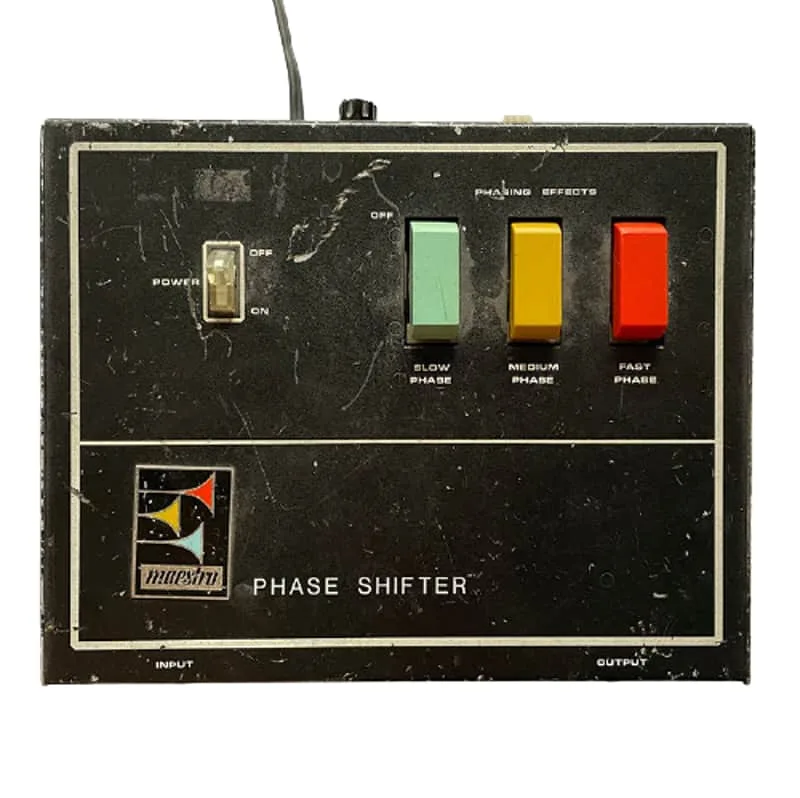
| Original circuit | Maestro PS-1 Phase Shifter, released 1971, six-stage, three speed switches45 |
| Versions | PS-1, PS-1A and PS-1B6 |
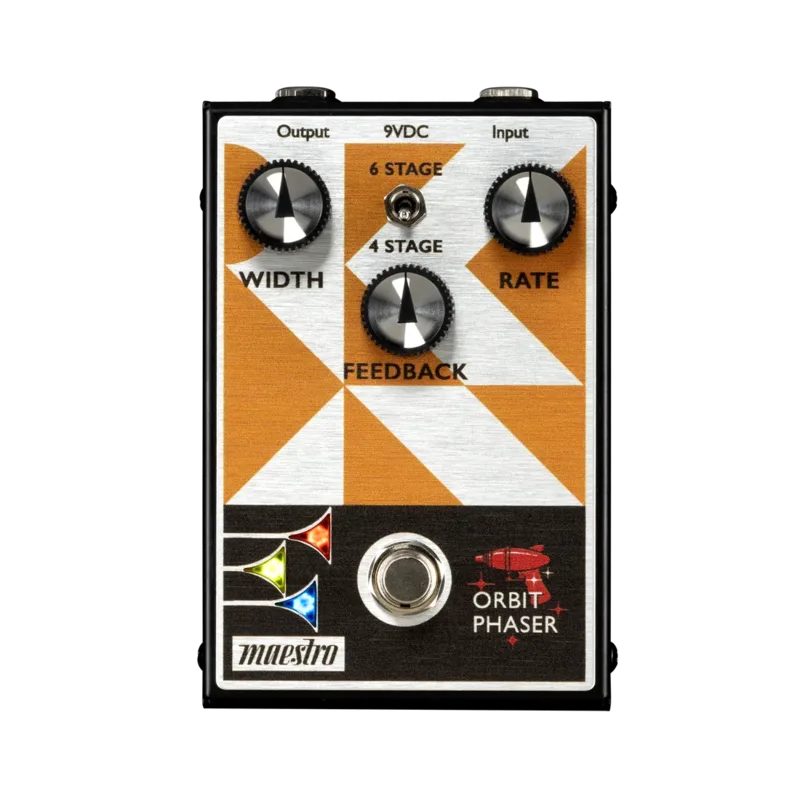
| Modern descendent | Maestro Orbit Phaser (model MOCOPP), all-analog, 4-stage and 6-stage modes, true bypass3 |
| Orbit power | 9V battery or regulated 9V DC, 5.5 x 2.1 mm plug, center-negative, 27.5 mA current draw3 |
| Orbit impedances | 280 kOhms input, 220 Ohms output3 |
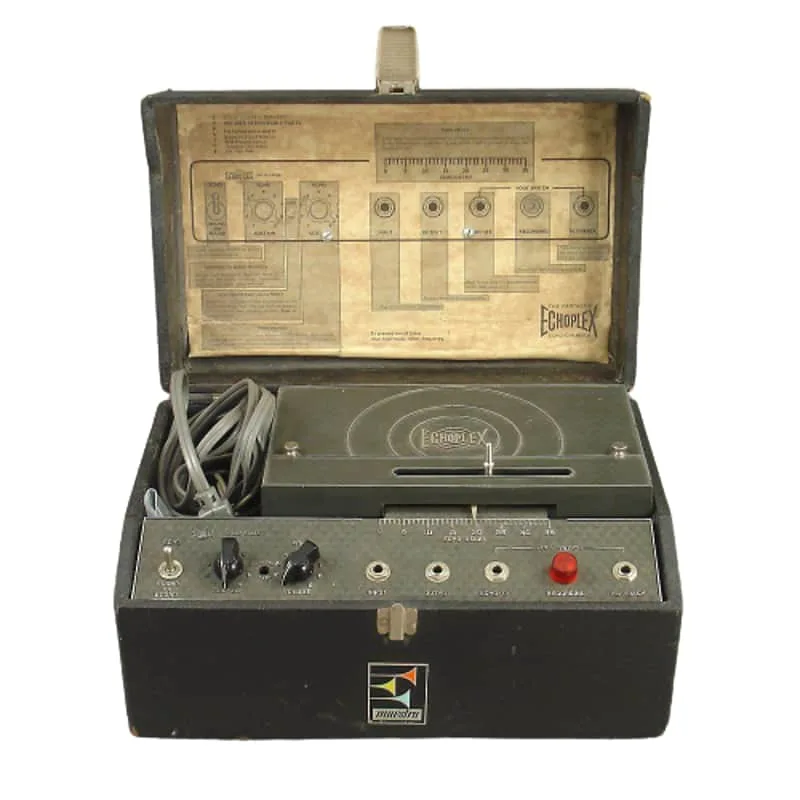
The Maestro Phaser is the circuit that started the phaser pedal as a product category. Released by Maestro in the early 1970s as the PS-1 Phase Shifter, it was the first phaser pedal ever sold, and Delicious Audio credits it as "the device that launched this effect's long and successful existence"12. Maestro, the effects brand of Gibson, is better known to some players for the Maestro Fuzz-Tone, but its 1970s range also included the PS-1 Phase-Shifter, the BG-1 Boomerang Wah and the Echoplex tape echo312.
The original was a fixed-recipe machine: six phase stages, three speed switches, and no other adjustments1. Everything a modern player expects from a phaser, the Rate knob, the depth control, the feedback switch, traces back to circuits built to add flexibility the PS-1 never offered. Gibson's current Maestro Orbit Phaser is a direct descendent of the PS-1, and a string of independent builders have made pedals based on, or in homage to, the same circuit.
Where the Maestro Phaser came from
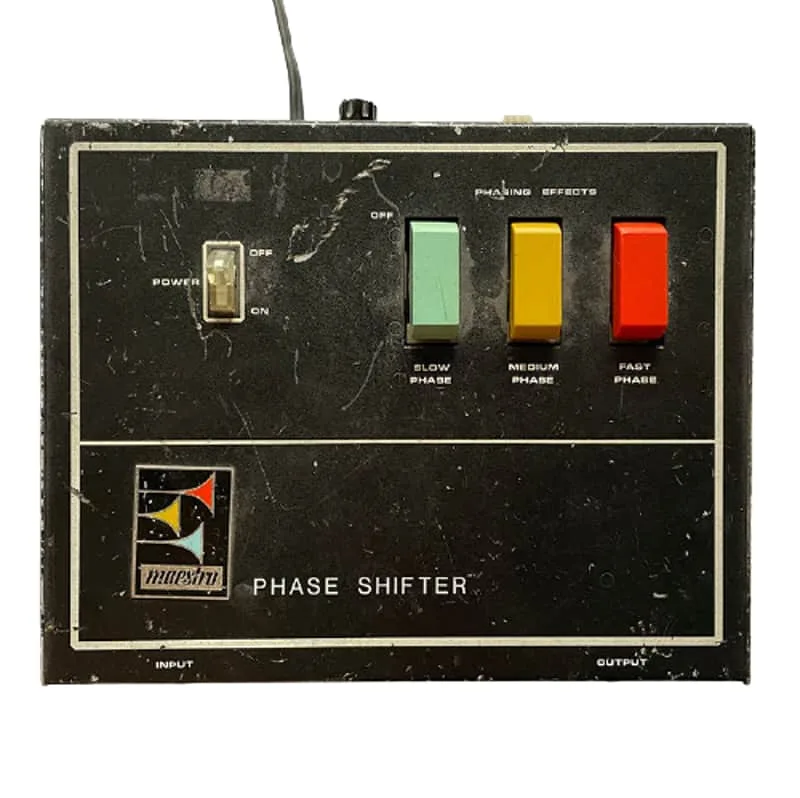
The PS-1 arrived in 1971 as a three-speed phase shifter45. Maestro produced three versions of the Phase Shifter over its run: the PS-1, the PS-1A and the PS-1B6. The PS-1A carried three paddle rocker knobs as its speed controls7, a control scheme that tells you how little there was to adjust: you picked a speed and played.
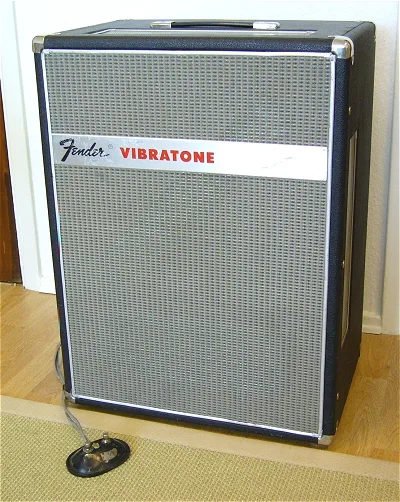
The design goal was not originally a "phaser sound" at all. The pedal was released intending to replicate the sound of a Leslie rotary speaker8, the rotating-speaker cabinet long associated with organs and, in guitar circles, with players running amps through cabs like the Leslie model 16, which was virtually identical in design to the Fender Vibratone9. EarthQuaker Devices' beginner guide puts the effect in that context: phasing was one of the earliest guitar effects, and the intention was to imitate a Leslie rotating speaker10. The circuit did not literally simulate a spinning speaker; instead it became a sweeping filter effect that players adopted for its own sound, and Mojo Hand FX notes that "the phase shifter turned into" a widely popular effect in its own right118.
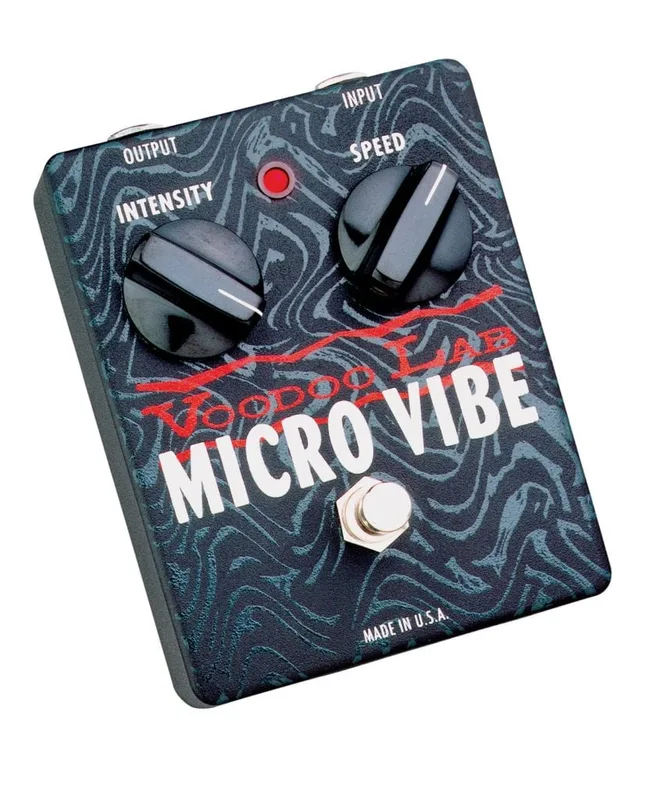
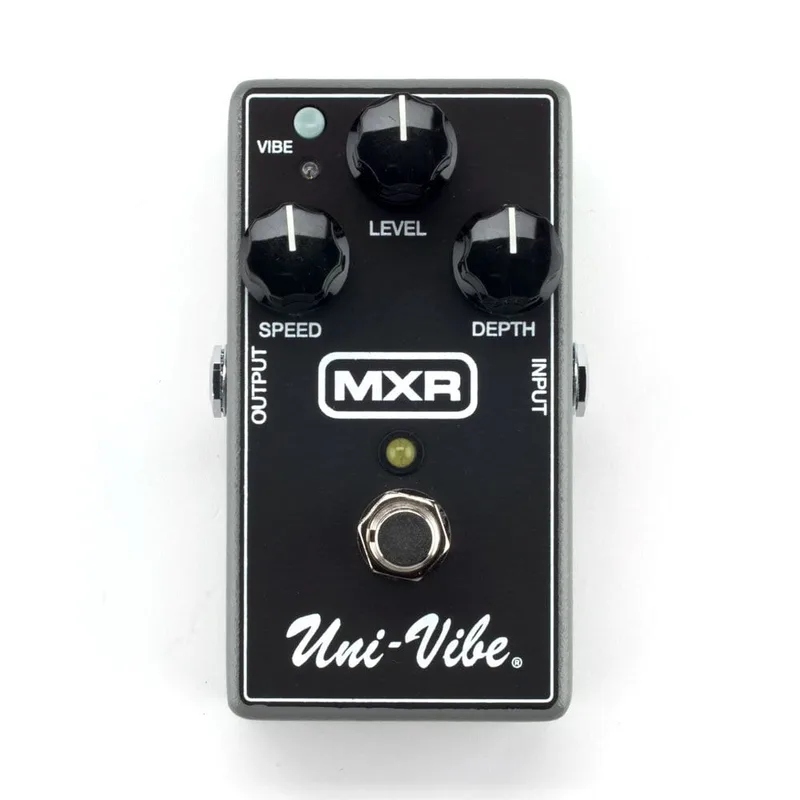
The Leslie connection is worth keeping straight because it separates the Maestro circuit from its closest ancestor. The Uni-Vibe, the other early rotating-speaker-inspired effect, is a variation of a four-stage phase shifter, as Voodoo Lab describes for its Micro Vibe12. The Maestro circuit went bigger: six stages, which gives a deeper, more pronounced sweep than a four-stage design.
Six phase stages and three speeds: how it works
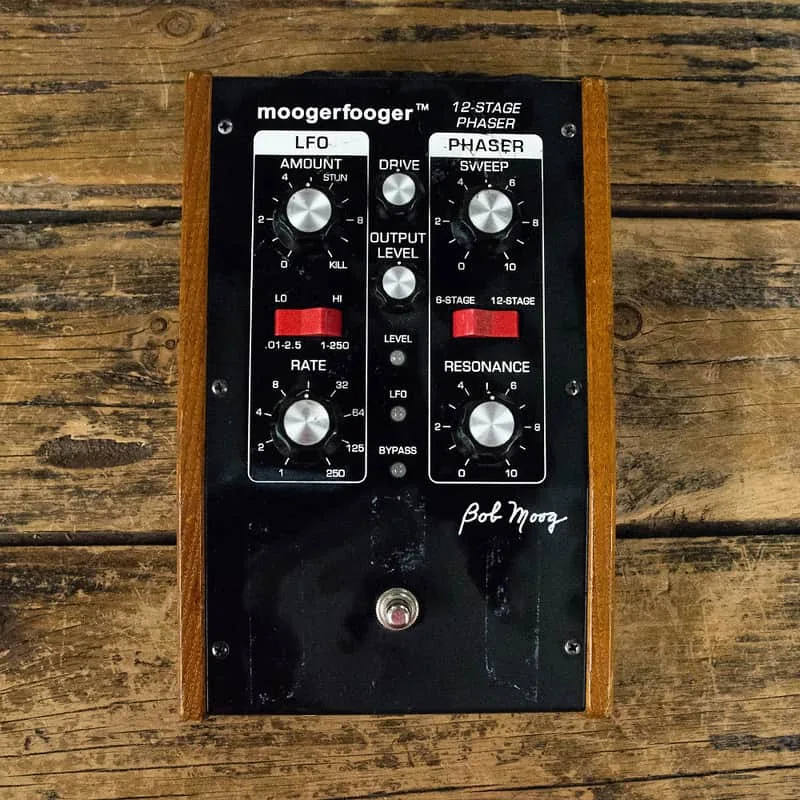
A phaser works by splitting the signal, shifting the phase of one copy through a chain of all-pass filters, and recombining the two. Where the shifted and unshifted signals cancel, notches appear in the frequency response, and sweeping the filters moves those notches up and down. The number of stages sets the number of notches: Vintage Synth Explorer's page on the Moog MF-103 explains that a 6-stage mode has three dips in its frequency response while a 12-stage mode has six13, and the same arithmetic applies to any phaser.
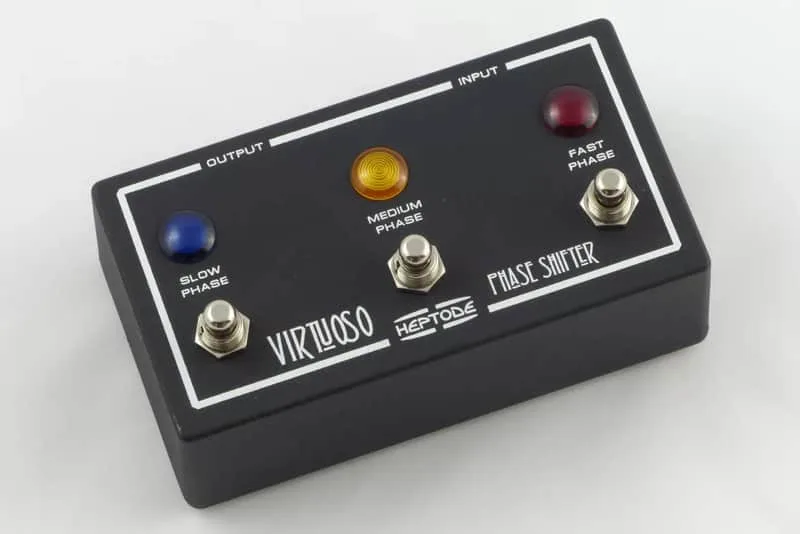
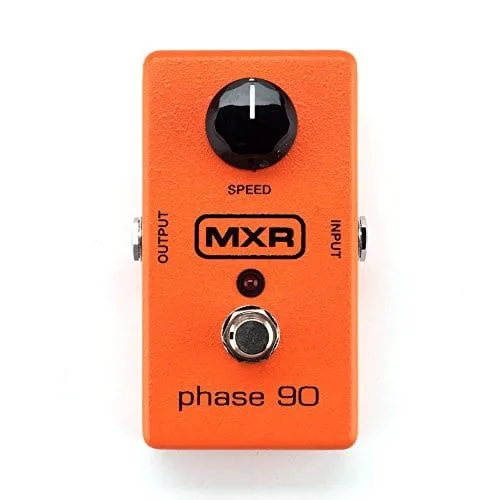
The Maestro PS-1 is a six-stage circuit where six JFETs provide a cascading all-pass filter network6. Those JFETs are the variable element: their resistance changes with a control signal, which sweeps the filter notches. Premier Guitar's review of the Heptode Virtuoso, a re-creation of the '70s Maestro PS-1A, puts the stage count in perspective: "It's a six-stage phaser (the Uni-Vibe and Phase 90 employ four stages)"1415. More stages means more notches and a more complex, deeper sweep.
The original's control surface was minimal:
| Control | What it did |
|---|---|
| Three speed switches | Selected the sweep speed; no other adjustments1 |
| Six phase stages | Fixed; the circuit always ran all six stages1 |
That simplicity is exactly what later builders reacted against. Pedal of the Day, reviewing the Mojo Hand FX Mister-O recreation, noted that "since the original had just three speed switches, this one has extra flexibility"16.
Gibson's modern Maestro Orbit Phaser keeps the lineage but expands the control set. It is an all-analog phaser pedal with a 4-stage and 6-stage mode and a three-control layout3. Its two-position Mode switch gives a choice of 4 or 6-stage phasing3, which Guitar World's Alex Lynham describes as "a choice of two different phasing sounds: a six-stage phaser, as found in the PS-1 series, and a four-stage phaser"217. The three knobs are Width, Rate and Feedback, with the Feedback knob offering "an extra layer of subtlety in shaping the sound"17. Gibson describes the pedal's character as warm and smooth, with the versatility needed to dial in phaser effects3.
| Orbit Phaser control | Function |
|---|---|
| Rate | Sweep speed |
| Width | Sweep range |
| Feedback | Adjustable phaser feedback, shapes the intensity of the notches17 |
| Mode toggle | 6-Stage or 4-Stage phasing3 |
| Footswitch | True bypass3 |
The Orbit is mono, fully analog, and built as a 3-knob plus 1-switch pedal5. Power comes from a 9V battery or a regulated 9V DC supply with a 5.5 x 2.1 mm center-negative plug, drawing 27.5 mA3.
The Orbit's power switch is incorporated into the input jack. Unplug the input when not in use to prevent battery drain3.
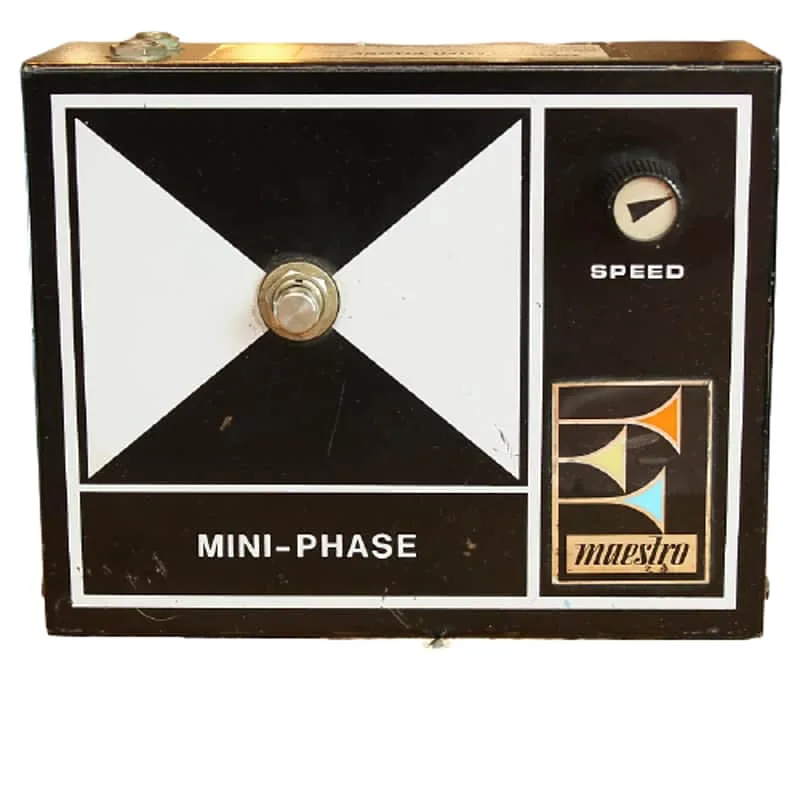
A smaller sibling also existed in the original range: the Maestro MPS-2 Mini Phase. A DIY stripboard layout of it on Guitar FX Layouts notes that the effect is slightly different from similar phasers in that it has no resistors between the drain and source of the JFETs, and that the original used 2N4303 JFETs18. An owner's SoundCloud demo of the original pedal, linked from that page, walks through the speed control from 0 through 3, 6 and 9 o'clock to full speed, with each pause between riffs marking a change18.
The Maestro Parametric Filter (MPF-1) and its controls
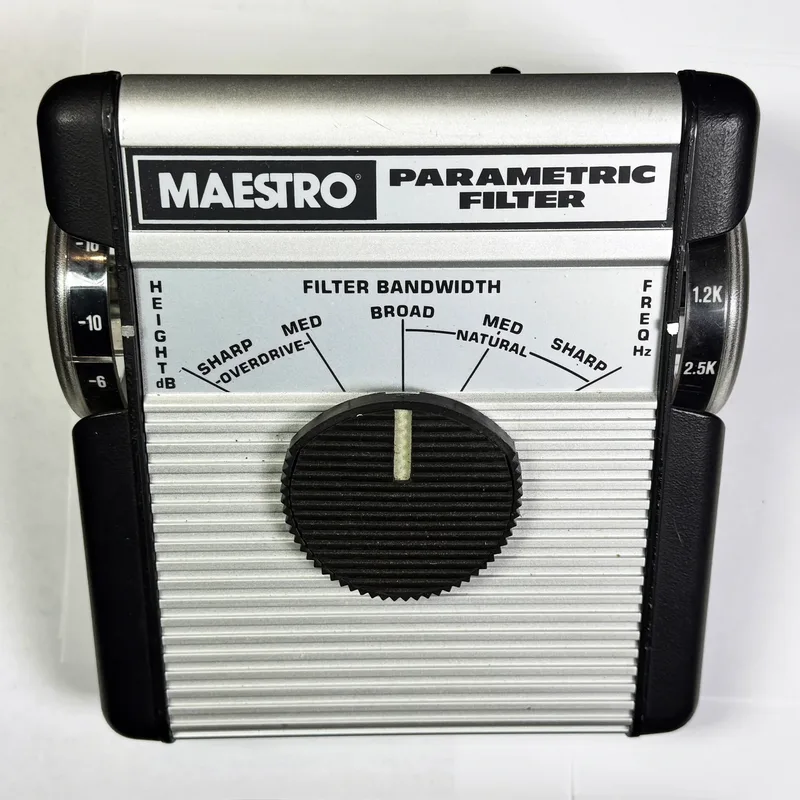
The Maestro range of the 1970s also included a pedal that shares this circuit family's DNA but does something entirely different: the Maestro Parametric Filter, or MPF-1. It was designed by Bob Moog for Gibson in the 1970s19, a rare Bob Moog-designed '70s effect20, and it is a parametric filter with overdrive21. MusicRadar describes it as having had "a hugely expressive, wheel-driven EQ"19.
Its three controls, as listed by Godlyke:
| MPF-1 control | Function |
|---|---|
| Freq | Controls the center frequency of the filter22 |
| Height | Controls the amount of boost of the selected frequency22 |
| Filter Bandwidth | Selects the width of the band-pass filter, with Overdrive settings Sharp and Med and Natural setting Broad22 |
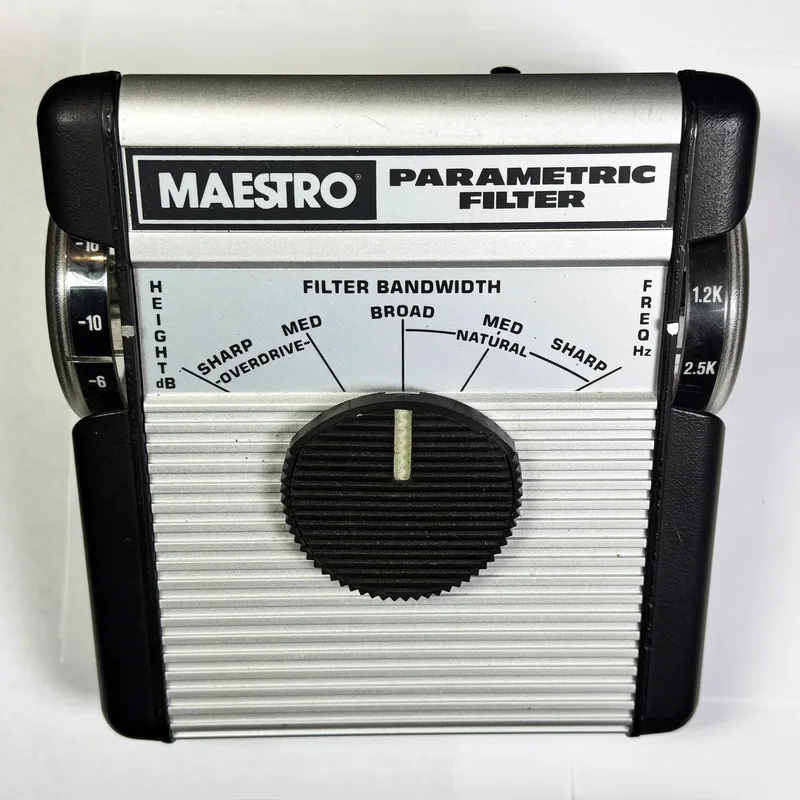
Premier Guitar, reviewing the Stone Deaf FX PDF-1, characterized the original Maestro as "a clever, clunky filter pedal that a resourceful player could use for everything from simple EQ to total fuzzification of the signal". The overdrive side is not the point on its own: builders on Guitar FX Layouts report that it is not supposed to be a strong overdrive, but meant to be used after a fuzz or an overdrive21. One builder's verdict on pairing it: "It really takes my Fuzz Factory to a new level"21.
The players associated with it are a big part of its reputation. Premier Guitar notes that "6-string adventurers, including Alex Lifeson and Josh Homme, have used the Maestro to sculpt their tones", and Delicious Audio names the hard rock bands Rush and Queens of the Stone Age as users23. MusicRadar calls it "a favourite of Josh Homme"19.
The MPF-1 has also become a DIY project. Guitar FX Layouts published a stripboard layout for it in October 2015, verified after two component value changes and a switch to a CD4007UBE IC, the modern equivalent of the CD4007AE in the original schematic21. Builders there also found that the original schematic called for an S-taper pot on the height control where a 10k linear pot works differently, and that a 20k pot in series with a low-ohm resistor to ground can serve as a usable gain control for the overdrive side21.
The MPF-1's control names outlived the pedal. Stone Deaf FX's PDF-1 is described in Premier Guitar as "a sturdier and more versatile evolution of the Maestro circuit," with each of its curious control names identical to those on the Maestro MPF that inspired it: Height, Freq and Bandwidth23.
Pedals based on the Maestro Phaser
The PS-1's status as the first commercially available phase pedal24 has made it a recurring reference point for builders. Some copied the circuit, some re-created it, and some built homages from scratch.
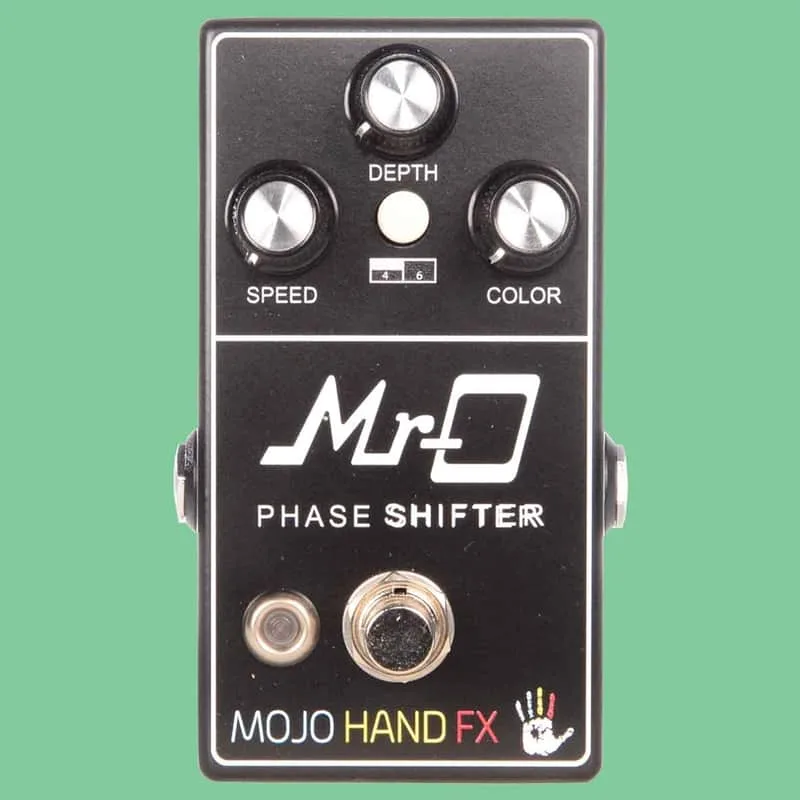
- Mojo Hand FX Mister-O: a six-stage phaser released in 2021 "to nail the dreamy '70s tones of the original Maestro units"4. It stays true to the original's six phase stages16, but Mojo Hand FX states that "not one single trace of the original circuit of the Maestro phaser from 50 years ago was copied, we only used our ears" and programming skills25. It draws about 70 mA1.
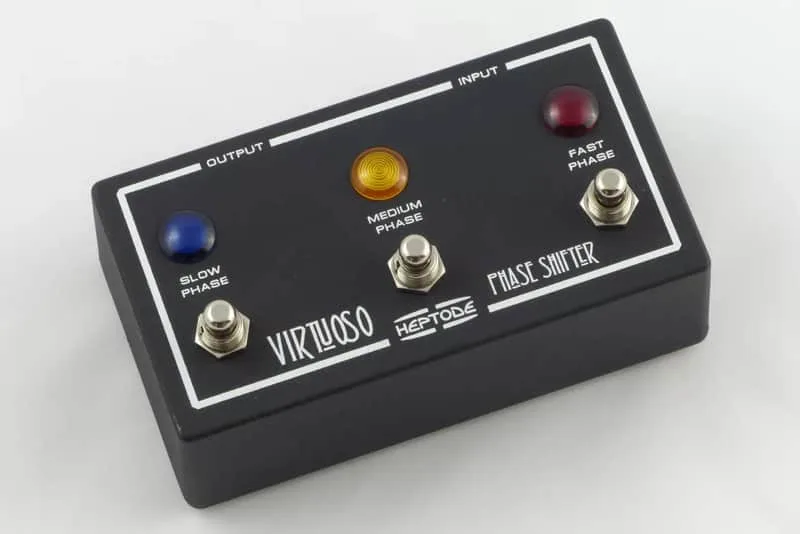
- Heptode Virtuoso Phase Shifter: a re-creation of the '70s Maestro PS-1A Phase Shifter15, a six-stage phaser reviewed by Premier Guitar14.
- Maestro Orbit Phaser: Gibson's own descendent of the PS-1, re-engineered for current players3524.
- Function f(x) Parallax: its phaser section credits "the old Maestro Phase Shifter, which we updated with modern components and modified for inclusion in this pedal"26.
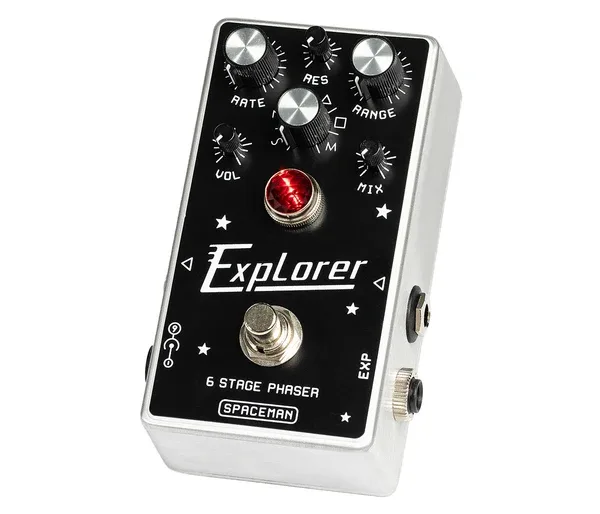
- Spaceman Explorer: a small form factor reissue of the original Explorer phaser, a classic circuit with the deluxe features of the original27.
The Mister-O's approach is the interesting counterpoint: rather than cloning, Mojo Hand FX gave it Speed, Depth and Color controls to add the flexibility the three-speed original lacked116. Where the original had three speed switches and no other adjustments, the Mister-O's extra controls let a player shape depth and character, not just speed1.
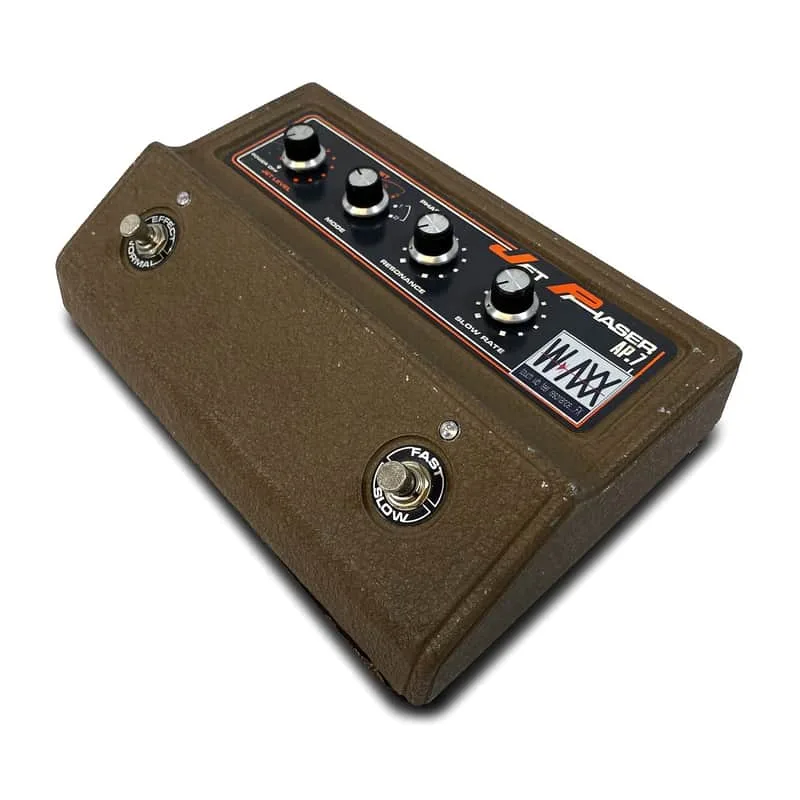
A cousin in the family tree is worth knowing about: the Roland AP-7 Jet Phaser, whose manual describes it as achieving "thick swirling phase and faux Leslie rotary speaker effects"28, the same Leslie goal the Maestro circuit started from. And on the four-stage side of the family, the Uni-Vibe remains the other main branch of early phaser design12.
Pedals on this page
Questions
Was the Maestro Phaser meant to sound like a Leslie speaker?
Yes. The original phase shifter was released in the early 1970s intending to replicate the sound of a Leslie rotary speaker, and the phaser effect itself grew out of that goal. Instead of a literal speaker simulation, the circuit became a sweeping filter effect in its own right, and it turned into a widely popular guitar effect.
Is the Maestro Orbit Phaser a reissue of the original phaser?
Not a straight reissue. Gibson describes the Orbit as a descendent of the Maestro PS-1, the first phaser pedal ever produced, and press coverage calls it re-engineered and tailored to the needs of today's players. It keeps the six-stage sound of the PS-1 series but adds a four-stage mode and Width, Rate and Feedback controls the original never had.
How much current does the Maestro Orbit Phaser draw?
Gibson lists the Orbit Phaser's current draw as 27.5 mA. It runs on a 9V battery or a regulated 9V DC power supply with a 5.5 x 2.1 mm plug wired center-negative. The power switch is built into the input jack, so you unplug the input when not in use to prevent battery drain.
Which guitarists used the Maestro Parametric Filter?
The Maestro Parametric Filter has been used by Alex Lifeson of Rush and by Josh Homme of Queens of the Stone Age, with press coverage calling it a favourite of Homme's. Premier Guitar notes that 6-string adventurers including both players have used the Maestro to sculpt their tones.
Sources (28)
- Mojo Hand FX Mister-O Phase Shifter, Delicious Audio, 2021-03-16
- Maestro Fuzz-Tone FZ-M review, Guitar World, 2022-05-09
- Maestro Orbit Phaser, Gibson (gibson.com)
- Mojo Hand FX serves up some old-school whoosh and swirl with the Mister-O Phase Shifter, MusicRadar, 2021-03-19
- Maestro Orbit Phaser, Delicious Audio, 2022-12-27
- How the Maestro PS-1 Phase Shifter changed popular music, Guitar World, 2026-07-03
- 4 WAYS TO USE A PHASER PEDAL, JHS Pedals
- Mr O - MojoHandFX, MojoHandFX, 1970
- Whirled Class: From Spinning Speaker Cabs to the RT-2 Rotary Ensemble, BOSS Articles (articles.boss.info), 2025-07-17
- A Beginners Guide To Pedalboards Pt. 1: Choosing Your Pedals, EarthQuaker Devices, 2021-12-06
- Mr O - B Stock, Mojo Hand FX
- Micro Vibe (NOS), Voodoo Lab, 2026-10-14
- Moog MF-103 12-Stage Phaser, Vintage Synth Explorer, 2026
- Heptode Virtuoso Phase Shifter Review, Premier Guitar, 2013-09-10
- Heptode Line Expands with Virtuoso Phase Shifter, Vintage Guitar magazine, 2013-05-03
- Mojo Hand FX Mister-O Phase Shifter, Pedal of the Day (www.pedal-of-the-day.com), 2021-07-03
- Maestro Agena, Arcas, Mariner and Orbit review, Guitar World, 2023-02-08
- Guitar FX Layouts: Maestro MPS-2 Mini Phase, Guitar FX Layouts (tagboardeffects.blogspot.com), 2014-02-17
- Stone Deaf unveils updated hybrid boost, drive and EQ pedal inspired by Josh Homme, MusicRadar, 2019-09-18
- Pedal Review: TWA Triskelion TK-01, Delicious Audio, 2011-12-07
- Guitar FX Layouts: Maestro MPF-1, Guitar FX Layouts (tagboardeffects.blogspot.com), 2021-04-13
- Maestro MPF-1 Parametric Filter (B-STOCK), Godlyke Distributing, Inc.
- Stone Deaf FX PDF-1 Pedal Review: Ultimate Guide, Premier Guitar, 2011-02-15
- Best phaser pedals 2026: swirling guitar tones, Guitar World, 2022-04-08
- Gibson serves Mojo Hand FX with cease and desist over use of Mister-O name, Guitar World, 2021-08-03
- Parallax, Function f(x), 2025-10-11
- Explorer Optical Phaser, Spaceman Effects
- PastFx_Jet_Phaser_Manual_2021.pdf, PastFx, 2021