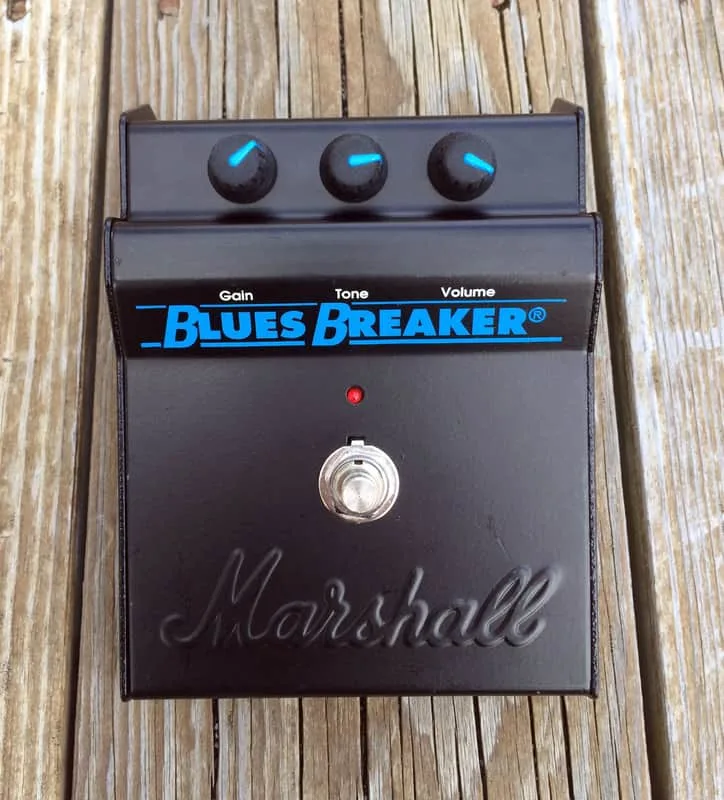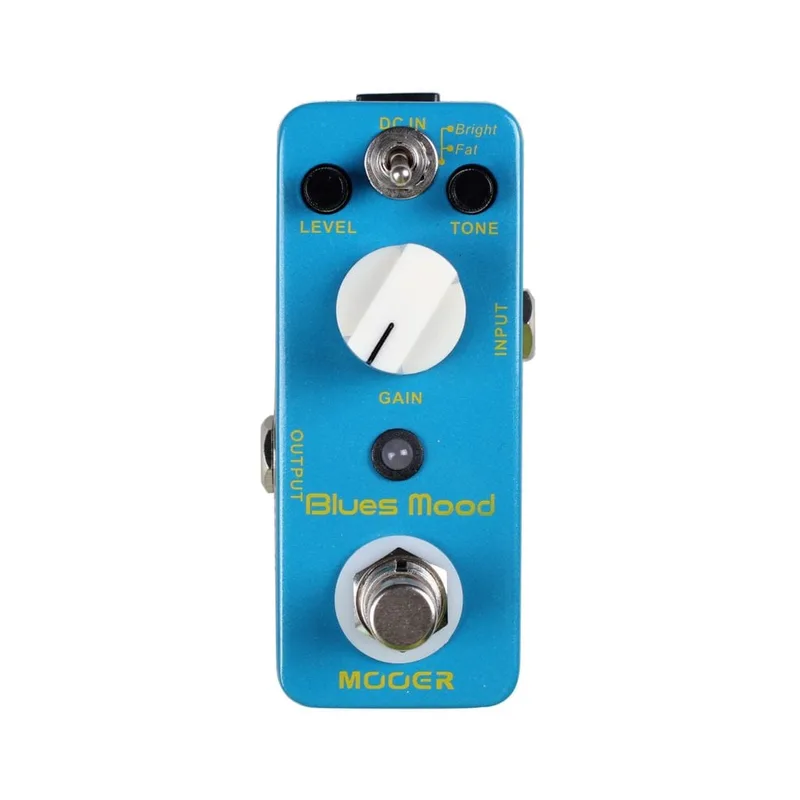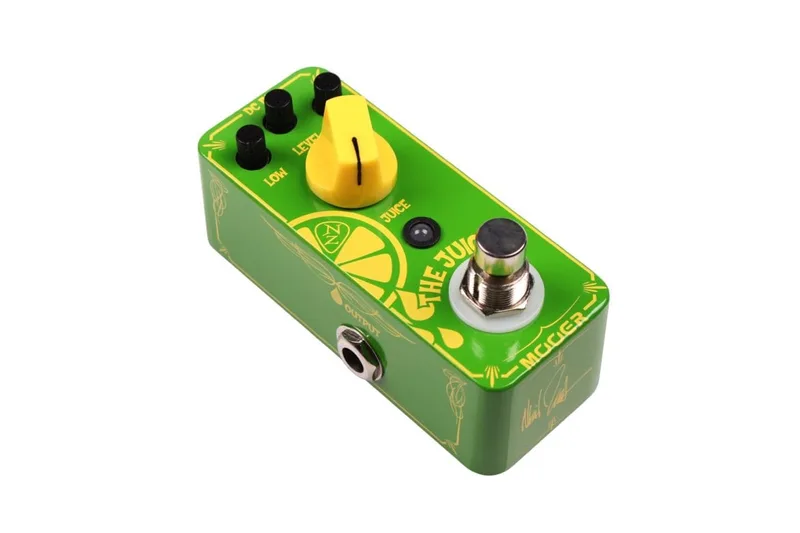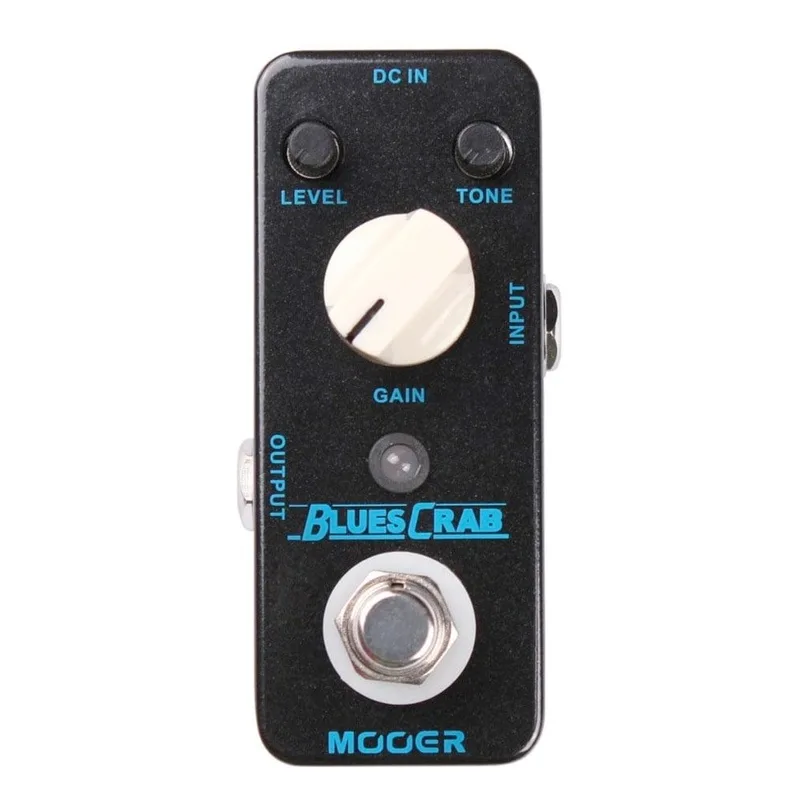


The Mooer Blues Crab is a compact overdrive pedal from Mooer Audio. Mooer describes it as delivering a "classic blues overdrive sound characteristic" in a very small, full metal shell1. MusicRadar's review places its circuit in a well known lineage: it reports that the pedal "owes more than something of a debt to Marshall's much-loved 90s Blues Breaker" pedal2.
For a player, that means a low to medium gain overdrive voiced for blues playing, in a housing small enough to fit on almost any pedalboard1.
What it does and how it is controlled
Mooer positions the Blues Crab squarely as a blues overdrive rather than a high gain distortion. Its tone control, in MusicRadar's description, adds "an edge with an adjustable extra shading of grit, delivered via a sensible tone control"2. In practice that gives you a way to dial in how much bite the drive adds on top of the base overdrive character.
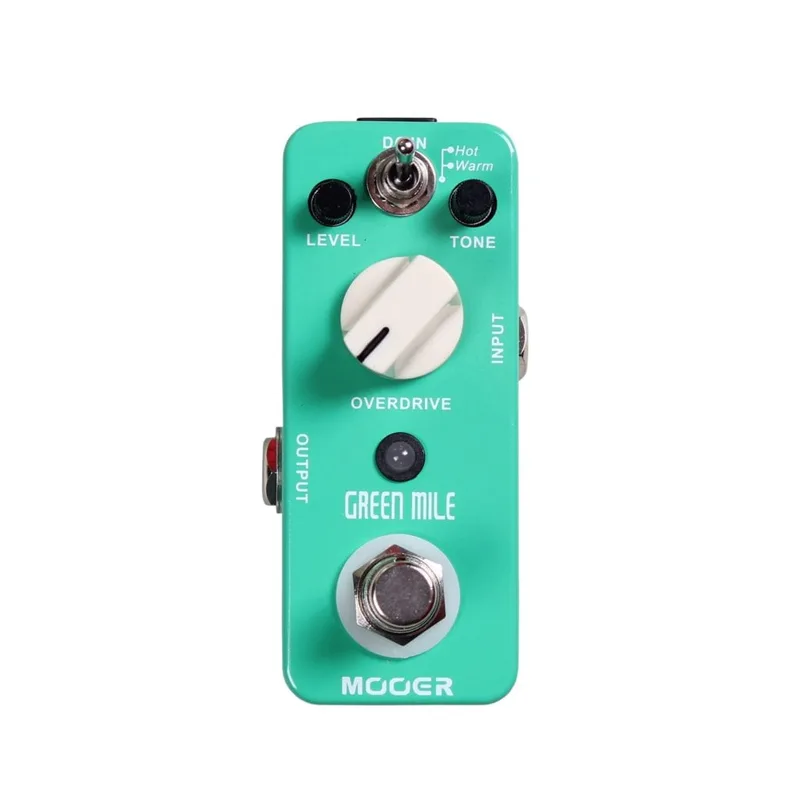
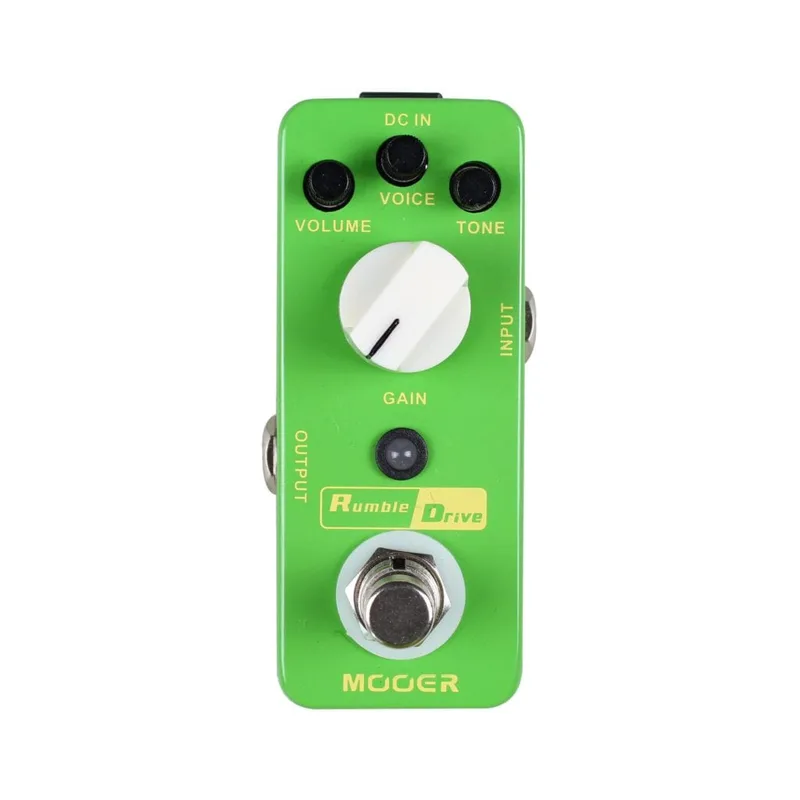
The pedal sits in Mooer's Micro Series style of mini pedals, alongside drives like the Mooer Green Mile, the Mooer Rumble Drive and the Mooer Hustle Drive. At 42mm wide and 160g, it takes up about the footprint of a standard stompbox footswitch, which is the main practical draw of the format1.
Where the circuit comes from
The Blues Crab's family tree matters to players comparing overdrives. MusicRadar reports that the circuit is based on Marshall's Blues Breaker pedal from the 1990s2. That design is one of the recognized overdrive architectures, distinct from Tube Screamer style circuits such as those compared on the Boss SD-1 vs Ibanez TS9 page. Bluesbreaker style circuits are generally associated with a more open, less mid-heavy character than Tube Screamer derivatives, which is why players often choose between the two families rather than treat them as interchangeable.
Power and connections
The Blues Crab runs only on an external 9V DC adapter with a center minus plug. There is no battery option, so it needs a spot on a power supply from the start.
The 6 mA current draw is light enough that the pedal can share a daisy chain or a multi output supply with other mini pedals without straining the total budget. The 1M Ohm input impedance is a standard high impedance guitar input, and the 1k Ohm output impedance will drive most amp and pedal inputs without issue1.
What reviewers said
MusicRadar reviewed the Blues Crab and summed it up as:
"A real classy performer that won't break the bank."
MusicRadar review team2
The same review noted the tone control as a sensible way to shape the grit, which lines up with the pedal's positioning as a straightforward blues overdrive rather than a feature heavy drive2.
Videos
MOOER Audio
Prymaxe
intheblues
Questions
Is the Mooer Blues Crab a Bluesbreaker clone?
MusicRadar reports that the Blues Crab owes a substantial debt to Marshall's much-loved 90s Blues Breaker pedal. That puts it in the family of Bluesbreaker-style overdrives rather than Tube Screamer-style circuits. Mooer's own product page describes it only as a classic blues overdrive.
Is the Blues Crab true bypass?
Yes. Mooer lists true bypass among the pedal's specifications, so the signal passes through untouched when the pedal is switched off. That suits small boards where the Blues Crab sits alongside other true bypass pedals.
How much current does the Mooer Blues Crab draw?
Mooer specifies a current draw of 6 mA at 9V DC. That is a very light load, so several Blues Crab-class pedals can share a single output on a multi-output power supply without trouble.
Can the Blues Crab run on a battery?
No. Mooer lists the power requirement as an AC adapter supplying 9V DC through a center minus plug, with no battery option mentioned. It needs a 9V DC power supply with a center negative plug.
Sources (2)
- Blues Crab_MOOER Audio, MOOER Audio
- Mooer Blues Crab review, MusicRadar, 2017-04-23