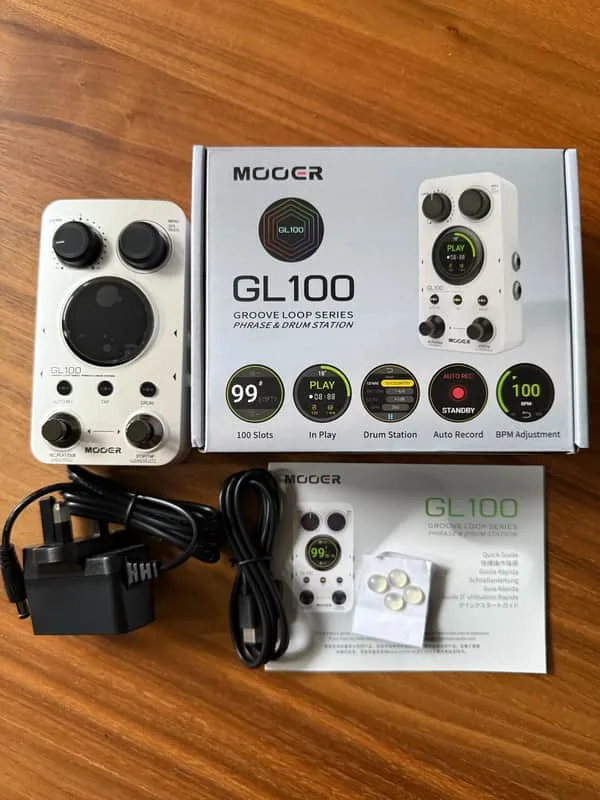


The MOOER GL200 is a stereo looper and drum machine in one pedal, part of Mooer's Groove Loop Series1. It records guitar, bass or microphone input as stereo loops at 44.1 kHz and 24-bit, stores them across 100 memory slots with up to 800 minutes of total recording time, and pairs them with a drum machine engine offering 220 patterns in 11 styles, with AI that Mooer says adapts grooves to your playing1. It builds on the earlier MOOER GL100 with expanded I/O, advanced looping, and a more powerful drum machine engine1.
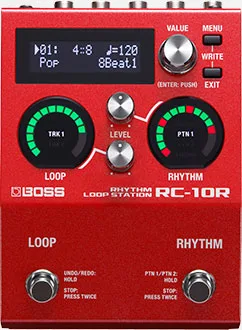
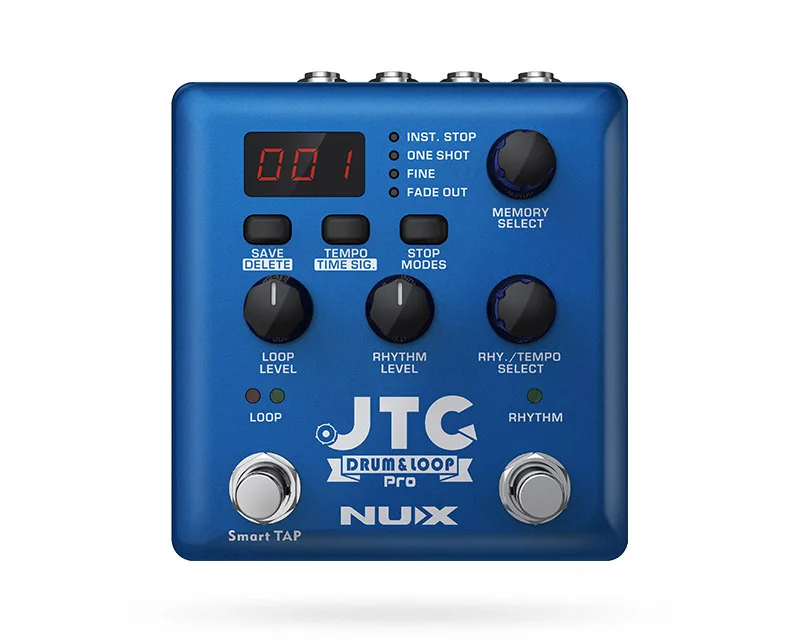
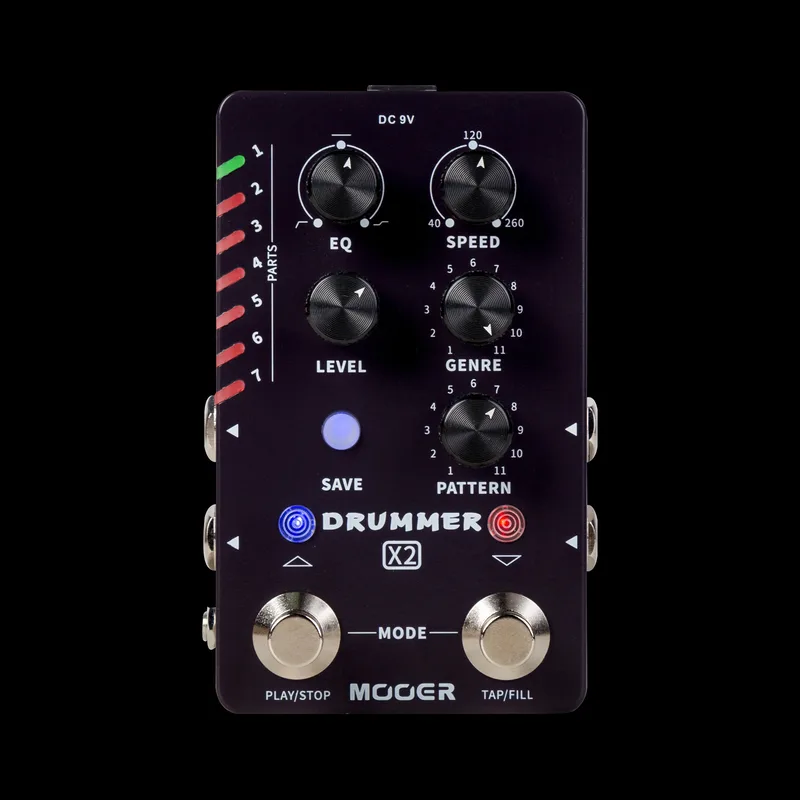
For a player, that combination means one box can hold a whole practice or live rig: a loop you build yourself, a drum groove underneath it, and a headphone output for silent playing. It sits in the same category as pedals like the BOSS RC-10R Rhythm Loop Station and the NUX JTC Drum & Loop Pro, combining the two functions covered separately by looping pedals and drum pedals123.
Where it came from
The GL200 sits at the large end of Mooer's looper range, and its specification shows the scale of it: 100 memory locations holding a total of 800 minutes of recording time, three multi-functional footswitches, and a digital circuit12. Its input section is built for more than a guitar alone, with an XLR/¼" combo input that provides phantom power alongside a second ¼" mono input1.
That recording capacity is a step up from what compact loopers typically offer: 100 memory locations and 800 minutes of storage mean a player can keep whole sets of loops and drum patterns on the pedal rather than offloading them2. The three multi-functional footswitches and tap tempo input for BPM adjustment are what make that material usable live2.
The GL200 is a digital unit, and its file handling reflects that: it imports WAV, FLAC, APE, MP3, M4A, AAC, OGG, MP4, MOV, WMA, AVI and MPEG files, and exports WAV1. That import list covers both audio and video containers, so a player can pull practice material or backing tracks from a range of sources and work with it on the pedal1.
The controls and touchscreen
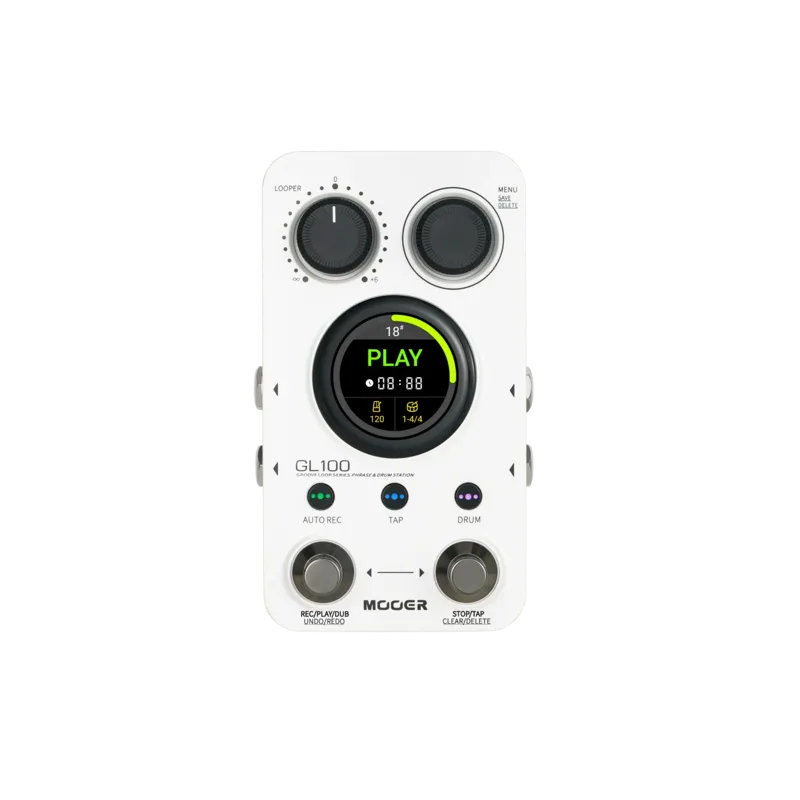
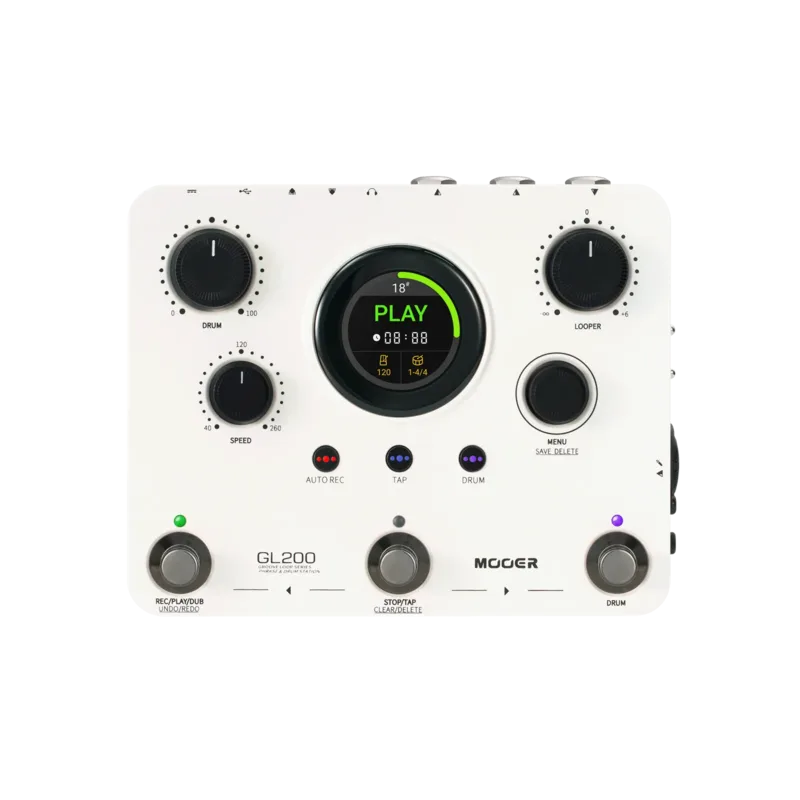
The GL200 is built around a 1.28-inch round touchscreen with what Mooer calls an intuitive interface12, used for status display and convenient function control2. The GL100's similar 1.3-inch screen drew a positive note from Gearnews at launch: "A 1.3″ touchscreen provides clear visibility and intuitive control over the pedal's functions"43.
Around the screen, the GL200 gives you three multi-functional footswitches2 plus a set of buttons and switches:
| Control | What it does |
|---|---|
| 1.28" round touchscreen | Status display and function control12 |
| 3x multi-functional footswitches | Looping and drum control2 |
| Auto Rec button | Starts recording automatically when you play2 |
| Tap button | Sets tempo by tapping2 |
| Drum button | Engages the drum machine2 |
| MIC/LINE switch | Selects the input level for the XLR input2 |
| Phantom power switch | Enables phantom power for microphone input2 |
Tempo can also be set by tap tempo input for BPM adjustment2.
Power and connections
The GL200 runs on 9V DC at 500 mA, center positive, and Mooer advises using the original adapter for best performance1. RockBoard lists the barrel connector as 2.1 mm x 5.5 mm, center negative, with power supplied via the included 9 VDC adapter2; the two sources disagree on polarity, so check the label on the supplied adapter before substituting another supply. At 500 mA this is not a battery pedal, and it will need its own tap on a power supply rather than a shared daisy chain output.
In the box you get:
The rear panel carries the XLR/quarter inch combo input with phantom power, a quarter inch mono instrument input, two quarter inch mono outputs, an eighth inch stereo headphone output, USB-C, and dual TRS MIDI I/O for multi-device sync1. The included TRS-to-5-pin adapter lets it talk to standard MIDI hardware1.
Recording, drums and file handling
Loops are stored in 100 memory locations holding up to 800 minutes of recording time in total12, captured at 44.1 kHz / 24-bit12. The drum machine provides 220 patterns across 11 styles, with AI that adapts grooves to your playing1.
Over USB-C the GL200 imports WAV, FLAC, APE, MP3, M4A, AAC, OGG, MP4, MOV, WMA, AVI and MPEG files, and exports WAV1, so backing tracks and stems from a computer can be loaded into the pedal's memory alongside recorded loops.
Videos
Mooer Mania and MOOER Audio
MyMusicMasterclass
Musiker TV
Questions
Can I plug a microphone into the MOOER GL200?
Yes. The GL200 has an XLR and quarter inch combo input with a phantom power switch for microphone input, plus a MIC/LINE switch for the XLR input, so both dynamic and condenser microphones can be connected directly. A separate quarter inch mono instrument input handles guitar or bass.
How long can the MOOER GL200 record?
The GL200 offers 100 memory slots with up to 800 minutes of total recording time. Audio is captured at 44.1 kHz and 24-bit, and loops can be exported as WAV files over USB-C.
Does the MOOER GL200 sync with other gear over MIDI?
Yes. The GL200 has dual TRS MIDI input and output for multi-device sync, and Mooer includes a 3.5mm TRS to 5-pin MIDI adapter in the box, so it can connect to standard 5-pin MIDI gear as well as TRS MIDI devices.
Can I import backing tracks into the GL200?
Yes. The GL200 imports WAV, FLAC, APE, MP3, M4A, AAC, OGG, MP4, MOV, WMA, AVI and MPEG files over its USB-C connection, and exports WAV. Imported tracks can sit in the 100 memory slots alongside recorded loops.
How many drum patterns does the GL200 have?
The GL200's drum machine engine provides 220 patterns across 11 styles, and Mooer says AI adapts the grooves to your playing. Tempo is set by tap tempo or the Tap button.
Sources (4)
- GL200_MOOER Audio, Mooer Audio
- GL200 by MOOER, RockBoard (rockboard.de), 2026
- GL100_MOOER Audio, MOOER Audio
- Mooer GL100: A Huge 300 Minutes of Looping!, gearnews.com, 2024-12-18