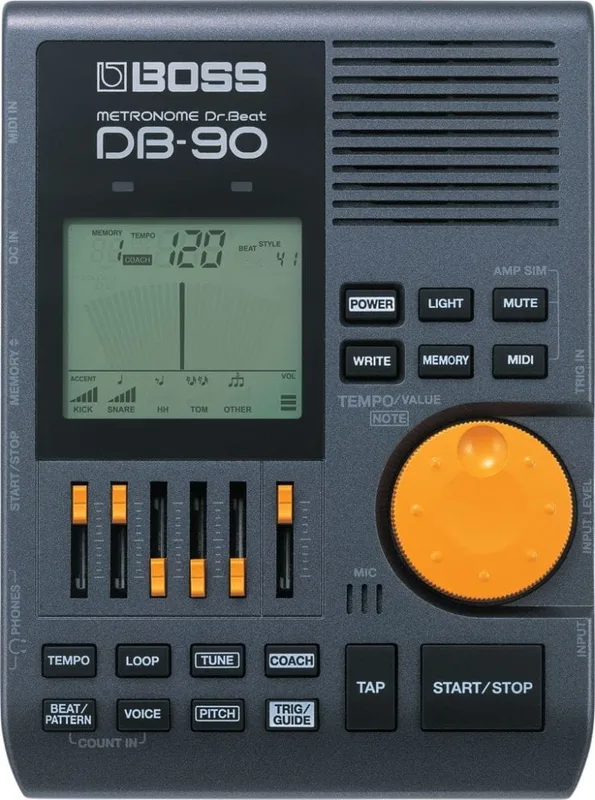
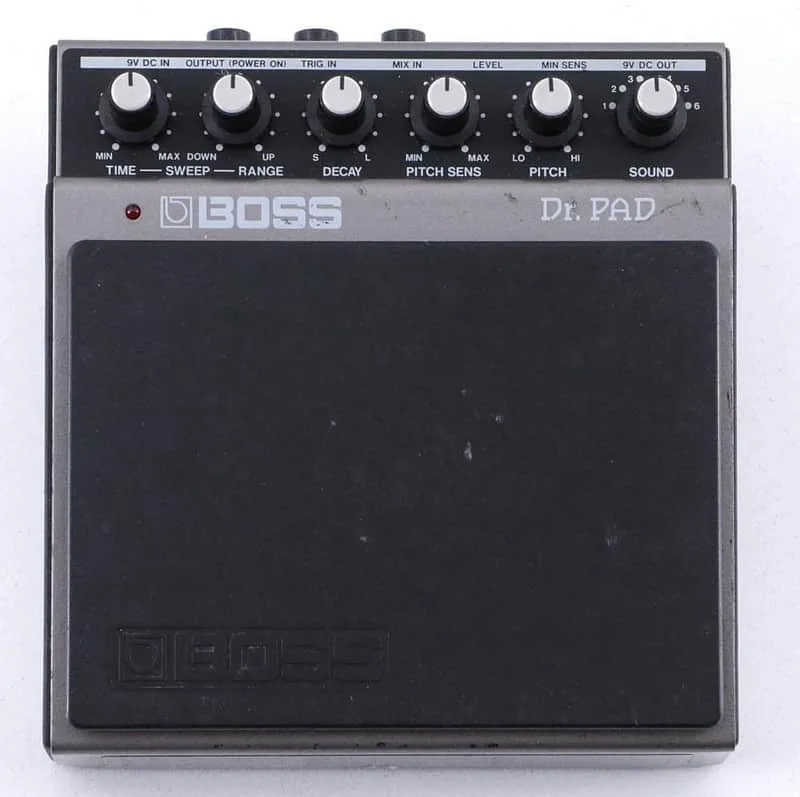
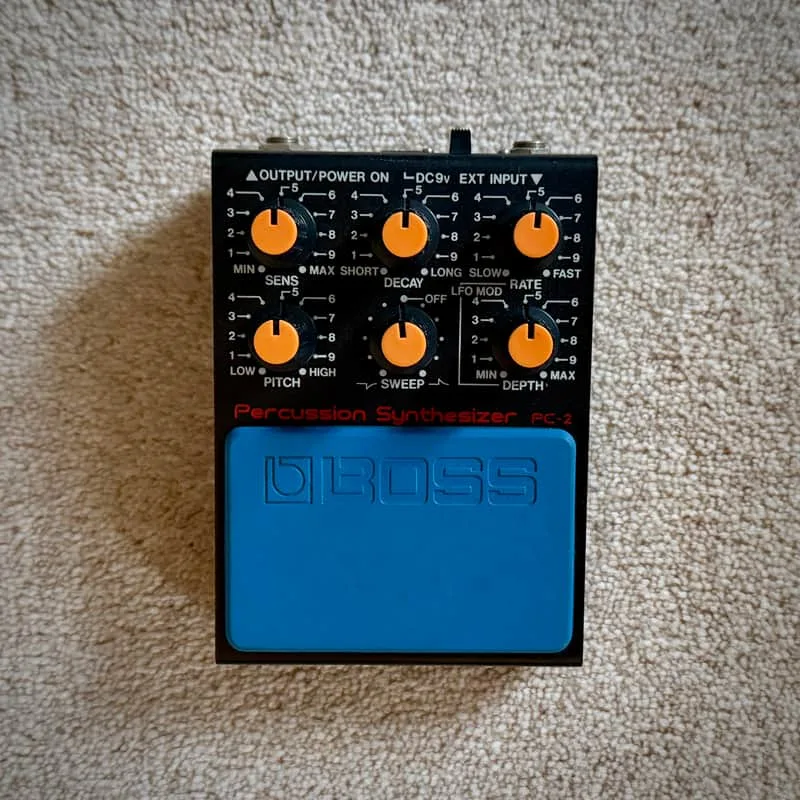

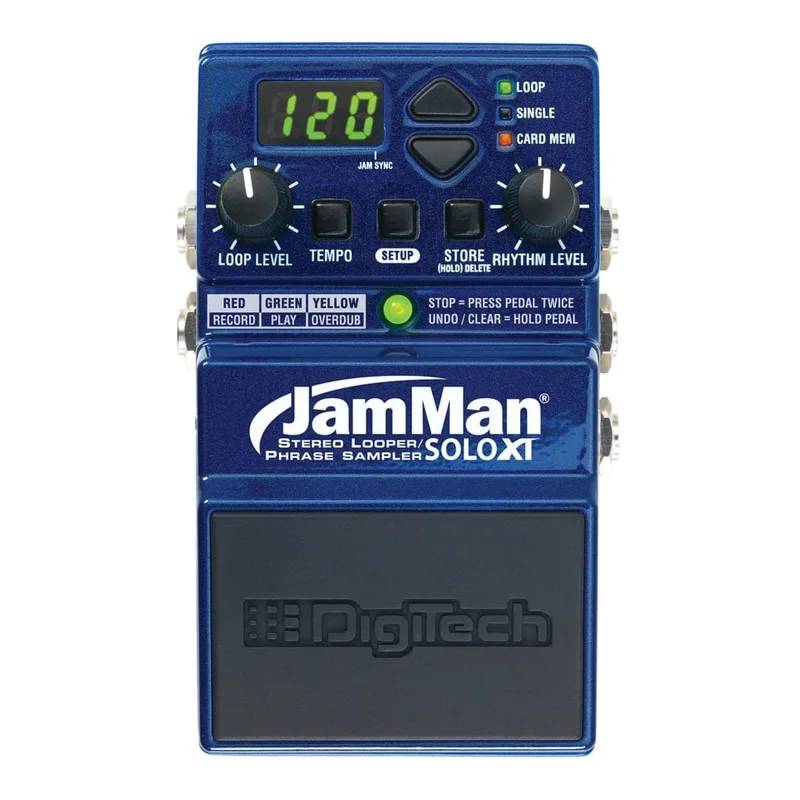
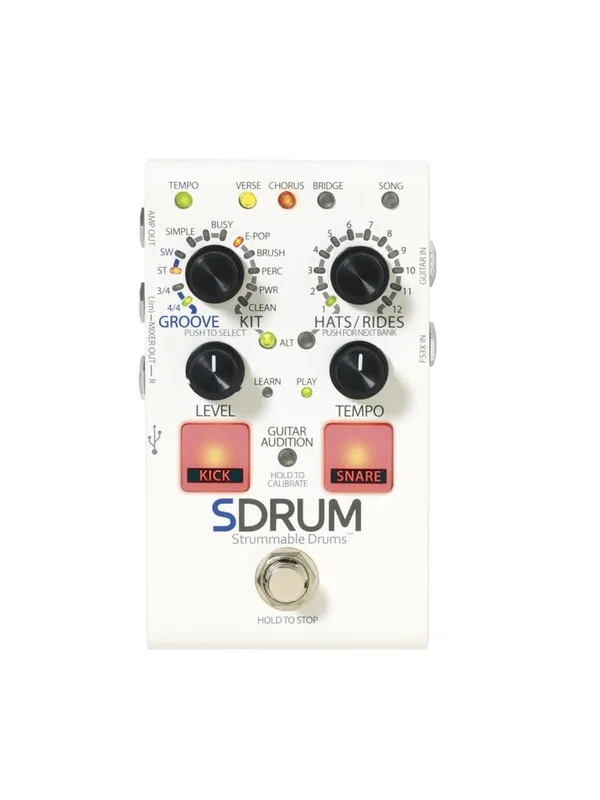
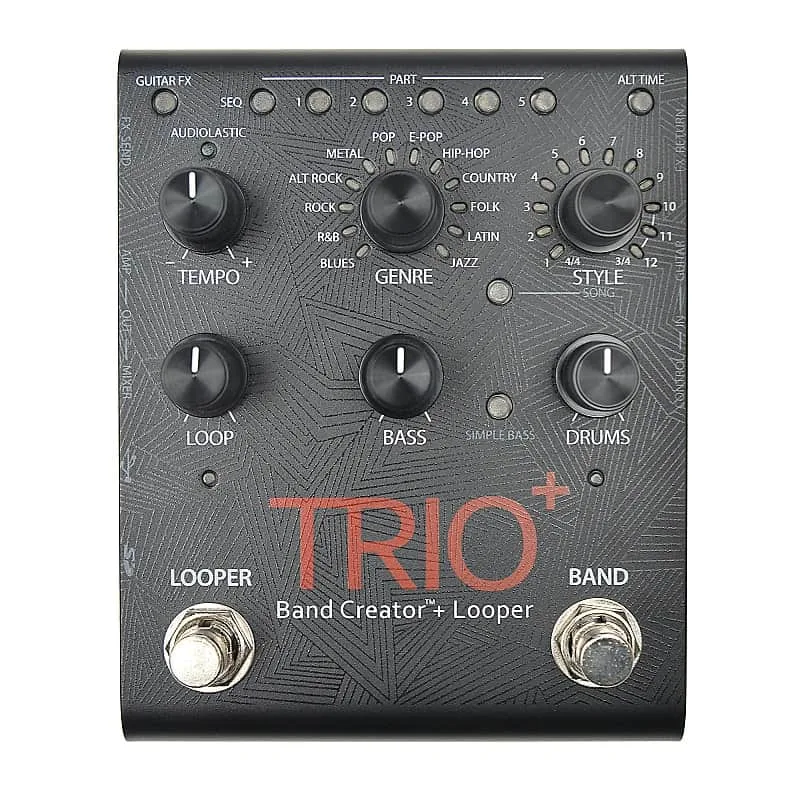
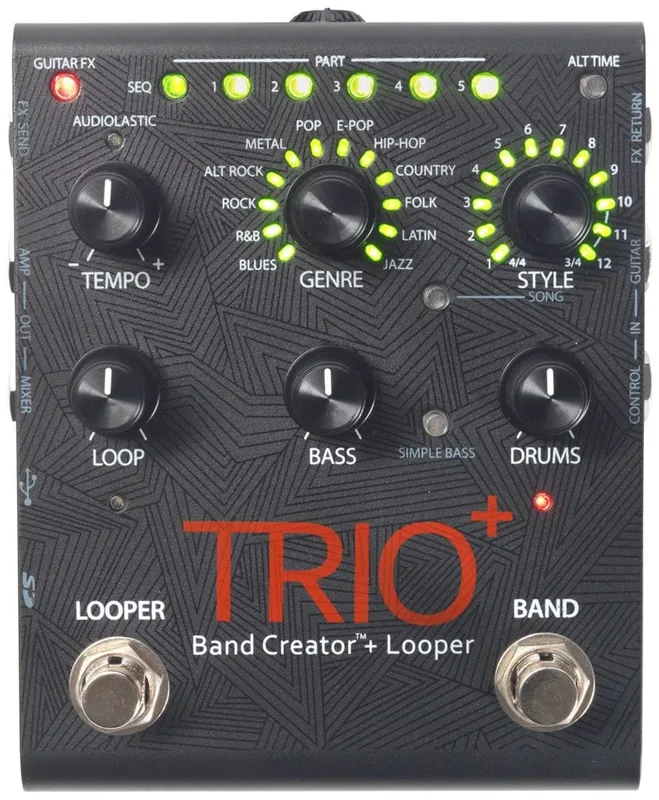
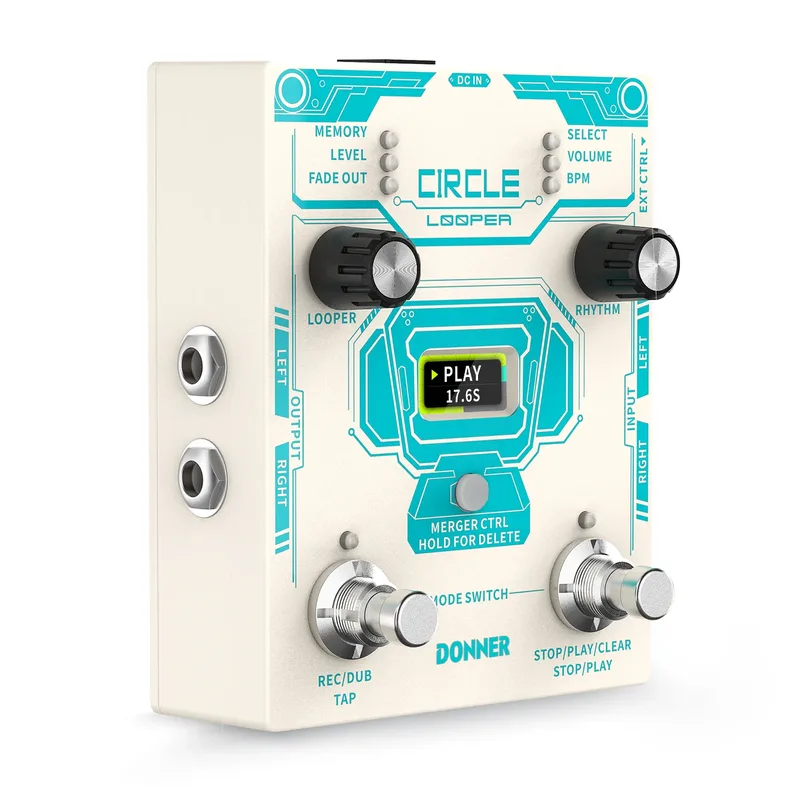
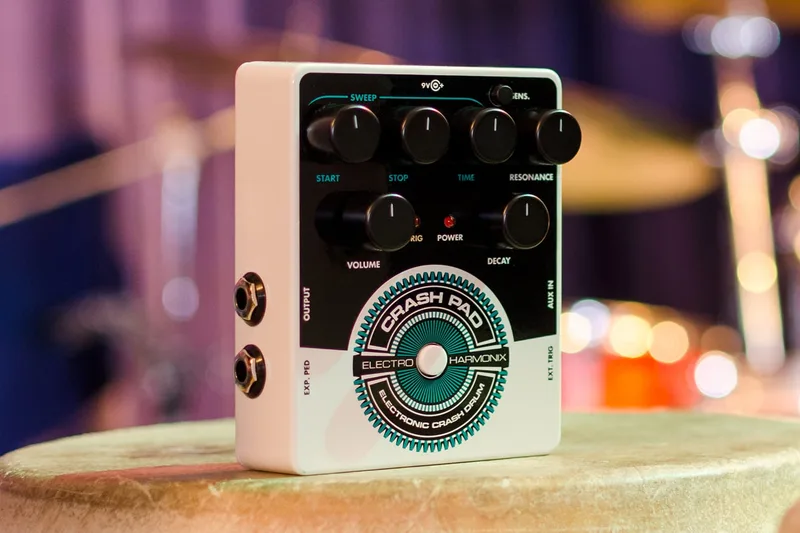
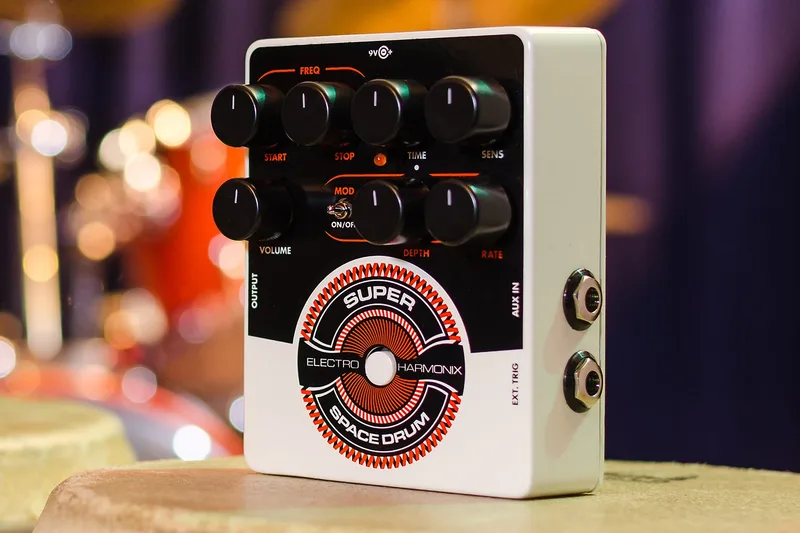
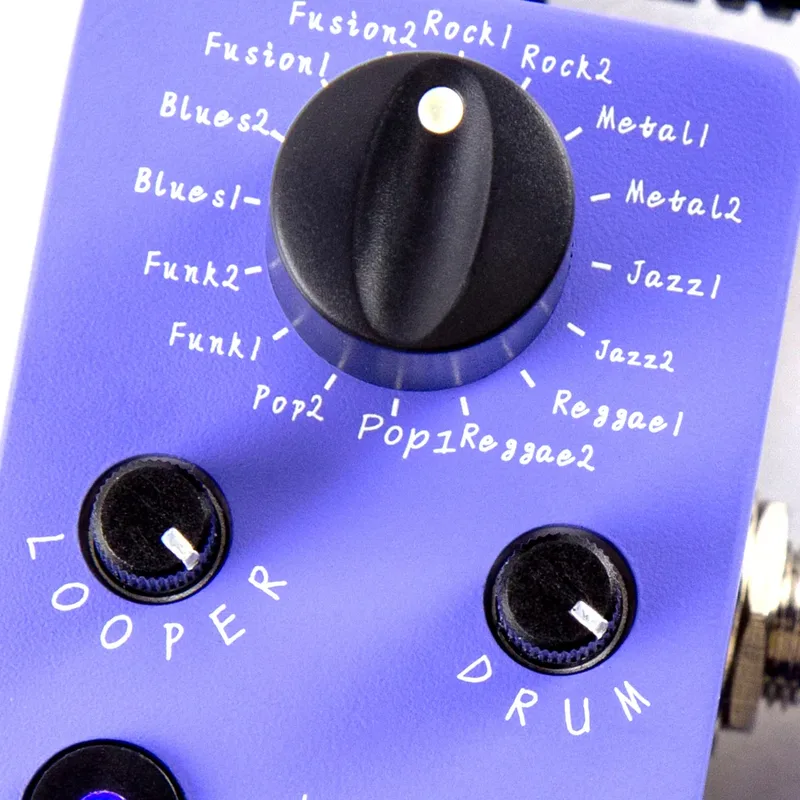
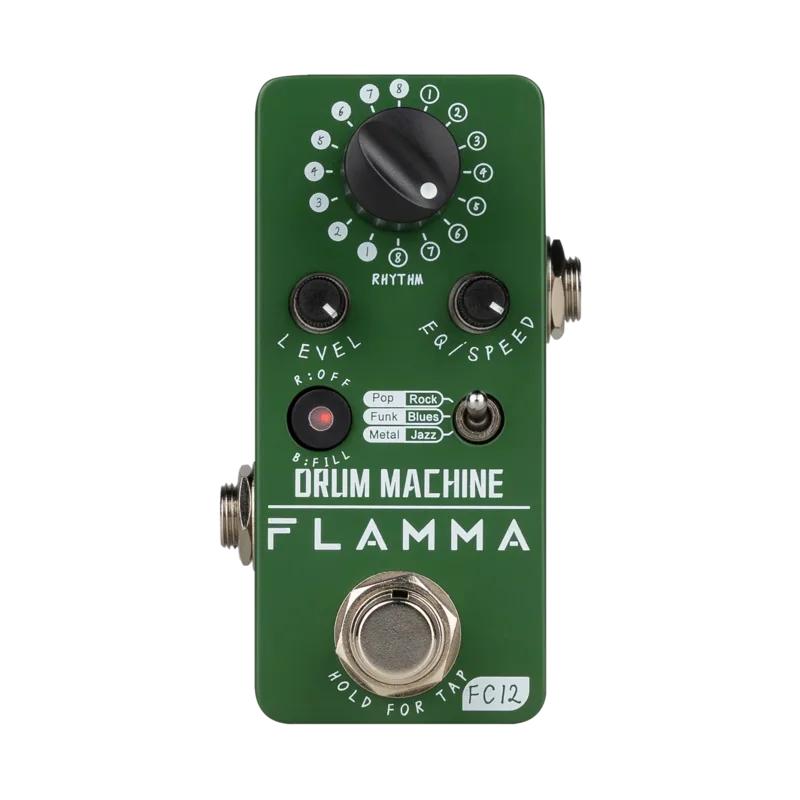
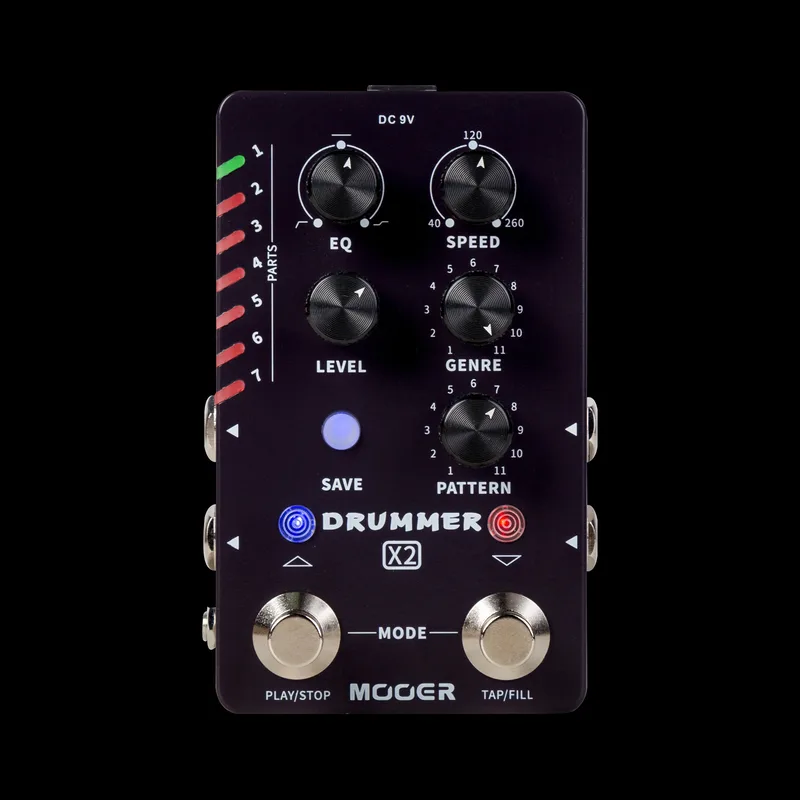
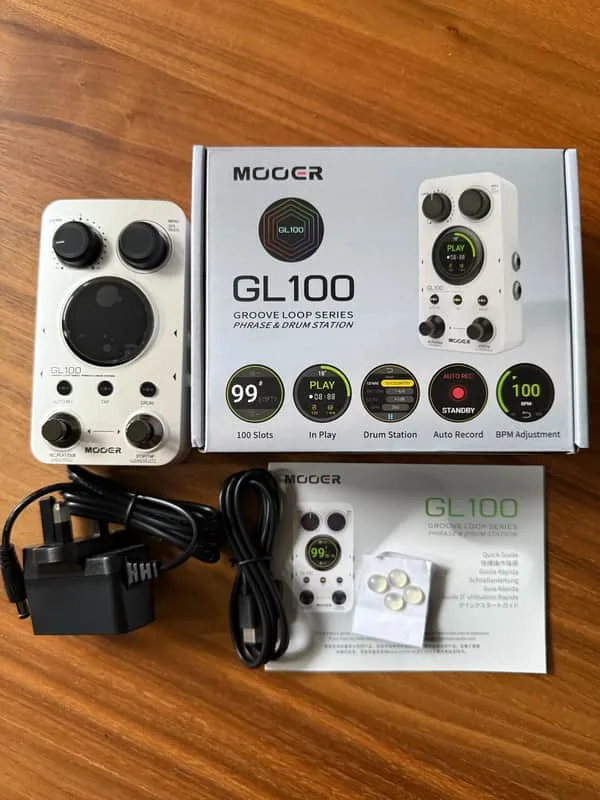
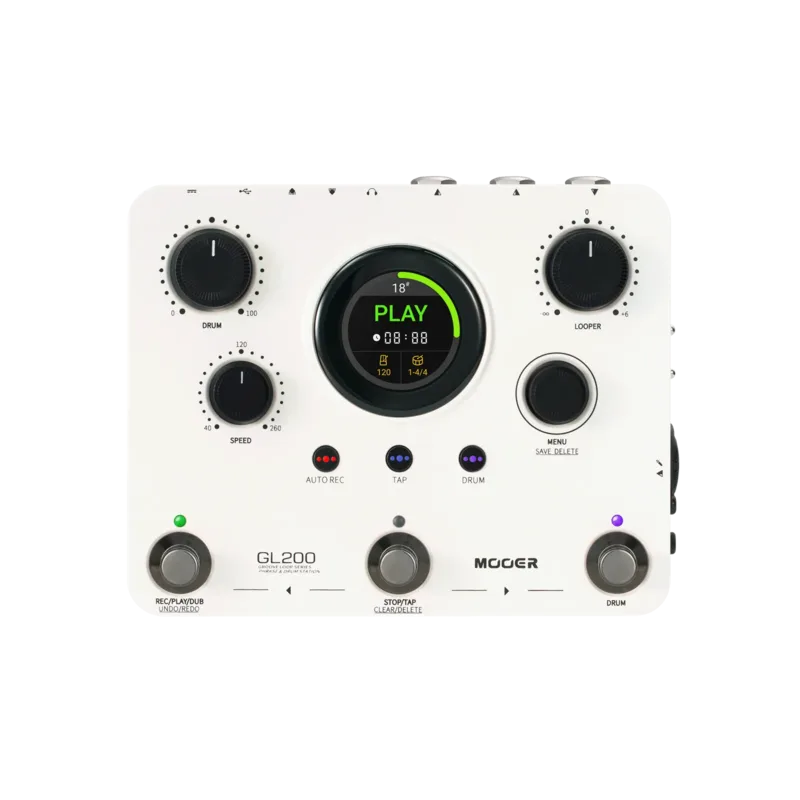
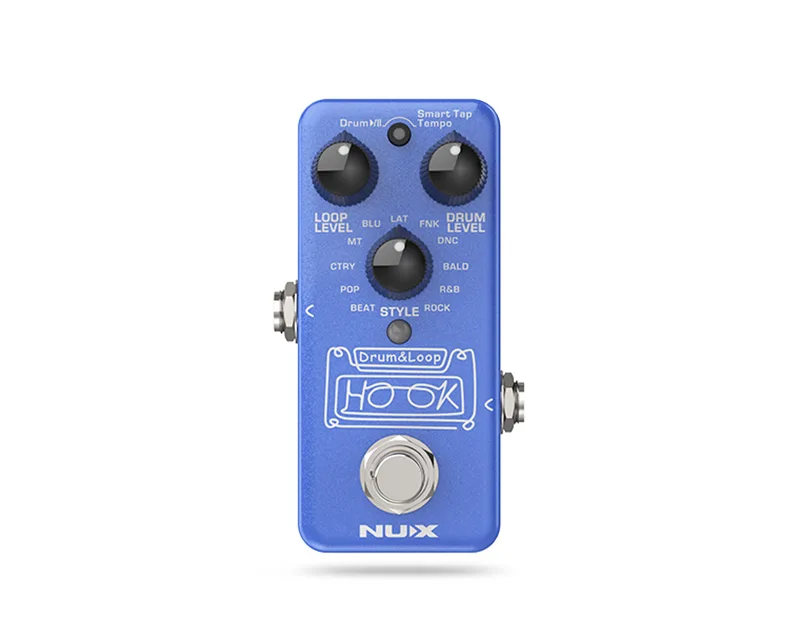
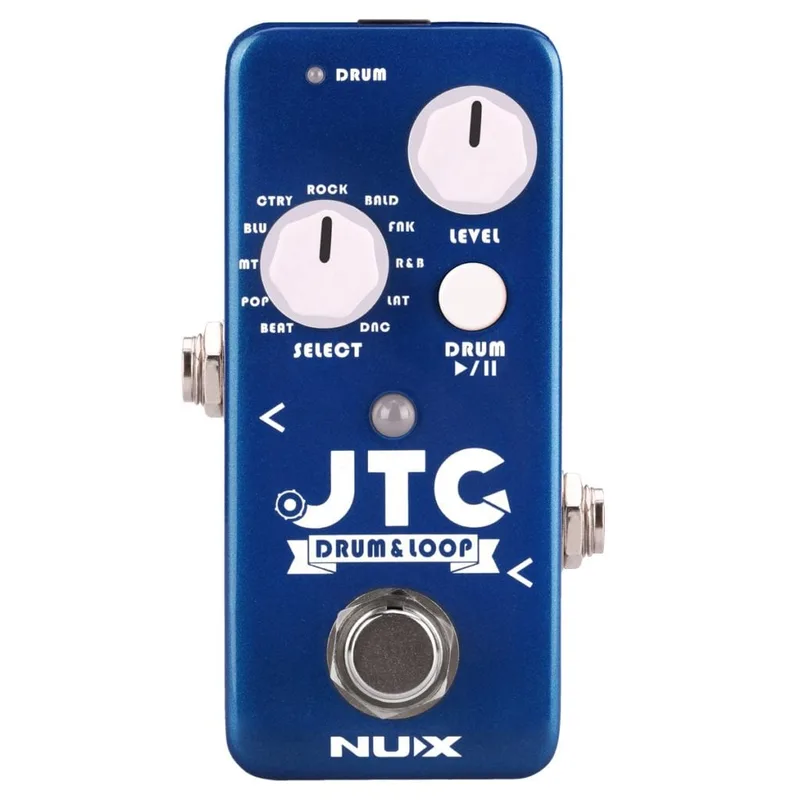
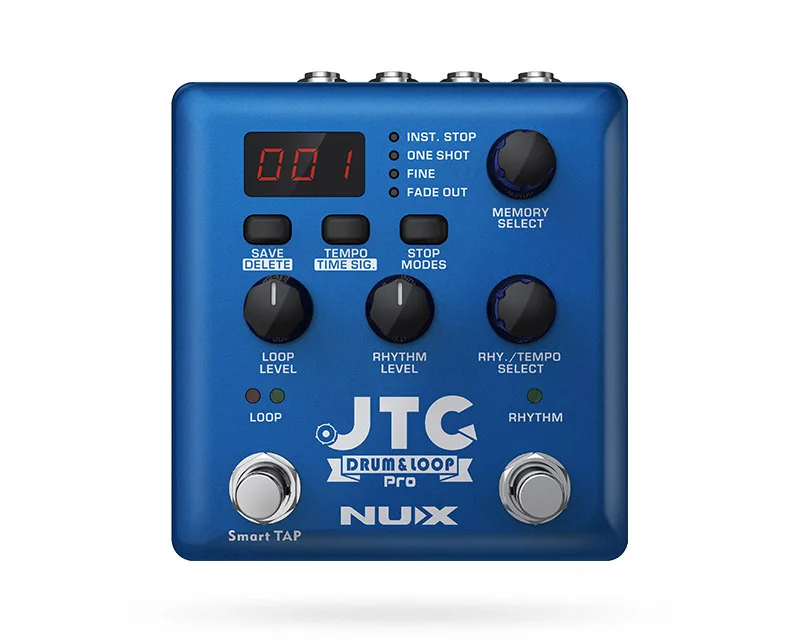
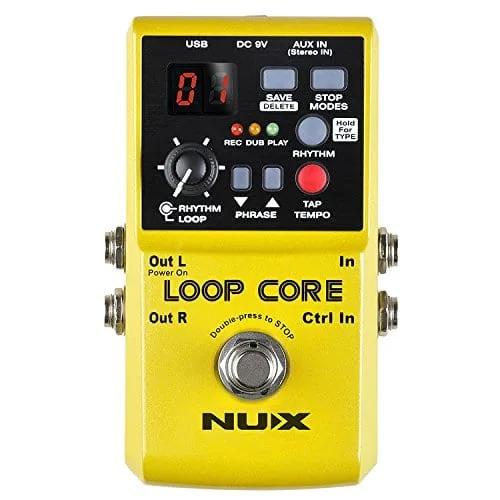
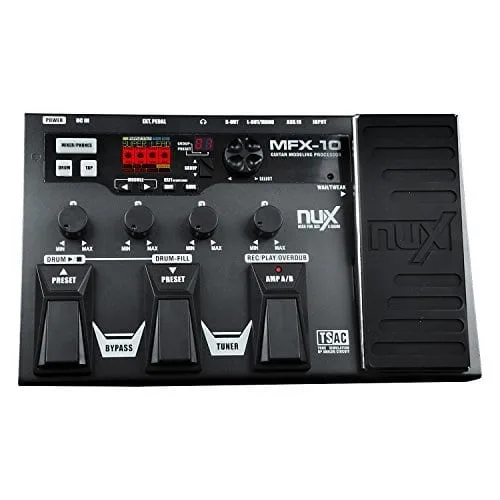
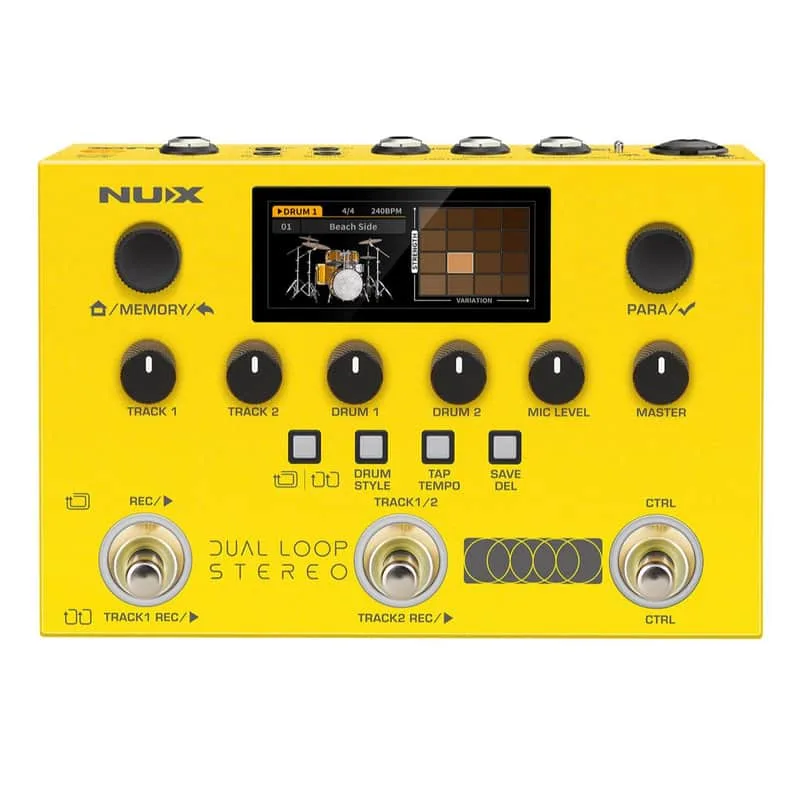
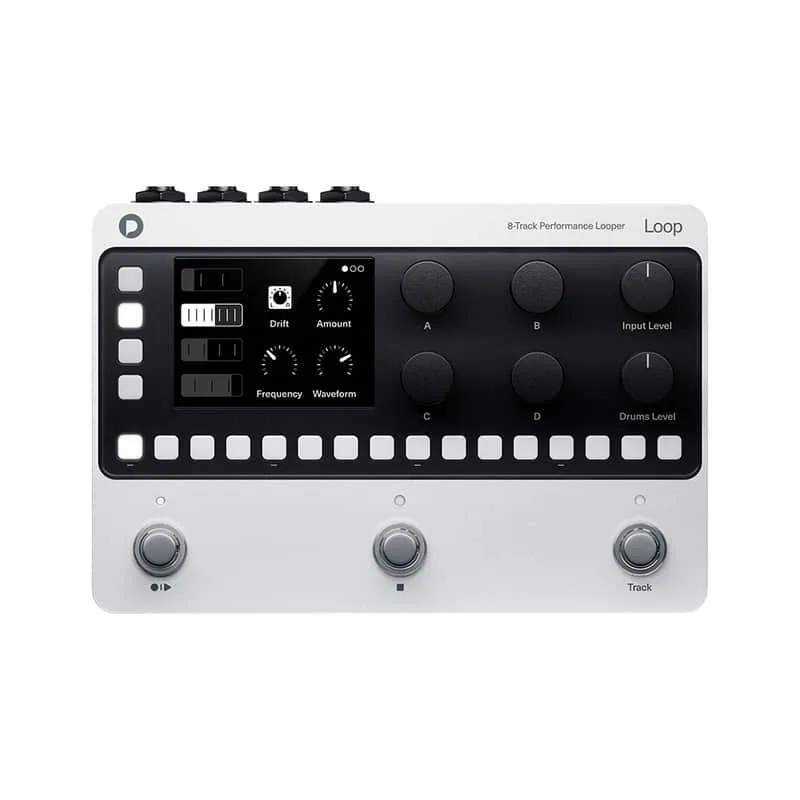
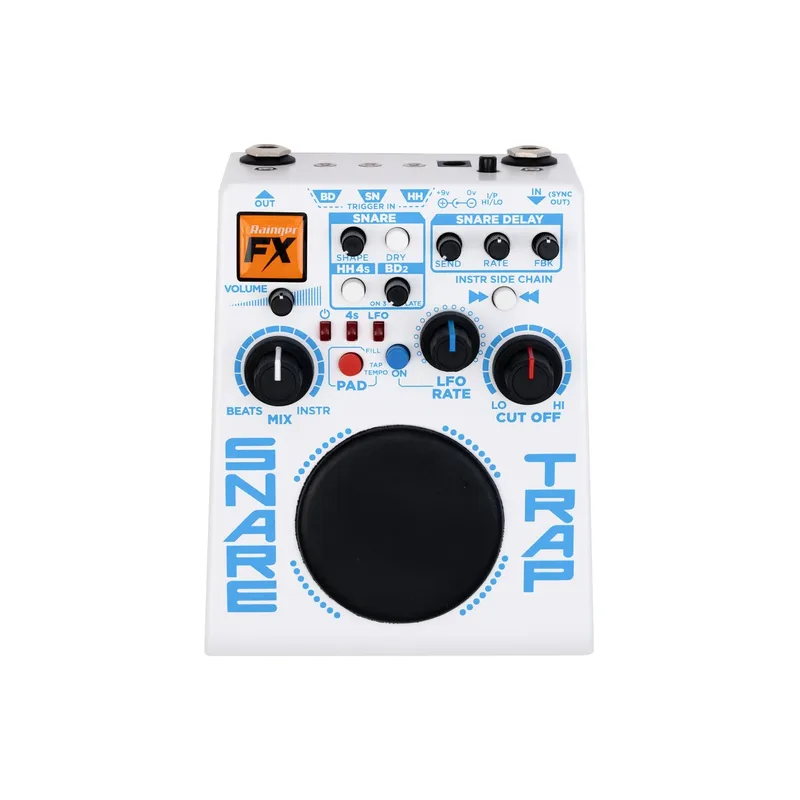
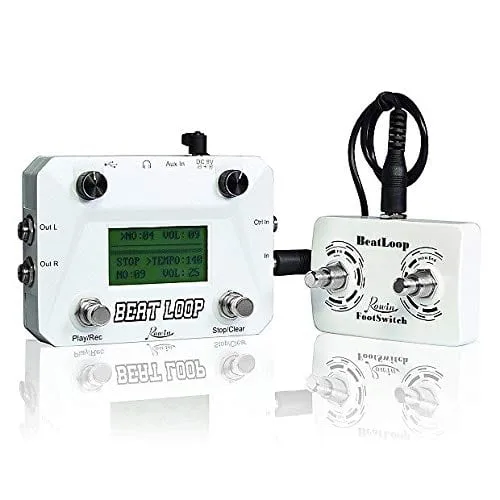
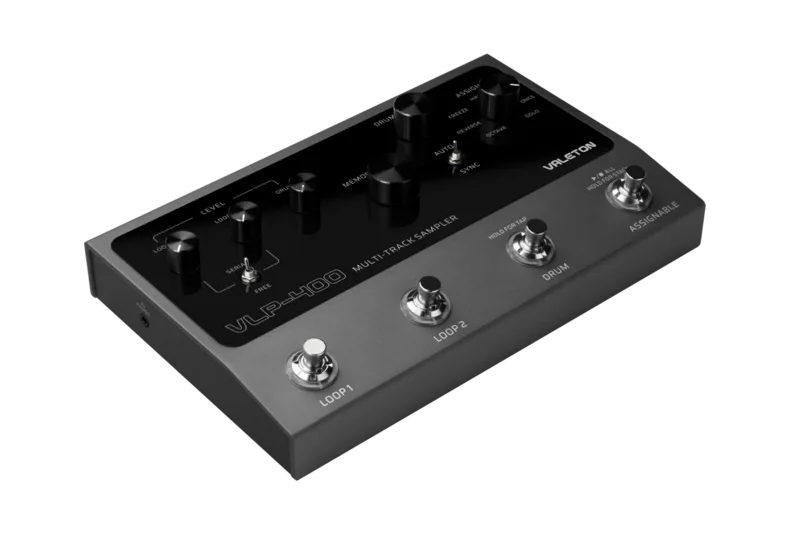
A drum pedal is a stompbox that generates a drum beat at your feet. Instead of processing your guitar signal, it produces rhythm: you pick a style and groove, set a tempo, and play along, whether for practice at home, songwriting, or holding down the rhythm slot on a gig without a drummer. Flamma describes its FC12 Mini Drum Machine Pedal as giving "everything a guitarist needs to maintain a steady rhythm and jam to a backing track"1.
Drum pedals come in two broad shapes. Some are pure drum machines in a pedal enclosure, doing nothing but making beats. Others combine a drum machine with a looper, so you can record your guitar and stack parts over a groove in one box; the Donner Circle Looper is marketed exactly this way, with the pitch "One-Person Band: Play guitar + drum at the same time"2. There are also rhythm-adjacent pedals that chop your own guitar into patterns rather than generating drums, such as Hologram Electronics' Dream Sequence, a programmable rhythm and octave pedal3.
How drum machine pedals make their beats
Most drum pedals are digital: they hold a library of sampled drum hits and assembled grooves, organized by musical style. The size of that library and how you navigate it is one of the main things that separates models.
- Drum pedal makers take different approaches to how their beats are generated and organized, from fixed groove libraries to style-based systems, and the specifics of each model are part of what separates them.
- How a given pedal's beats are made, and how many of them there are, is documented by each maker for its own product.
Tempo is the other half of the equation. Grooves are typically tempo-syncable, so the pattern follows the speed you set rather than the other way around, and advanced loopers add tempo syncing alongside undo/redo functions and visual indicators for precise timing, as BOSS's loop pedal guide notes4. The feel of the beat, how a groove sits against your playing, comes from the pattern programming and the samples themselves, which is why makers quote style counts and sample capacity as headline features.
A few pedals take a different route and synthesize percussion rather than playing back samples, or treat rhythm as a modulation of your own signal. Hologram's Dream Sequence sits in this camp: it is a programmable rhythm and octave pedal, sequencing an octave effect into patterns rather than reproducing a drum kit3.
History and landmark drum pedals
The modern wave of drum pedals is largely a story of loopers growing drum sections and dedicated beat boxes shrinking to pedal size. The releases documented over the last few years show both tracks running in parallel.
One documented landmark in this category comes from Dedalo Fx, a maker known for groundbreaking pedals such as Beat, described as the first drum machine in pedal format.5
The thread that the documented history supports is the drum machine in pedal format itself: Dedalo Fx is known for Beat, described as the first drum machine in pedal format, which established the basic idea of a drum machine that lives on a pedalboard rather than in a rack or a desktop unit5.
Prices above are launch prices as reported at the time of each release. Drum pedals, like most pedals, are often discounted after launch, so treat these figures as historical, not current.
Standalone drummers, looper combos and multi-effects rhythm sections
Choosing between the three formats is the first real decision a buyer faces, and each suits a different player.
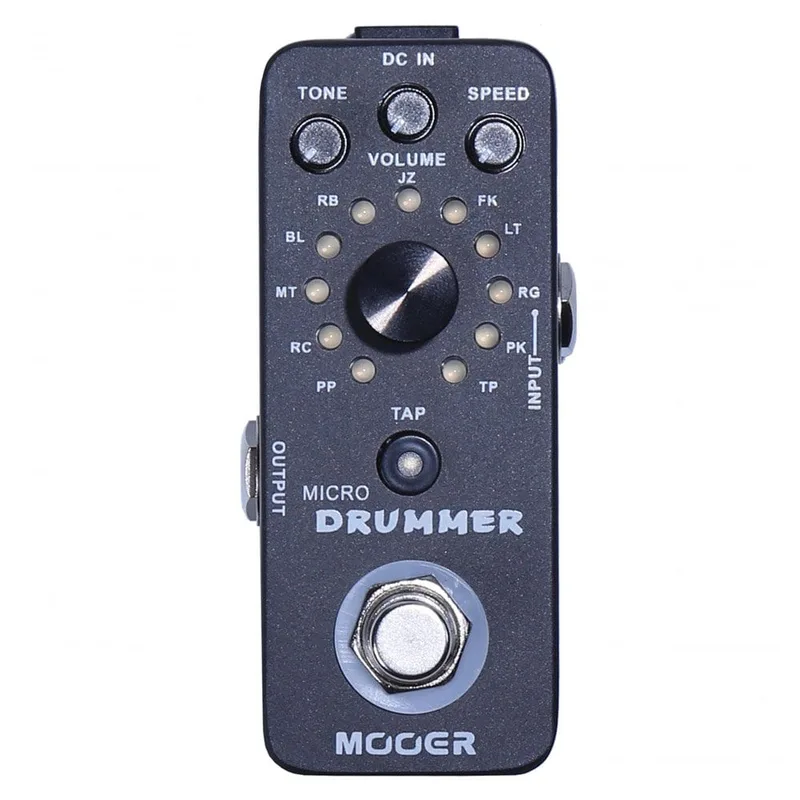
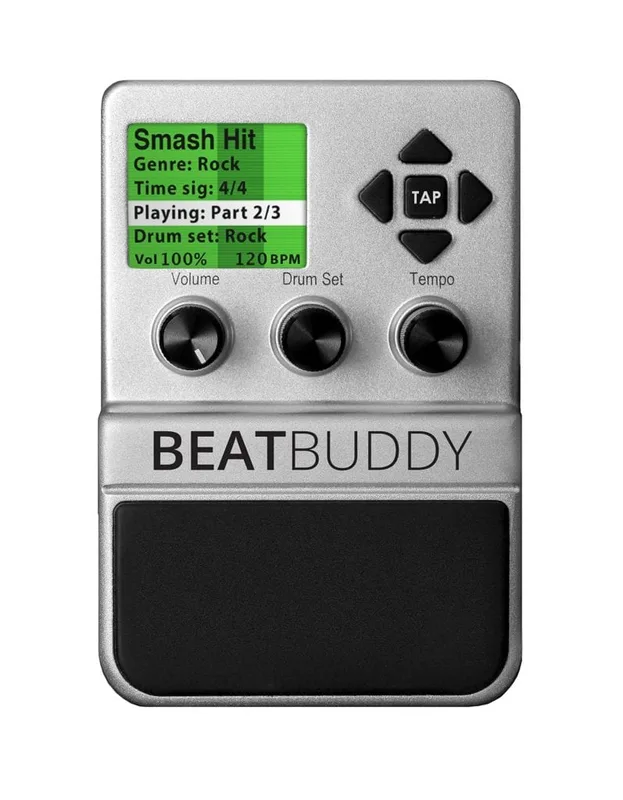
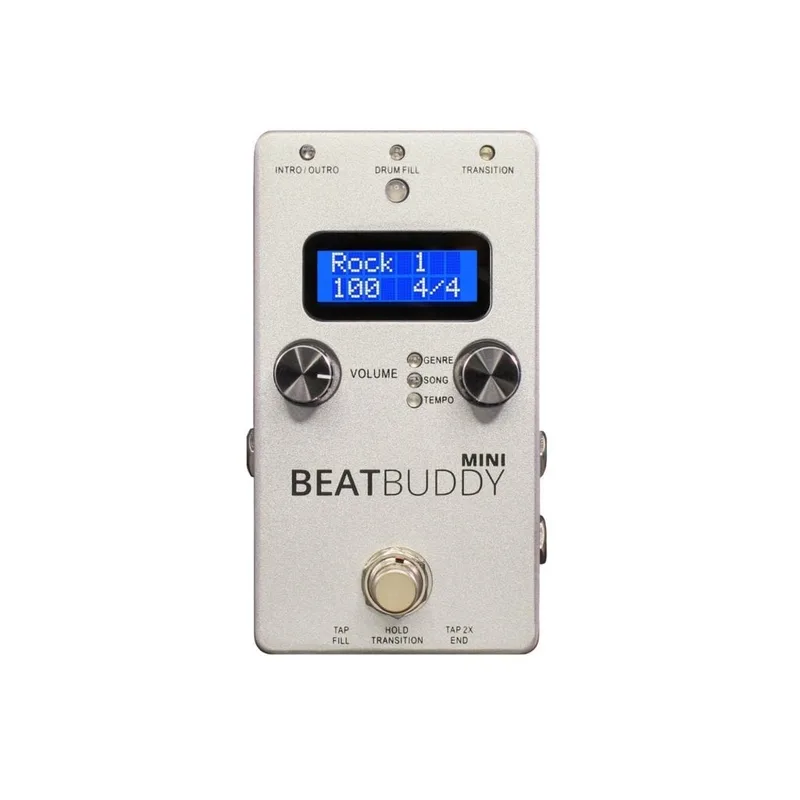
Standalone drum pedals do one thing: make beats. The Flamma FC12 is the shape of the category, a small box whose whole job is a steady rhythm and a backing track to jam to1. The Mooer Micro Drummer II is the mini-format example6, and the BeatBuddy line is the performance-oriented end, with footswitch control designed for live use7. A standalone unit suits a player who already has a looper, or who just wants a metronome with feel for practice.
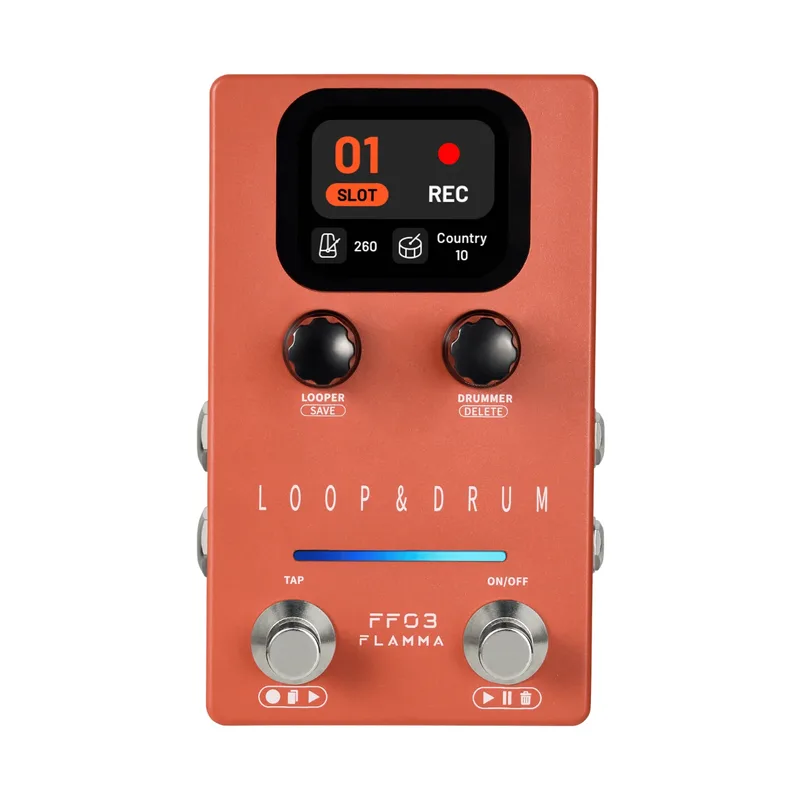
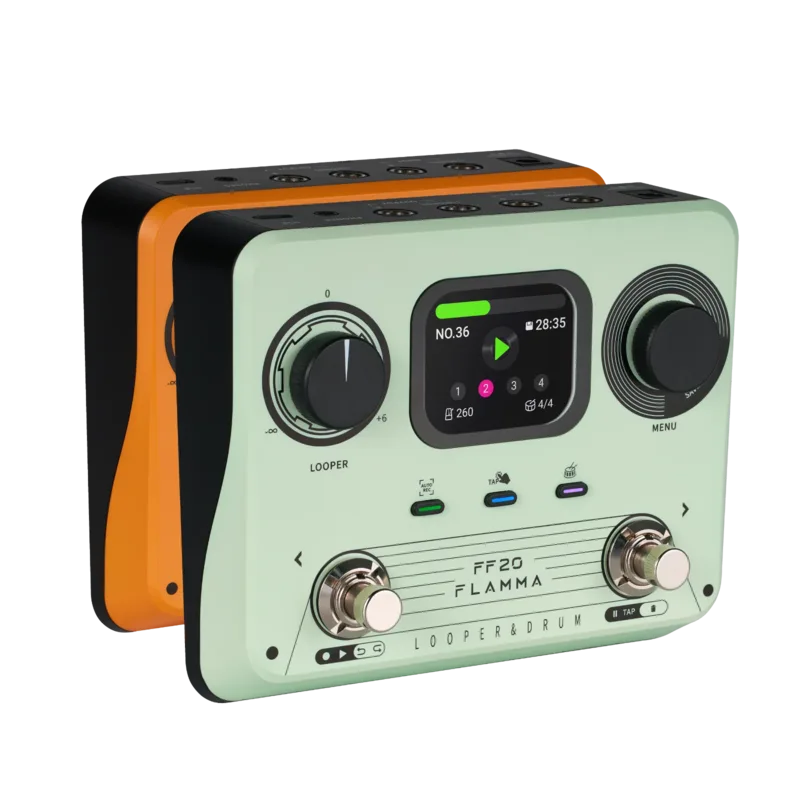
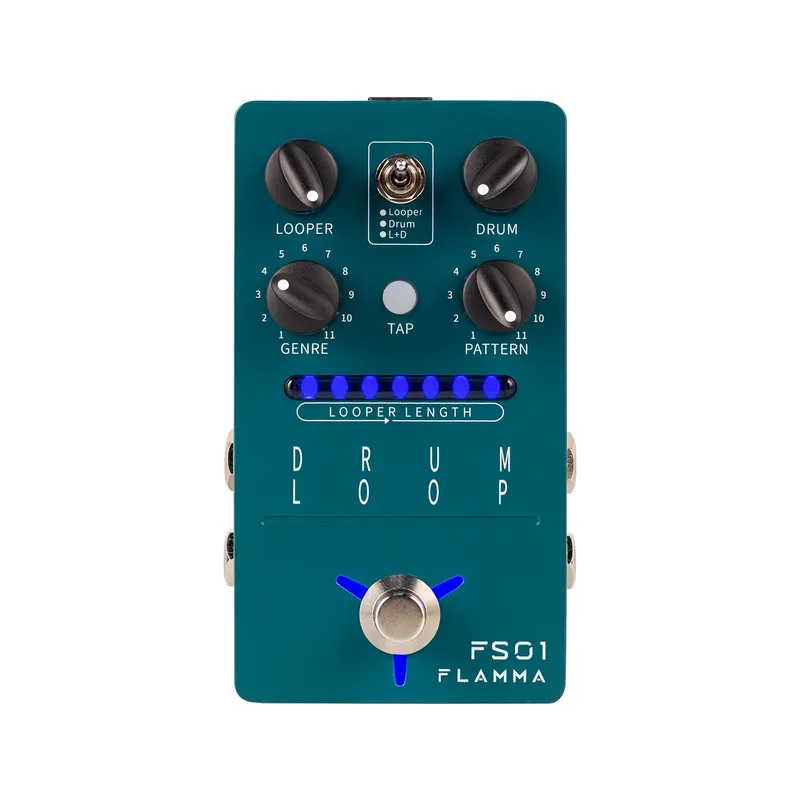
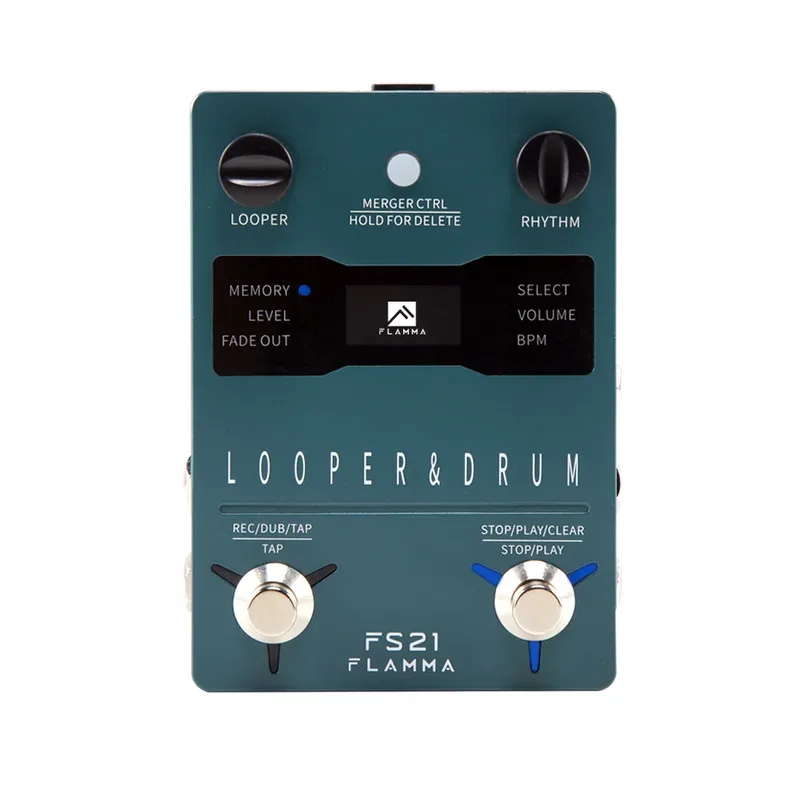
Looper and drum combos put recording and rhythm in one box. The Flamma FF03 Stereo Looper & Drum pedal is described as an all-in-one solution to practice and performance needs, combining a stereo looper and drum machine8, and the Mooer Groove Loop X2 aims to serve as the ultimate looper and drum machine combo pedal9. Advanced loopers in this class offer undo/redo functions, tempo syncing, and visual indicators for precise timing4. Add drums to looping and you have a one-person band in a single enclosure.
Multi-effects rhythm sections bury the drum machine inside a bigger processor that also handles amp simulation, effects and looping in one unit. This route suits a player building a whole rig in a single box rather than a pedalboard of specialists, trading the flexibility of separate units for convenience and a smaller footprint.
What the usual controls do
Because the category mixes formats, controls vary more than on a drive or delay pedal, but a few jobs recur.
- Groove and style selection is how you pick the beat, and makers differ in how they organize their libraries.
- Tempo control sets the speed, and on tempo-syncable loopers the drums and the loop follow the same clock.
- Transport footswitches start, stop and navigate the beat, and on looper combos they also run the loop itself.
On pure loopers without drums, advanced units offer undo/redo functions, tempo syncing, and visual indicators for precise timing4, and those same features matter on the looper-drum hybrids, where the drums make any timing sloppiness in a loop easy to hear.
Signal chain, outputs and power
A drum pedal with a mono input and output, like the Flamma FC12 with its ¼" monophonic input/output, passes your guitar through like any other pedal1. Where it sits in the chain then follows the ordinary rules, which BOSS's signal chain guide lays out: wah directly after the tuner and before the drive section, compression close to the guitar and before the drive section, modulation after the drive section, and delay after distortion for cleaner, more even repeats and before reverb10.
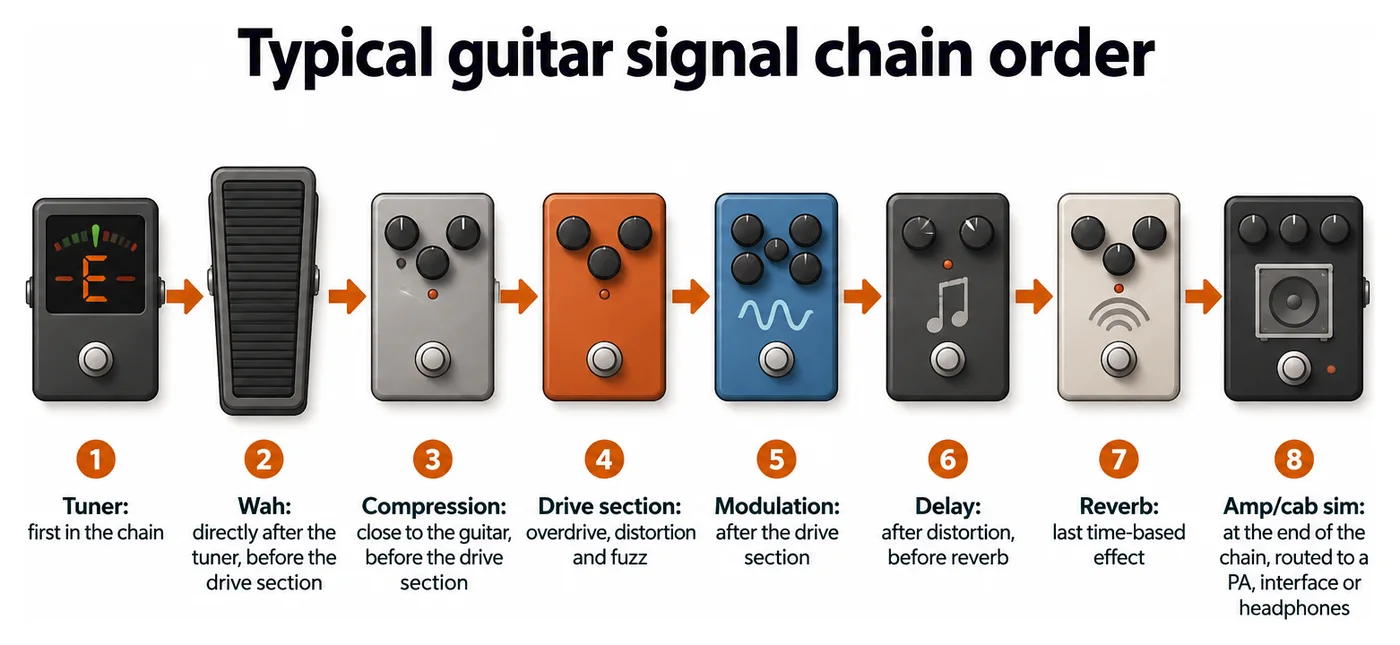
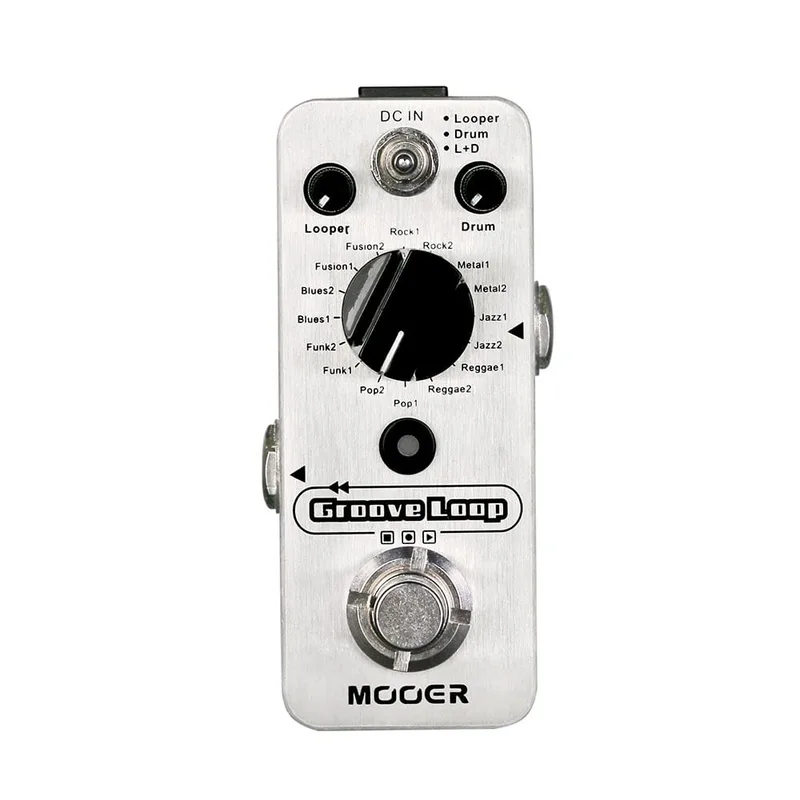
The drum output is a separate question from the guitar path. BOSS notes that the most common placement for an amp and cabinet simulator pedal is at the end of the chain, where the signal is routed to a PA system, audio interface or headphones10, and a drum pedal's beat needs a similar full-range destination, since a guitar amp's speaker is voiced for guitar, not a kick drum. On stereo looper-drum units like the Groove Loop X2, the loop and drums come out in stereo9.
Power follows the same practice as the rest of your board. Isolated supplies are the standard recommendation for digital pedals, and Strymon's Ojai R30 and Zuma are built for exactly this: the Ojai R30 provides five high-current, fully isolated outputs, and the Zuma nine, for 9V, 12V and 18V pedals11.
One control distinction worth knowing: an expression input is not the same as a tempo input. On the Empress Superdelay, for example, the expression pedal input lets you control either mix or feedback with your foot, not the delay's timing12, so check what a pedal's expression jack actually addresses before assuming it handles tempo.
Questions to ask when choosing a drum pedal
Before comparing specific models, it helps to settle a few questions about how you will actually use one.
- Standalone or combo? If you already own a looper you like, a dedicated drum pedal avoids paying twice for looping. If you are starting from nothing, a looper-drum combo does both jobs in one footprint.
- How many grooves, and which styles? A practice player may be happy with a small fixed library; a gigging player covering multiple genres needs breadth, so compare each model's library before deciding.
- Will you want your own content? Some pedals use fixed libraries that cannot load your own beats, while others offer ways to manage and expand their content, so check which approach a model takes before buying.
- Mono or stereo? If your rig is stereo, a stereo looper-drum unit preserves that; a mono unit collapses the image.
- How will you hear it? Plan for a PA, mixer, interface or headphones for the drum output, following the same routing logic as any other pedal at the end of a chain.
- How much foot control do you need live? Extra switches cost money but matter mid-song, so weigh how much hands-free control your set demands.
- What else is on your board? A drum pedal draws power like any digital pedal, so count it against your supply's outputs.
Questions
Can a drum pedal replace a drummer for live gigs?
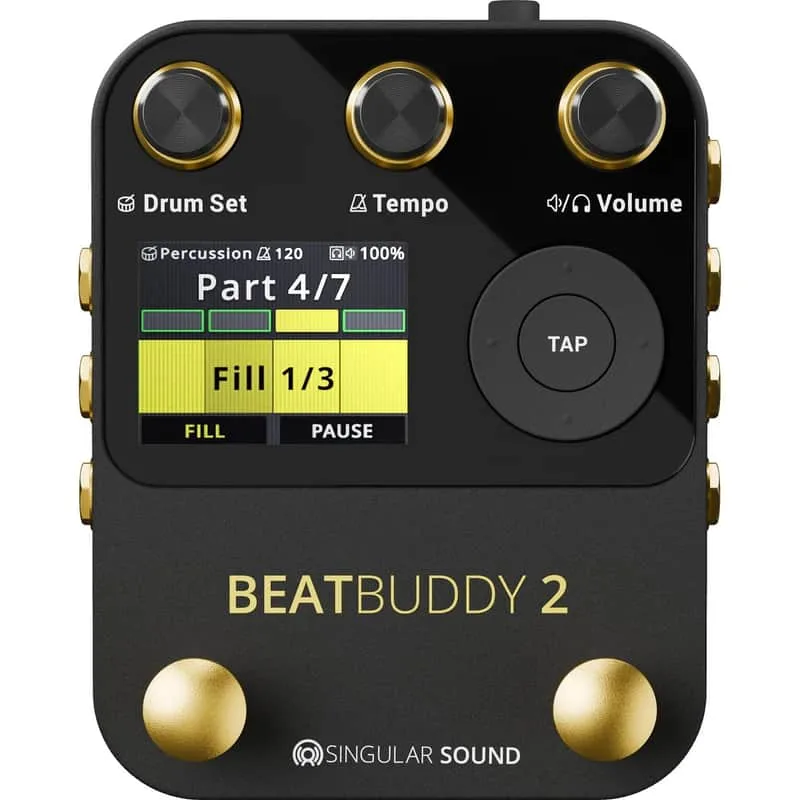
It can cover the rhythm slot for solo performers, duos and jam nights, and the Flamma FC12 is built exactly for maintaining a steady rhythm while you play over a backing track. The Singular Sound BeatBuddy 2 adds an Autopilot mode intended to keep a performance moving hands-free. Whether that replaces a drummer depends on the gig: a fixed groove library will not react to a song the way a player does.
Do drum machine pedals go before or after other effects?
A drum pedal with a mono input and output, like the Flamma FC12, simply sits in your guitar chain and passes your signal through, so the usual signal chain rules apply: wah and compression early, drive next, then modulation, delay and reverb. If the pedal outputs drums on their own jack, that output usually goes straight to a mixer or PA, separate from your effects.
What is the difference between a drum pedal and a looper with drums?
A standalone drum pedal only generates a beat. A looper with drums, like the Donner Circle Looper or Mooer GL100, records your guitar and layers it on top of a drum groove, so one box gives you a backing band. Loopers also add record, overdub, playback, stop and undo/redo controls that a pure drum pedal does not need.
Can you control a drum pedal tempo with your foot?
Yes, in most cases. Drum pedals are footswitch-operated by design, and the BeatBuddy 2 can be paired with the SuperSwitch foot controller for extra hands-free control. Note that an expression pedal input does not always mean tempo control: on the Empress Superdelay, for example, the expression input controls mix or feedback, not tempo.
Do drum pedals need a separate amp or PA?
The drums need somewhere to be heard other than your guitar amp, since a guitar speaker is voiced for guitar. BOSS notes that amp and cabinet simulator pedals at the end of a chain are most commonly routed to a PA system, audio interface or headphones, and that is the usual destination for a drum pedal's output too.
Can you add your own beats to a drum machine pedal?
On some models, yes. The Singular Sound BeatBuddy 2 ships with revamped online manager software, which is the route for managing its content. Budget pedals generally work from a fixed library instead: the Donner Circle Looper, for instance, offers 100 drum grooves from 10 music styles with no way to load your own.
Sources (12)
- FLAMMA FC12 Mini Drun Machine Pedal, Flamma Innovation
- Circle Looper Guitar Pedal with Drum Machine Time Display Donner, donnerdeal.com
- Dream Sequence, Hologram Electronics
- The Complete Guide to Loop Pedals for Electric Guitarists, BOSS (articles.boss.info), 2025-04-04
- The history of Dedalo Fx pedals, Dedalo Fx
- Mooer unveils the Micro Looper II, guitarworld.com, 2023-06-01
- Singular Sound BeatBuddy 2 with SuperSwitch: An Eager Drummer at Your Feet!, gearnews.com, 2025-09-25
- Flamma FF03 Stereo Looper & Drum Pedal, Pedal of the Day, 2026-04-30
- Mooer launches the drum machine-loaded Groove Loop X2 stereo looper pedal, Guitar World, 2021-09-22
- The Ultimate Guide to Guitar Effects Pedal Order and Signal Chain, BOSS (articles.boss.info), 2023-03-01
- Ojai Expansion Kits, Strymon (www.strymon.net), 2026-02-19
- Superdelay, Empress Effects Inc.