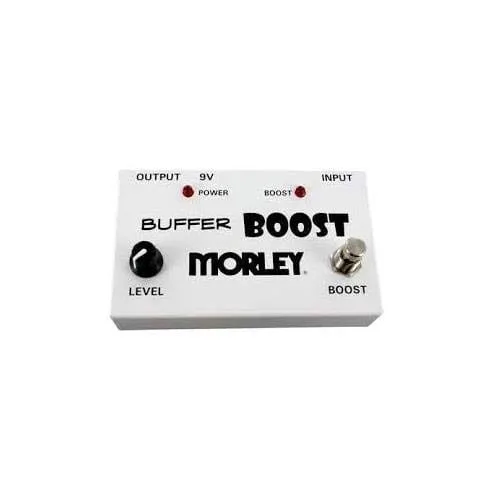


The Morley Buffer Boost is a utility pedal rather than an effect: a buffer circuit with a clean boost, built to give your guitar's signal an extra push at the front or back of the signal chain so it maintains level and tone on the way to the amp1. Where a long pedalboard of unbuffered pedals can eat treble and level, a buffer converts the guitar's high-impedance output to a low-impedance signal that survives that trip, and the Buffer Boost adds up to 20dB of clean boost you can engage for solos1. Guitar World reviewed it in March 2013, when it carried a list price of $1191.
What it is and what it does
Guitar World's reviewer, writing in March 2013, framed the pedal plainly: "The Morley Buffer Boost is not an effect but rather an essential tool that remains in constant use when it's patched int"o a signal chain1. The buffer section runs constantly once the pedal is in the chain, while the boost is a separate stage you call up with a footswitch. That split matters for how you use it: the buffer is doing its job whether you touch anything or not, and the boost is there for the moments you need more level, up to 20dB of it1.
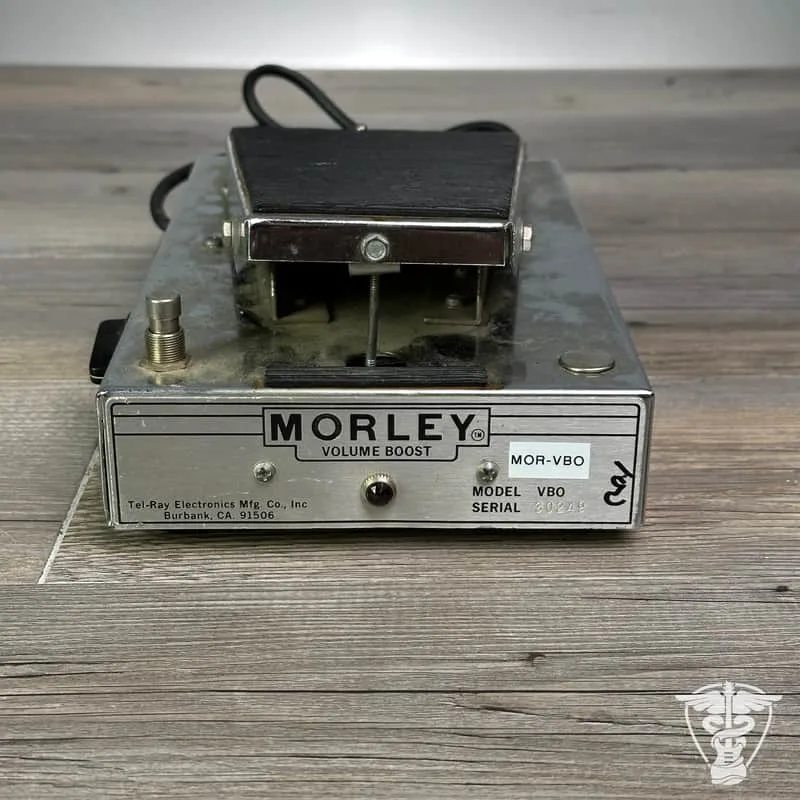
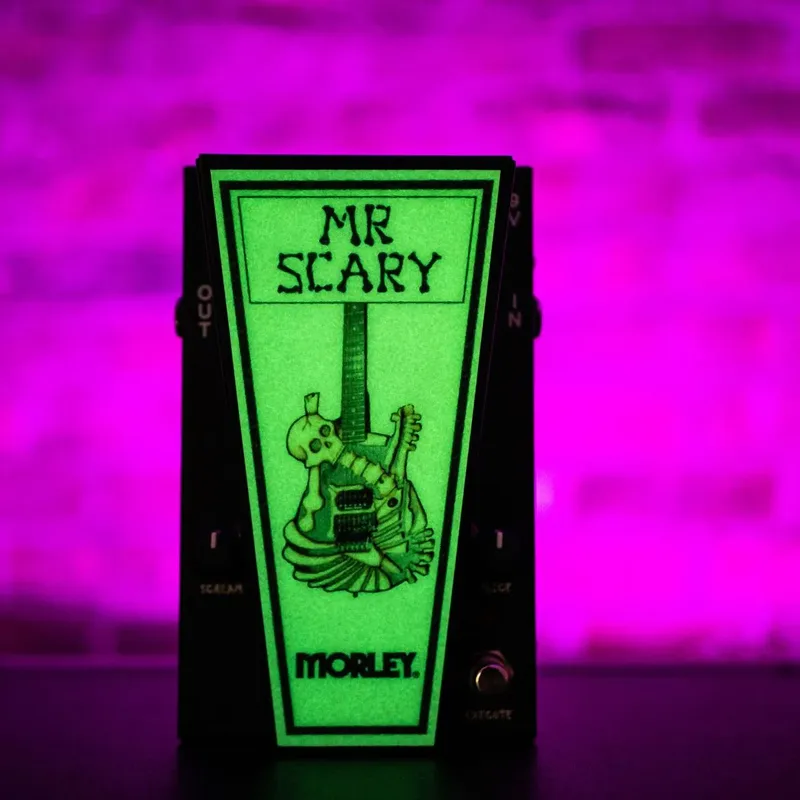
Morley is better known for wah and volume pedals, including the Morley Volume Boost and wah models such as the Morley George Lynch Mr. Scary Wah, but the Buffer Boost sits in the same utility territory as the company's level-control pedals rather than its tone-shaping ones1.
Controls and connections
The control surface is minimal, which fits a pedal meant to be set once and left alone.
| Control or connection | What it does |
|---|---|
| Boost footswitch | Engages the boost function as needed, for example for solos1 |
| 1/4-inch mono input jack | Accepts the guitar or the preceding pedal in the chain1 |
| 1/4-inch mono output jack | Feeds the next pedal or the amp1 |
| Nine-volt adapter jack | Powers the pedal from a supply1 |
Power is flexible for its era: alongside the adapter jack, it can also operate with a nine-volt battery1, so it works on a simple board without a power supply.
Where to put it in the chain
Morley designed the buffer to work at the front or the back of the signal chain1. Guitar World's reviewer came down on the side of the front:
"I preferred how the Buffer Boost sounded up front, as the strong signal decreased the signal-to-noise ratio"ts and eliminated the cumulative white noise sizzle from using several unbuffered effects at once.
That preference lines up with how other makers of buffers advise placement. Suhr recommends placing its Buffer as the first device in the signal chain2, and Lehle's technical writing on buffering notes that a buffer at the beginning of the chain is what preserves the signal through the pedals that follow, rather than trying to recover it at the end3. For a player with several true-bypass pedals and long cables, first in the chain is the placement the published guidance points to.
What reviewers said
The Guitar World review of March 2013 is the published verdict on record. Its findings were favorable on both counts: the buffer did its job of maintaining level and tone, and the reviewer preferred the pedal's sound at the front of the board, where the strong signal reduced noise in the effects that followed1. The review also noted the practical touches, the battery option and the simple mono jacks, as part of the package at the $119 list price1.
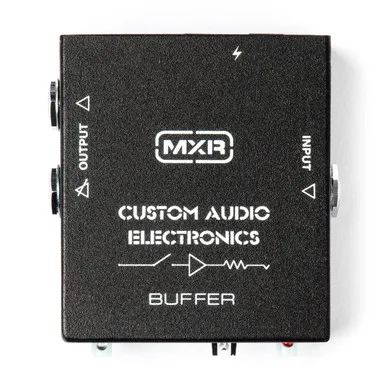
For comparison, Guitar World later gave similar attention to the MXR Buffer Boost, recommending it in July 2015 as new and noteworthy gear for guitarists4, and the site has covered buffer-boost designs from other makers since. The Morley unit stands as an early-2010s take on the format, from a company whose catalog leans toward wah and volume pedals.
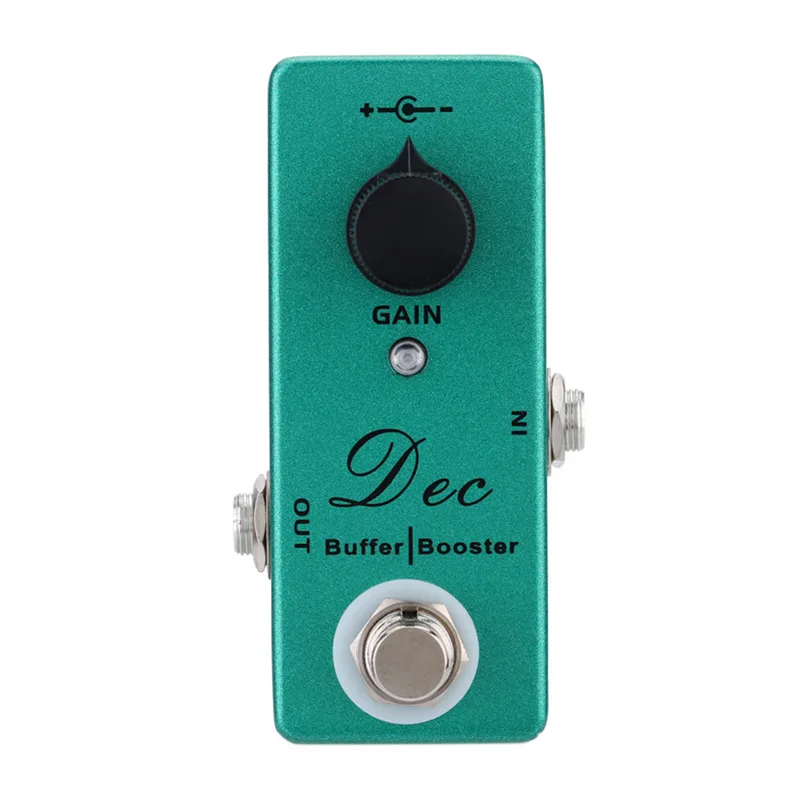
Players comparing options today can also look at the Mosky DEC Buffer Booster, a single-knob buffer and boost in the same category, or the broader Boost Pedals and Buffer Pedals pages for the type as a whole.
Videos
Guitar World
The Tone King
WMusicDistribution
Questions
Should the Morley Buffer Boost go first or last in the chain?
Guitar World's reviewer preferred it up front, at the start of the pedalboard. There, the strong signal it produces decreased the signal-to-noise ratio in the effects that followed and eliminated the cumulative white noise sizzle that builds up when several unbuffered effects are used at once. Morley designed it to work at the front or back of the chain.
Does the Morley Buffer Boost run on a 9V battery?
Yes. Alongside a jack for a nine-volt adapter, it can also operate with a nine-volt battery, so it works on a board without a dedicated power supply as well as on one that has a spot free.
Is the buffer always on in the Morley Buffer Boost?
Yes. Guitar World described it as not an effect but an essential tool that remains in constant use when it is patched into a signal chain. The boost section is separate, with its own footswitch for engaging it as needed, such as for solos.
How much did the Morley Buffer Boost cost?
Its list price was $119 at the time of Guitar World's review in March 2013. It is an older, discontinued item, so current pricing is not part of the record here.
Sources (4)
- Review: Morley Buffer Boost, Guitar World, 2013-03-27
- Suhr Buffer, Suhr (www.suhr.com)
- Do I need a buffer?, blog.lehle.com, 2017-06-14
- Guitar World Recommends: MXR Buffer Boost, Guitar World, 2015-07-28