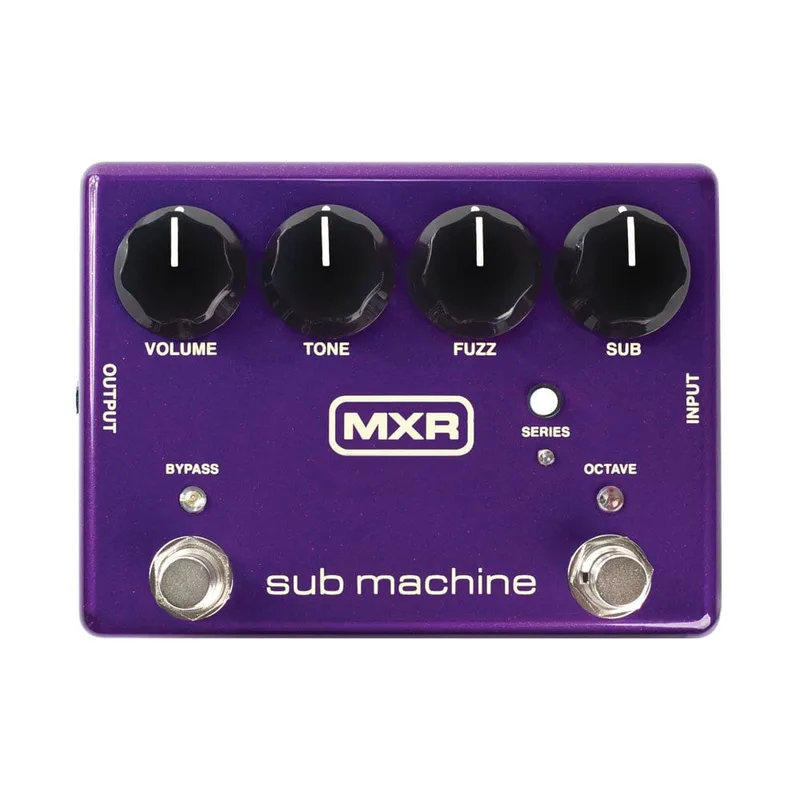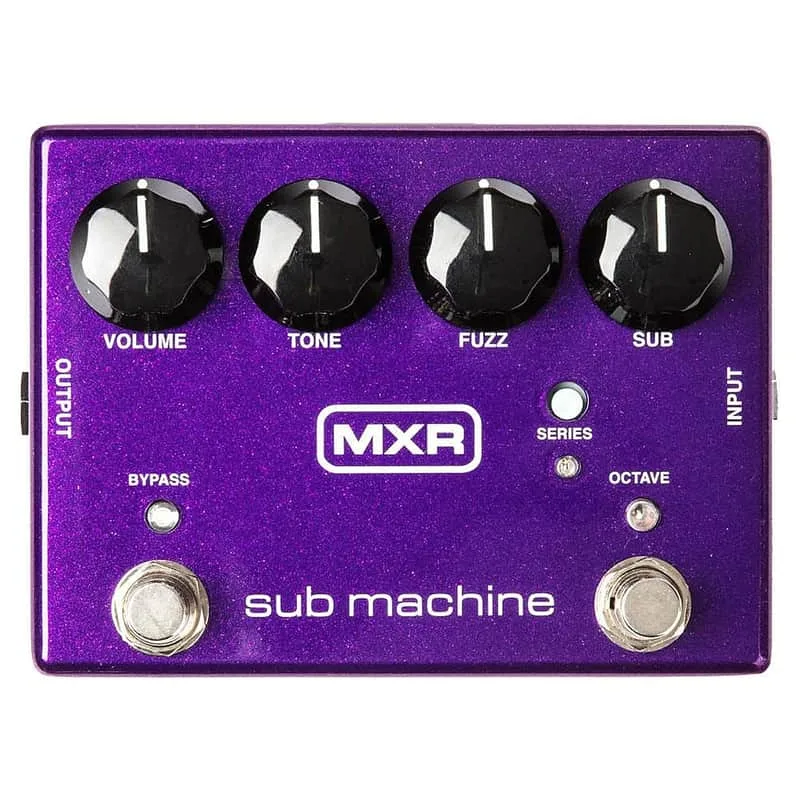


The MXR Custom Shop Sub Machine is an octave fuzz pedal that puts two voices in one box: the fuzz circuit of the MXR Custom Shop La Machine, complete with its octave-up mode, and an old-school sub-octave circuit with its own level control1. The result is a pedal a player can set as a straight fuzz, a fuzz with an octave-up scream on top, a fuzz with a growling octave-down underneath, or a sub-octave effect on its own.
Premier Guitar's reviewer found the fuzz side held up at quiet volumes too, describing "how buzzing, full, and sustaining it can sound at low pedal, amp, and guitar volume levels when you crank the fuzz"2. The pedal launched on February 13, 2015 at a US street price of $149.991.
An octave fuzz with a sub-octave circuit
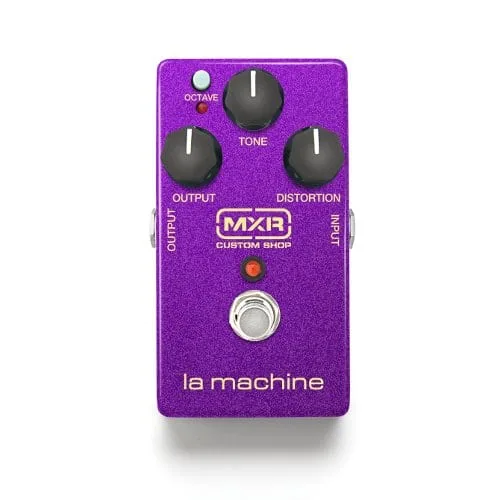
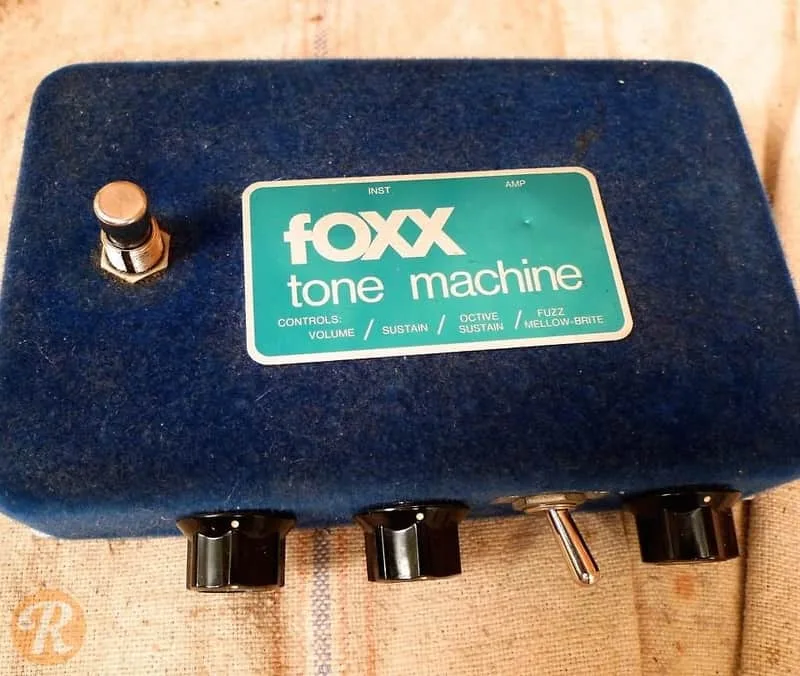
The Sub Machine combines two effect paths in one enclosure. The mechanical heart of the pedal is MXR's La Machine fuzz, an octave fuzz inspired by the Foxx Tone Machine of the 1970s23. On top of that, the Sub Machine adds a sub-octave circuit that generates a note one octave below what you play, with its own level knob so you can set the mix of fuzz and sub1.
That makes it a three-voice pedal in effect terms:
- Fuzz: the La Machine circuit on its own, with Volume, Tone and Fuzz controls1
- Octave up: the La Machine's octave-up mode, which adds an octave-up tone to the fuzz signal for a raw, searing sound4
- Sub octave: an old-school octave-down circuit with its own level control, usable alone or blended with the fuzz1
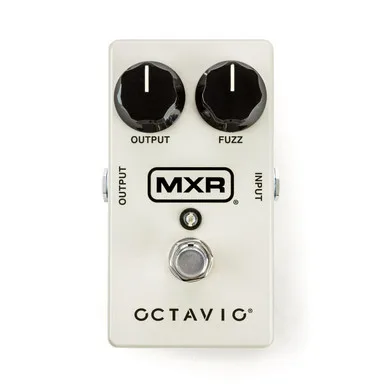
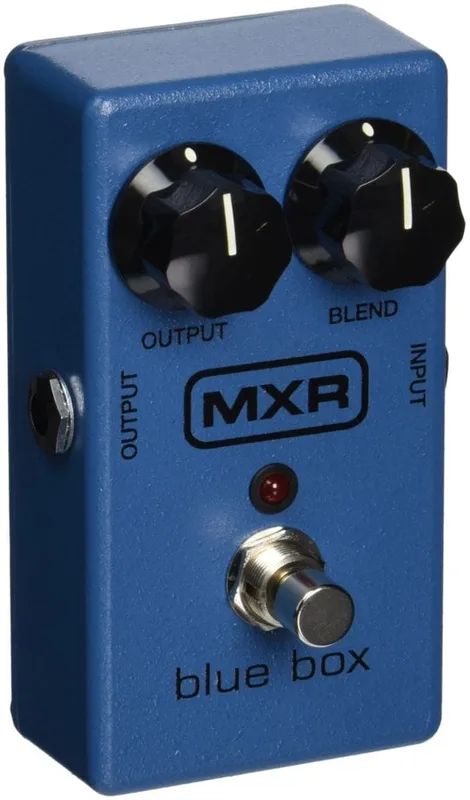
The pedal sits in MXR's wider range of octave fuzzes, alongside pedals like the MXR Octavio Fuzz and the MXR Blue Box, but the Sub Machine is the one that puts octave up and octave down in the same box as the fuzz.
The controls
The control layout carries over the La Machine's knobs and adds two things: a sub-octave volume knob and a series/parallel switch21.
| Control | What it does |
|---|---|
| Volume | Overall output of the fuzz side, carried over from the La Machine1 |
| Tone | Tone shaping of the fuzz, carried over from the La Machine1 |
| Fuzz | Gain of the fuzz circuit, carried over from the La Machine1 |
| Sub-octave volume | Sets the level of the octave-down signal, from zero octave content up to full2 |
| Octave footswitch | Engages the octave-up mode2 |
| Series/parallel switch | Selects how the sub-octave and fuzz/high-octave signals interact2 |
The sub-octave volume knob is the key to the pedal's flexibility. Premier Guitar's reviewer noted it "can be dialed back to zero octave content or up to Jabba," and that with the fuzz volume off the sub-octave works on its own2. That means the pedal can serve as a straight octave-down effect, which most octave fuzzes cannot do.
The octave switch is also a change from the La Machine. On the original La Machine, the octave function was a small push button, which Premier Guitar listed among that pedal's cons as "octave bypass button is small"3. On the Sub Machine it is a footswitch, which the reviewer called "vastly improved from the original La Machine simply by making it a footswitch rather than a minuscule button"2.
The series/parallel switch
The fifth control is the series/parallel switch, and it changes how the two halves of the pedal interact2:
- Parallel: the sub-octave and fuzz/high-octave signals run independently and are summed at the output, so each keeps its own character2
- Series: the sub-octave signal is fed into the fuzz circuit, so the fuzz shapes and drives the octave-down sound2
In parallel mode you get a clean blend of the two voices. In series mode the sub-octave goes through the fuzz, which stacks the effects for a heavier, more saturated octave-down tone2.
From the La Machine to the Sub Machine
The Sub Machine's story starts with the La Machine, which Jim Dunlop introduced at NAMM 2014 as an MXR Custom Shop fuzz pedal4. The La Machine is an octave fuzz inspired by the Foxx Tone Machine, with a control set virtually identical to the Foxx's except that a small push button stands in for the Foxx's side-mounted octave toggle3.
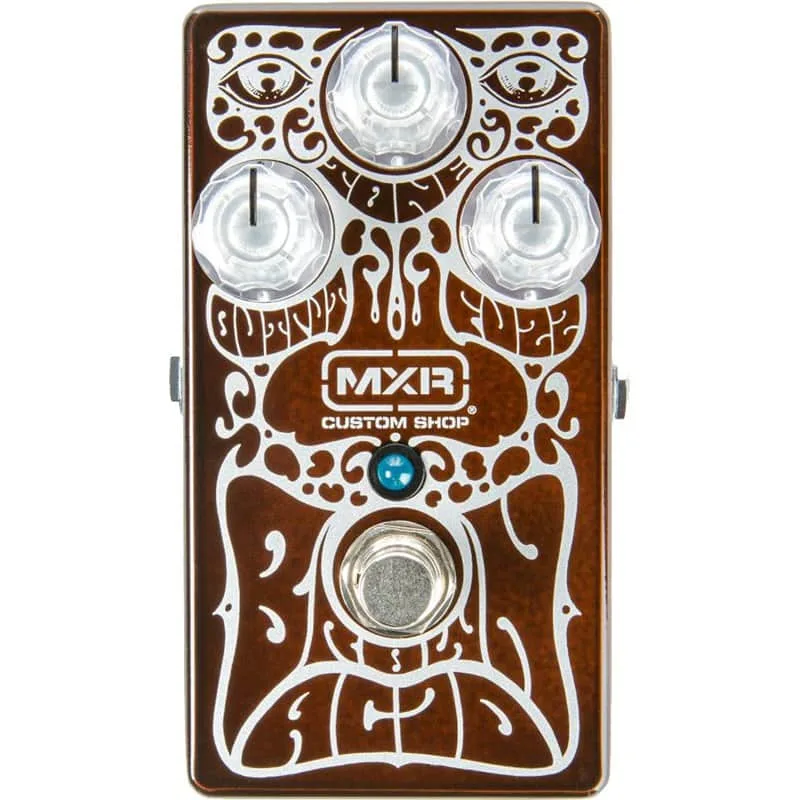
The MXR Custom Shop itself is the small-batch wing of MXR's operation. Dunlop describes it as "a testing ground for the MXR team's most ambitious and adventurous ideas"5, and the Sub Machine fits that description: it takes an existing Custom Shop pedal and extends it with a circuit the standard MXR line did not offer.
The Sub Machine Fuzz, announced February 13, 2015, features the La Machine's circuitry and all of its functions, from its Volume, Tone and Fuzz controls to its octave-up mode, and adds the sub-octave circuit with its own level control1. It shipped in a sturdy, road-ready housing with components to match1.
What reviewers said
Premier Guitar reviewed the Sub Machine and came away positive on its range and value. The review's pros list reads: "Surprisingly versatile and full of tone-shaping possibilities. Good value. Killer basic fuzz voice."2
The same reviewer had covered the La Machine earlier and found that pedal "smooth and forgiving for an octave fuzz," with a "fuzz voice is huge and versatile by itself"3, qualities that carry into the Sub Machine since the fuzz circuit is the same.
For context on where the Custom Shop line sits, MusicRadar's review team wrote that "MXR's custom shop is slowly but surely getting itself something of a reputation"6, and the Sub Machine's combination of two octave circuits in one true-bypass box at a $149.99 street price is the kind of release that reputation was built on1.
Videos
ProGuitarShopDemos
Sweetwater
Premier Guitar
Questions
Is the MXR Custom Shop Sub Machine true bypass?
Yes. The Sub Machine Fuzz uses true bypass switching, so with the pedal off your signal passes through without the circuit coloring it. The La Machine it is based on also used true bypass switching.
What is the difference between the Sub Machine and the La Machine?
The Sub Machine carries over the La Machine's circuitry and all of its functions, including the Volume, Tone and Fuzz controls and the octave-up mode, and adds an old-school sub-octave circuit with its own level control plus a series/parallel switch. The octave switch also became a footswitch instead of the La Machine's small push button.
Can you use the sub-octave on its own without the fuzz?
Yes. The sub-octave volume knob can be dialed from zero octave content up to full, and with the fuzz volume off the sub-octave is usable on its own, which makes the pedal work as a straight octave-down effect.
What does the series/parallel switch do on the Sub Machine?
In parallel mode it runs the sub-octave and the fuzz/high-octave signals independently and sums them at the output, so each keeps its own character. In series mode the sub-octave signal is fed into the fuzz circuit, so the fuzz shapes the octave-down sound.
How much does the MXR Custom Shop Sub Machine cost?
At its February 2015 launch the Sub Machine Fuzz carried a street price of $149.99 in the US. For comparison, the La Machine it builds on was listed at a $139 street price in Premier Guitar's review.
Sources (6)
- Dunlop Releases the Sub Machine Fuzz, Premier Guitar, 2015-02-13
- MXR Custom Shop Sub Machine Octave Fuzz Review, Premier Guitar, 2015-09-03
- MXR Custom Shop La Machine Review, Premier Guitar, 2014-09-15
- NAMM 2014: Jim Dunlop Introduces MXR Custom Shop La Machine Fuzz Pedal -with Demo Video, Guitar World, 2014-02-04
- MXR: A Short History, Dunlop (lifestyle.jimdunlop.com), 2014-03-05
- MXR Variphase CSP001 review, MusicRadar, 2008-02-05