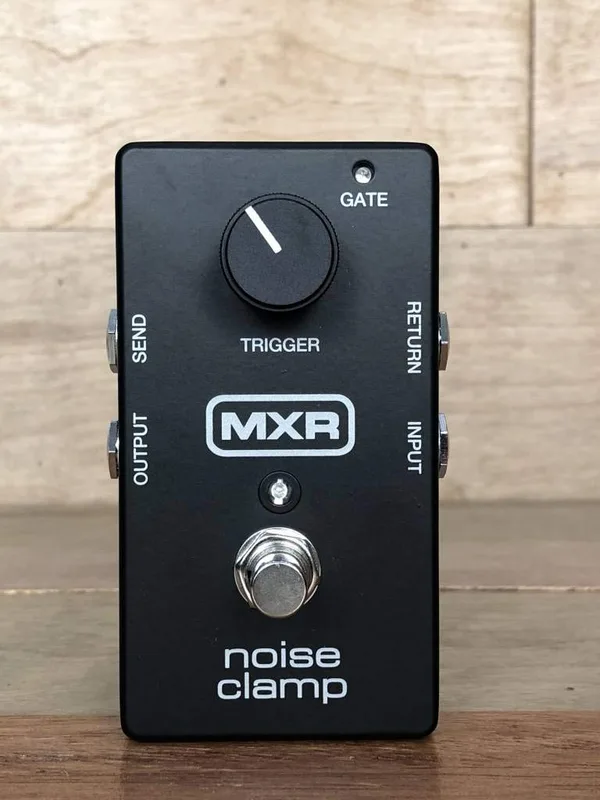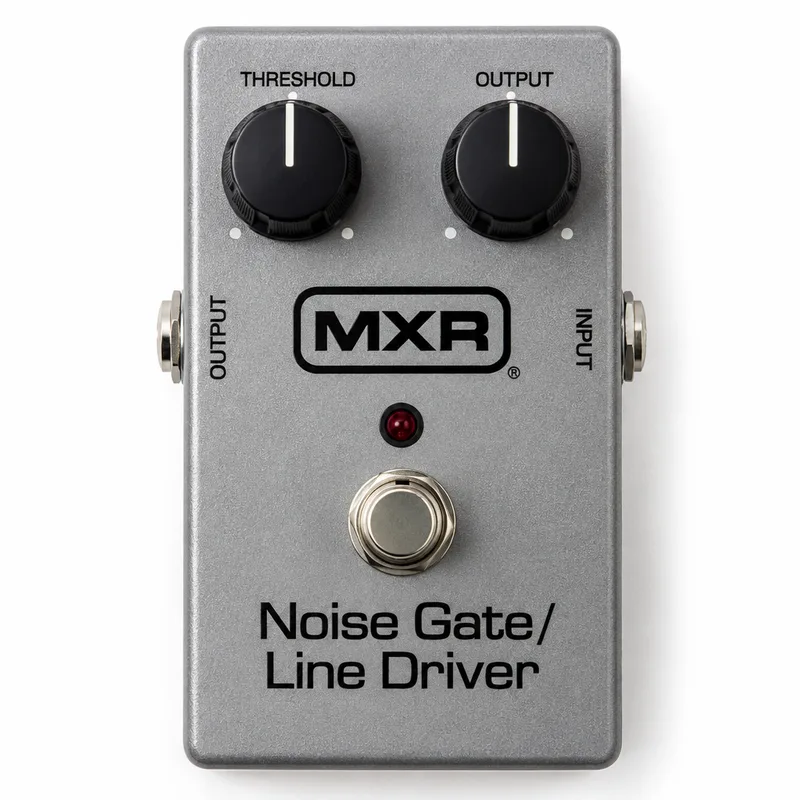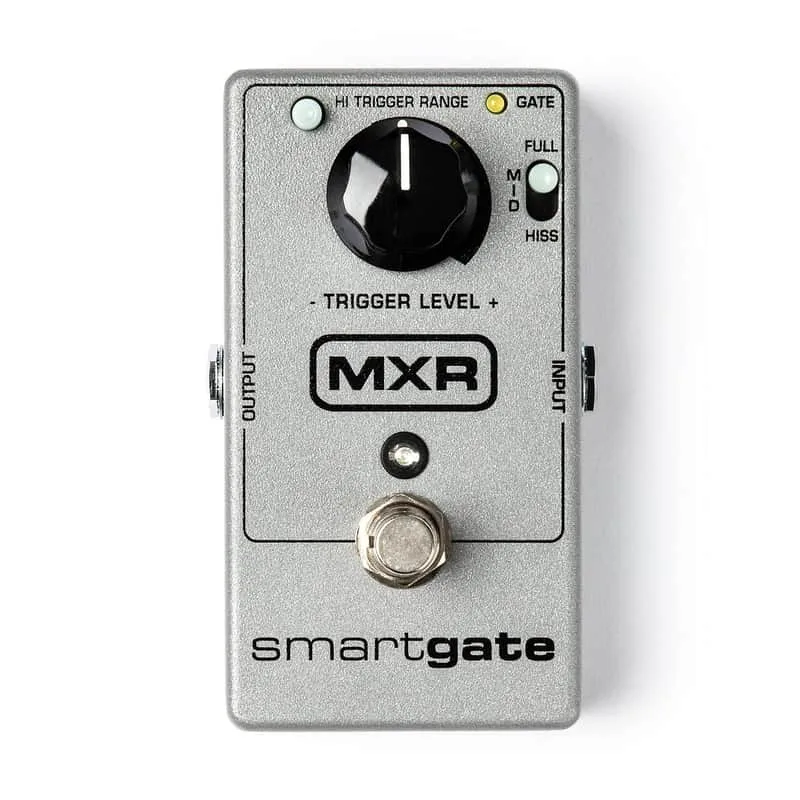


The MXR M135 Smart Gate is a compact noise reduction pedal built to quiet a noisy signal without shutting down your playing. Its defining feature is three selectable noise reduction ranges, chosen with a single switch, so the gate can be tuned to the kind of noise you are fighting rather than working at one fixed setting1. It sits in MXR's noise reduction line alongside the MXR Noise Clamp and the MXR Noise Gate/Line Driver.
Controls
The pedal keeps its face simple: one knob, one slider switch and one toggle switch, plus the footswitch2.
| Control | What it does |
|---|---|
| TRIGGER LEVEL knob | Controls sensitivity of the gate threshold, indicated by a yellow GATE LED1 |
| MODE slider (Full / Mid / Hiss) | Selects the noise reduction range1 |
| HI TRIGGER RANGE switch | Extends trigger range for extremely noisy situations1 |
| FOOTSWITCH | Toggles effect on/bypass, with a red LED indicating on1 |
Guitar Pedal X summarized the control set as "Hi Triage Range Switch, MODE : Full / Mid / Hiss, Trigger Level" in its 2025 look at compact noise gates2.
The three noise bands: Hiss, Mid and Full
The MODE slider is the heart of the pedal. The maker's manual explains the intent behind each range21:
"The Hiss setting and the bypass (red LED indicates on) Mid setting are both effective on instruments with high gain midrange *A-weighted boosting, such as distorted electric guitars and amplified harmonicas."
"The Full setting is most effective when used to quiet input sources with low-end hum and buzz problems, such as AC line noise, display noise, or light dimmer noise."
In practice, that means a player with a high-gain distortion pedal in front of the gate would typically reach for Hiss or Mid, while Full is aimed at hum and buzz picked up from mains and lighting sources rather than from the amp's gain stage itself1.
Power and bypass
The Smart Gate runs on 9 volts DC and draws 15 mA, and it can also be powered by one 9-volt battery, fitted by removing the bottom plate1. With a 15 mA draw it is a light load on a pedalboard power supply.
The M135's bypass is Hardwire, not true bypass, according to the maker's manual1. In Hardwire bypass the signal still passes through the pedal's circuitry when the effect is off.
Where it sits among noise gates
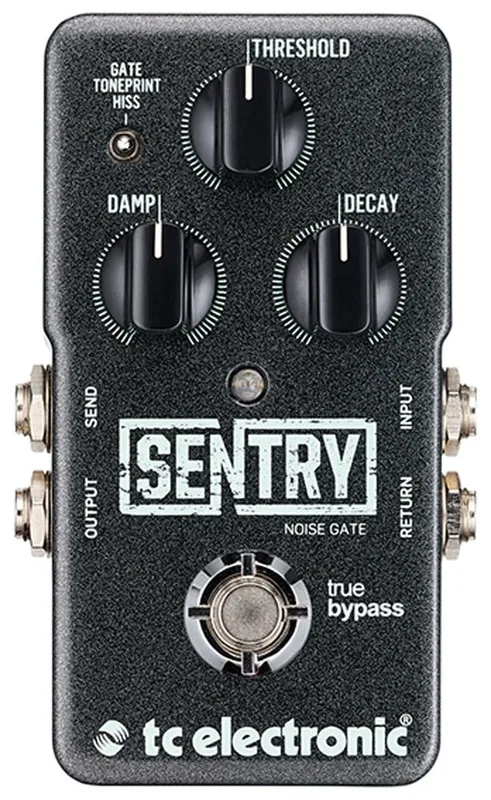
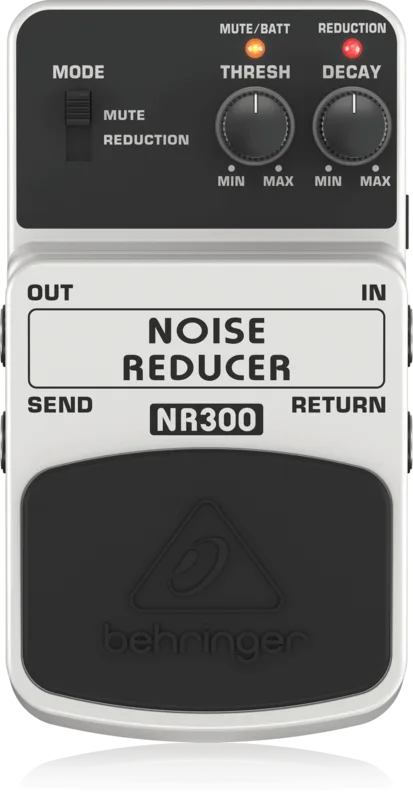
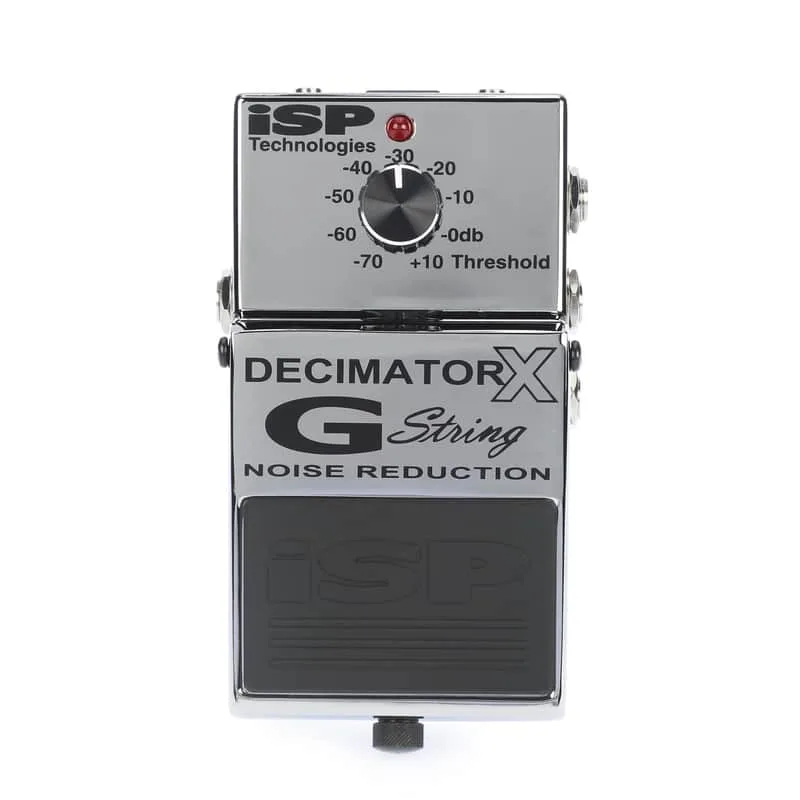
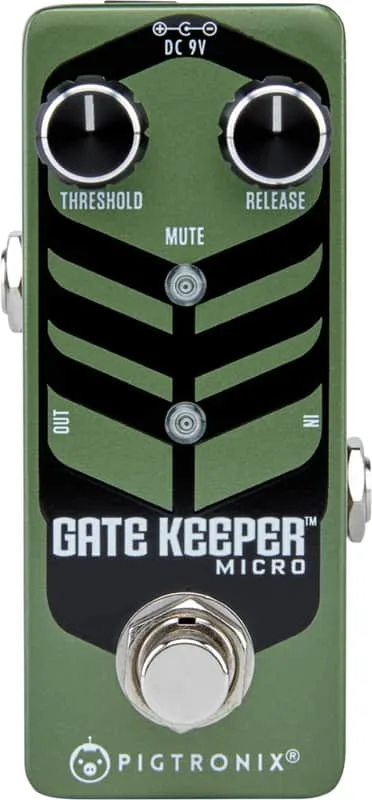
The M135 carries a list price of $149 USD2. It belongs to the same family of dedicated noise gates as pedals such as the TC Electronic Sentry, the Behringer NR300, the ISP Technologies Decimator X, the Pigtronix Gatekeeper Micro and the Boss NS-2 Noise Suppressor, each of which approaches the same job of cutting hiss and hum between phrases in its own way.
For a wider view of the category, see the Noise Gate Pedals page.
Videos
Isurus
Innovator's Choice
Outdoor Tube Plus
Questions
Does the MXR Smart Gate take a battery?
Yes. According to the maker's manual, the MXR Smart Gate is powered by one 9-volt battery, and you remove the bottom plate to install it. It can also run on a 9 volts DC power supply, drawing 15 mA of current, so it sits comfortably on a pedalboard powered from a standard supply.
Is the MXR Smart Gate true bypass?
No. The maker's manual lists the bypass type as Hardwire rather than true bypass. In Hardwire bypass the signal still passes through the pedal's circuitry when the effect is off, which the footswitch toggles, with a red LED indicating when the gate is on.
What do the Hiss, Mid and Full settings do?
The MODE slider selects the noise reduction range. The maker says the Hiss and Mid settings are both effective on instruments with high gain midrange boosting, such as distorted electric guitars and amplified harmonicas. The Full setting is most effective for quieting input sources with low-end hum and buzz problems, such as AC line noise, display noise or light dimmer noise.
What does the Hi Trigger Range switch do?
The Hi Trigger Range switch extends the gate's trigger range for extremely noisy situations, according to the maker's manual. It works alongside the Trigger Level knob, which controls the sensitivity of the gate threshold, indicated by a yellow GATE LED.
Sources (2)
- M135.pdf, Dunlop Manufacturing, Inc., 2019
- Guitar Pedal X, Guitar Pedal X, 2025-05-26