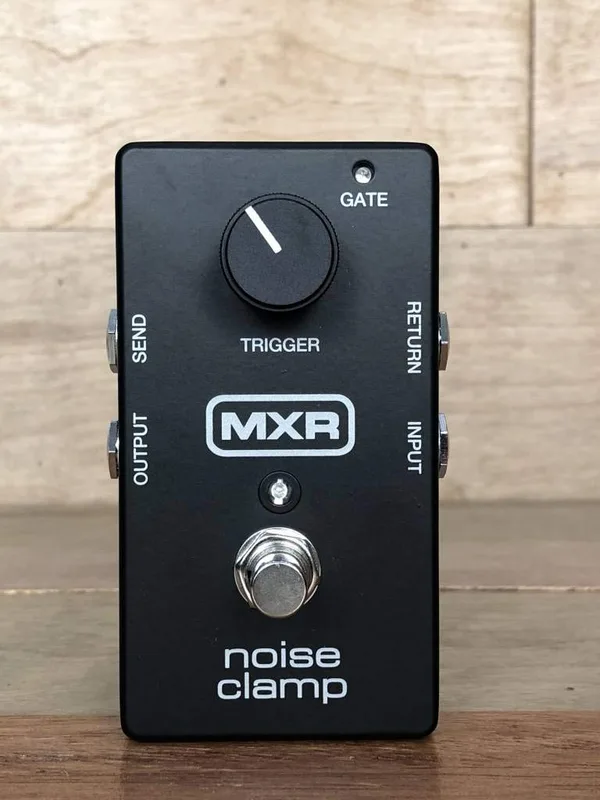


The MXR Noise Clamp (M195) is a noise gate pedal from MXR, made by Dunlop Manufacturing, that eliminates hiss and excess noise from an effects chain using a single threshold control, the Trigger knob. Dunlop says it is capable of reducing noise by up to 26dB while maintaining riff definition at extreme gain levels12. What sets it apart from a plain gate is its own send/return effects loop: your guitar goes into the input, your noisiest pedals go inside the loop, and the Clamp gates them based on the clean signal at its input.
Dunlop's MXR Noise Clamp is a noise gate pedal, and reviewers have found it a quality, no-frills piece of kit that does exactly what it says on the tin3. Its US street price has been listed at $794, and Dunlop's current product pages carry it at a list price of $125.995.
What it does: up to 26dB of noise reduction
A noise gate mutes the signal when it falls below a set volume threshold, so hiss, hum and pedal noise disappear in the gaps between your playing. The Noise Clamp's single Trigger knob sets that volume threshold: turn it until the noise stops when you're not playing, and your notes still open the gate when you are1. Premier Guitar's buying guide describes the pedal's lone trigger dial as letting players set the volume threshold at which the pedal is active9.
Dunlop rates the reduction at up to 26 dB, with the manual listing gate attenuation of -26 dBV2. The manual also gives a signal-to-noise ratio of 99.5 dBA, a max level of 10 dBV, and total harmonic distortion of 0.01% measured at 1 kHz at -10 dBV2. Attack time is 3 ms and release time is 10 ms, fast enough to clamp noise between phrases without audibly cutting sustained notes2.
MusicRadar's review found it gets the job done with little fuss, reducing noise by up to 26dB and, in the reviewer's words, doing so without messing with your tone or overcomplicating things3.
"The Noise Clamp gets the job done with little fuss and - this is important - does so without messing with tone or overcomplicating things."
The controls and the effects loop
The front panel is deliberately minimal: one TRIGGER knob, one footswitch that toggles the effect on/bypass, and a green LED showing whether the gate is on or off12. The jacks do the interesting work2:
| Jack | What it does |
|---|---|
| INPUT | Connects to your guitar |
| OUTPUT | Goes to your amp |
| SEND | Front of the effects loop |
| RETURN | End of the effects loop |
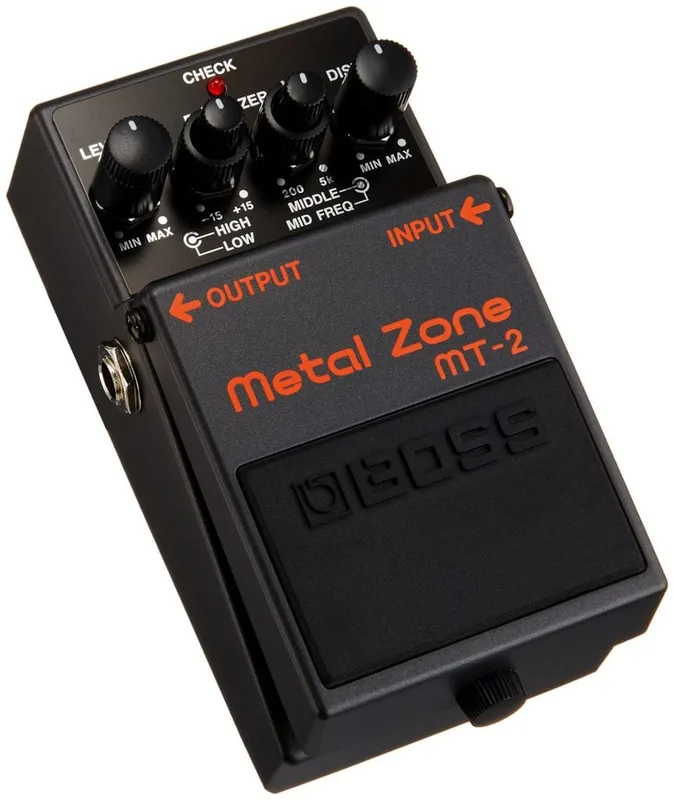
The loop is the reason to choose this pedal over a simple in-line gate. Instead of gating your whole signal, you patch your noisy pedals, typically high-gain distortion and overdrive boxes, between Send and Return. The Trigger knob reads the clean signal at the input and gates only what sits in the loop, so the character of your dry signal is preserved while the hiss from the looped pedals is silenced. Premier Guitar's reviewer tested it this way with a Boss Metal Zone in the loop and found it tightened up the tone of the Boss pedal considerably4.
An internal switch, reached by removing the back plate, toggles between two loop modes2:
- Loop On (switch up, the factory setting): the Send/Return effects loop is active even while the pedal is off26.
- Loop Bypass (switch down): the loop works only when the pedal is engaged2.
Premier Guitar's reviewer notes the same distinction: normally the loop is always active, even when the pedal is off, though you can set the loop to work only when the pedal is engaged4. Loop On suits a board where the looped pedals are always in your path; Loop Bypass suits players who want the looped section out of the chain entirely when the gate is off.
Power
The Noise Clamp runs on 9 volts DC and draws 13 mA2. Power options12:
- One 9 volt battery, accessed by removing the bottom plate of the pedal
- A Dunlop ECB003 9-volt adapter (ECB003E in Europe)
- A Dunlop DCB10 DC Brick power supply
The bypass is buffered rather than true bypass2, so the pedal's buffering remains in the signal path when the effect is switched off.
What reviewers said
MusicRadar called the Noise Clamp a sturdy brute that looks like it will take years of repeated pounding onstage, and gave it an overall verdict of a quality, no-frills piece of kit that does exactly what it says on the tin3. The review noted the UK price of £120 but still found it an unobtrusive and effective noise gate that, in the reviewer's words, mercilessly jumps on unwanted pedal noise3.
Premier Guitar's 2023 review, which listed the $79 street price, focused on the loop-based approach: with a Boss Metal Zone in the loop, the reviewer found it tightened up the tone of the Boss pedal considerably4.
How it compares
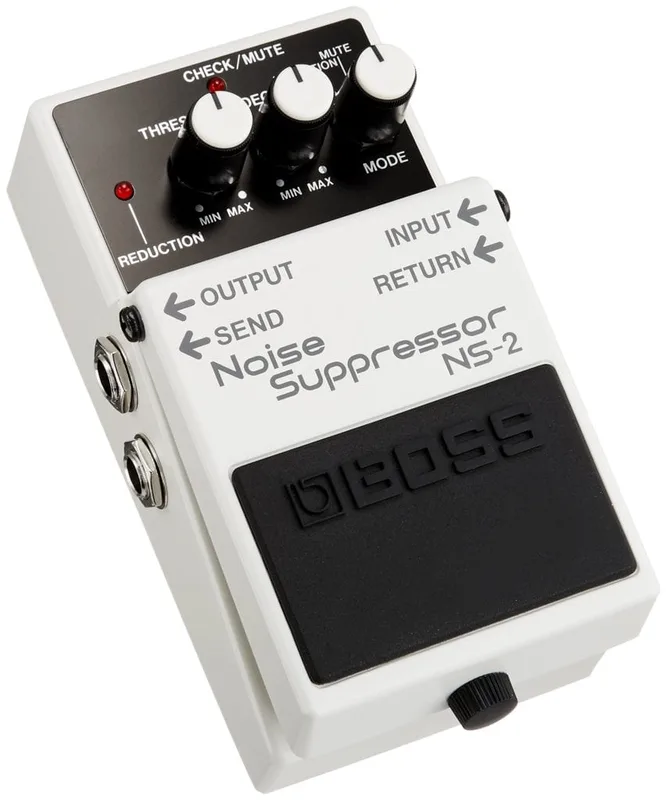
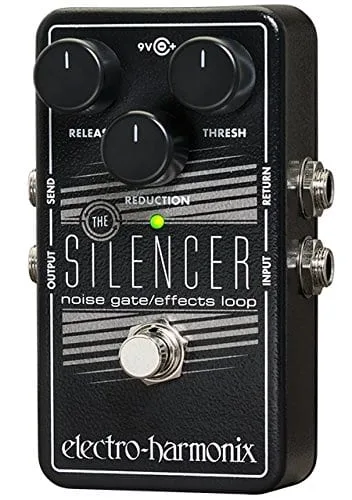
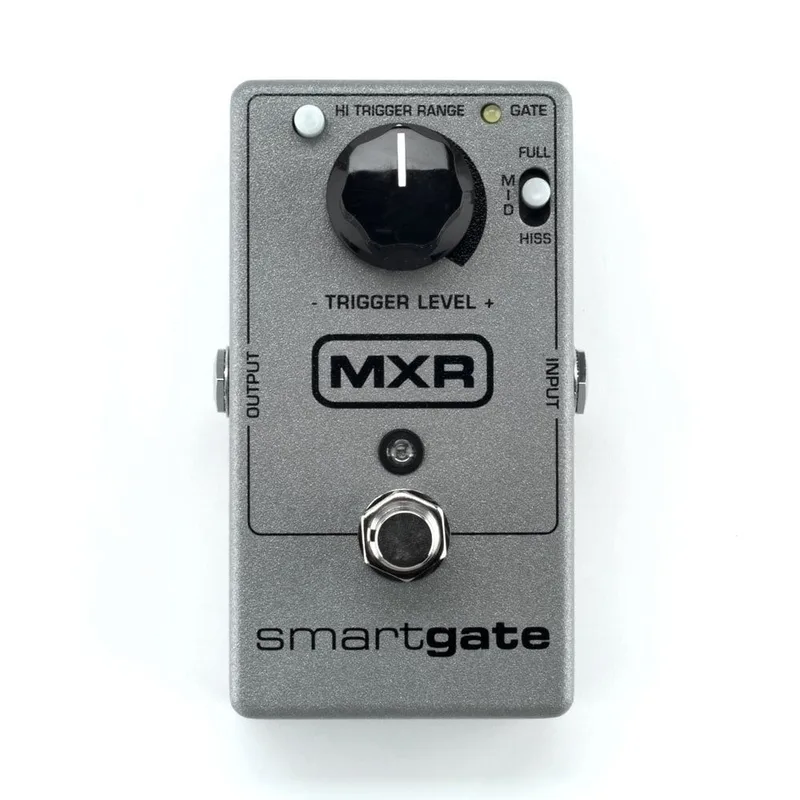
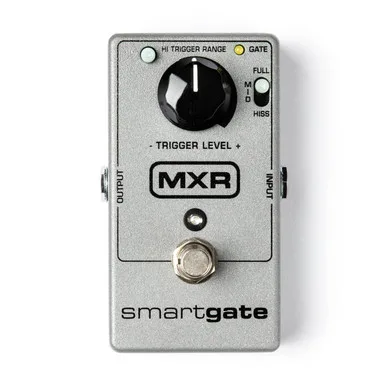
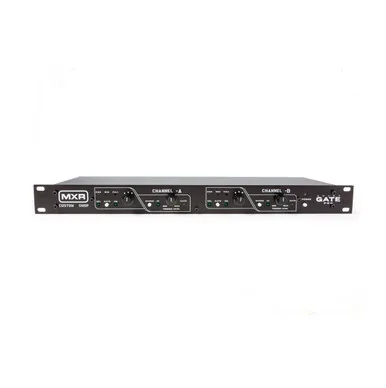
Compared with other loop-based gates, the Noise Clamp's pitch is simplicity: one knob against the multiple controls of pedals like the Boss NS-2 Noise Suppressor or Electro-Harmonix The Silencer. Within MXR's own range, the MXR Smart Gate offers a different feature set, and the line extends up to the MXR Smart Gate Pro and its rack unit for players who want more control. If you want a fuller picture of the category, see the noise gate pedal type page193.
Videos
jimdunlopusa
docSanchezFX
Bax Music UK
Questions
Does the MXR Noise Clamp take a battery?
Yes. It runs on one 9 volt battery, accessed by removing the bottom plate of the pedal. It can also be powered by a Dunlop ECB003 9-volt adapter or a Dunlop DC Brick power supply, and it draws 13 mA at 9 volts DC.
Is the MXR Noise Clamp true bypass or buffered?
It is buffered, not true bypass, according to the official MXR M195 manual. That means the pedal's buffering stays in the signal path when the effect is switched off.
How do you set the internal loop bypass switch on the Noise Clamp?
Remove the back plate to reach an internal switch that toggles between Loop Bypass and Loop On. Switch up is Loop On, the factory setting, where the Send/Return loop stays active even when the pedal is off. Switch down is Loop Bypass, where the loop works only when the pedal is engaged.
What should go in the Noise Clamp's effects loop?
The noisy pedals in your chain, typically high-gain distortion and overdrive units. The Noise Clamp's Trigger knob senses your guitar at its input and gates the loop, so hiss from the pedals inside the loop is silenced while your dry signal at the input stays untouched.
What is the attack and release time of the MXR Noise Clamp?
The official MXR M195 manual lists an attack time of 3 ms and a release time of 10 ms. That is fast enough to clamp noise between notes without audibly chopping sustained playing.
Sources (9)
- MXR® NOISE CLAMP, Dunlop (jimdunlop.com)
- M195.pdf, Jim Dunlop, 2019
- MXR Noise Clamp review, MusicRadar, 2011-10-21
- MXR Noise Clamp Pedal Review, Premier Guitar, 2011-10-18
- MXR® SMART GATE® PRO RACK UNIT, Jim Dunlop (jimdunlop.com)
- Dunlop Adds MXR Noise Clamp, Vintage Guitar magazine, 2011-06-08
- MXR® SMART GATE® NOISE GATE, Jim Dunlop (jimdunlop.com)
- MXR® SMART GATE® PRO FOOT CONTROLLER, Dunlop (jimdunlop.com)
- Tools for the Task: Noise Gate Pedals, Premier Guitar (www.premierguitar.com), 2019-06-14