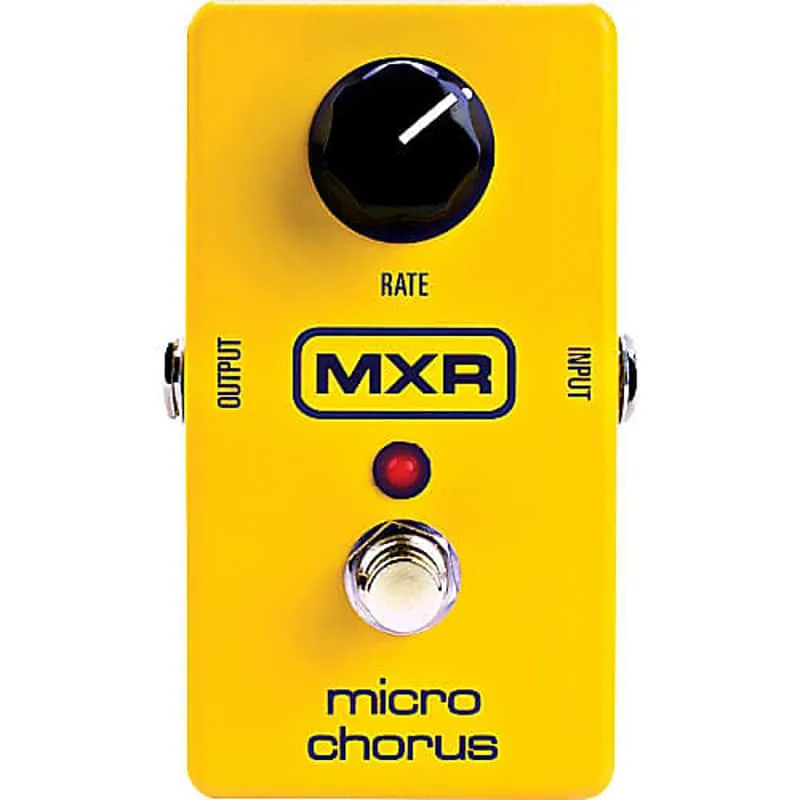


The MXR M148 Micro Chorus is a compact analog chorus pedal. MXR describes it as adding "rich chorus textures, from sparkly watery shimmers to intense rotating speaker simulation", and the manual places it alongside what the maker calls MXR Classics such as the Phase 90, Dyna Comp and Micro Amp. It runs on all-analog circuitry with bucket brigade technology, the delay line design behind classic chorus and flanger pedals, which MXR says gives a warm analog tone1.
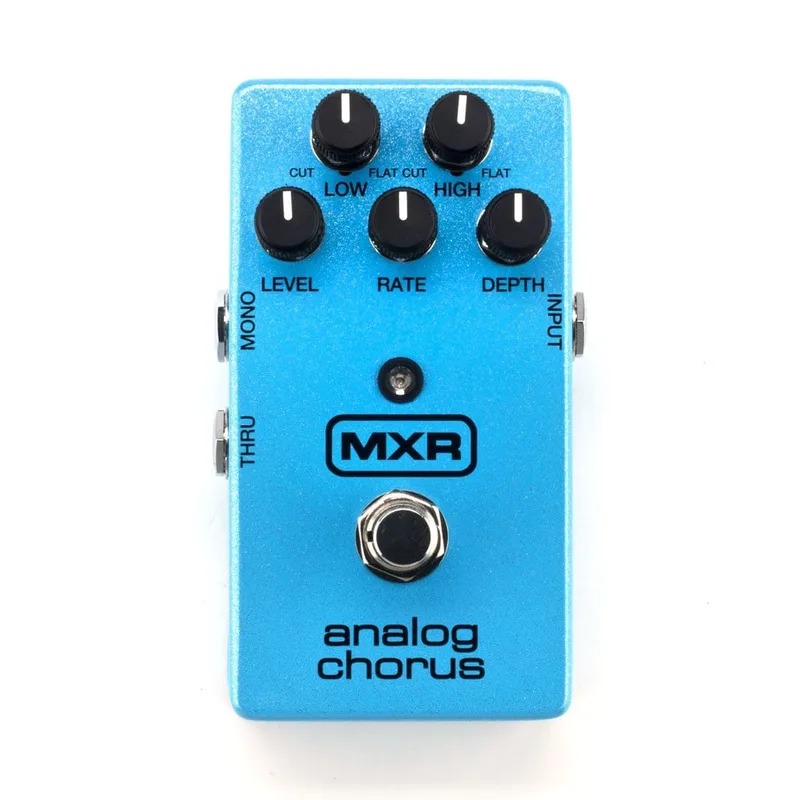
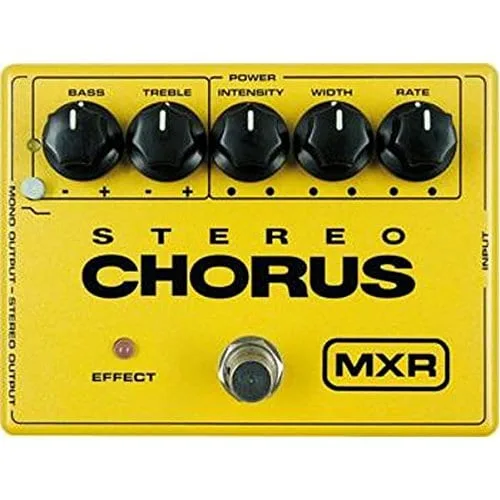
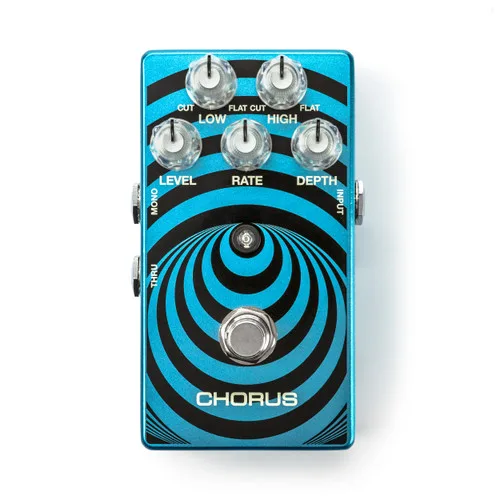
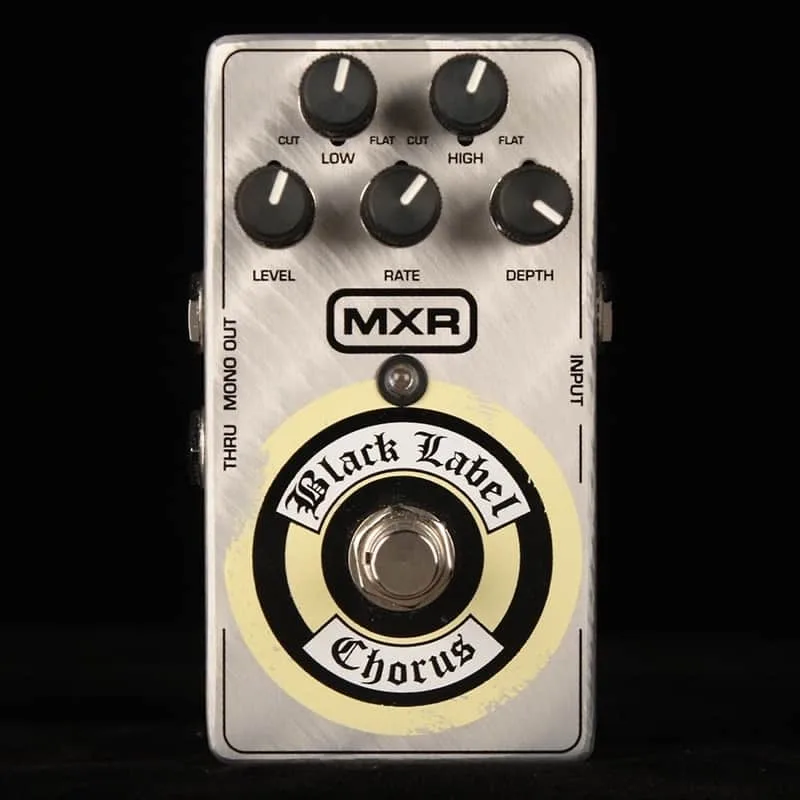
It is one of the simplest chorus pedals MXR makes: one knob, one footswitch, and a small enclosure. Players who want more control can look at the MXR Analog Chorus or the MXR Stereo Chorus, while the MXR Wylde Audio Chorus is the company's artist-branded take on the effect.
The controls
The M148 keeps things to a single knob and a footswitch1.
| Control | What it does |
|---|---|
| RATE | Adjusts the speed of the chorus effect. Clockwise increases chorus speed towards a watery shimmer; counterclockwise gives a slower, rotating sound |
| FOOTSWITCH | Toggles the effect on or bypass, with a red LED showing when it is on |
The Rate knob sweeps from 0.25 Hz to 7.5 Hz, so the range runs from a slow sway to a fast shimmer1.
How it works
Like any chorus, the M148 splits your signal and delays one copy, then modulates that delayed copy and blends it back with the dry signal. The manual lists the delay time at 4.2 ms and 6.8 ms, and the delayed signal covers 20 Hz to 4.5 kHz1. Because the circuit is all analog with bucket brigade technology, the delayed path is handled by analog delay chips rather than digital conversion1.
Power and connections
Setup is the usual two-cable arrangement: run a cable from your guitar to the Micro Chorus' INPUT jack, and another cable from the OUTPUT jack to your amplifier1.
Power options:
- One 9-volt battery, accessed by removing the pedal bottom plate1
- A 9-volt AC adapter such as the Dunlop ECB003/ECB003E1
- A DC Brick power supply1
The pedal runs on 9 volt DC and draws 5 mA1. Input impedance is 1 MΩ and output impedance is 1 kΩ at 1 kHz1. Maximum input level is -5 dBV at 500 Hz, maximum output level is +8 dBV, and the noise floor is -89 dBV A-weighted with the Rate control full counterclockwise1.
Specifications
| Specification | Value |
|---|---|
| Effect type | Chorus1 |
| Circuit | All analog, bucket brigade technology1 |
| Bypass | True Hardwire1 |
| Rate control range | 0.25 Hz to 7.5 Hz1 |
| Delay time | 4.2 ms, 6.8 ms1 |
| Delayed signal | 20 Hz to 4.5 kHz1 |
| Input impedance | 1 MΩ1 |
| Output impedance | 1 kΩ, 1 kHz1 |
| Max input level | -5 dBV, 500 Hz1 |
| Max output level | +8 dBV1 |
| Noise floor | -89 dBV A-weighted, Rate full counterclockwise1 |
| Current draw | 5 mA1 |
| Power supply | 9 volt DC1 |
Videos
Sweetwater
Ryan Lutton
Wall of Sound
Questions
Is the MXR M148 Micro Chorus true bypass?
Yes. The manual lists the bypass type as True Hardwire, so when the effect is off your guitar signal passes through without the chorus circuit in the way. The footswitch toggles between effect on and bypass, and a red LED shows when the effect is on.
Does the MXR M148 Micro Chorus take a battery?
Yes. It is powered by one 9-volt battery, which you reach by removing the pedal's bottom plate. It can also run from a 9-volt DC adapter such as the Dunlop ECB003/ECB003E or a DC Brick power supply.
Is the MXR M148 Micro Chorus analog?
Yes. MXR describes the circuit as all analog, using bucket brigade technology, which the maker says gives a warm analog tone. The delayed signal covers 20 Hz to 4.5 kHz according to the manual.
How much current does the MXR M148 draw?
The manual lists the current draw at 5 mA, which is low enough that nearly any 9-volt pedalboard supply can run it alongside other pedals.
Where can I find the MXR M148 manual?
MXR's parent company Jim Dunlop publishes the manual as a PDF at jimdunlop.com/content/manuals/M148.pdf. It covers setup, the Rate control, the footswitch and the full specifications listed on this page.
Sources (1)
- M148.pdf, Jim Dunlop, 2019