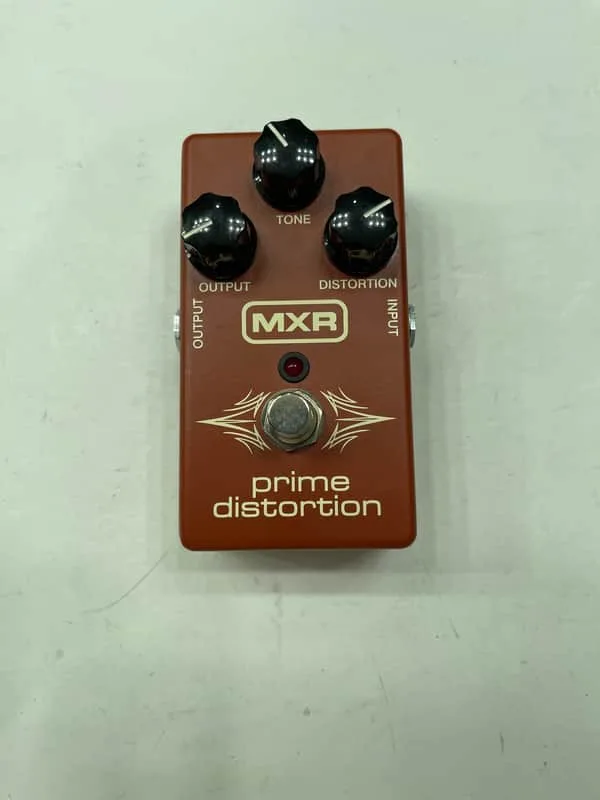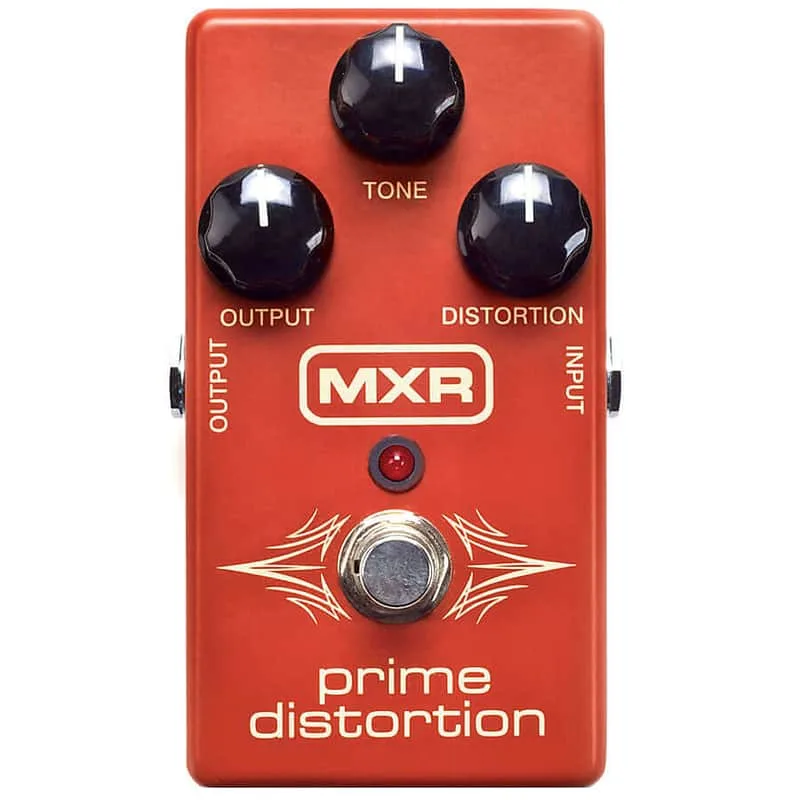


The MXR M69 Prime Distortion is a compact distortion pedal made by Dunlop Manufacturing, Inc. It is built around three knobs, output, tone and distortion, and Dunlop describes its character as a "Big '80s arena rock sound" with raw, punchy sustain, promising classic, ripping tone in seconds1. Pedal of the Day filed it under Overdrive / Distortion and noted "Nice vintage style hard clipping" in its circuit2.
What the M69 Prime Distortion does
The M69 keeps things simple: three knobs and a footswitch. The DISTORTION knob controls the amount of distortion, clockwise increasing it and counterclockwise decreasing it. The TONE knob controls the color of the distortion signal, and the OUTPUT knob controls the overall effect volume, clockwise for louder1. The FOOTSWITCH toggles the effect on and bypass, with a white LED indicating when it is on1.
MusicRadar's reviewer, Michael Astley-Brown, described how the pedal behaves at its middle settings: "With the Prime Distortion's three controls - output, tone and distortion - set to noon, the pedal compresses and blooms", like a cooking valve amp, and he found that rolling back the guitar's volume gives a touch-sensitive overdrive with bite3. Pedal of the Day's Victor L heard "bluesy 70's rock tone" in it as well, crediting the vintage style hard clipping2.
Dunlop's manual also includes three sample settings as starting points: Tejas Heat, Seattle Sludge and Searing Shred1.
Power and connections
The M69 runs from a 9 volt DC power supply or from one 9 volt battery; to install the battery you remove the bottom plate1. Connections are straightforward: run a cable from your guitar to the pedal's INPUT jack, and another cable from the OUTPUT jack to your amplifier1.
At 4.0 mA of current draw1, the M69 is a light load for any pedalboard power supply.
The M69's bypass is Hardwire, not true bypass1. If your board depends on mechanical true-bypass switching, this is the specification to know before you slot it in.
Specifications
| Specification | Value |
|---|---|
| Nominal input | -22 dBV1 |
| Max output | -10 dBV1 |
| Input impedance | 1 MΩ1 |
| Output impedance | 6 kΩ1 |
| Distortion range | 27 dB @ 500 Hz1 |
| Tone control | +/- 4 dB @ 100 Hz, +/- 5 dB @ 2 kHz1 |
| Signal to noise | 85 dB, A-weighted, VREF = 1 VRMS1 |
| Bypass | Hardwire1 |
What reviewers said
MusicRadar's review credited the pedal with "true bypass, metal enclosure and MXR's distortion lineage" and summed it up as "Great value and build quality"3. Note that MusicRadar's description of the bypass differs from Dunlop's own manual, which specifies Hardwire bypass1; where the two disagree, the maker's manual is the surer reference. MusicRadar listed the UK price at the time of review as £59 GBP3.
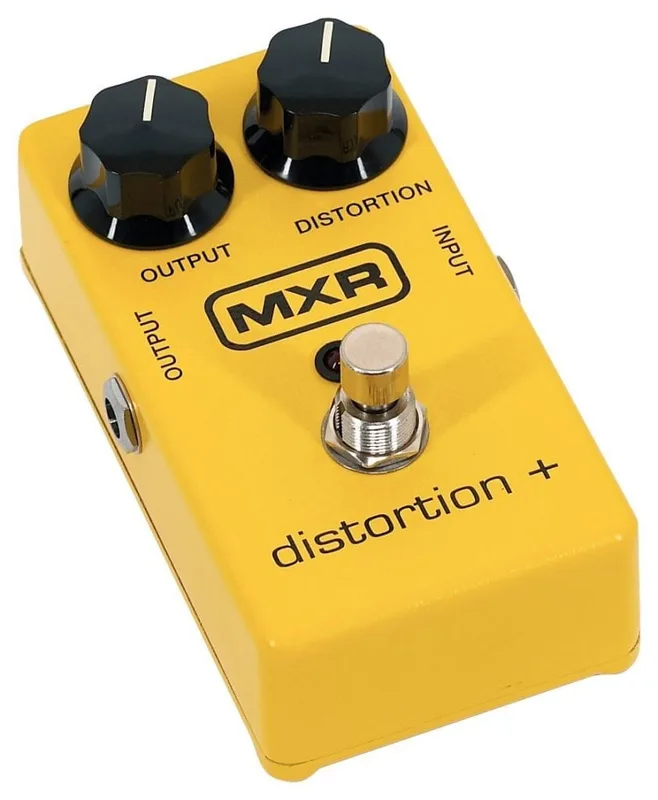
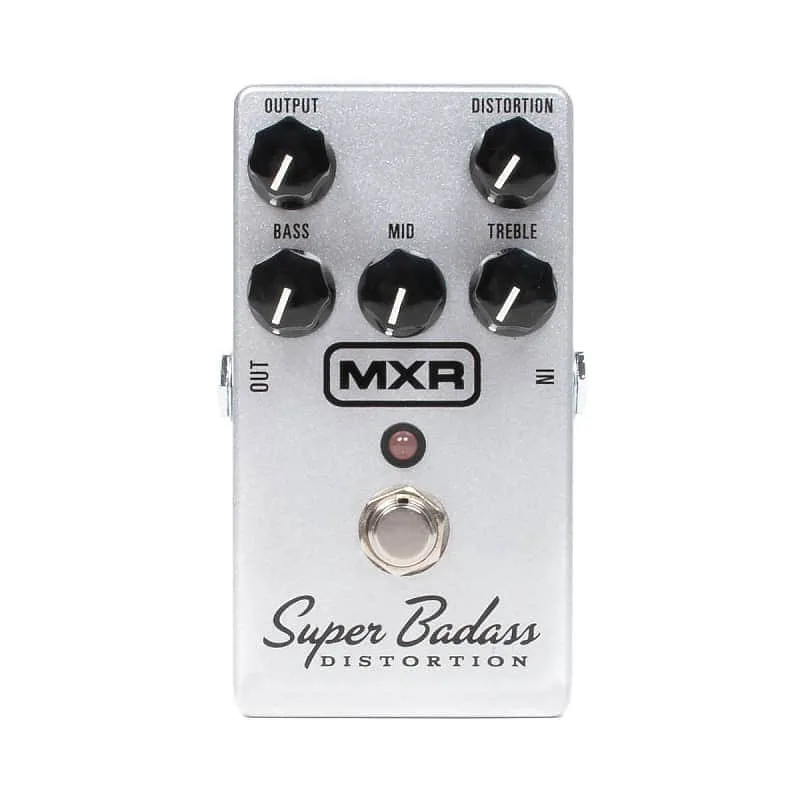
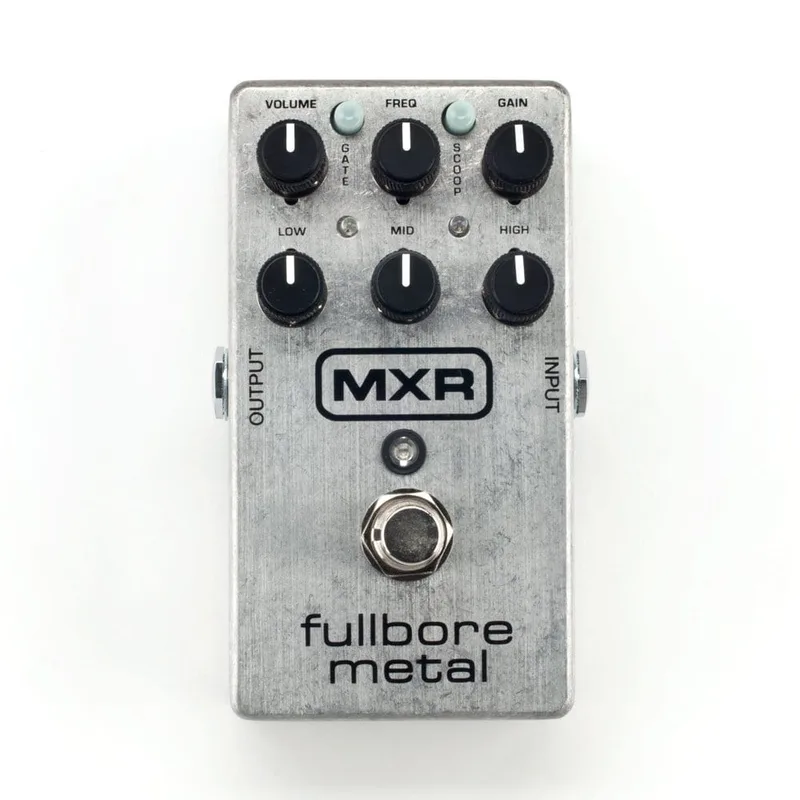
If the M69's three-knob approach leaves you wanting more control, MXR's distortion line runs from the simple Distortion + to pedals with more shaping on board, such as the M75 Super Badass Distortion and the Fullbore Metal. For more on the category, see the Distortion Pedals page.
Videos
Andertons Music Co
ST Audio
Robert Jackson
Questions
Does the MXR M69 Prime Distortion take a battery?
Yes. According to Dunlop's manual, the M69 Prime Distortion is powered by one 9 volt battery, and you remove the bottom plate to install it. The pedal can also run from a 9 volt DC power supply, and its current draw is a low 4.0 mA, so it sits comfortably on a pedalboard without straining a shared supply.
How much current does the M69 Prime Distortion draw?
Dunlop's manual lists the current draw at 4.0 mA from a 9 volt DC supply. That is a very light load by pedal standards, so the M69 can share a daisy-chained supply with other low-draw pedals without trouble.
Is the MXR M69 Prime Distortion true bypass?
No. Dunlop's manual specifies Hardwire bypass, not true bypass. In Hardwire bypass the input stays connected to the output through the pedal's circuitry when the effect is off, rather than switching the signal through a separate mechanical path.
What are the Tejas Heat, Seattle Sludge and Searing Shred settings?
They are sample settings printed in Dunlop's manual for the M69 Prime Distortion, giving players three starting points for the pedal's output, tone and distortion knobs: Tejas Heat, Seattle Sludge and Searing Shred.
How many controls does the M69 Prime have?
Three. The DISTORTION knob controls the amount of distortion, the TONE knob controls the color of the distortion signal, and the OUTPUT knob controls the overall effect volume. MusicRadar's reviewer found that with all three set to noon the pedal compresses and blooms like a cooking valve amp.
Sources (3)
- M69P.pdf, Dunlop Manufacturing, Inc., 2024
- Dunlop MXR M69 Prime Distortion, Pedal of the Day, 2014-09-26
- MXR M69 Prime Distortion review, MusicRadar, 2013-08-30