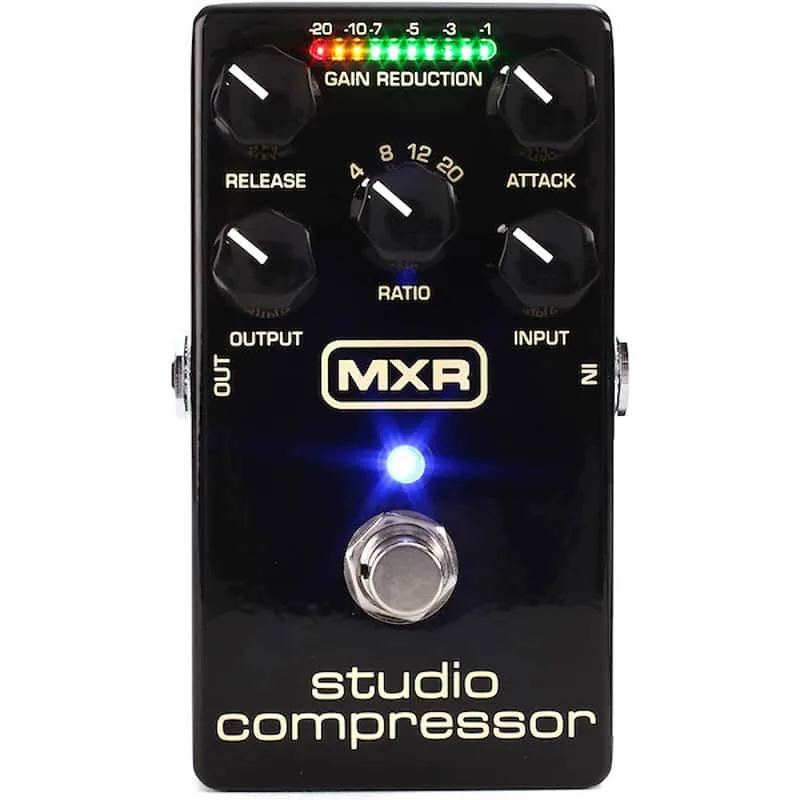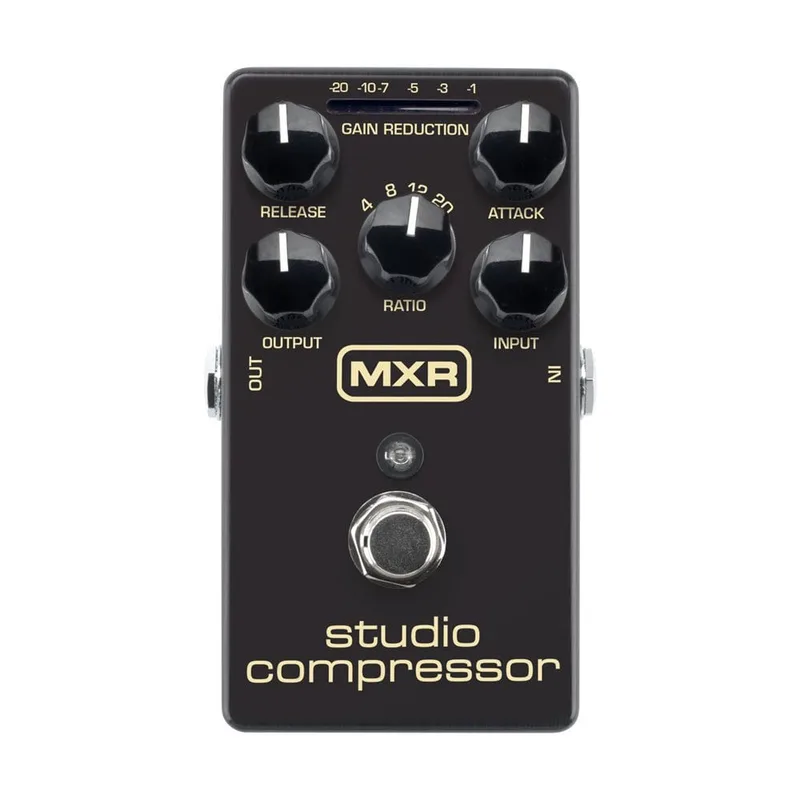


The MXR Studio Compressor is a compressor pedal from MXR that brings the control set of a recording-studio compressor into a Phase 90-sized stompbox. MXR describes it as providing recording-quality compression with Constant Headroom Technology and true bypass switching, and it carries five controls: Attack, Release, Ratio, Input and Output, so you can fine-tune your compression from subtle leveling all the way to squashing12.
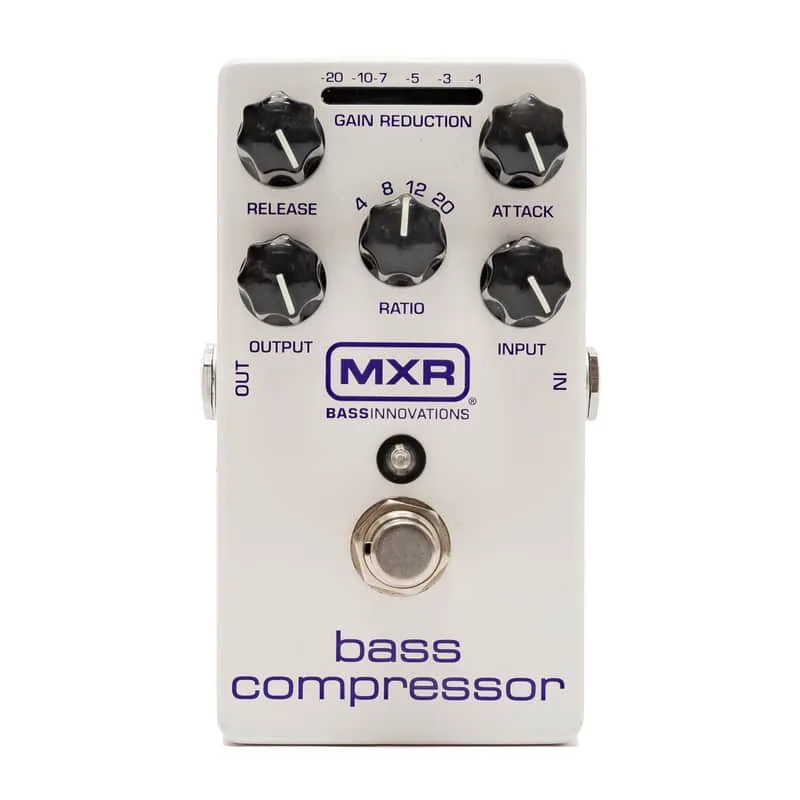
The pedal is based on the sort of classic compressors you would find in studios, with a choice of compression ratios as found on Urei's rackmounted 1176. In MusicRadar's review, Trevor Curwen called it "a naturally transparent-sounding compressor rather than one providing an obvious sonic signature"3. It is closely related to the MXR M87 Bass Compressor: Curwen described the M76 Studio Compressor as "more of the same, but with a new look and name, aimed to give it more universal appeal"3.
The controls
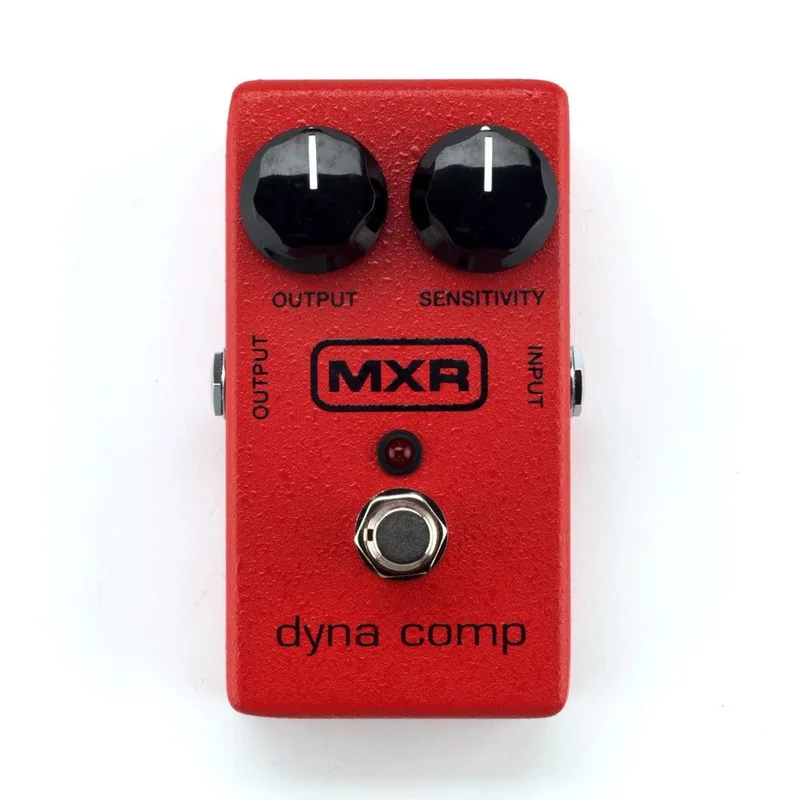
The Studio Compressor's five knobs give you the same kind of control a studio engineer has on a rack compressor, rather than the two-knob simplicity of pedals like the MXR Dyna Comp. MXR's product page summarizes the set as Attack, Release, Ratio, Input and Output controls for fine-tuning compression from subtle to squashing1.
| Control | What it does |
|---|---|
| INPUT | Controls the gain level of the input signal; clockwise increases input gain, counterclockwise decreases it2 |
| RATIO | Sets the degree of compression, from mild to extreme2 |
| ATTACK | Controls the reaction time of the compression, shaping the front of the envelope25 |
| RELEASE | Controls how quickly your signal returns to its uncompressed level; clockwise quickens the release, counterclockwise slows it down2 |
| OUTPUT | Controls overall effect volume; clockwise to increase, counterclockwise to decrease2 |
The Ratio control offers four positions: 4:1, 8:1, 12:1 and 20:12. Those steps mirror the ratio choices found on Urei's rackmounted 1176, the studio compressor the pedal takes its inspiration from3. Attack and Release are the knobs that shape the envelope of the sound: fast attack clamps down on a note's initial transient, while slow release lets the signal breathe back to its uncompressed level more gradually3.
Under the hood, the pedal uses MXR's proprietary Constant Headroom Technology, which the company says provides tons of headroom for clear, transparent performance that stays as dynamic as you need it to be1. Dunlop's own history of the compressor line describes the CHT-equipped pedals as "state-of-the-art tone shaping tools"6.
Power and connections
Setting the pedal up is straightforward:
- Run a cable from your instrument to the M76's INPUT jack2.
- Power it with one 9-volt battery, installed by removing the bottom plate, or with a Dunlop ECB003 9-volt adapter, or a DC Brick, Iso-Brick or Mini Iso-Brick power supply12.
- Run a cable from the output to your amp or the next pedal in the chain.
The power supply requirement is 9 volts DC2. The battery option is worth noting: many modern compressor pedals only run on an adapter, but this one keeps the battery compartment, which suits small boards or players who move between rigs. The adapter and power bricks are not included with the pedal1.
The pedal's bypass is listed in the manual as True Hardwire, and MXR's product page describes it as true bypass switching, so your dry signal passes through the pedal largely untouched when the effect is disengaged12.
Specifications
The manual gives the full measured performance of the pedal2:
| Specification | Value |
|---|---|
| Compression ratio | 4:1, 8:1, 12:1, 20:1 |
| Attack time | 20 µs to 800 µs |
| Release time | 50 ms to 1.1 s |
| Gain | 31 dB |
| Max input level | +14 dBV |
| Max output level | +8.5 dBV |
| Noise floor | -90 dBV (A-weighted, all controls at mid position) |
| Bypass | True Hardwire |
| Power supply | 9 volts DC |
That gain range and the +14 dBV maximum input level are what make Constant Headroom Technology practical: the pedal can take a hot signal without clipping the input stage, which is part of why MusicRadar's reviewer found it transparent rather than colored13.
Where it sits in MXR's compressor line
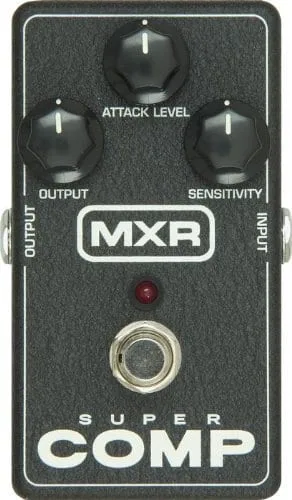
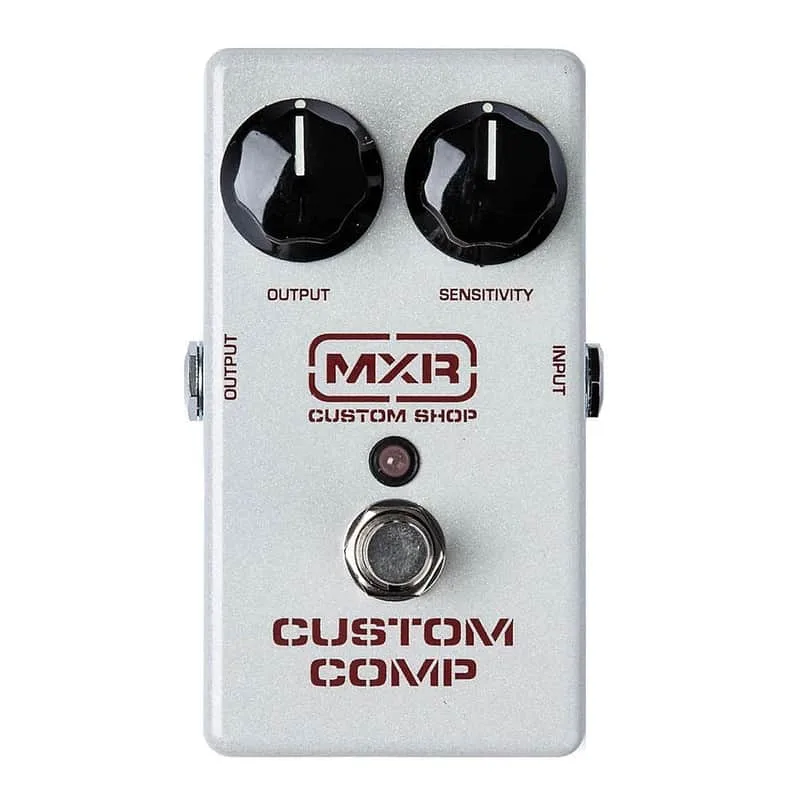
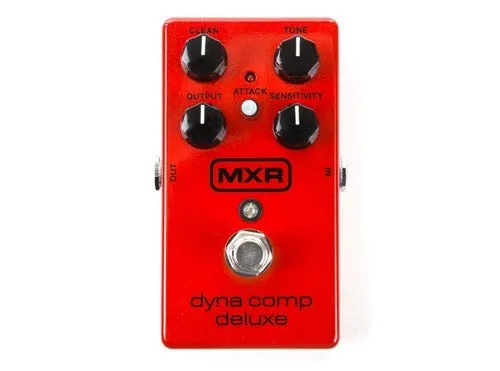
MXR makes a wide range of compressors, from the simple two-knob Dyna Comp and Super Comp to the Custom Comp and the four-knob Dyna Comp Deluxe. The Studio Compressor sits at the full-featured end of that range: it is the one to reach for when you want studio-style control over attack, release and ratio rather than a single sensitivity knob. For bass players, the closely related M87 Bass Compressor offers the same Phase 90-sized package and control set tuned for bass5.
Dunlop also sells electronic parts for the pedal, offered for sale with the qualified technician in mind, so repairs are possible for players comfortable with a soldering iron or with access to a tech7.
Videos
Riccardo Gioggi | Rock & Shred Guitar Lessons
KLEBER K SHIMA
StompboxTV
Questions
Is the MXR Studio Compressor true bypass?
Yes. The manual lists the bypass as True Hardwire, and MXR's product page describes the pedal as having true bypass switching, so your dry signal passes through untouched when the effect is off.
Can the MXR Studio Compressor run on a battery?
Yes. It can be powered by a 9-volt battery, which you install by removing the bottom plate. It also runs on a Dunlop ECB003 9-volt adapter or Dunlop's DC Brick, Iso-Brick and Mini Iso-Brick power supplies, which are sold separately.
What is MXR Constant Headroom Technology?
Constant Headroom Technology, or CHT, is MXR's proprietary design that gives the pedal a large amount of headroom for clear, clean, transparent performance. MXR describes it as keeping the compression as dynamic as you need it to be, even with hot input signals.
How big is the MXR Studio Compressor?
It is built into a durable, lightweight aluminum housing the size of a Phase 90, MXR's small standard enclosure. That makes it easy to fit on a pedalboard alongside other compact MXR pedals.
Sources (7)
- MXR® STUDIO COMPRESSOR, Jim Dunlop (jimdunlop.com)
- M76.pdf, Dunlop Manufacturing, Inc., 2019
- MXR M76 Studio Compressor review, MusicRadar, 2016-09-14
- MXR® SUPER COMP, Jim Dunlop (jimdunlop.com)
- M87.pdf, Jim Dunlop, 2019
- A Dyna Comp-rehensive History, Dunlop (lifestyle.jimdunlop.com), 2018-10-25
- MXR® STUDIO COMPRESSOR - PARTS, Jim Dunlop (www.jimdunlop.com)