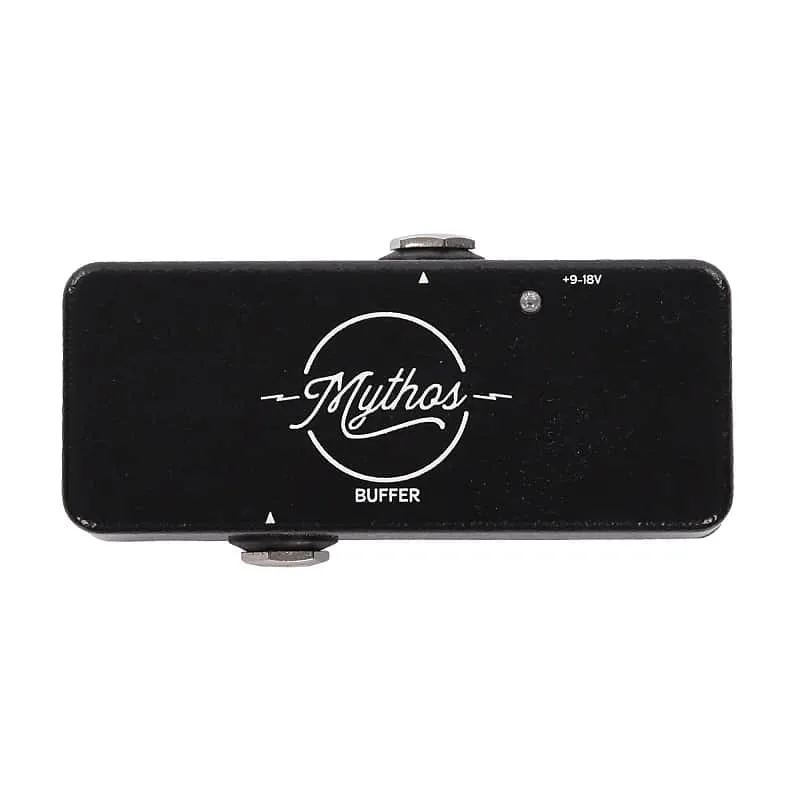
The Mythos Buffer is a compact buffer pedal from Mythos Pedals. A buffer sits in your signal chain and converts the guitar's high-impedance output into a low-impedance signal that can travel through long cables and many true-bypass pedals without the treble loss and dulling that otherwise creeps in1. The Mythos Buffer does this with a 1M ohm input impedance and a 1k ohm output impedance, in a mini enclosure sized to fit anywhere on a pedalboard2.
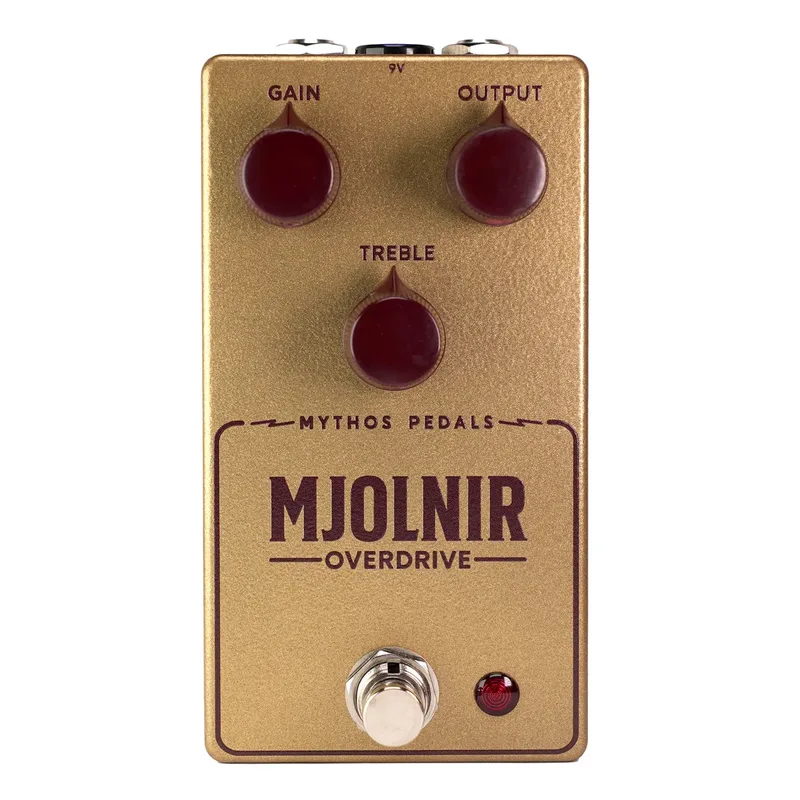
The circuit itself has a specific lineage: Mythos Pedals took the buffer straight out of their Mjolnir overdrive and put it in its own box2.
"We pulled the buffer out of our Mjolnir and put it in a mini box so you could place it anywhere on your board."
What the Mythos Buffer does
As a signal chain grows, with more stompboxes and patch cables, players often notice a loss of treble and overall tone; a buffer is the standard fix, pushing the signal along the chain and preventing that loss13. Mythos Pedals describes the result in terms of clarity: at 9 volts the buffer gives "a nice amount of clarity and sparkle for large boards/cable runs," and at 18 volts it "increases the clarity and brightness without being thin or brittle"2.
The maker's own framing of the two voltage settings:
| Voltage | What Mythos Pedals says it does |
|---|---|
| 9V | A nice amount of clarity and sparkle for large boards and cable runs2 |
| 18V | Increases clarity and brightness without being thin or brittle2 |
Because it is a small box with no controls to speak of, the practical decisions are where to place it and how to power it, not how to dial it in2.
A buffer taken from the Mjolnir
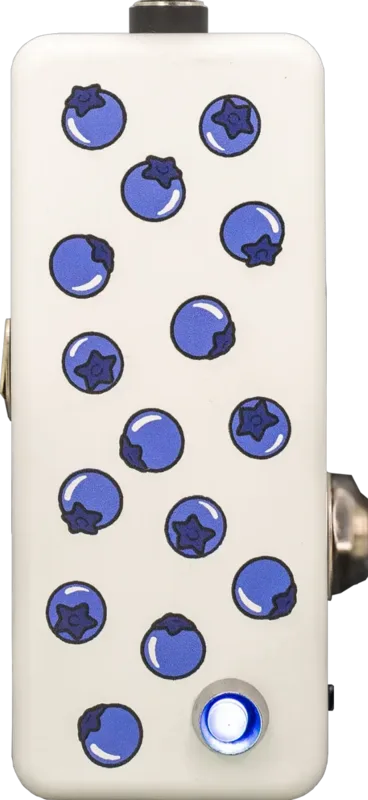
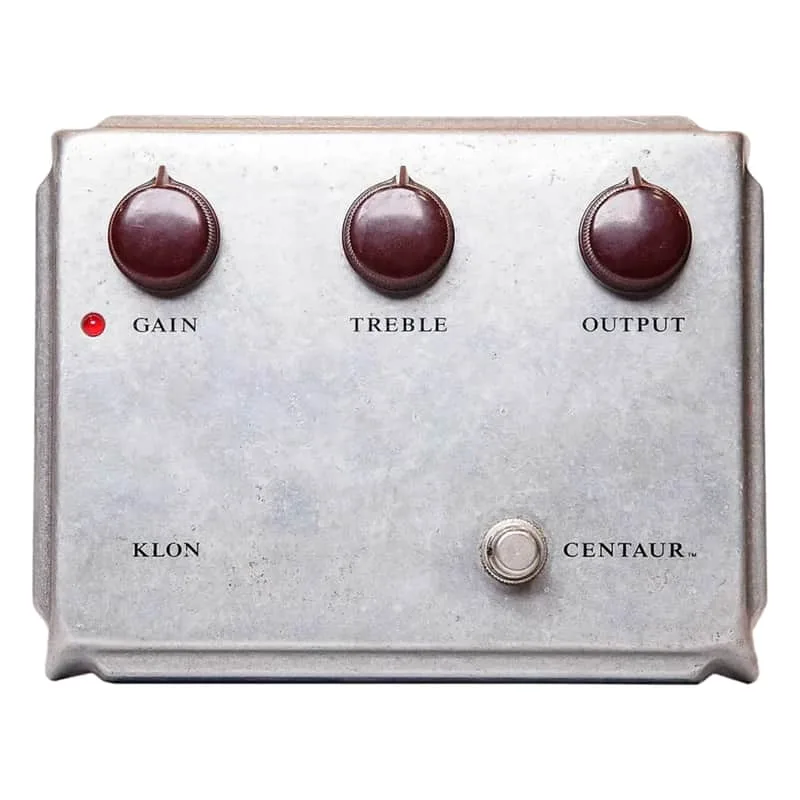
The circuit's family tree matters to some players. Mythos Pedals calls it a "mini k-style op amp buffer"2, which places it in the lineage of the buffer circuit associated with the Klon Centaur. Other makers have built buffers on the same idea: Jed's Pedds' K Buffer kit "compares to the buffer part of a Klon"4, and the FruitFX Blueberry Buffer is modeled after the input buffer circuit of the Klon Centaur5. The Mythos Buffer's distinction is that its version of that circuit comes from the Mjolnir, Mythos Pedals' own overdrive, rather than being a standalone clone2.
Impedance and power
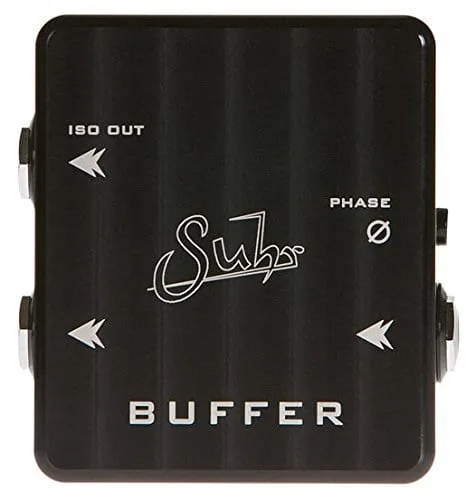
The two impedance figures are the working specification of any buffer. The 1M ohm input impedance is a common target: the Suhr Buffer is also specified at 1M ohm input impedance678, as are the Xotic Super Clean Buffer8 and Saturnworks' standard IC buffer678. The 1k ohm output impedance is what lets the Mythos Buffer drive the rest of the chain; Saturnworks quotes under 100 ohms for its IC buffer and Suhr quotes 150 ohms for theirs, so the Mythos sits a little higher than those two, though all are far below the impedance of a passive guitar output910.
Power is flexible. The buffer runs on 9 to 18 volts with a current draw of approximately 10 mA2. That 9 to 18V range is shared by other buffers such as the Suhr Buffer, whose manual specifies a 9 to 18V DC center negative supply6, and the Revival Engineering Glory Buffer, which operates from 9 to 18V for additional clean headroom11. The higher voltage is what buys the extra clarity and brightness Mythos Pedals describes at 18V2.
The maker gives a voltage range and current draw but no polarity or connector detail, so match the supply to the pedal's power input as marked on the unit.
Where it fits on a board
The use case is the same one most buffer makers describe: long cable runs and big pedalboards. JHS notes that signal loss from a long cable run or from too many true-bypass pedals is exactly what a buffer placed early in the chain addresses3, and the Glory Buffer is aimed at runs over 20 feet from a board or guitar to an amp11. The Mythos Buffer's mini enclosure is the maker's answer to placement: small enough to tuck in wherever the chain needs it, first in line or at the far end2.
Questions
What is the input impedance of the Mythos Buffer?
The Mythos Buffer has a 1M ohm input impedance and a 1k ohm output impedance, as stated by Mythos Pedals. The high input impedance preserves the guitar's natural tone at the input, while the low output impedance lets the signal drive long cable runs and the rest of the pedalboard without losing treble.
Can the Mythos Buffer run at 18 volts?
Yes. Mythos Pedals specifies 9 to 18 volt operation with a current draw of approximately 10 mA. According to the maker, running it at 18 volts increases the clarity and brightness of the signal without it becoming thin or brittle.
Does the Mythos Buffer work on a large pedalboard with long cable runs?
Yes. Mythos Pedals says that at 9 volts the buffer gives a nice amount of clarity and sparkle for large boards and cable runs, and at 18 volts the clarity and brightness increase further. Its mini enclosure is designed so it can be placed anywhere on a board.
What kind of buffer circuit does the Mythos Buffer use?
Mythos Pedals describes it as a mini k-style op amp buffer, meaning an op amp based circuit in the style of the buffer found in a Klon. It is the same buffer circuit the company pulled out of its Mjolnir overdrive pedal and placed in a mini enclosure.
Sources (11)
- IC Buffer for Guitar Pedals: Op-Amp Buffer Kit & Schematic, General Guitar Gadgets, 2014-05-12
- Buffer - Mythos Pedals, Mythos Pedals
- UNDERSTANDING BUFFERS, JHS Pedals
- K Buffer, Jed's Pedds (jedspeds.co.uk)
- Blueberry Buffer by FruitFX, RockBoard PedalPedia, 2026
- Buffer Manual, Suhr (JS Technologies, Inc.), 2022
- Super Clean Buffer, Xotic Online Shop - Artists and End-users, 2025-10-01
- Super Clean Buffer // Super Sweet Booster, Xotic California (xotic.us)
- Buffer Pedals for Guitar or Bass, Saturnworks Pedals, 2026-08-08
- Suhr Buffer, Suhr (www.suhr.com)
- Glory Buffer, Revival Engineering (throneroompedals.com)