

The Noise Space Audio Klone is a boost overdrive pedal built on the Klon Centaur circuit, hand-built by a one-person, Kiev-based builder, Noise Space Audio1. Where most Klon copies aim to reproduce the original exactly, Delicious Audio categorizes this one as a reinterpretation, since it keeps the core circuit but adds a series of mods, most notably two toggle switches for extra tonal options1.
The Klon circuit it builds on has a long-standing reputation. Premier Guitar's columnist describes the Klon as a "more pedal," one that beefs up your amp's core tone by giving you more of it2. Pedal of the Day's reviewer found the Noise Space Audio version delivers on that reputation, writing that it "sounds fantastic and gives you all the Klon feels you've been searching for"3.
A Klon reinterpretation with mods
The original Klon Centaur used rare New Old Stock germanium diodes to clip the audio wave softly and smoothly, a detail that has become central to the pedal's mythology4. The Noise Space Audio Klone uses NOS USSR ?9? diodes, the same type used in the original Klon, according to both Delicious Audio and Pedal of the Day13. That matters because the supply of those original diodes has been a running story in the Klon world: in 2021, Klon's Bill Finnegan said that any Centaurs he built going forward would still have the NOS diodes, amid reports that the stock of NOS clipping diodes was running dry5.
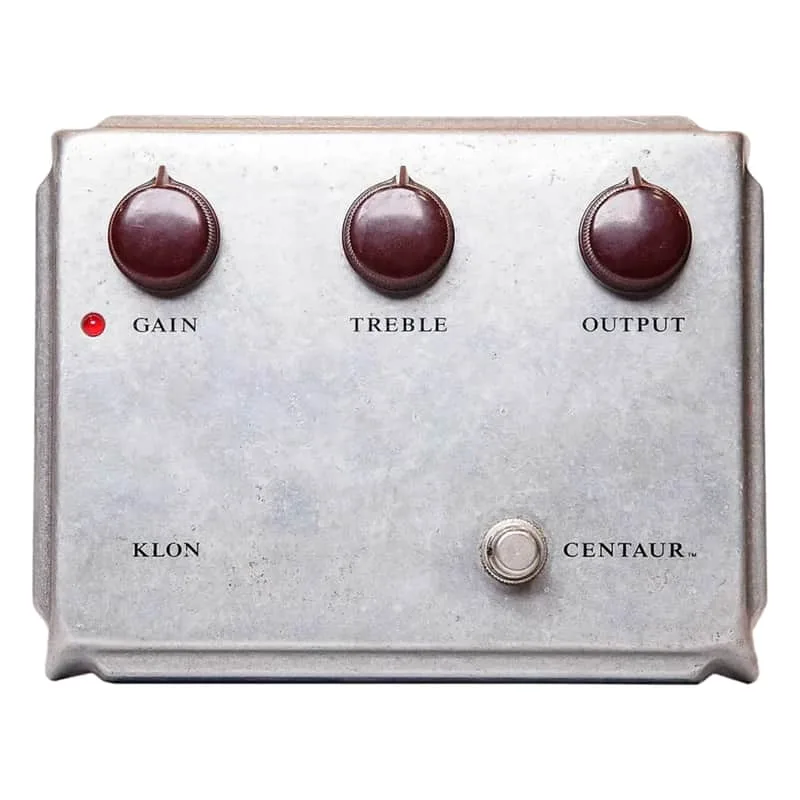
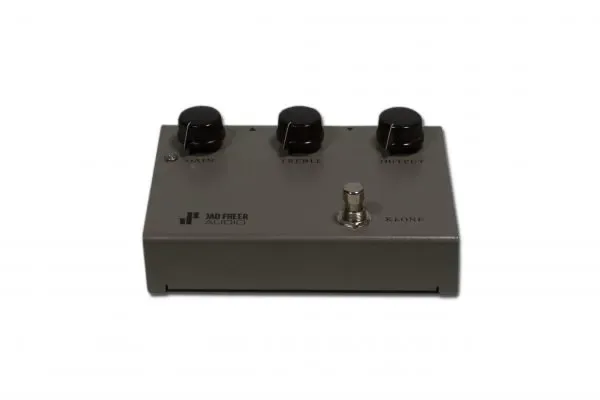
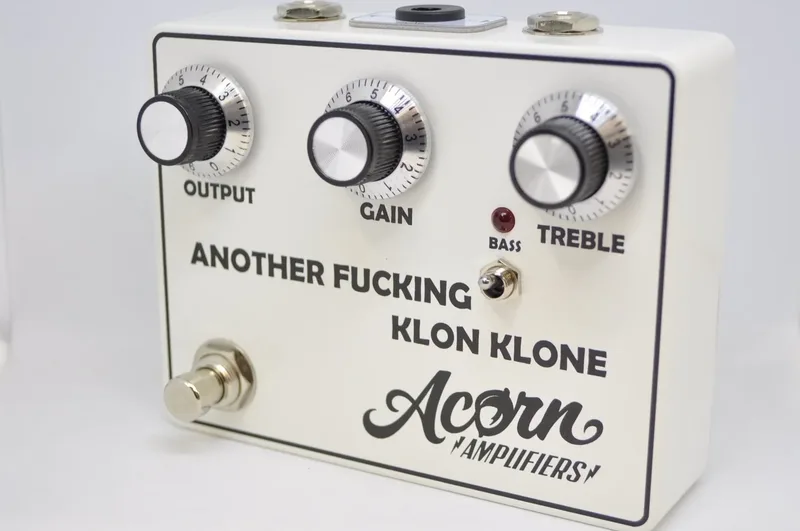
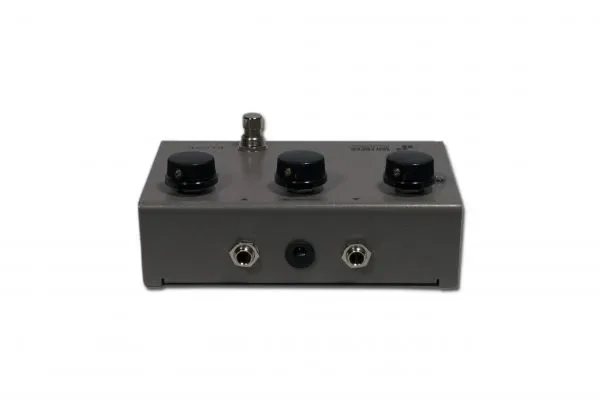
The Klone sits alongside several other takes on the circuit. The Jad Freer Audio Klone is a faithful reproduction of an original Centaur, serial number 3157, with each unit compared 1:1 to the original before shipping. The Acorn Amplifiers Another F#%king Klon Klone is a handmade faithful version of the same circuit. The Noise Space Audio take stands apart from both by modifying the circuit rather than copying it outright1.
"This version of the Klon can be categorized as a reinterpretation, since it features a series of mods."
Delicious Audio added the pedal to its list of the Best Klone Clones1.
The controls: gain knob, gain toggle and low-frequency switch
The control layout keeps the Klon's core functionality and adds switching on top of it. Every Klon and every clone of it has the dual gain knob, and this pedal is no exception1. Pedal of the Day notes you get the three classic parameters onboard: Gain, Treble and Output3.
| Control | What it does |
|---|---|
| Gain (dual knob) | Sets the drive amount; core functionality shared with the Klon and its clones13 |
| Treble | Top-end control, one of the three classic Klon parameters3 |
| Output | Level control, one of the three classic Klon parameters3 |
| Low-frequency switch | Three-position switch for extra tonal options in the low end1 |
| Gain mode switch | Two-position switch selecting gain modes1 |
The two switches are what separate this pedal from a stock Klon clone. The 3-way low-frequency toggle lets you push or trim the low end, and the 2-way gain toggle changes the drive character, options the original Centaur never had1.
Clean boost and drive use
Like the Klon circuit it derives from, the pedal covers a range of gain settings. Pedal of the Day describes it as working "as a clean boost, a low-gain drive or something with a little more dirt on it"3. JHS Pedals makes the same point about the Klon itself: "You can use this as a clean boost if you want to"6.
The clean-boost reputation of the Klon circuit is well documented. Warren Haynes told GuitarPlayer that the Klon boosted your sound without changing it, and that it did the transparent boost better than the Tube Screamer, to the extent you could not detect any tone difference when set to boost level only7. An AMZ Guitar Effects review went further, calling the Klon "the one to beat so far" for clean boost, with a little extra clarity that made the reviewer want it back on when it was switched off8.
Videos
Noise Space Audio
Noise Space Audio
Noise Generator
Questions
What diodes are in the Noise Space Audio Klone?
It uses NOS USSR ?9? diodes, the same type used in the original Klon Centaur. The original pedal clipped the audio wave with rare New Old Stock germanium diodes, which is part of why original Centaurs and faithful clones are prized by players.
Can the Noise Space Audio Klone be used as a clean boost?
Yes. Reviewers describe the Klon circuit as usable as a clean boost, a low-gain drive, or something with a little more dirt on it. Set for level only, the Klon approach boosts your sound without changing it, so no difference in tone is detectable.
How is the Noise Space Audio Klone different from a standard Klon clone?
It is a reinterpretation rather than a straight copy. Alongside the classic dual gain knob it adds two toggles for extra tonal options: a 3-way low-frequency switch and a 2-way gain toggle, letting you shape the low end and drive character beyond what a stock Klon circuit offers.
Sources (8)
- Noise Space Audio Klone, Delicious Audio, 2021-08-10
- Guide to Overdrives, Distortions, and Boost Pedals, Premier Guitar, 2016-02-22
- Noise Space Audio Klone Boost Overdrive, Pedal of the Day, 2021-04-21
- The Myth in the Box: Inside the Klon Centaur Phenomenon, gearnews.com, 2026-07-04
- Klon's supply of legendary NOS diodes dwindles, KTR overdrive to use different diodes, Guitar.com, 2021-09-07
- THOUSAND DOLLAR PEDALS, JHS Pedals
- Warren Haynes says this is the greatest distortion pedal, GuitarPlayer (www.guitarplayer.com), 2024-12-12
- Reviews of boost pedals, muzique.com (AMZ Guitar Effects)