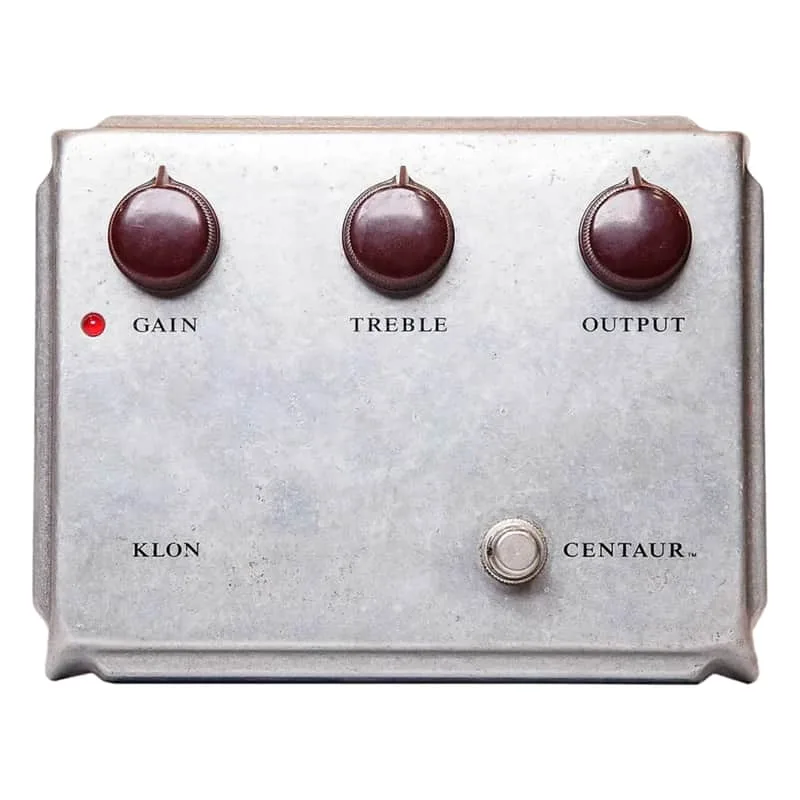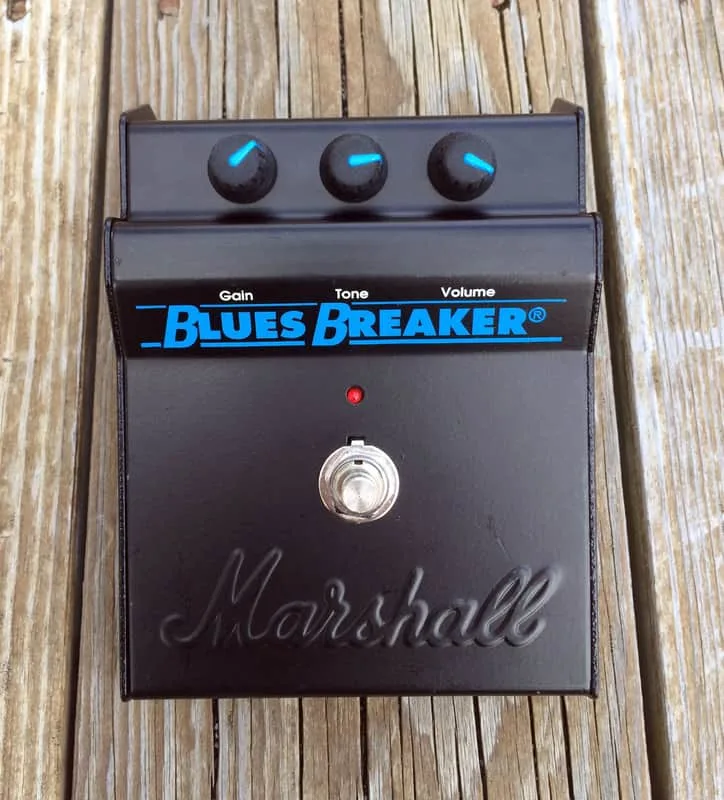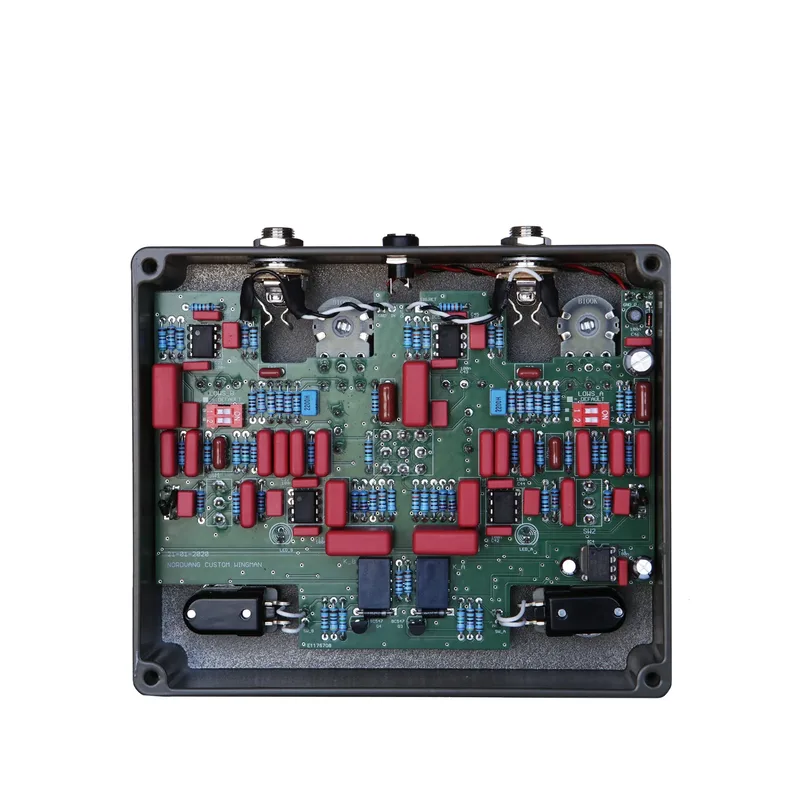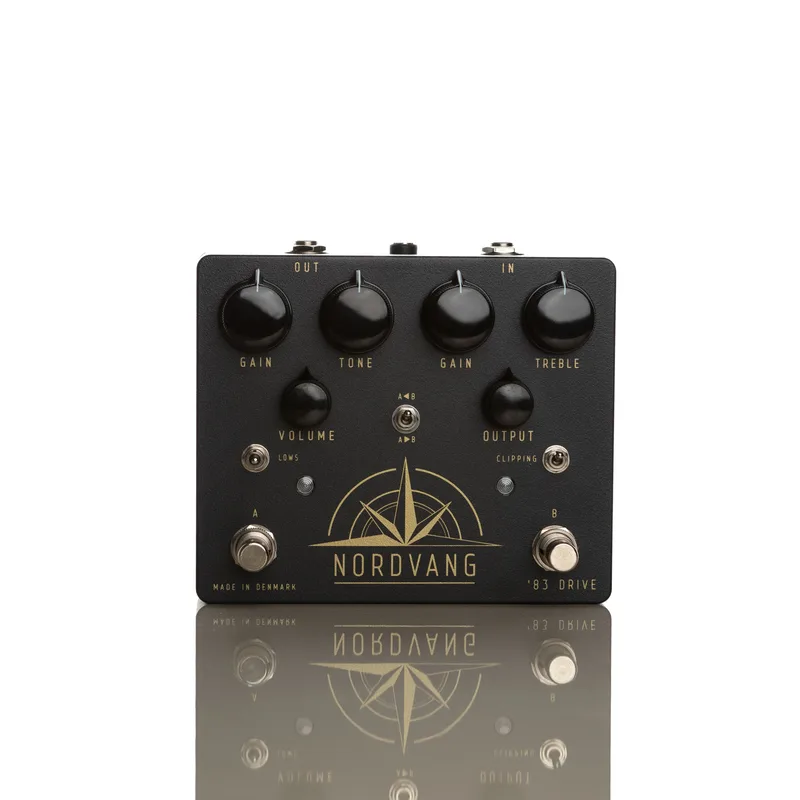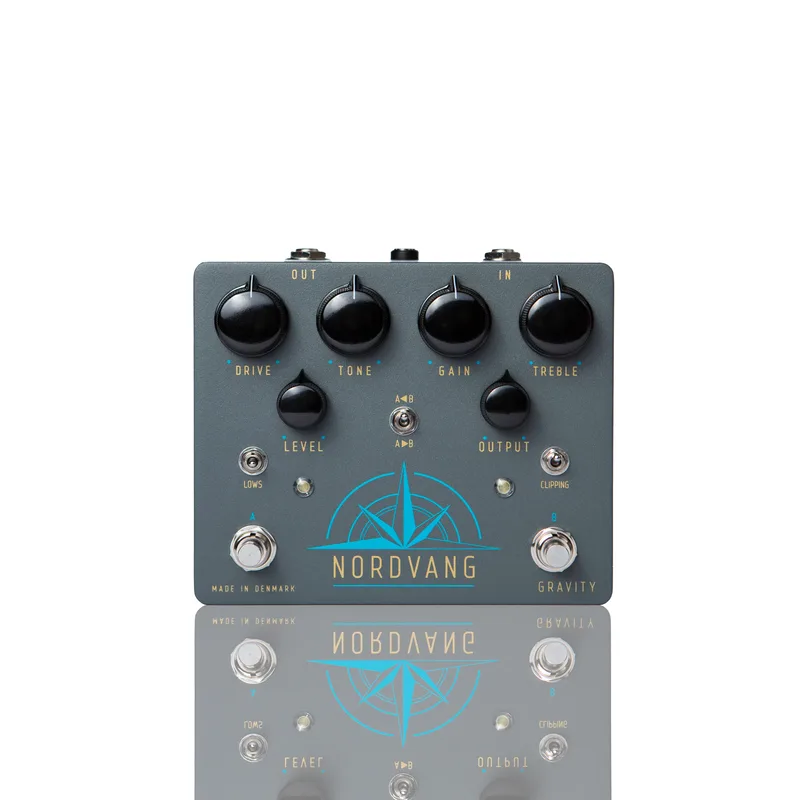


The Nordvang '83 Drive is a dual overdrive pedal made in Denmark by Nordvang. It puts two independent overdrive circuits in one enclosure: side A (the left side) is a replica of the first BB1 Black Box Blues Breaker circuit with extra output volume, and side B (the right side) is an exact replica of the K-circuit, the Klon Centaur design12. Each side has its own footswitch, so the two drives can be used separately or stacked2.
Nordvang describes the pedal as covering ground from an always on drive tone to a mid boosting lead tone1. The name is a nod to the John Mayer song "83": Nordvang says the number 83 is a significant number to John Mayer, who is a big fan of both Blues Breakers and Klons23.
Two overdrives in one box
The idea behind the '83 Drive is straightforward: instead of buying a Blues Breaker style pedal and a Klon style pedal separately, you get both in one box, with the option to stack them. Nordvang calls these "two classic drive sounds favored by many guitarists in one enclosure"1.
Side A is the Blues Breaker side. Nordvang describes it as a replica of the circuit of the first BB1 Black Box Blues Breaker, with extra output volume added1. Side B is the Klon side, which Delicious Audio describes as a Centaur Klon clone and Nordvang as an exact replica of the K-circuit12.
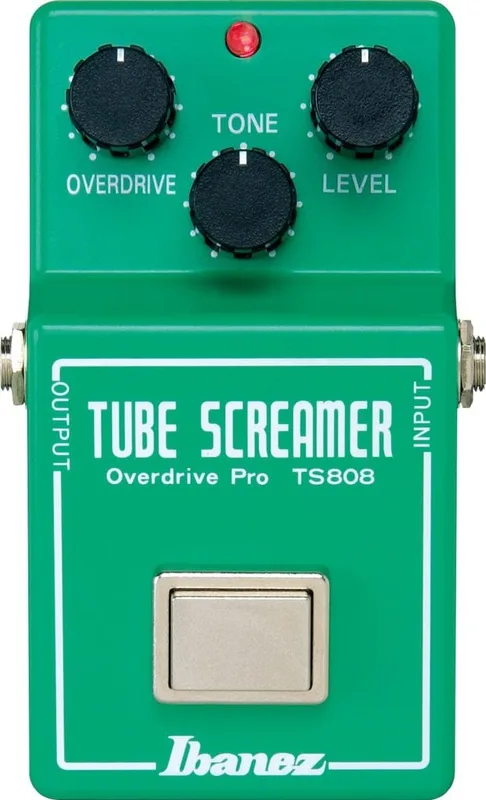
The connection to John Mayer is part of the pedal's story. Nordvang says both source pedals have played an important part in Mayer's live guitar tones through the years, as the pre drive he stacks into his TS10 to obtain his lead tone1. Delicious Audio reports the same, and notes the name origin: the number 83 is significant to Mayer2.
The controls on each side
Each side has its own footswitch and its own control set, with some differences between the two circuits2.
| Side | Circuit | External controls | Internal options |
|---|---|---|---|
| A (left) | BB1 Black Box Blues Breaker replica | Gain, Tone, Volume, three position LOWS toggle | Dip switches (see below) |
| B (right) | K-style circuit | Gain, Treble, Output, three position CLIPPING toggle | Dip switch for open clipping setting |
On side A, the LOWS toggle is a three position switch that changes the bass response of the circuit2. On side B, the CLIPPING toggle selects between clipping diode types, covered below1.
A toggle switch in the middle of the pedal allows the player to switch the order of the circuits, flipping the internal order of the effects and hence the signal path from guitar to amp2. The guitar.com review of the V2.0 calls this the AB/BA effect order switch3.
Internal dip switches and 18V headroom
Inside the pedal there are dip switches on both sides for deeper tweaking. On side A, the v2.5 has three dip switches for gain, soft clipping and hard clipping1; the earlier version described by Delicious Audio had four sets, adding a symmetrical/asymmetrical clipping option, with modes including distortion/hard clipping (switch 1-2) and clean boost/overdrive/soft clipping (switch 3-4)2. The guitar.com review of the V2.0 also lists internal dip switches for hard/soft clipping, high/low gain and symmetrical/asymmetrical clipping on side A3.
On side B, the CLIPPING toggle on the v2.5 switches between a pair of germanium, schottky or silicon clipping diodes1. Earlier versions offered germanium or schottky only23. The germanium diodes have changed over time: the v2.5 uses NOS original Russian D9B germanium diodes1, while the earlier version used original Sylvania 1N34A, for as long as Nordvang's stock lasted2. An internal dip switch on side B can change the silicon mode to an open setting with no clipping diodes at all, which Nordvang labels simply "LOUD"1. The V2.0 also had an internal presence control on side B3.
For headroom, Nordvang increased the op amp supply voltage to 18V on side A12. The guitar.com review describes this as bumping up the internal voltage to 18V for increased headroom3. The pedal itself is powered by a 9V power supply only3.
The '83 Drive runs on a 9V power supply only, so there is no battery option3. The 18V figure is the internal op amp supply voltage, not the input voltage.
On the bypass question, side A is true bypass, with Nordvang adding switching options for tweaking, while side B is buffered bypass, and Nordvang has kept the buffer in on the K-style side of the circuit, as the original Klon did123.
What reviewers said
"A compelling alternative to blowing all your savings on two classic overdrive pedals3."
On side A, the reviewer found it "produces a beautifully rich and warm breakup, with plenty of punch and dynamic range," and said it "brilliantly tackles some of the original Marshall pedal's less-loved qualities by improving the headroom and output, as well as taming the troublesome low end with that finely tuned three-way switch"3.
On side B, the reviewer reported "mids-rich singing tones aplenty, just about the best boost ever and that perfect blend of warm overdrive and high-headroom clarity as you wind up the gain." The strongest claim in the review concerns the Klon comparison3:
"The highest compliment we can pay the Nordvang next to out near-mythical original Klon is that we genuinely couldn’t tell them apart."3
That comparison was made against the reviewer's own original Klon Centaur3.
Delicious Audio covered the pedal in July 2023 and reported that the first batch was already sold out2.
Where it sits in the Nordvang range
Nordvang launched the '83 Drive as one of a trio of dual-channel gain pedals, each with at least one Klon-style overdrive channel; the Nordvang Wingman V2.0 is another of the three24. The current version of the '83 Drive is the v2.5, and the earlier V2.0 is the version the guitar.com review covers13.
Videos
Shawn Tubbs
Simon Gotthelf Music
Brett Kingman
Questions
Is the Nordvang '83 Drive true bypass?
Partly. Side A, the Blues Breaker-style circuit, is true bypass. Side B, the K-style circuit, uses buffered bypass, and Nordvang has kept the buffer in on that side, which is how the original Klon circuit behaved. So the answer depends on which side of the pedal you are using.
Can you change the order of the two overdrives on the '83 Drive?
Yes. A toggle switch in the middle of the pedal, described in the V2.0 review as an AB/BA effect order switch, flips the internal order of the two circuits and therefore the signal path from guitar to amp. You can run the Blues Breaker side into the Klon side, or the other way around.
What diodes does the '83 Drive clipping switch use?
On the v2.5, the three position CLIPPING toggle on the K-style side selects a pair of germanium, schottky or silicon clipping diodes, and an internal dip switch can change the silicon mode to an open setting with no clipping diodes at all. Earlier versions offered germanium or schottky only.
Why is it called the '83 Drive?
The name is a nod to the John Mayer song 83. Nordvang says the number 83 is a significant number to John Mayer, who is a big fan of both Blues Breakers and Klons, the two circuits the pedal is built around.
How does John Mayer use the '83 Drive with his TS10?
Nordvang says the two original pedals the design is based on have been an important part of John Mayer's live tones over the years, used as the pre drive he stacks into his Ibanez TS10 to obtain his lead tone. The '83 Drive puts both of those pre drive circuits in one box.
Sources (4)
- '83 Drive v2.5, Nordvang Custom
- Nordvang '83 Drive (Klone + Blues Breaker), Delicious Audio, 2023-07-07
- Nordvang ’83 Drive V2.0 review: A faithful recreation of widely used drive circuits all in one box, guitar.com, 2022-03-08
- Wingman v2.0, Nordvang Custom
 John Mayer