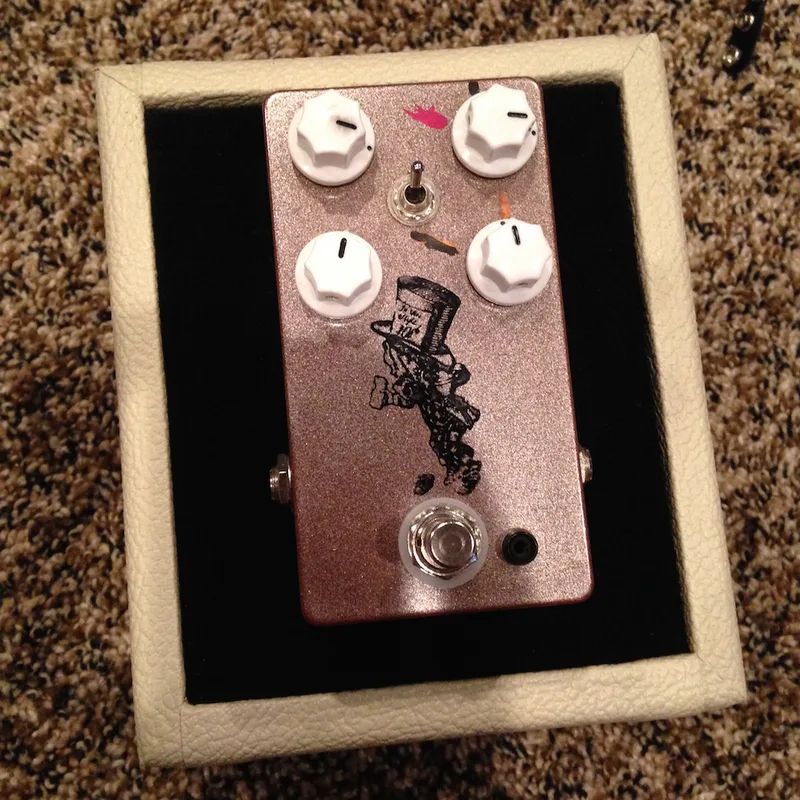


The Pedal Monsters Mad Hatter Overdrive is an overdrive pedal built to capture the sound of Marshall's 1962 Bluesbreaker amplifier. Pedal of the Day's reviewer, Mike B, wrote that the pedal "seeks to re-create that illustrious Eric Clapton tone, and does a pretty damn good job," describing it as providing "great crunch with superb tone, much like those famous amps did in the 60's"1.
The Bluesbreaker sound behind it
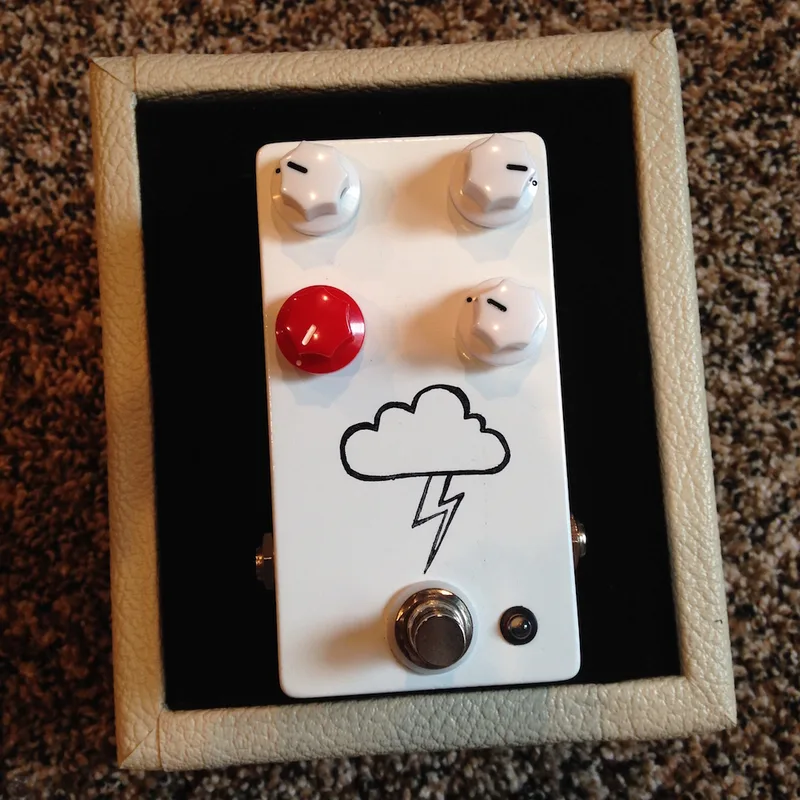
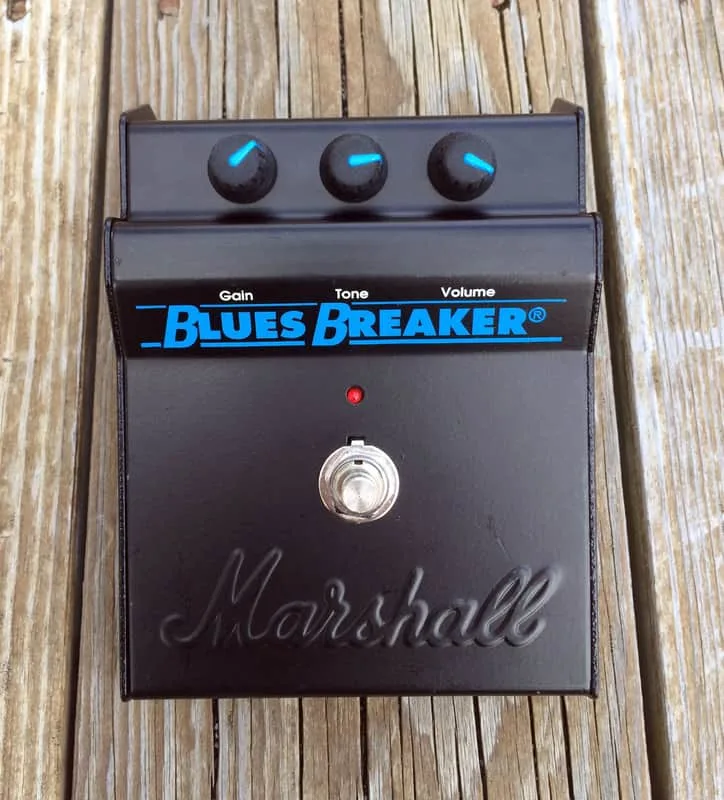
The Bluesbreaker name comes from the amplifier Marshall built in 1962, which Pedal of the Day calls "one of the most sought-after guitar sounds on the planet"1. The pedal circuit that carried the name, Marshall's early '90s Bluesbreaker pedal, has itself been the starting point for many highly-regarded overdrives: Origin Effects describes the Bluesbreaker as "the starting point for many highly-regarded overdrive pedals," known for its soft-clipping circuit and broad midrange emphasis23. RockBoard's PedalPedia entry for the Marshall Bluesbreaker pedal says it "seeks to emulate the velvety and warm overdrive tones reminiscent of the iconic Marshall Bluesbreaker amplifier"4. The Mad Hatter follows that lineage, and Pedal Monsters also makes the related Pedal Monsters White Lightning Overdrive. For how the type works more broadly, see Overdrive Pedals, or the Marshall Blues Breaker pedal itself.
Controls
The Mad Hatter keeps the standard three drive controls and adds two extras: a Presence knob and a clipping toggle1.
| Control | What it does |
|---|---|
| Volume | Output level, one of the drive standards1 |
| Gain | Amount of drive, one of the drive standards1 |
| Tone | Treble shaping, one of the drive standards1 |
| Presence | Adds extra spark to the sound, a control usually found on amplifiers1 |
| Toggle switch | Flip-flops between diode clipping and LED clipping1 |
"Volume, Gain and Tone are the drive standards here," Mike B wrote in the Pedal of the Day review, but "the fourth knob is Presence, which adds just a little something extra to the mix, providing that extra bit of spark"1. Presence is a control players normally meet on an amplifier's back panel, not on an overdrive pedal, which is what sets the Mad Hatter's layout apart from a typical three-knob drive.
The toggle switch is the other departure. It selects between diode clipping and LED clipping, the two ways the pedal shapes the distortion at its core. "The toggle switch adds even more depth and options to this pedal, flip-flopping between diode clipping and LED clipping," the review notes1. Players familiar with the Marshall Blues Breaker circuit will recognize the soft-clipping character both settings build on2.
What reviewers said
The pedal's published coverage comes from Pedal of the Day's 2015 review. Its verdict, in Mike B's words: the Mad Hatter "seeks to re-create that illustrious Eric Clapton tone, and does a pretty damn good job"1.
"The famous “Bluesbreaker” amplifier made by Marshall in 1962 is one of the most sought-after guitar sounds on the planet"
Videos
Pedal Monsters
Pedal Monsters
Pedal of the Day
Questions
What does the Presence knob do on the Mad Hatter Overdrive?
Presence is the fourth knob on the pedal, alongside Volume, Gain and Tone. Pedal of the Day's reviewer described it as adding just a little something extra to the mix, providing that extra bit of spark to the sound. It is a control usually found on amplifiers rather than on overdrive pedals, which is what sets the Mad Hatter apart from the standard three-knob drive layout.
What does the diode and LED clipping switch do?
A toggle switch on the Mad Hatter Overdrive flip-flops between diode clipping and LED clipping. Clipping is what turns the pedal's clean signal into overdrive, and the two types shape the distortion differently, so the switch adds depth and options to the pedal without adding more knobs.
Which amp is the Mad Hatter Overdrive based on?
The pedal is based on the famous Bluesbreaker amplifier made by Marshall in 1962, which Pedal of the Day called one of the most sought-after guitar sounds on the planet. The pedal seeks to re-create that sound, and the Bluesbreaker circuit has been the starting point for many highly-regarded overdrive pedals.
Does the Mad Hatter Overdrive sound like a Clapton Bluesbreaker tone?
Pedal of the Day's reviewer thought so. The review said the Mad Hatter seeks to re-create that illustrious Eric Clapton tone and does a pretty damn good job, describing the pedal as providing great crunch with superb tone, much like those famous amps did in the 60's.
Sources (4)
- Pedal Monsters Mad Hatter Overdrive, Pedal of the Day, 2015-05-02
- HALCYON BLUE OVERDRIVE, Origin Effects, 2026
- Origin Effects Halcyon Blue Overdrive, Delicious Audio, 2024-10-14
- Bluesbreaker by Marshall, RockBoard PedalPedia, 2026