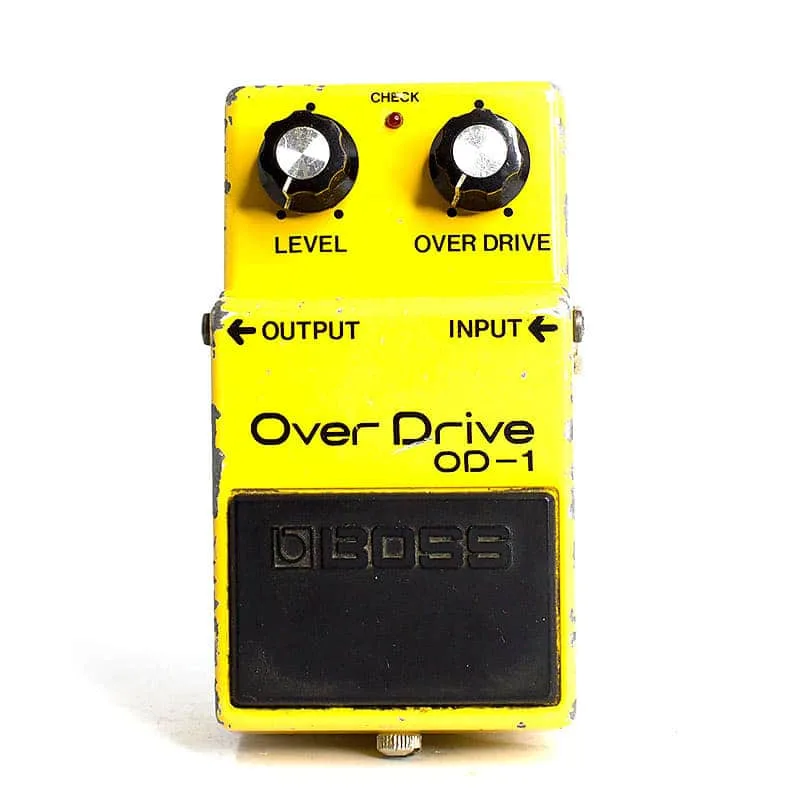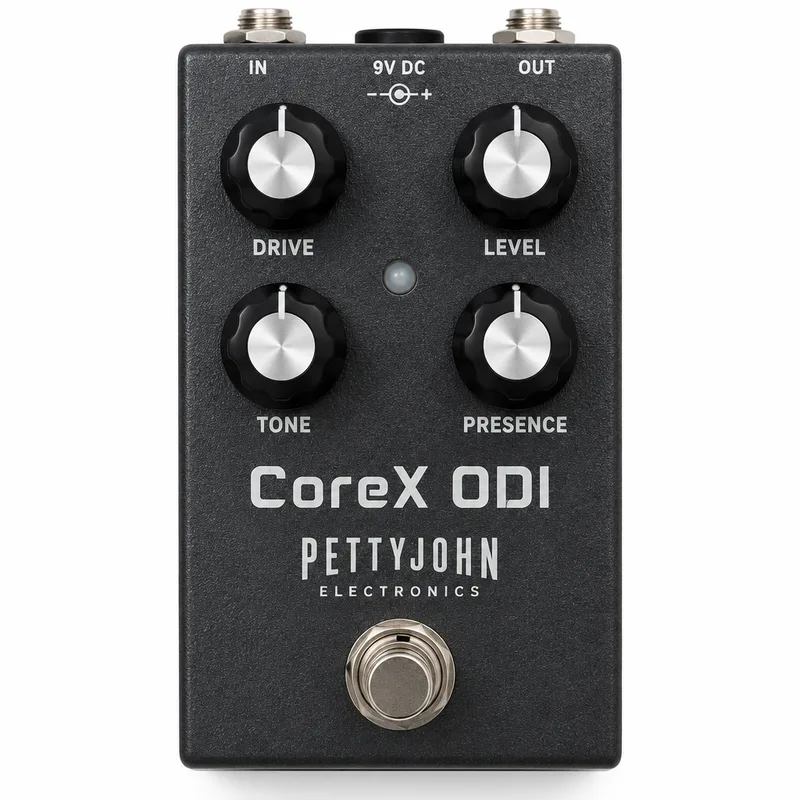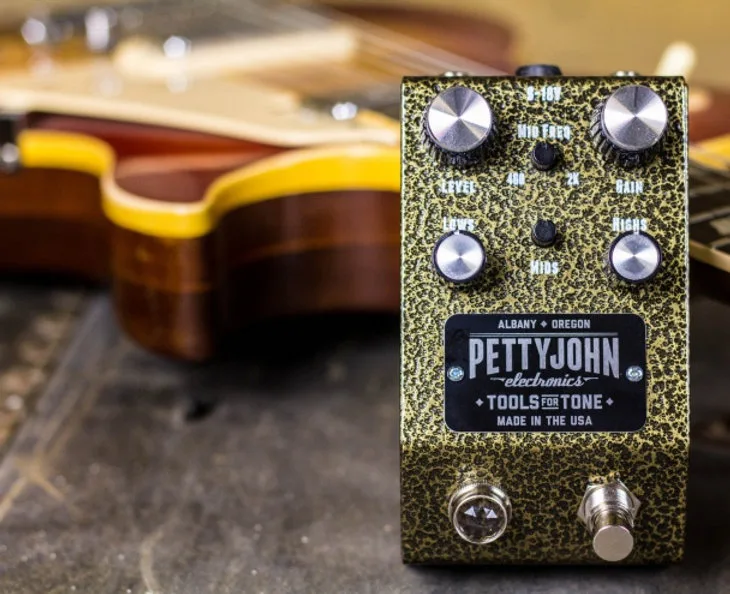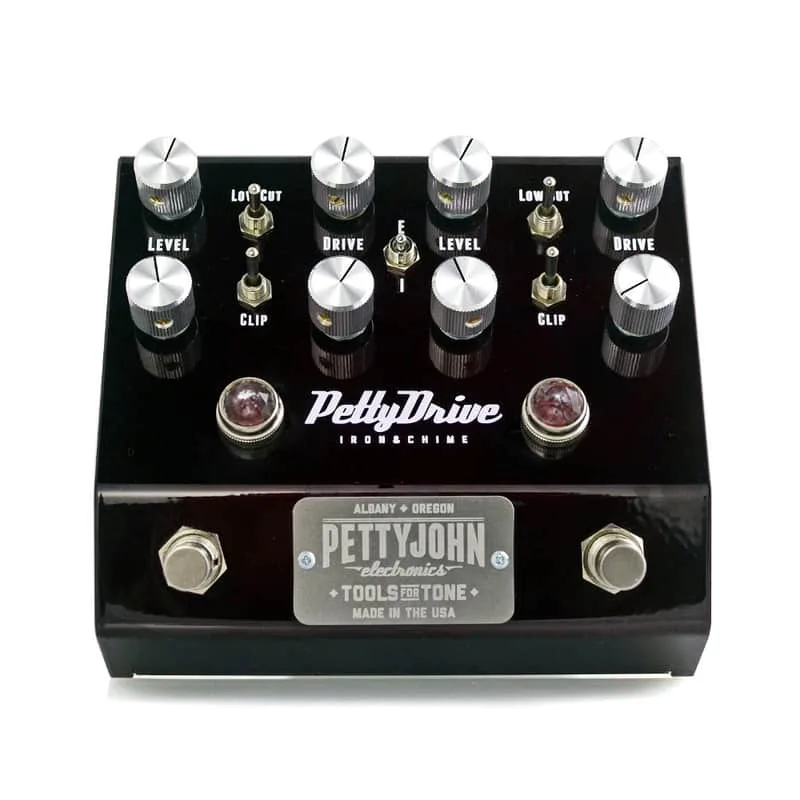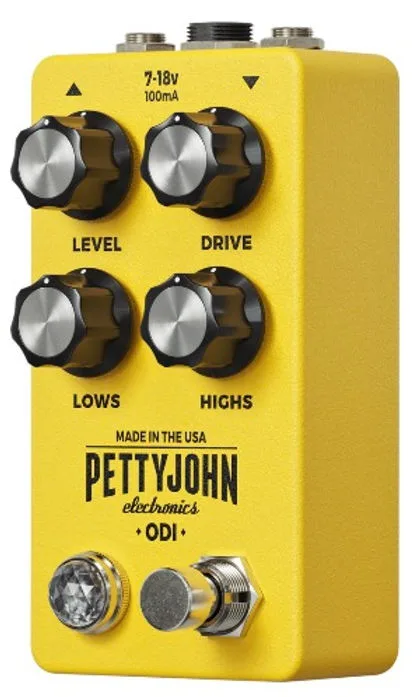


The Pettyjohn Electronics ODI is an overdrive pedal released in the company's CORE Series, a line built around a dual rail power supply that Pettyjohn says affects the headroom, tone and feel of the pedal, achieving up to four times the headroom over standard 9v pedals123. Compared to the original pedal it takes after, it features separate knobs for Lows and Highs for more flexible tone sculpting4. Pettyjohn describes the experience in familiar terms: "you will experience instant sonic nostalgia when you plug in to the ODI, recognizing the tone heard on countless records"1.
Where it came from
Pettyjohn describes the ODI in personal, nostalgic terms: "you will experience instant sonic nostalgia when you plug in to the ODI, recognizing the tone heard on countless records"1. The pedal sets itself apart from the original it draws on with separate knobs for Lows and Highs, which the maker positions as allowing more flexible tone sculpting4. The CORE Series dual rail power supply is central to the design: Pettyjohn says it affects the headroom, tone and feel of the pedal, achieving up to four times the headroom over standard 9v pedals123.
The original Boss OD-1 itself went through two versions: early examples with a long dash and clear switch used a 14 pin op-amp RC3403, before Boss changed to dual op-amps such as the JRC4558DD5. For more on how that circuit line developed, see the comparison of the Boss SD-1 vs Ibanez TS9 Tube Screamer, and for other takes on the overdrive format, see Overdrive Pedals.
The controls
The ODI uses the CORE Series control set, four knobs that Pettyjohn describes as a streamlined set for quickly dialing in tones1.
| Control | What it does |
|---|---|
| Level | Output level |
| Gain | Amount of overdrive |
| Lows | Bass EQ, separate from the treble stage |
| Highs | Treble EQ, separate from the bass stage |
Delicious Audio's Paolo De Gregorio noted that the knobs for Level, Gain, Lows and Highs are analogous to the other CORE series pedals, and that "Compared to the original, it features separate knobs for Lows and Highs for more flexible tone sculpting."4 The original OD-1 offered no such tone shaping, so this is the main practical difference a player will find.
Power: the dual rail supply
The CORE Series, ODI included, runs a dual rail doubling power supply. Pettyjohn explains: "We designed the CORE Series with a dual rail doubling power supply. This design can scale from +/-7v to +/-18v"1. The company says this design affects the headroom, tone and feel of the pedal, achieving up to four times the headroom over standard 9v pedals13. The same supply design is described across the CORE Series documentation2.
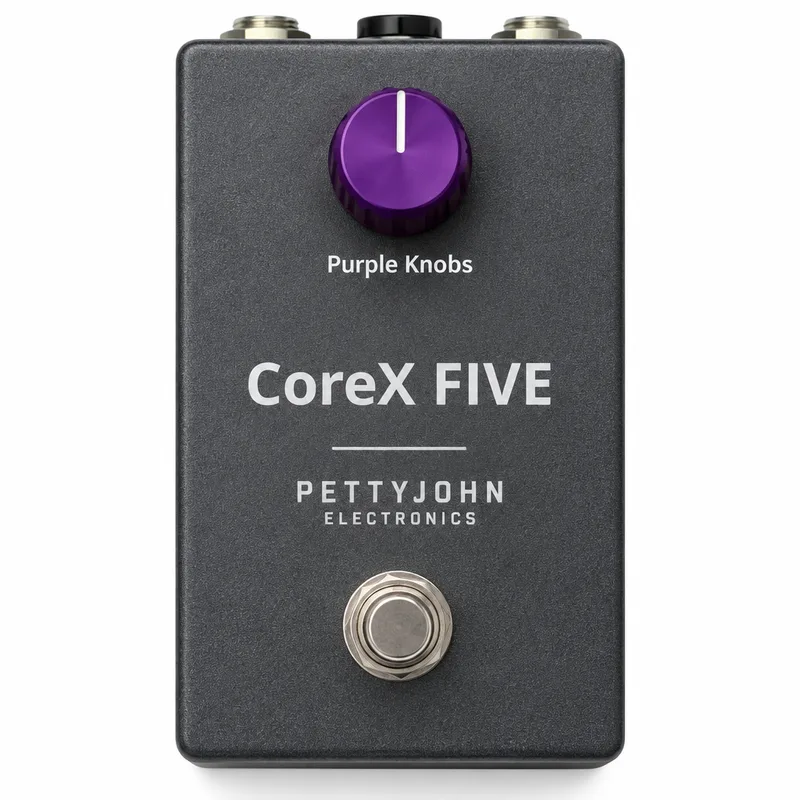
The ODI's dual rail power supply is the core of its design: Pettyjohn says it affects the headroom, tone and feel of the pedal, achieving up to four times the headroom over standard 9v pedals123. Pettyjohn later offered the CoreX ODI, which carries yellow knobs6.
What reviewers said
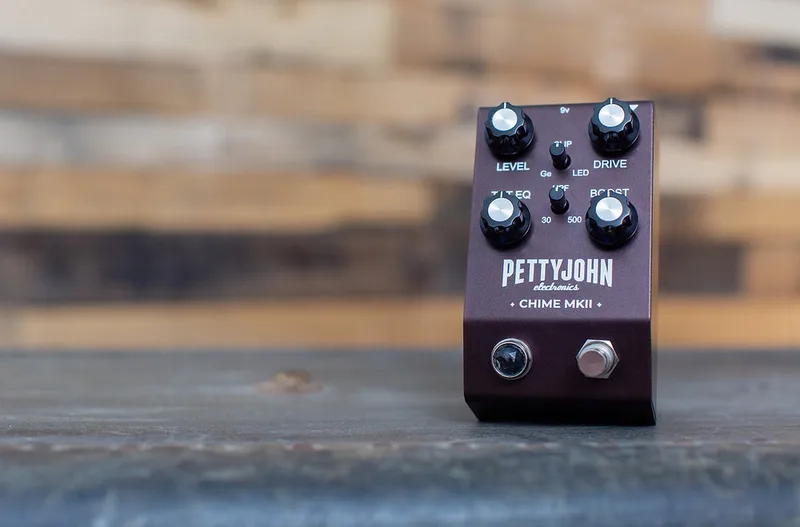
Delicious Audio's write-up at release framed the ODI as part of a coherent family: "analogous to the other CORE series pedals" in its control layout4. The maker's own description of the playing experience leans on the circuit's history: "you will experience instant sonic nostalgia when you plug in to the ODI, recognizing the tone heard on countless records" over the last four decades1. JHS Pedals' history of the company places the ODI alongside Pettyjohn's other lines, including the Foundry Series pedals such as the Pettyjohn GOLD and Pettyjohn CHIME7.
Videos
Mike Hermans
Aaron J Livecchi
gearfever
Questions
Is the Pettyjohn ODI based on the BOSS OD-1?
Yes. Pettyjohn Electronics describes the ODI as based on Stephen Pettyjohn's first overdrive pedal, the 1979 OD-1, and JHS Pedals notes the pedal is called the ODI because it is built around the 1978 BOSS OD-1. The company says Stephen set out to recreate the tonal characteristics he loved about the original, adding features of its own.
Does the Pettyjohn ODI use a 9V power supply?
It runs from a standard pedal supply, but internally it uses a dual rail doubling power supply that scales from +/-7v to +/-18v. Pettyjohn says this design affects the headroom, tone and feel of the pedal, achieving up to four times the headroom of standard 9v pedals.
Is the Pettyjohn ODI still in production?
No. The ODI is a legacy product: Pettyjohn Electronics discontinued the CORE Series as of January 1st, 2022, and the company's page for the pedal is now titled ODI Info (Legacy Product).
Is the Pettyjohn ODI true bypass?
Yes. Pettyjohn describes the ODI's switching as a true bypass, relay based system for minimum pop when engaging the effect, part of the CORE Series quiet bypass switching system.
How does the ODI's tone control differ from the original OD-1?
The original OD-1 has a single tone stage, while the ODI gives you separate knobs for Lows and Highs. Delicious Audio's Paolo De Gregorio wrote that this allows more flexible tone sculpting compared to the original, alongside the Level and Gain controls.
Who designed the Pettyjohn ODI?
Circuit designer Stephen Pettyjohn. The company says the inspiration to make the pedal is a personal one to him: his first overdrive pedal back in high school was a 1978 Boss OD-1, and the ODI is his recreation of that sound with added features.
Sources (7)
- ODI Info (Legacy Product), Pettyjohn Electronics, 2022-01-03
- RAIL Info (Legacy Product), Pettyjohn Electronics, 2022-01-06
- ROUS Info (Legacy Product), Pettyjohn Electronics, 2022-01-03
- Pettyjohn Electronics Odi Overdrive, Delicious Audio, 2021-04-22
- TONEHOME, TONEHOME
- CoreX | Pettyjohn Elec, Pettyjohn Electronics
- PETTYJOHN ELECTRONICS, JHS Pedals