

The Pettyjohn ROUS ("Rodent of Unusual Size") is an analog distortion pedal from Pettyjohn Electronics, part of the builder's CORE series of compact pedals1. Pettyjohn describes it as "a highly evolved member of the RAT family," a take on the classic Pro Co RAT circuit that blurs the line between overdrive and distortion2. Its gain range moves from low gain overdrive to what RockBoard's PedalPedia calls unusually large sounding distorted tones quickly with the turn of the Gain knob1.
The ROUS, "Rodent of Unusual Size", is described by Pettyjohn as a highly evolved member of the RAT family21, an analog overdrive and distortion pedal whose gain range moves from low gain overdrive to unusually large sounding distorted tones quickly with the turn of the GAIN knob1. Much like the original RAT, the gain amp drives an array of diodes in shunt position, and a Fire Swamp switch adjusts that diode clipping array between two settings for a marked change in tone.
A RAT-family distortion with sweepable filters
The RAT references are not disguised: the name spells it out, and Delicious Audio noted that "the references to the RAT aren't disguised, ROUS stands for 'Rodent of Unusual Size'"3. Much like the original, the ROUS's gain amp drives an array of diodes in shunt position, the same basic arrangement Guitar World describes in the Pro Co RAT as an op-amp based distortion circuit combined with diode clipping34.
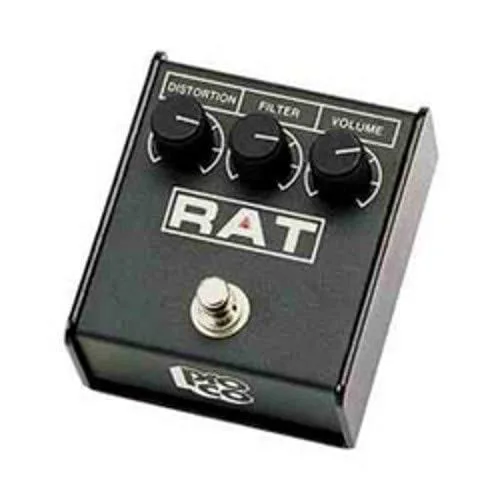
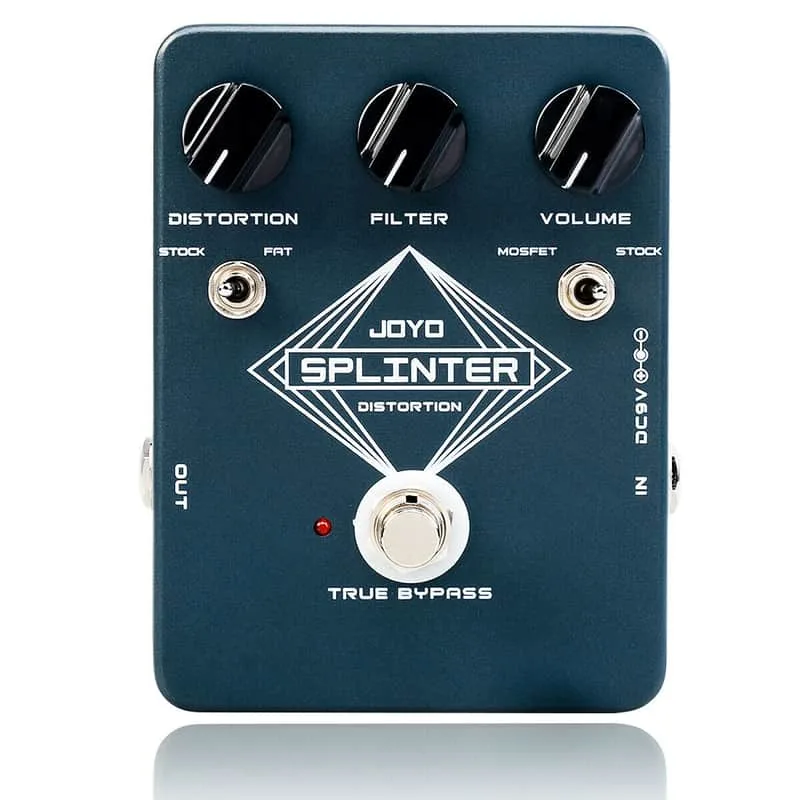
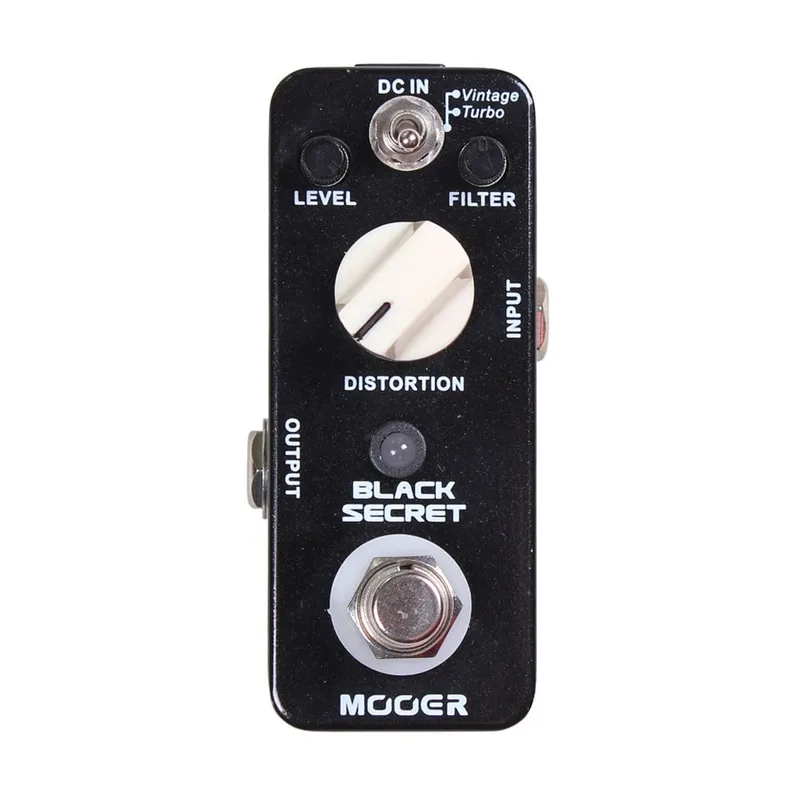
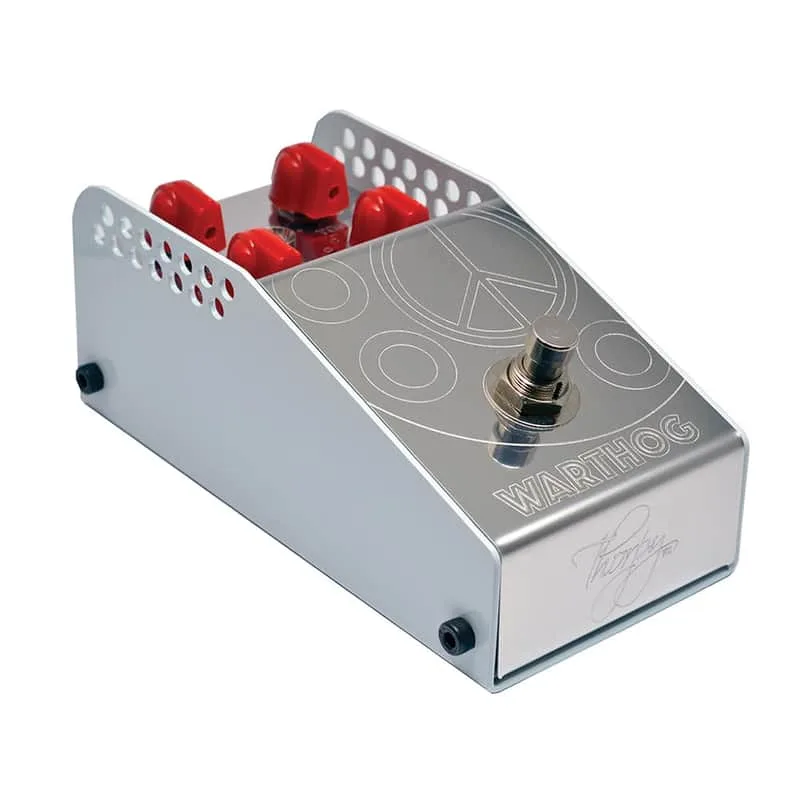
Where the ROUS departs from a straight RAT is in the filtering. Instead of the RAT's single tone control, the ROUS puts a sweepable low pass filter before the gain stage and a sweepable high pass filter after it, so you shape what feeds the clipping and what leaves it independently3. This approach has a documented lineage: an independent technical analysis of the earlier Blakemore Effects R.O.U.S. on the Guitar FX Layouts blog found that pedal to be "basically a Rat with the pot between the 47R and 2u2 in the pair of high pass filters at the inverting input to control the frequency, with passive high and low pass filters after the opamp stage replacing the simple tone control"5. Guitar Player's Dave Hunter counts the Pettyjohn ROUS among the numerous clones and homages that "contain a good dose of ProCo Rat DNA," alongside the Joyo Splinter, Jam Rattler, Mooer Black Secret, JHS Pack Rat and ThorpyFX Warthog6.
The controls
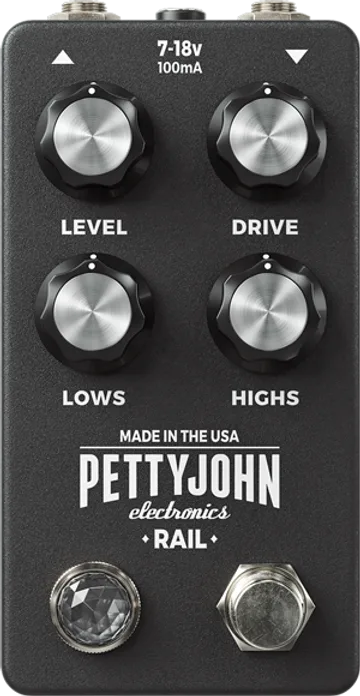
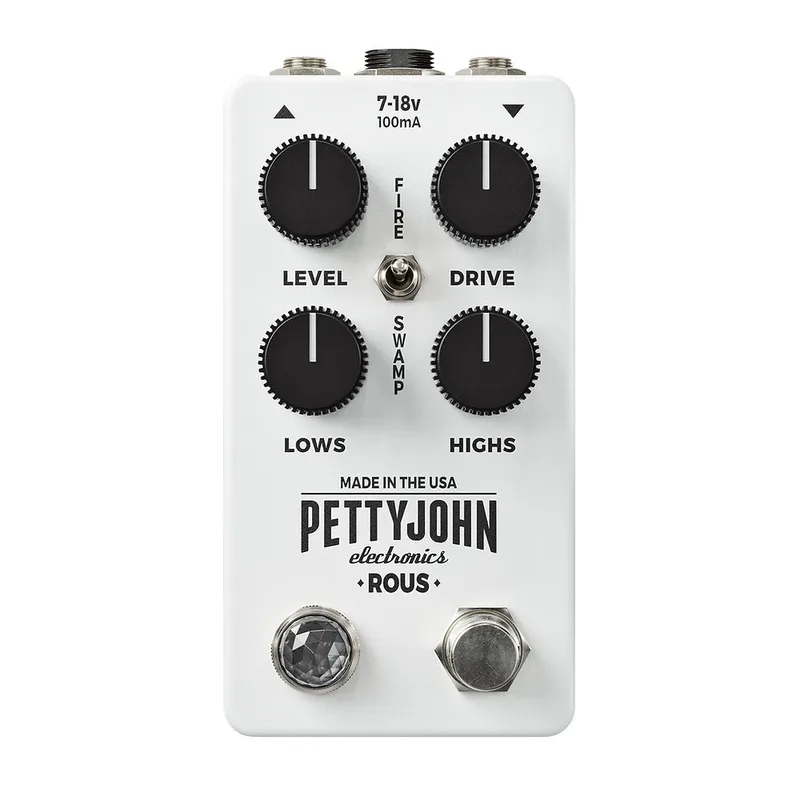
The ROUS carries a four knob control set plus a clipping mode switch. RockBoard's PedalPedia entry lists the set as Level, Gain, Lows and Highs1; Guitar Pedal X's coverage lists the same four knobs as Level, Drive, Lows and Highs, matching the knob set of Pettyjohn's RAIL fuzz78.
| Control | What it does |
|---|---|
| Drive / Gain | Moves the internal gain amp from a relatively low gain overdrive into all out distortion fairly quickly3 |
| Level | Sets overall signal level; carefully placed in the circuit, fully buffered, and will not load or tone suck3 |
| Lows | Sweepable filter before the gain stage, sweeping from sub 30Hz to beyond 1kHz, rolling off at 18dB/octave3 |
| Highs | Active 18dB/oct sweepable control after the gain stage, sweeping from 22kHz down to 1kHz, fully buffered3 |
| Fire/Swamp switch | Selects between two diode clipping arrays, silicon or germanium3 |
The two filter knobs are the working end of the design. Because the Lows control sits before the gain stage, it changes how hard the clipping stage is pushed in the bass; the Highs control then trims the top end after the distortion has been generated3.
Fire and Swamp modes
The Fire/Swamp switch adjusts the diode clipping array between two settings that Delicious Audio described as making "a remarkable change in tone"3.
- Fire: Pure silicon hard clipping, the setting that most closely resembles the original RAT design3.
- Swamp: Adds germanium diodes into the clipping array, increasing headroom and softening the clipping effect in a vintage, musical way, with softer clipping and vintage overtones3.
Power, switching and build
The ROUS runs on 9V DC with a center negative plug and draws 100mA1. It is true bypass, using a relay based switching system that Delicious Audio described as being "for minimum pop when engaging the effect"3. The pedal is hand made in Oregon, USA, and shipped in a new enclosure by GORVA design3. Custom mod options were available only through the Pettyjohn online shop9.
At 100mA, the ROUS draws more current than many compact analog drives. A dedicated, isolated 9V output is a better fit than a daisy chain shared with low draw pedals.
What reviewers said
Guitar Pedal X's Stefan Karlsson covered the pedal twice. In his 2020 roundup of the year's new fuzz and distortion pedals he noted it was still incoming at the time, writing "This is one that is still incoming, I was hoping to have it by Christmas, but it's no doubt been held up somewhere along the way"8. By his 2024 roundup of compact RAT-style distortions he had spent time with it, and his verdict was positive:
"this distinct take on the Rat is actually really decent"
In SWAMP mode the pedal adds germanium into the clipping array, which increases the headroom and softens the clipping effect in a way Pettyjohn describes as vintage and musical3. This contrasts with FIRE mode's pure silicon hard clipping, giving players two distinct voicings from the same circuit.
FIRE mode is pure silicon hard clipping, and Pettyjohn notes this setting most closely resembles the original RAT design3. Paired with the sweepable LOWS and HIGHS controls, it gives the pedal a versatile overdrive and distortion range with deep nostalgic origins.
Versions and status
The circuit follows the original RAT topology: the gain amp drives an array of diodes in shunt position34. Tone shaping is split around the gain stage, with the LOWS control placed before it and the active, fully buffered HIGHS control after it3. The Fire Swamp switch then adjusts the diode clipping array between the FIRE and SWAMP settings.
Videos
AndyDemos
Mike Hermans
Iga Massardi
Questions
Is the Pettyjohn ROUS true bypass?
Yes. The ROUS uses a true bypass, relay based switching system, which Delicious Audio described as being for minimum pop when engaging the effect. The Level control is fully buffered and, according to the same coverage, will not load or tone suck the signal.
What is the difference between Fire and Swamp on the ROUS?
Fire is pure silicon hard clipping and most closely resembles the original RAT design. Swamp adds germanium diodes into the clipping array, which increases headroom and softens the clipping effect in a vintage, musical way, delivering softer clipping with vintage overtones.
Is the Pettyjohn ROUS based on the RAT?
Yes. Pettyjohn itself describes the ROUS, which stands for Rodent of Unusual Size, as a highly evolved member of the RAT family. Like the Pro Co RAT, its gain amp drives an array of diodes in shunt position, but it replaces the RAT's simple tone control with sweepable low and high pass filters.
What power does the Pettyjohn ROUS need?
The ROUS runs on 9V DC with a center negative plug and draws 100mA. That current draw is on the high side for an analog drive pedal, so a dedicated output from a power supply is a safer choice than sharing a daisy chain with other pedals.
Has the Pettyjohn ROUS been discontinued?
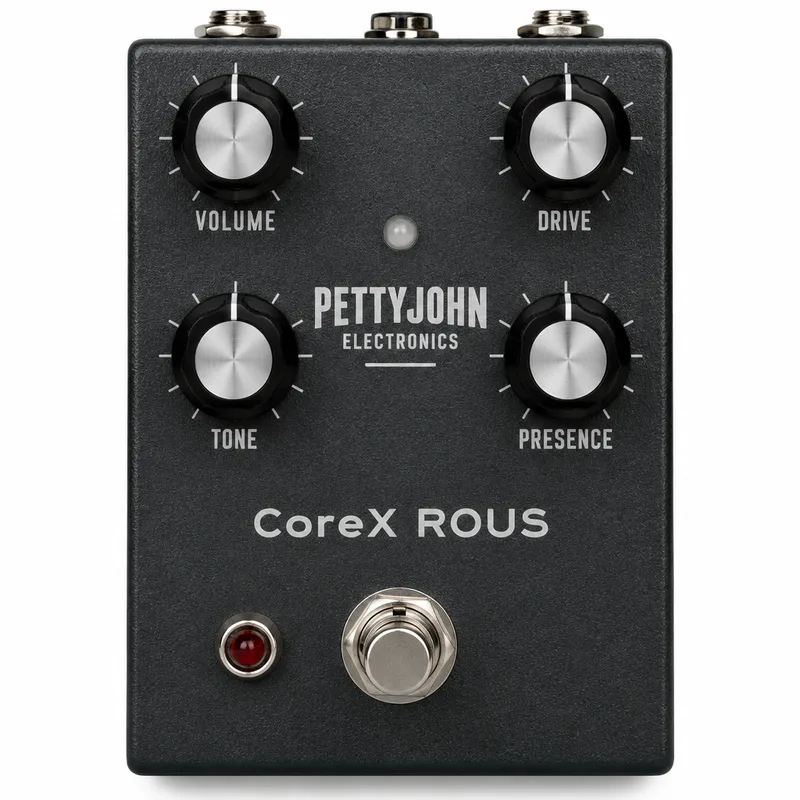
Pettyjohn lists the original ROUS as a legacy product on its own site. A later CoreX series version, the CoreX ROUS, was discontinued in October 2026 because the power supply that series was designed around is being discontinued.
Where is the Pettyjohn ROUS made?
The ROUS is hand made in Oregon, USA, by Pettyjohn Electronics. The original pedal also shipped in a GORVA design enclosure, and custom mod options were available only through the Pettyjohn online shop.
Sources (9)
- ROUS by Pettyjohn, RockBoard PedalPedia, 2026
- CoreX | Pettyjohn Elec, Pettyjohn Electronics
- Pettyjohn Rous Distortion, Delicious Audio, 2020-10-26
- The ProCo Rat went from basements to blockbuster albums, Guitar World, 2024-12-12
- Guitar FX Layouts: Blakemore Effects R.O.U.S., Guitar FX Layouts (tagboardeffects.blogspot.com), 2014-05-13
- From Jeff Beck and Joe Perry to Kurt Cobain and Thurston Moore, the Flexible ProCo Rat Has Star Appeal and Staying Power, GuitarPlayer (www.guitarplayer.com), 2022-12-16
- Guitar Pedal X, Guitar Pedal X, 2024-08-30
- Guitar Pedal X, Guitar Pedal X, 2020-12-18
- ROUS Info (Legacy Product), Pettyjohn Electronics, 2022-01-03