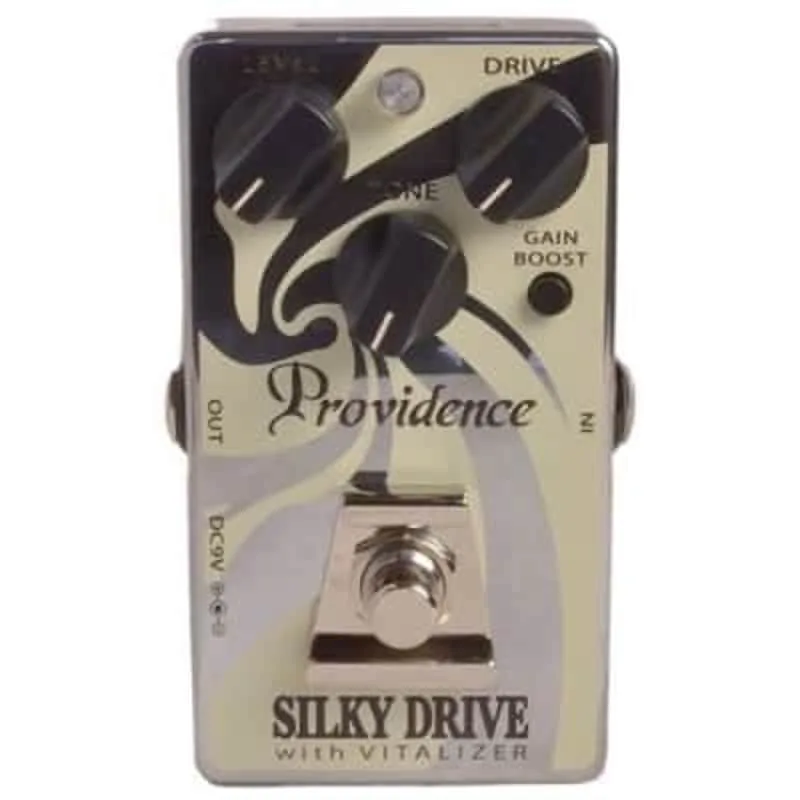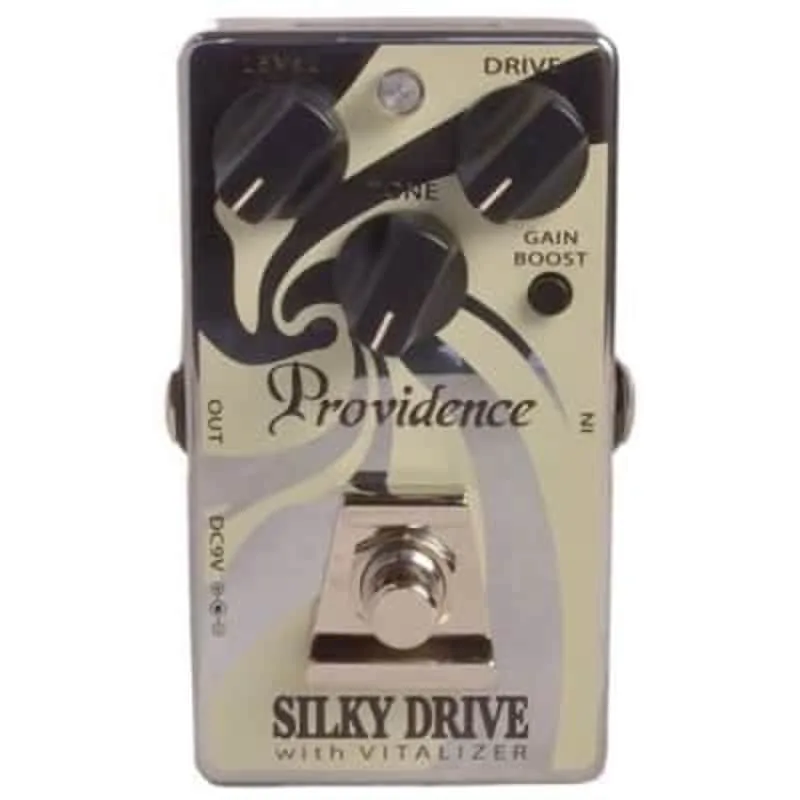


The Providence Silky Drive (SLD-1F) is an overdrive pedal from Providence Effects, a maker whose drive pedals sit in the higher price bracket. RockBoard's PedalPedia describes it as delivering "a classic sound that is reminiscent of the smooth, silky overdrive tones produced by vintage tube amplifiers"1. Reviewers broadly agreed with that description: Premier Guitar found it produces "a very smooth, harmonic overdrive with superb articulation and high-end warmth" with the tone knob at 12 o'clock and drive at 1 o'clock2.
It is a bright pedal rather than a dark one. Premier Guitar noted it is "very much at home on the brighter side of the tone spectrum"2, which makes it a natural fit for players who want their amp's top end to stay lively under gain. At a street price of $3942, it is a serious purchase, and the price is the one thing reviewers flagged against it.
What it does to your sound
The Silky Drive is built around a natural, dynamic overdrive character. MusicRadar's review found it "responds superbly to playing dynamics and respects the basic integrity of your core tone"3, meaning it does not bury your guitar's own voice under the effect. Even with the drive cranked, Premier Guitar found it "very responsive to guitar volume levels and picking dynamics"2, so you can clean it up from the guitar's volume knob the way you would with a tube amp.
Where the drive knob takes you depends on where it is set:
- Fully counterclockwise: a clean boost that, while not transparent, still offers a throaty clarity2
- Tone at 12 o'clock, drive at 1 o'clock: a very smooth, harmonic overdrive with superb articulation and high-end warmth2
- Drive cranked: tones ranging from early Van Halen to SRV, depending on pickup selection2
One feature that carries through the range is clarity. MusicRadar found it has "the sense of presence, note separation and clarity that the majority of drive stompboxes simply can't match"3.
The pedal also includes what Providence calls a Vitalized Noiseless Switching Circuit, designed to minimize noise when switching the effect on or off2. An earlier MusicRadar roundup of Providence pedals likewise cited its V.N.S (noiseless switching) and Vitalizer circuit4.
The controls and the gain boost switch
The control set is familiar to anyone who has used an overdrive before. Premier Guitar noted the volume, drive and tone knobs "are familiar to anyone who's used, say, a Tube Screamer"2. On top of those three, there is a gain boost switch3.
| Control | What it does |
|---|---|
| Master level | Sets the overall output volume3 |
| Drive | Sets the amount of overdrive, from clean boost to cranked3 |
| Tone | Shapes the brightness, from rolled-back mid focus to open top end3 |
| Gain boost switch | Adds extra dirt on top of the drive setting2 |
The gain boost is the pedal's one footswitchable extra. Premier Guitar described it as "a gain boost button for piling on some dirt"2, and found that engaging it "yielded a tad more oomph and ample sustain"2. Their one criticism of the pedal's boost side was that the "gain boost could offer a little more push"2, so treat it as a moderate step up rather than a second channel.
How it compares
Versus a Tube Screamer
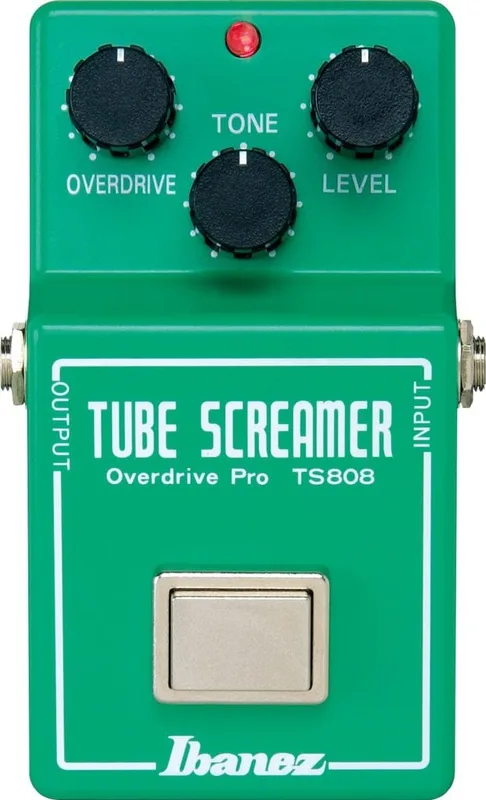
With the tone rolled back and the drive at a moderate setting, MusicRadar found you "can get into Tube Screamer-type territory, albeit with slightly less mid emphasis and stronger bass"3. Push it further, though, and it goes somewhere a Tube Screamer does not: with more gain, more tone and the gain boost engaged, MusicRadar found it has "the wider frequency response and smoother drive of something like Fulltone's OCD"3. In short, it can cover the mid-forward territory but is not locked into it.
Versus other Providence overdrives
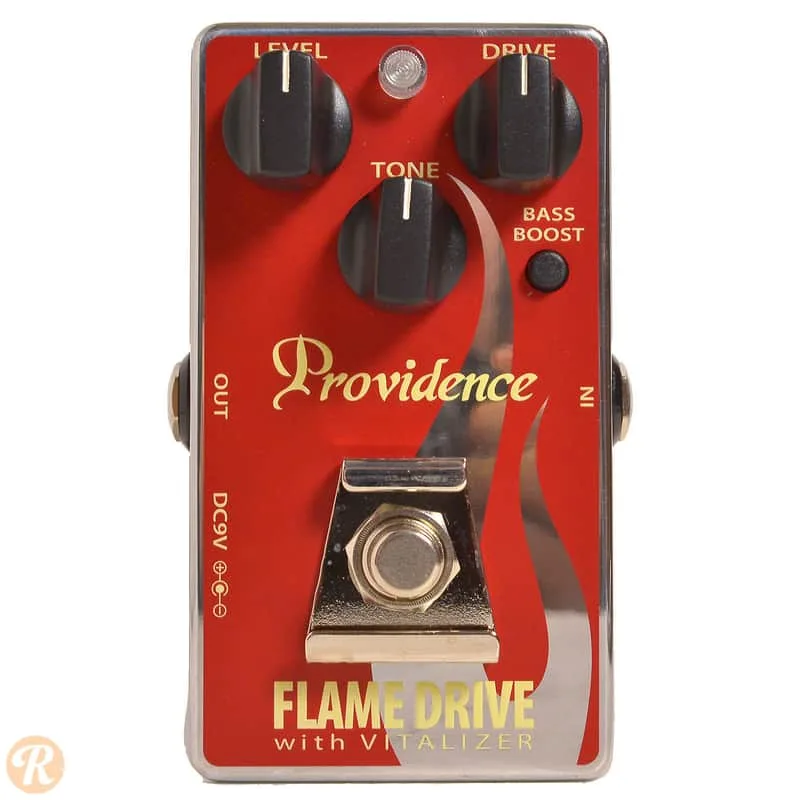
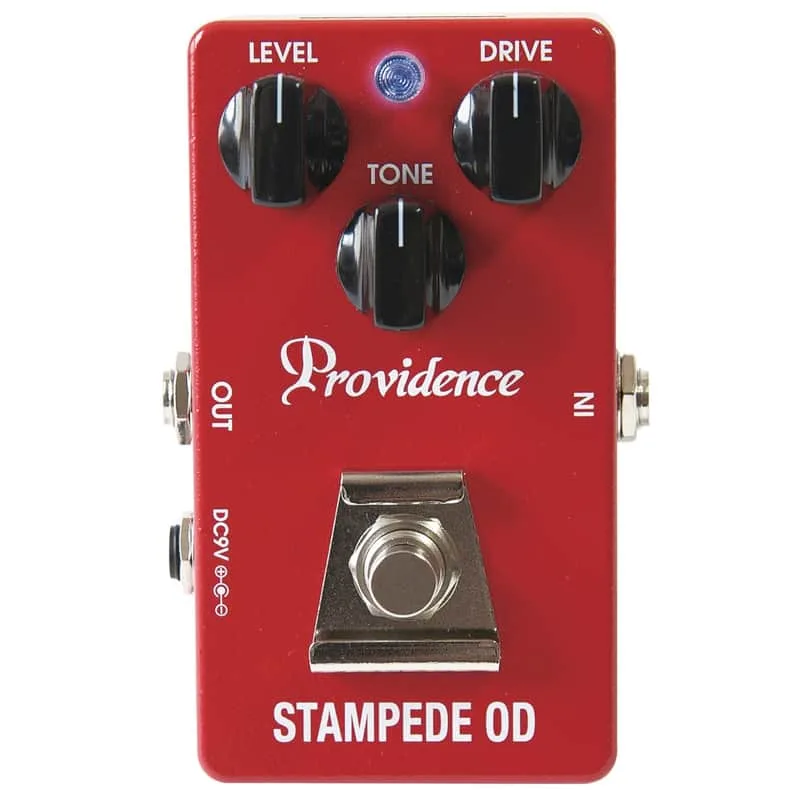
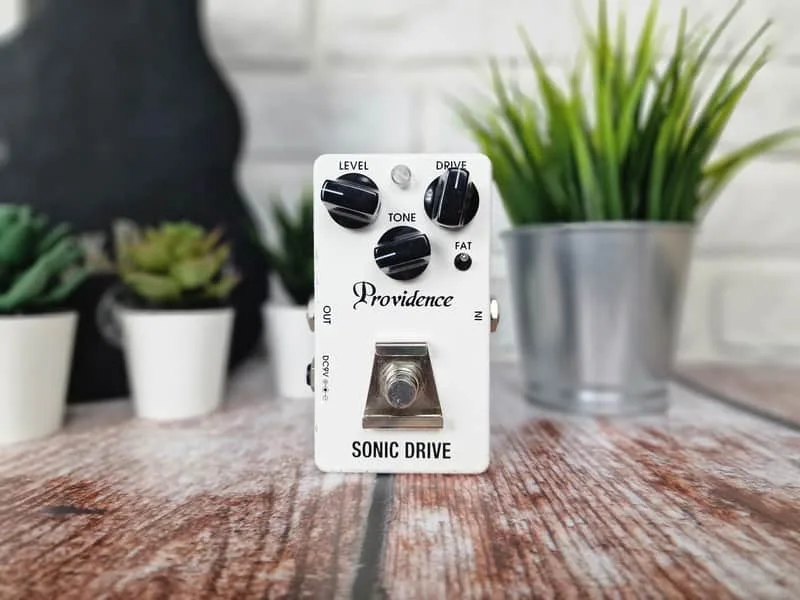
MusicRadar placed the Silky Drive within Providence's own line: "this pedal sits between Providence's Sonic Drive and the Stampede OD; it's less edgy and aggressive than the latter"3. Compared with the Providence SOV-2 Stampede OD, the Silky Drive is the smoother, less aggressive choice, while offering more dynamics and a wider range of textures than the Providence Sonic Drive SDR-43.
Bypass and switching
The Silky Drive is not a true-bypass pedal. Instead, it uses a double-contact grounding circuit (DCG), which means there are two ground connections on the output jack, holding the plug firmly and helping avoid loose connections and extraneous noise3. For players who worry about tone loss when the pedal is off, the DCG approach is Providence's answer, and the Vitalized Noiseless Switching Circuit is designed to keep the on/off transition quiet2.
What reviewers said
The two published reviews agree on the pedal's quality and disagree on nothing except how much the price should weigh against it.
"Wonderful overdrive with incredible dynamics, but with an equally 'incredible' price."
MusicRadar's reviewer called it an "exceptionally clear yet versatile overdrive tone" overall, but concluded that "over £300 for an overdrive pedal is bordering on silly money, no matter how good it sounds"3. Premier Guitar's review was more favorable on value, listing the $394 street price alongside a positive verdict on the pedal's smoothness, articulation and responsiveness2.
Videos
ProvidenceSoundMovie
Brett Kingman
Lance Keltner Music
Questions
Is the Providence Silky Drive true bypass?
No. MusicRadar notes it is not a true-bypass pedal, but it uses a double-contact grounding circuit (DCG) with two ground connections on the output jack. This holds the plug firmly and helps avoid loose connections and extraneous noise.
How does the Silky Drive compare to a Tube Screamer?
According to MusicRadar, with the tone rolled back and moderate drive it reaches Tube Screamer-type territory, but with slightly less mid emphasis and stronger bass. With more gain, more tone and the gain boost engaged, it moves toward the wider frequency response and smoother drive of something like Fulltone's OCD.
How is the Silky Drive different from the Providence Stampede OD?
MusicRadar places it between Providence's Sonic Drive and the Stampede OD. It is less edgy and aggressive than the Stampede OD, but more dynamic and with a wider range of textures than the Sonic Drive.
Can the Silky Drive be used as a clean boost?
Yes, in a way. Premier Guitar found that turning the drive knob fully counterclockwise gives a clean boost that, while not transparent, still offers a throaty clarity. The gain boost switch adds a tad more oomph and ample sustain.
What does the gain boost switch on the Silky Drive do?
It adds extra dirt on top of the drive knob's setting. Premier Guitar describes it as a gain boost button for piling on some dirt, and found engaging it yielded a tad more oomph and ample sustain, though their review also noted it could offer a little more push.
Sources (4)
- Silky Drive SLD-1F by Providence, RockBoard PedalPedia, 2026
- Providence Silky Drive Pedal Review, Premier Guitar, 2012-09-05
- Providence Silky Drive review, MusicRadar, 2012-10-26
- 4 overdrive and distortion pedals from Providence, MusicRadar, 2012-06-21