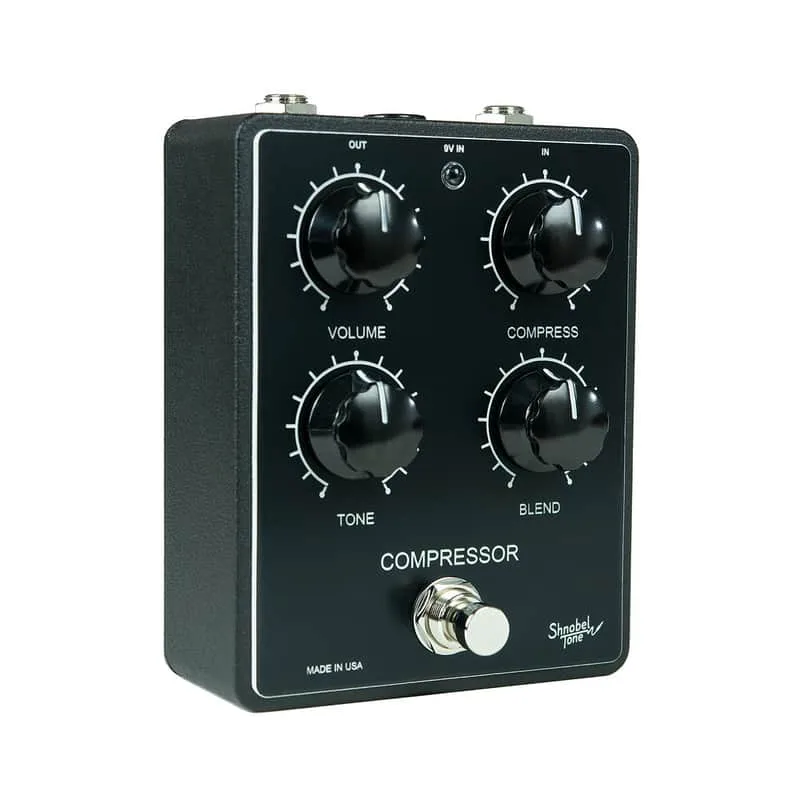
The Shnobel Tone Compressor is a compressor pedal made by Shnobel Tone, hand-built with through-hole components and fitted with top-mounted power and in/out jacks1. It runs on standard 9V center negative power and has no battery compartment1. Shnobel Tone's own product page calls it "a studio compressor for your pedalboard"2, and the maker says you can use its Blend knob to mix your original signal with the compressed signal, which Premier Guitar summed up as a compressed tone "rich with overtones and thickness while retaining your original signal for punchy, responsive note attack"1.
What it does to your sound
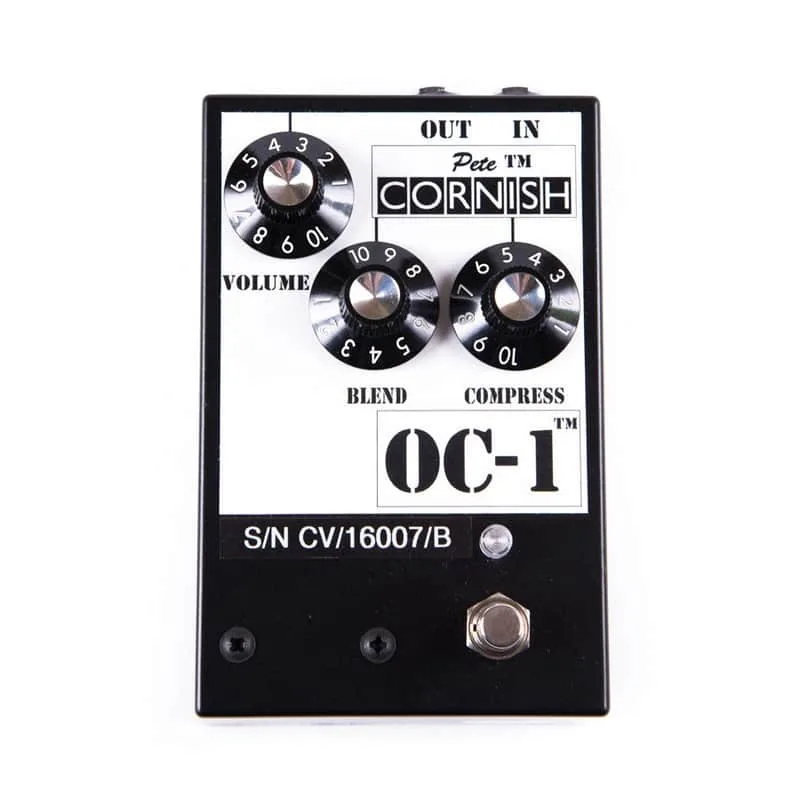
Optical compression works by using a light-dependent element to control signal level. In the classic optical circuit, traced in detail by Aion FX in its analysis of the Pete Cornish OC-1, the compression "happens by means of a simple voltage-dividing attenuator, essentially a dynamically-operated volume reduction," a method Aion FX notes goes "all the way back to the first optical compressors from the 1950s such as the LA2A"3. That lineage is what gives optical compressors their reputation for smooth, gradual gain reduction rather than the grab of a VCA design.
Shnobel Tone positions the Compressor as a pedal that keeps your picking dynamics intact. The Blend knob is the key to that: the maker says it "allows you to mix between your original signal and the compressed signal creating a very natural and punchy sound that is very musical"2. Blending compressed and clean signal is a common approach on modern compressor pedals, letting players keep note attack while adding sustain and thickness underneath.
Controls and how to use them
The Compressor keeps its control set minimal, with three knobs:
| Control | What it does |
|---|---|
| Compress | A single knob controlling compression and attack1 |
| Blend | Mixes original and compressed signal for a natural, punchy sound2 |
| Tone | Dials in the right sound for guitar or bass2 |
Premier Guitar highlighted the single-knob approach in its announcement, noting "a single Compress knob for controlling compression/attack" alongside "a specialized Tone knob that makes it easy to get the perfect sound for your guitar or bass"1. For a player new to compression, that means one knob sets how hard the pedal works, Blend sets how much of it you hear, and Tone shapes the result.
Power, bypass and connections
The pedal runs on standard 9V center-negative power and has no battery compartment, so it needs a pedalboard power supply21. It uses a true bypass foot switch, so with the pedal disengaged the signal passes through unprocessed2. Power and input/output jacks are all top-mounted, which helps with tight pedalboard layouts where side jacks can crowd neighboring pedals1.
No battery compartment means this pedal cannot run on a 9V battery. Plan on a spot on a power supply, and note that international buyers are responsible for customs duties and import taxes, per the maker's product page2.
On bass
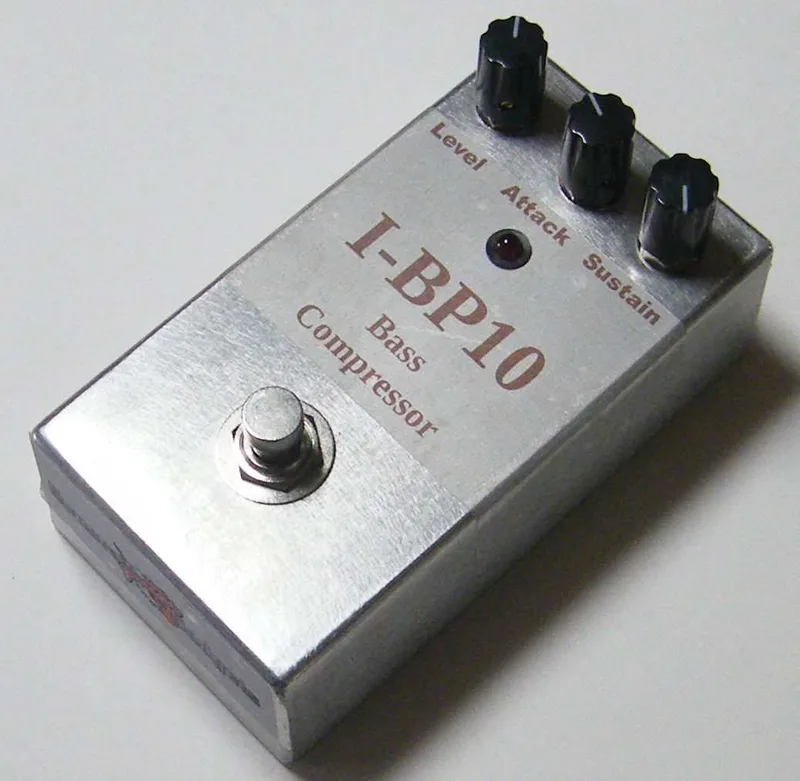
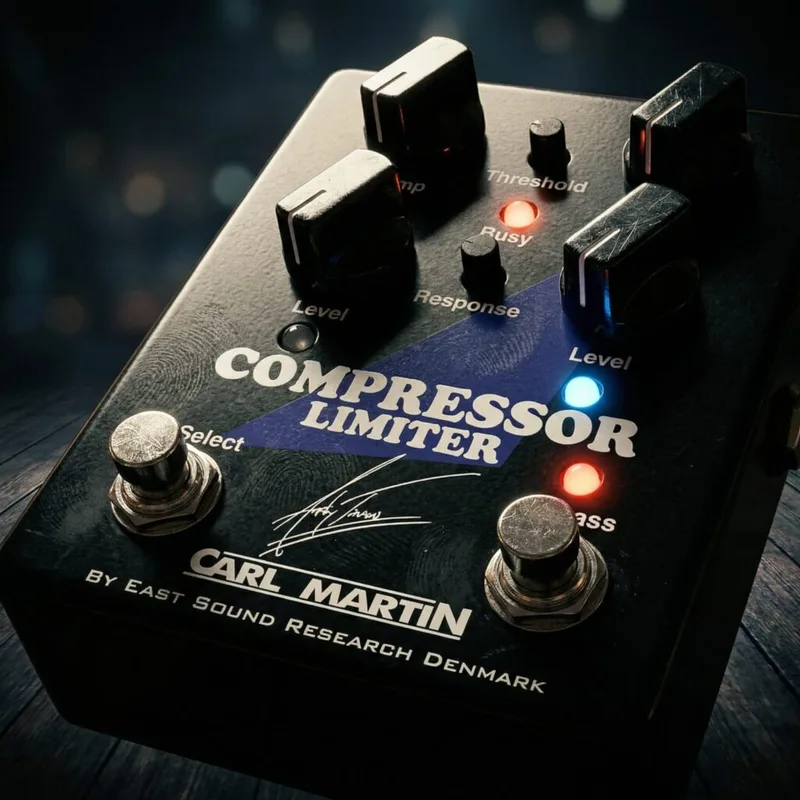
Shnobel Tone says the Tone control and Blend knob together let you "dial in the perfect sound for your guitar or bass"2, and Premier Guitar's announcement carried the same claim for the Tone knob1. Blend controls are especially useful on bass, where heavy compression can dull the attack of plucked and slapped notes; mixing in clean signal keeps that attack audible. Players comparing bass-specific options can also look at dedicated units like the Ibanez BP10 Bass Compressor or the Carl Martin Andy Timmons Signature Compressor/Limiter, which its maker says works on bass across a wide frequency range.
How it compares to other optical compressors
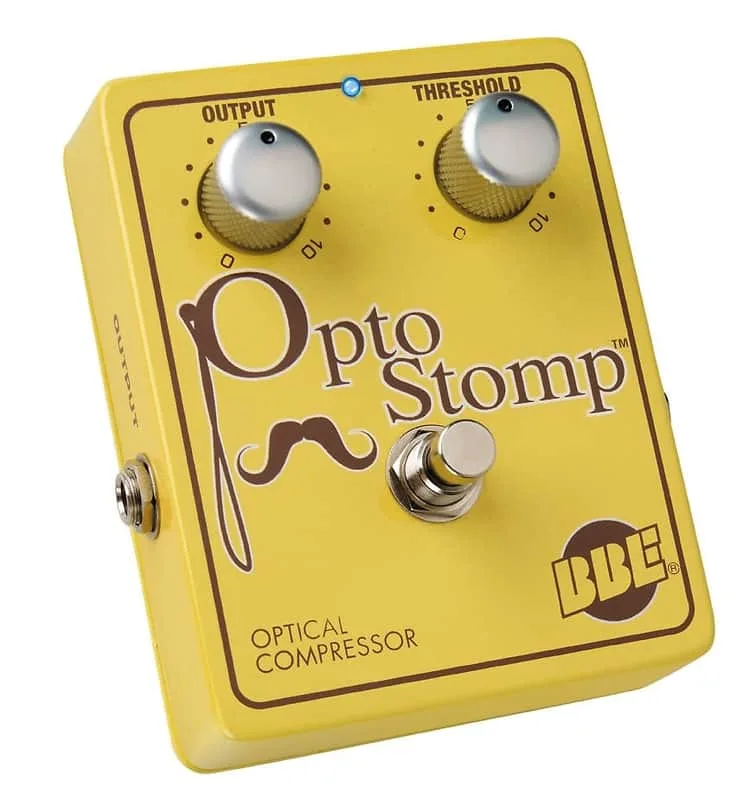
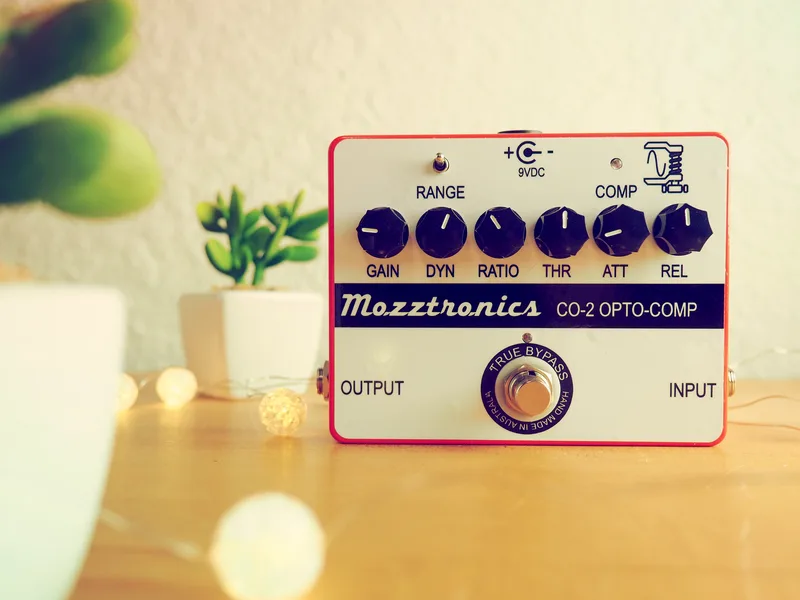
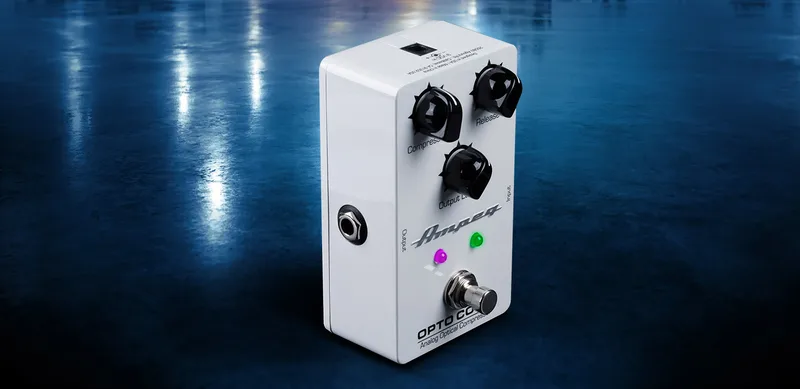
The Shnobel Tone Compressor sits in a crowded field of optical compressor pedals. The BBE Opto Stomp is another optical design that uses a light sensor to control signal levels, and the Mozztronics CO-2 Opto-Comp likewise uses an optical element for its compression4. On the vintage-flavored side, Ampeg says its Opto Comp delivers "smooth, vintage style compression that adds headroom and sustain to your tone"5. What distinguishes the Shnobel Tone unit on paper is the combination of a single Compress knob with both Blend and Tone controls in a hand-built, through-hole package21.
For a broader look at the category, including non-optical designs, see the compressor pedals overview.
Questions
Is the Shnobel Tone Compressor true bypass?
Yes. Shnobel Tone lists a true bypass foot switch on its product page, and Premier Guitar's 2023 press release confirms the same feature. When the pedal is off, the signal passes through without processing.
Does the Shnobel Tone Compressor take a battery?
No. The pedal runs on standard 9V center-negative power and has no battery compartment, so you will need a power supply. Shnobel Tone lists 9V as its power requirement on the product page.
How much does the Shnobel Tone Compressor cost?
The Shnobel Tone product page lists the Optical Compressor at $279.00, and Premier Guitar reported a suggested retail price and MAP of $279 when the pedal was announced in June 2023.
Can the Shnobel Tone Compressor be used with bass?
Yes. Shnobel Tone says the Tone control and Blend knob let you dial in the right sound for guitar or bass, and Premier Guitar described the Tone knob as making it easy to get the perfect sound for either instrument.
Is the Shnobel Tone Compressor hand-built?
Yes. Premier Guitar's 2023 press release describes the Compressor as hand-built with through-hole components, rather than surface-mount automated assembly.
Sources (5)
- Shnobel Tone Introduces First Compressor Pedal, Premier Guitar, 2023-06-01
- Optical Compressor, Shnobel Tone
- Tracing Journal: Cornish OC-1 Optical Compressor, with X-rays!, Aion FX (aionfx.com), 2019-11-15
- Mozztronics CO-2 Opto-Comp Optical Compressor, Pedal of the Day, 2021-04-28
- Ampeg Launches Liquifier Chorus & Opto Comp Pedals, Premier Guitar, 2018-01-27