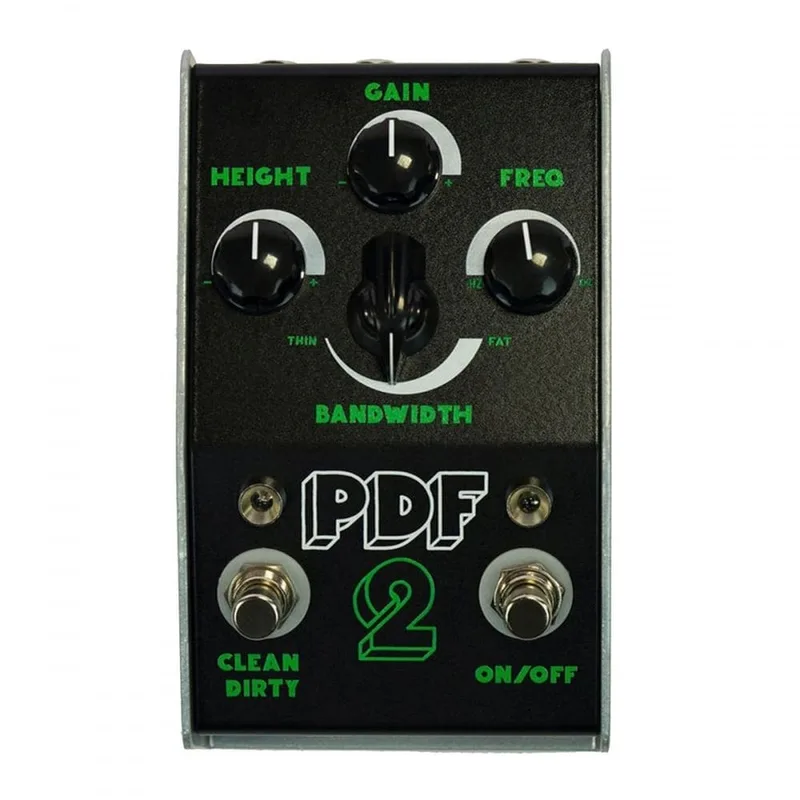


The Stone Deaf PDF-2 is a Parametric Distortion Filter: a pedal that combines a one-band parametric EQ with a clean boost channel and a gain channel, covering overdrive, distortion and fuzz territory for guitars, basses, drums and synths1. Where a graphic EQ gives you fixed bands, a parametric filter lets you choose which part of the tonal spectrum you cut or boost, and by how much, which makes the PDF-2 less a conventional drive pedal and more a tone-shaping tool that can get as extreme as you want it to be.
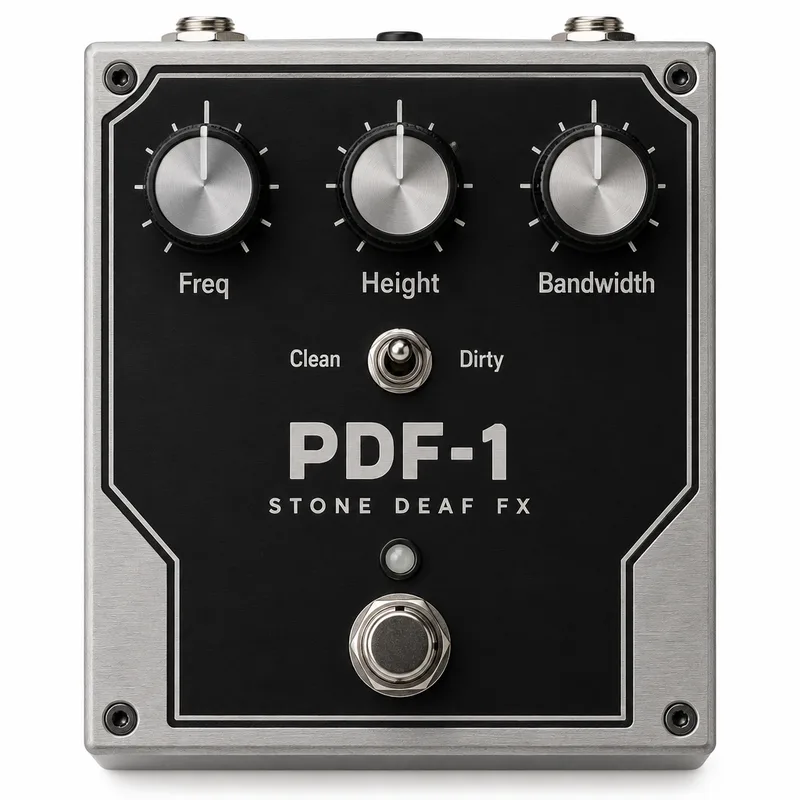
The pedal is the successor to Stone Deaf's PDF-1, and the maker describes it as more versatile than the original, with a reduced noise floor, an adjustable gain control, and dual footswitches for channel switching1. It is designed and built in the UK1.
Stone Deaf's product page marks the current stock as the last batch before discontinuation. The page lists a sale price of £128 against a regular price of £1601.
A parametric filter with clean and dirty channels
The PDF-2's core is its single parametric EQ band, paired with two channels selected by footswitches. On the clean channel, Guitar.com's reviewer found it can deliver a good approximation of a full-frequency boost3. Stomping the left-hand footswitch engages dirty mode, where the gain control runs from warm crunch to what the reviewer called "fuzzy sonic mayhem"2.
The same clean/dirty idea goes back to the PDF-1. Premier Guitar's review of the earlier pedal described the switch as one that "effectively changes the Stone Deaf from a boost/parametric EQ to a distortion/parametric EQ unit"4, and Pedal of the Day called it a switch "between a more Boost type setting and a crunchier gain mode with ease"5. On the PDF-1, Premier Guitar found the clean circuit remarkably transparent, with the clean boost creating a bright, airy space and lending character to overdrive and distortion signals further down the chain4.
What the filter adds to the drive is the point of the pedal. Guitar.com's Richard Purvis wrote:
"The overdrive itself is thick and smooth, but it's in combination with the EQ filtering that it opens up all manner of new rock voices: thudding sludge power, woody mid-gain clonk, snarling punk grind"2
His overall verdict was blunt: "It's amazing how much fun you can have with a one-band parametric EQ, and that goes for double when it's as good as this"2.
The controls
The PDF-2's front panel, as reviewed by Guitar.com2:
| Control | What it does |
|---|---|
| Frequency | Chooses which part of the tonal spectrum the filter cuts or boosts |
| Height | Sets how much cut or boost is applied at that frequency |
| Gain | Active only in dirty mode; runs from warm crunch to fuzzy sonic mayhem |
| Five-way rotary bandwidth switch | Changes the focus of the filtering, and therefore how extreme it sounds |
| Clean/Dirty footswitch | Switches between the clean boost channel and the gain channel |
| Bypass footswitch | Engages and disengages the pedal (true bypass)1 |
The bandwidth switch is worth dwelling on for a moment, because it is what separates a parametric filter from a simple tone knob. As Guitar.com put it, the five-way dial "changes the focus of the filtering, and therefore how extreme it sounds"2: a narrow bandwidth makes the cut or boost a surgical spike or notch, while a wide one behaves more like a broad tone shift.
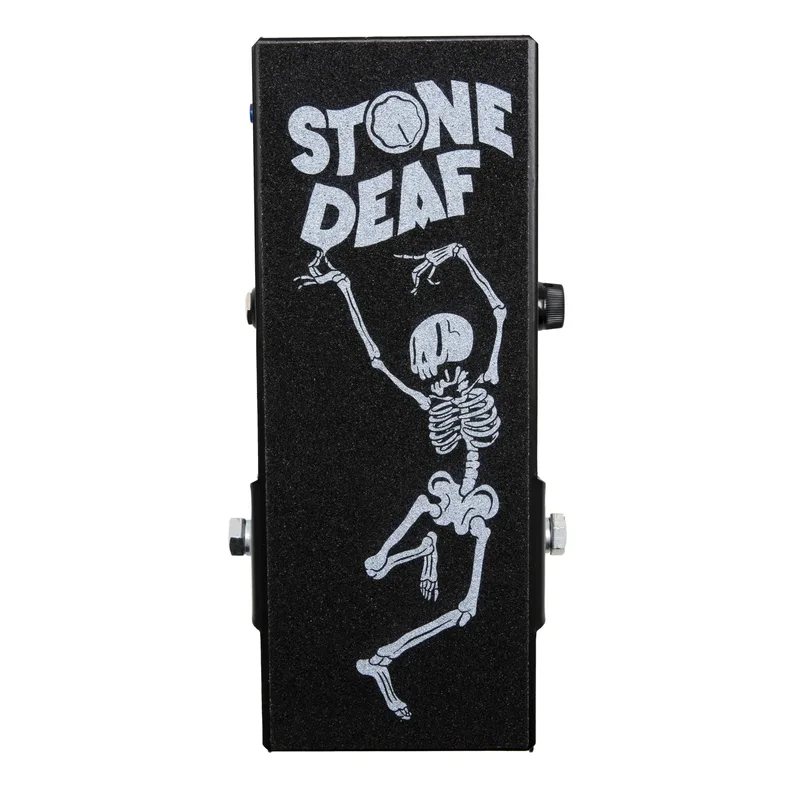
The pedal also carries a TRS input for Stone Deaf's EP-1 expression pedal, and only the EP-12. With the EP-1 connected, the height control becomes a live sweep. At minimum, the reviewer found the mids hollowed out for something like a manual phaser effect; nearer the top of the dial, the boosted frequencies leap out to create wah-like and, in his words, "weirdly synth-like" tones2. Players chasing that territory may also want to look at filter pedals and wah-wah pedals more broadly.
Power and setup
The PDF-2 runs on a 9V battery or a DC adaptor, neither supplied with the pedal2. On the DC side, Stone Deaf is specific: the pedal requires 9V center negative, and anything else may harm the product and will be classed as user damage under the warranty1.
Stone Deaf asks owners to use an isolated power supply and specifically recommends against low-cost daisy chain and single wall-wart supplies1. At 55mA1 the draw is modest, but the maker's isolation requirement rules out sharing a daisy chain with the rest of a pedalboard.
History: from the PDF-1 and the Maestro MPF-1
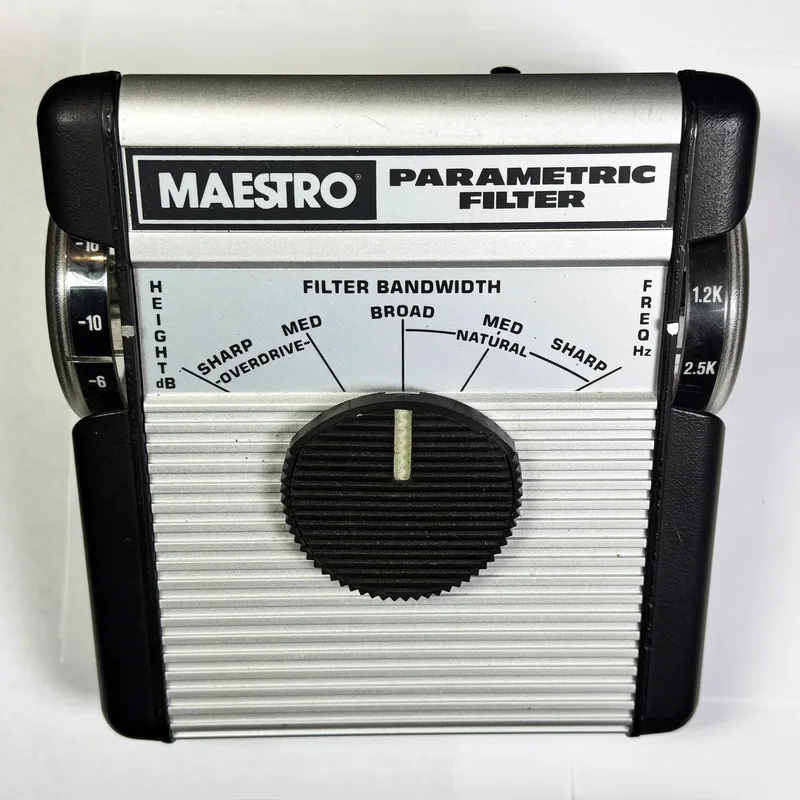
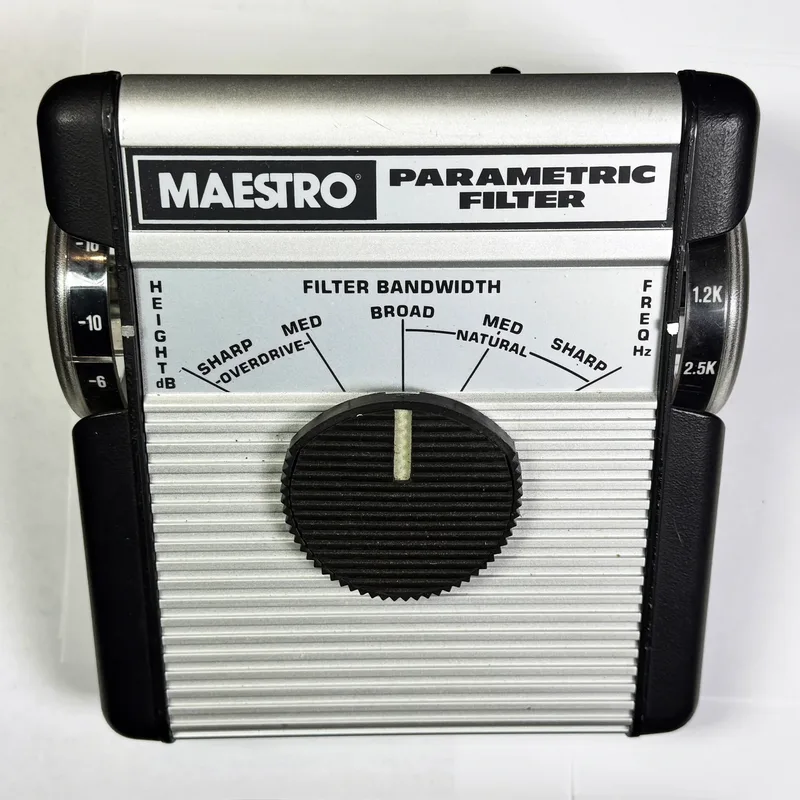
The PDF-2's circuit has a clear lineage. Stone Deaf's first take was the PDF-1, which Pedal of the Day described as "loosely based on the vintage Maestro Parametric Filter (MPF)"52, a pedal that "seeks to add color and sparkle to your existing tone, without being too clunky or over-the-top"5. That Maestro filter, the MPF-1, was designed by Bob Moog for Gibson in the 1970s6, and the PDF-2 carries the same inspiration, with Stone Deaf's own manual noting the circuit is "inspired by the Maestro MPF-1"2.
The Maestro original has its own pedigree. MusicRadar reports the MPF-1 was designed by Bob Moog for Gibson in the 1970s6, and its service documentation, examined in a technical analysis of the schematic, shows it was itself a parametric filter with overdrive7. So the PDF-2's formula, a sweepable filter feeding a gain stage, is a revival of a 1970s design rather than a new idea.
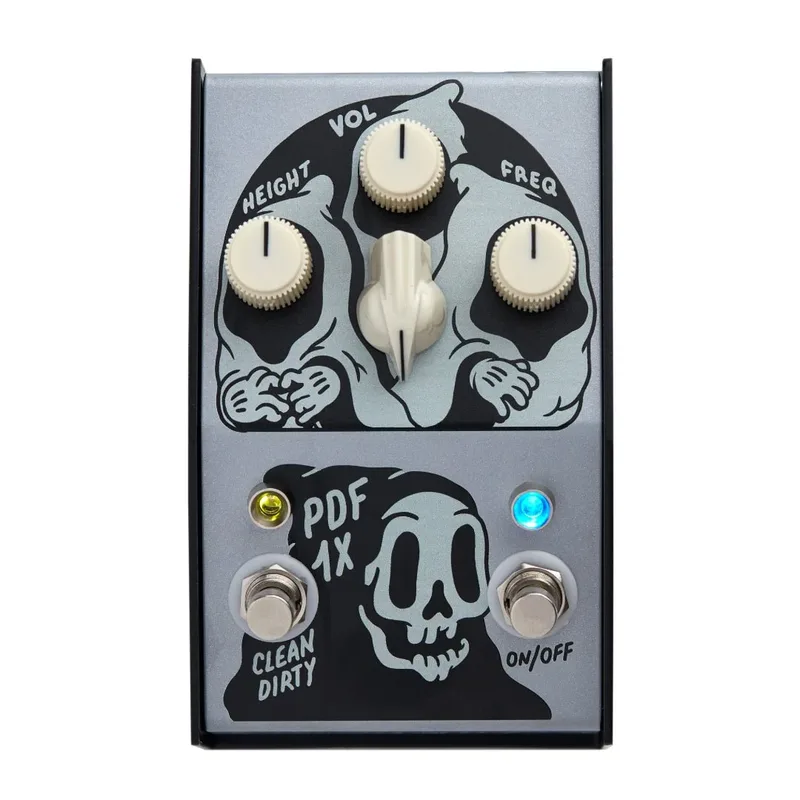
The line also has a famous player attached. Guitar.com describes the PDF-2 as "a drive and EQ pedal he actually uses" in reference to Josh Homme8, and Stone Deaf later issued a limited edition PDF-1X inspired by Homme's tones, which Gearnews notes worked with the EP-1 expression pedal just as the PDF-2 did9.
What reviewers made of it
Published coverage of the PDF-2 has been positive. Guitar.com's full review concluded that a one-band parametric EQ is genuinely fun to use when it is this well executed2, and the site's 2016 effects-of-the-year feature highlighted the pedal's versatility across both channels2.
Videos
ProGuitarShopDemos
Stone Deaf FX
Stone Deaf FX
News
Questions
Is the Stone Deaf PDF-2 discontinued?
Yes. Stone Deaf's product page marks the current stock as the last batch before discontinuation, so once these units sell through, the pedal is gone. The page still lists it at a sale price of £128 against a regular price of £160, and the maker's one-year warranty still applies to new purchases.
Does the PDF-2 work with an expression pedal?
Yes, but only with Stone Deaf's own EP-1 expression pedal. The PDF-2 has a TRS expression input dedicated to the EP-1, and no other expression pedal is specified for it. Sweeping the filter with the EP-1 takes it from hollowed-out, phaser-like mids at the bottom of the dial to boosted, wah-like and even synth-like tones near the top.
Does Josh Homme use the Stone Deaf PDF-2?
Yes. Guitar.com describes the PDF-2 as a drive and EQ pedal that Josh Homme actually uses, not just one he endorses. The connection runs through the whole line: Stone Deaf also issued a limited edition PDF-1X inspired by Homme's tones, and the PDF-2's filter approach descends from that same circuit family.
Can the Stone Deaf PDF-2 run on a battery?
Yes. Guitar.com's review notes the PDF-2 is powered by a 9V battery or a DC adaptor, neither supplied with the pedal. If you use a power supply, Stone Deaf requires an isolated 9V DC center-negative supply and specifically recommends against daisy chains and single wall-wart supplies.
What is the difference between the PDF-1 and PDF-2?
The PDF-2 is the successor to the PDF-1, and Stone Deaf describes it as more versatile than the original. It adds a reduced noise floor, an adjustable gain control, and dual footswitches for channel switching between the clean and dirty modes, where the PDF-1 used a single Clean/Dirty switch.
Is the Stone Deaf PDF-2 true bypass?
Yes. Stone Deaf lists true bypass among the PDF-2's specifications on its product page, so with the pedal disengaged the signal passes through without active buffering. The maker also specifies a 55mA current draw on its 9V center-negative power requirement.
Sources (9)
- PDF-2 - Stone Deaf, Stone Deaf (stonedeaffx.com)
- Stone Deaf PDF-2 & EP-1 Expression Pedal Review, Guitar.com, 2018-10-15
- Gear Of The Year 2016, Guitar.com, 2016-12-16
- Stone Deaf FX PDF-1 Pedal Review: Ultimate Guide, Premier Guitar, 2011-02-15
- Stone Deaf FX PDF-1 Parametric Distortion Filter, Pedal of the Day, 2016-05-30
- Stone Deaf unveils updated hybrid boost, drive and EQ pedal inspired by Josh Homme, MusicRadar, 2019-09-18
- Guitar FX Layouts: Maestro MPF-1, Guitar FX Layouts (tagboardeffects.blogspot.com), 2015-10-10
- Acorn Amplifiers Solid State Preamplifier review, Guitar.com, 2026-03-17
- Stone Deaf Effects limited edition PDF-1X, gearnews.com, 2019-09-18