

The Subdecay Octave Theory is an octave modulator and guitar synthesizer pedal from the Oregon builder Subdecay, released in 2018. Subdecay calls it the world's first octave modulator / octave shift pedal, and also the world's first Shepard tone guitar synthesizer. Its sound takes its cues from old school synthesizers and the 8 bit computing era, and it pairs an octave engine with a resonant filter inspired by the Korg MS2012. It sits among Subdecay's synth pedals, and Brian Marshall has called it the quirkiest of that family2.
Where it came from
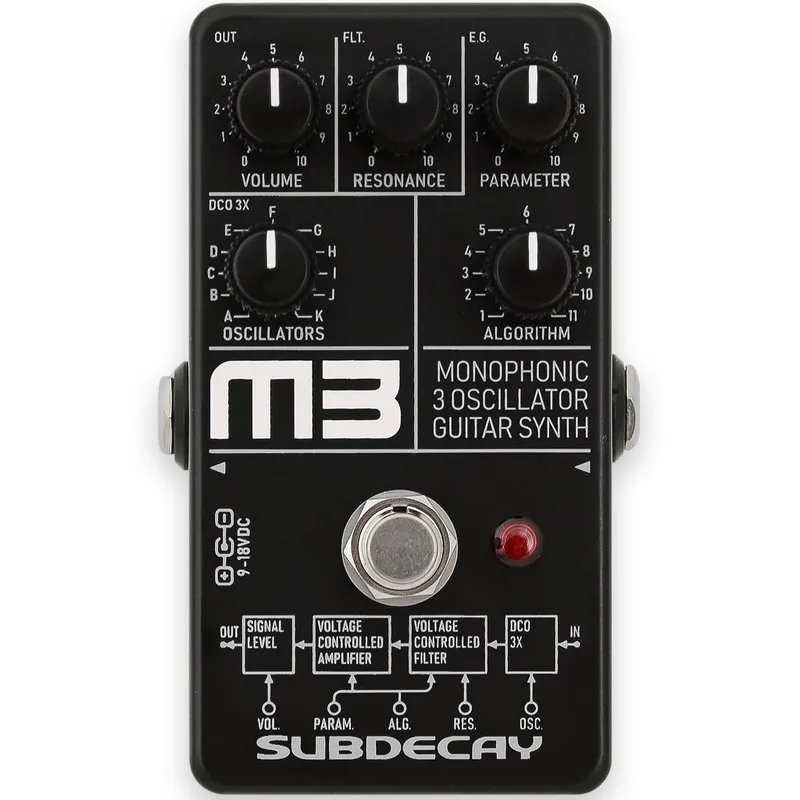
The Octave Theory was Subdecay's first synth pedal that needed some digital assistance. Brian Marshall explained the origin in an interview on the Subdecay site: "I took parts of the M3 experiment and went digital. We made the Octave theory."3 The pedal's filter side stayed analog: Subdecay describes it as an all analog filter design modeled on the Korg MS20's resonant filter1.
Delicious Audio, reviewing the pedal around its release, described it as "a very interesting filter/octave pedal inspired by old school synthesizers like the Korg MS20 and the 8 bit computing era"4.
The controls and modes
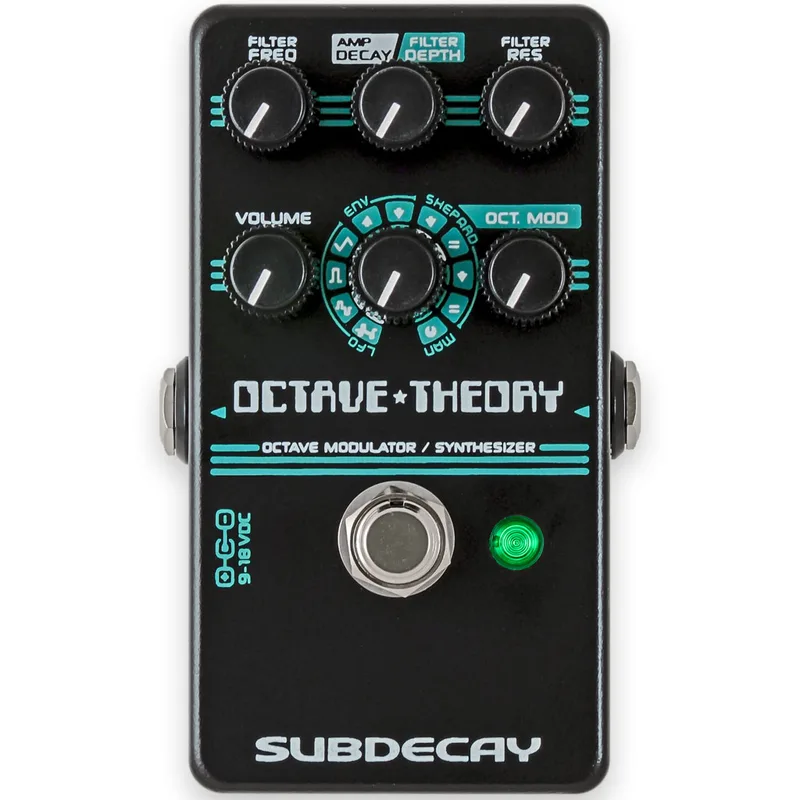
The pedal modulates your octaves in four ways: LFO modulation, envelope modulation, Shepard tone, or manual mode1. What the octave mod knob does depends on which family of modes you are in:
| Mode family | What the oct. mod knob does |
|---|---|
| LFO modes | Controls the LFO speed1 |
| Envelope mode | Controls the envelope's overall influence1 |
| Manual mode | Sweeps from three octaves down to two octaves up1 |
| Shepard tone modes | Manually controls the octaves from several octaves down to several octaves up1 |
The mode knob also selects between two filter behaviors, marked in white and green on the pedal1:
- White marker modes (AMP priority): the decay knob gives you full control of the AMP decay, and the filter follows the ADR envelope at a fixed depth1.
- Green marker modes (filter priority): the filter follows an envelope generated by the strength of the input, the same way envelope filters work1.
One control to treat with intent is the resonance knob. Subdecay notes that, like the MS20, the resonance knob can push the Octave Theory into oscillation1, so high resonance settings become a sound source of their own rather than just a sharp filter.
With the mode knob turned all the way to the right, Subdecay says the pedal transforms into an even better version of its earlier Octasynth, with expanded octave range and enhanced filter control2.
The Shepard tone modes
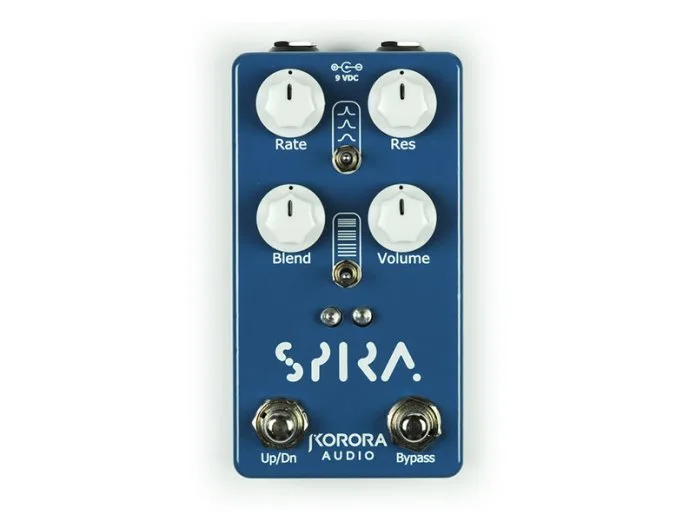
The Shepard tone idea is the pedal's headline feature. In the modes marked with an equals sign, playing one octave higher produces the same note1. That breaks the usual rule of octave pedals, where each octave up or down is an unmistakable jump in pitch, and it is what lets the pedal produce the endlessly rising or falling movement the Shepard tone effect is known for. Guitar Pedal X covered it in a comparison of Shepard tone pedals, pairing the Octave Theory with Korora Audio's Spira5.
Tracking, guitar and bass
Tracking is handled by an analog fundamental detector. Subdecay's Brian Marshall says this ensures excellent tracking across the entire range of a guitar2. On bass, the maker's guidance is that the pedal performs well above the 5th fret, so bass players working lower on the neck should expect the tracking to be less dependable there2.
Octave Theory vs Octasynth
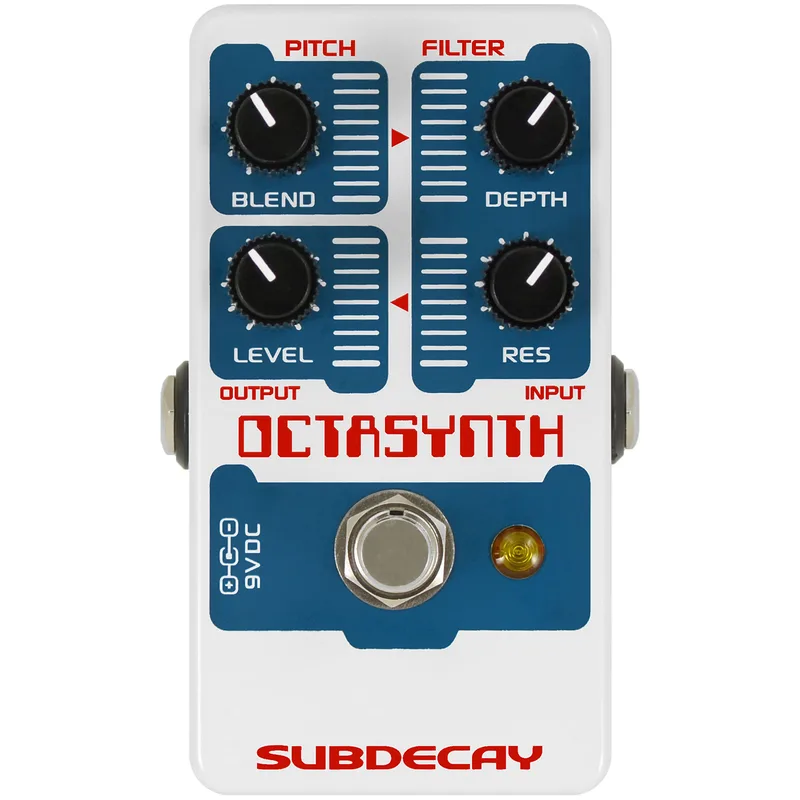
Subdecay positions the Octave Theory as most similar to its original guitar synth pedal, the Octasynth, but with the most requested feature added: where the Octasynth's blend control only allowed for one or two octaves down, the Octave Theory's manual mode runs from three octaves down to two octaves up1. Subdecay has also said that with the mode knob full right, the pedal becomes an even better version of the Octasynth, with expanded octave range and enhanced filter control2.
What reviewers said
Delicious Audio's Paolo De Gregorio described the Octave Theory as a very interesting filter/octave pedal, citing its inspiration in old school synthesizers like the Korg MS20 and the 8 bit computing era4. Guitar Pedal X's Stefan Karlsson listed the pedal at £179 as of July 2026, noting it was also listed at $1995. Subdecay's own buying guide, from Brian Marshall, sums up its place in the lineup: "Among our synth pedals, the Octave Theory is the quirkiest."2
Videos
Subdecay
Mike Hermans
EytschPi42
Questions
What is a Shepard tone on the Subdecay Octave Theory?
A Shepard tone is an auditory illusion where a sound seems to rise or fall endlessly without actually getting anywhere. On the Octave Theory, Subdecay describes it as the world's first Shepard tone guitar synthesizer: in the modes marked with an equals sign, playing one octave higher produces the same note, so octave shifts stop sounding like obvious jumps and more like a continuously moving tone.
Is the Subdecay Octave Theory analog or digital?
It is a hybrid. Builder Brian Marshall has said he took parts of the M3 experiment and went digital to make the Octave Theory, so the octave and synth engine uses digital assistance. The filter, however, is an all analog design, inspired by the resonant filter of the Korg MS20.
Does the Octave Theory work with bass?
Subdecay says the tracking relies on an analog fundamental detector, which it describes as giving excellent tracking across the entire range of a guitar. On bass, the maker says the pedal performs well above the 5th fret, so lower bass positions are where tracking is less dependable.
How is the Octave Theory different from the Octasynth?
Subdecay describes the Octave Theory as most similar to its original guitar synth pedal, the Octasynth, but with the most requested feature added: instead of the Octasynth's blend control, which only allowed for one or two octaves down, the Octave Theory's manual mode runs from three octaves down to two octaves up. Subdecay has also said that with the mode knob full right, the pedal becomes an even better version of the Octasynth with expanded octave range and enhanced filter control.
Can the resonance knob make the Octave Theory oscillate?
Yes. Subdecay's product page states that, like the Korg MS20, the resonance knob can push the Octave Theory into oscillation, so turning resonance up high is a deliberate sound design tool on this pedal, not just a filter sharpening control.
Sources (5)
- Octave Theory, Subdecay, 2020-07-03
- Which Synth Pedal is for Me?, Subdecay, 2024-08-15
- Brian Marshall interviews himself on the making of the M3 guitar synth., subdecay.com, 2023-11-15
- SubDecay Octave Theory Octave Modulator / Synthesizer, Delicious Audio, 2019-03-31
- Guitar Pedal X, Guitar Pedal X, 2026-07-13