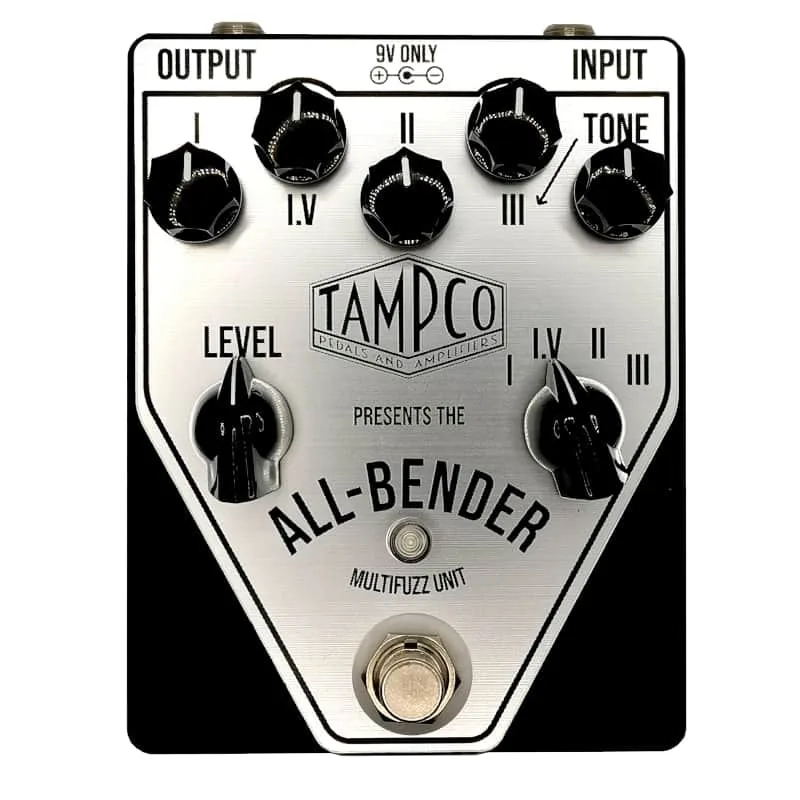


The Tampco All-Bender is a four-in-one fuzz pedal from the French boutique maker Tampco, announced in February 2022. It is an omnibus fuzz built from four Tone Bender-inspired circuits, the MkI, the 1.5, the MkII and the Mk3, each available at the touch of a dial1. Where a player would once have had to buy four separate vintage-style fuzzes to hear the differences between the early Tone Bender versions, the All-Bender puts all four in one enclosure, selected by a rotary knob21.
The pedal runs on silicon transistors rather than the germanium parts of the original 1960s units. MusicRadar noted the practical benefit: "The silicon transistors will also be less sensitive to temperature changes"1. That is a meaningful difference for players used to germanium fuzzes, which can drift as a stage warms up. It also follows a historical pattern: British Pedal Company's history of the Tone Bender records that the 1970s saw the MK3 change from traditional germanium transistors to more consistent silicon units3.
Four Tone Bender circuits in one pedal
The All-Bender's core idea is the rotary circuit selector. Delicious Audio described it as "a rotary knob on the bottom right selecting between four voicings emulating the first four version of the original Tone Bender"2, and MusicRadar called the pedal "an omnibus fuzz comprised four Tone Bender-inspired circuits, each available at the touch of a dial"1. The chickenhead rotary knob moves between the MkI, 1.5, MkII and Mk3 positions1.
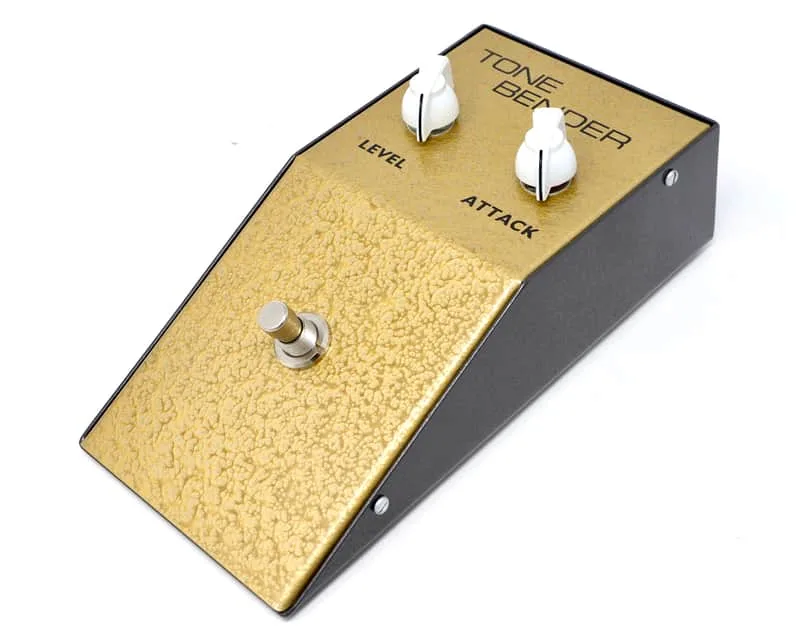
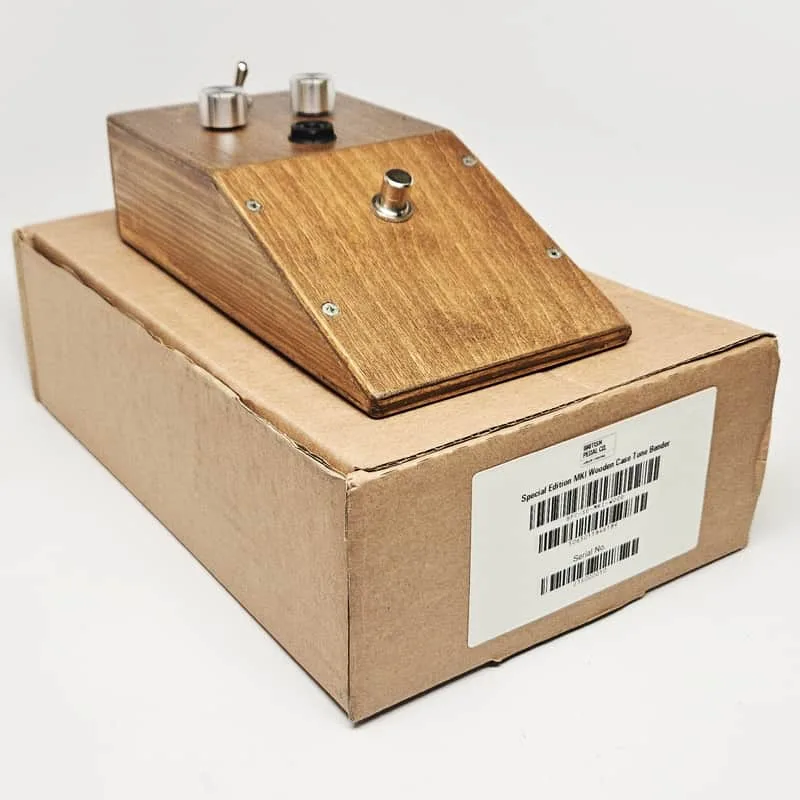
The Tone Bender family it draws on began in the 1960s. The original 1965 Metal Case Tone Bender pedal was created by Gary Hurst4, and the versions that followed, including the transitional MK1.5 with its Impex S3-1T transistor, each had their own character. Players who want the full story of the first circuit can read about the Sola Sound Tone Bender MKI and the modern British Pedal Company Special Edition Master Built MKI Tone Bender elsewhere on this site.
Controls and how each mode sounds
Each mode features its own gain knob on the top row, with MkIII also enjoying a Tone knob2. A shared Level knob "delivers a fair amount of volume to hit your amp hard for extra saturation"2. The Mk3 position is the only one with a dedicated tone control, as per the original units1.
| Mode | Character |
|---|---|
| MkI | The more compressed of the lot2; an "acid bark"1 |
| 1.5 | More low end21; a "warm cushion"1 |
| MkII | A treble boost quality to it2; "harmonically charged screech"1 |
| Mk3 | The most flexible of all, thanks to the Tone control21; "fluid, gain-laden"1 |
MusicRadar summed up the four positions in one line: "Just turn that chickenhead rotary knob choose from the acid bark of the MkI, the warm cushion of the 1.5, the harmonically charged screech of the MkII and the fluid, gain-lade[n] Mk3"1.
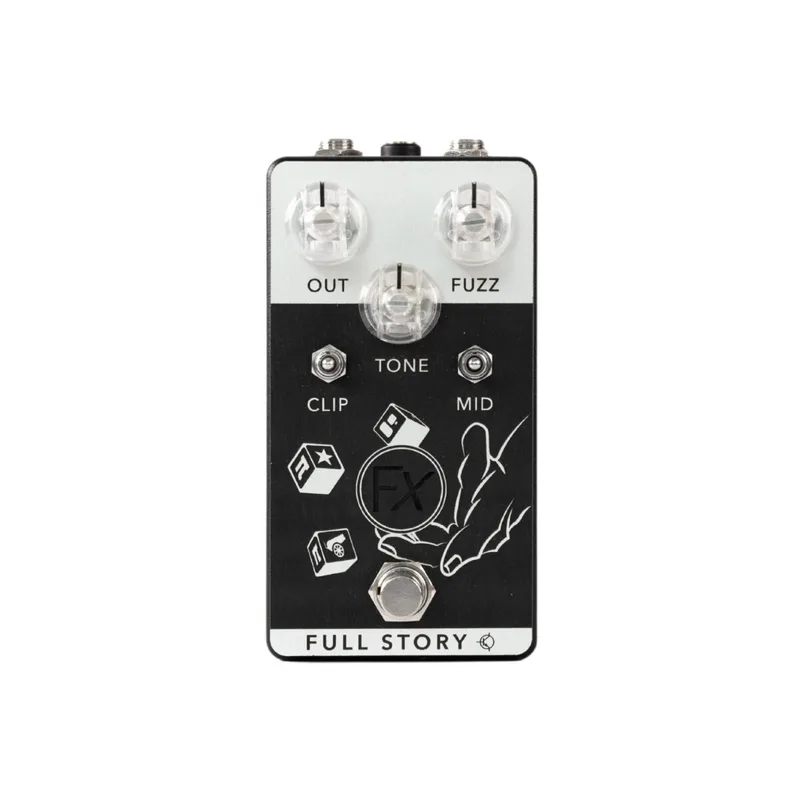
The Mk3 position has also traveled beyond the pedal itself. French maker Anasounds, having studied the circuits of all the versions of the Tone Bender, built its Full Story Tone Card on a circuit "inspired by the position III of the All-Bender," describing the result as "taking the best of the disto/fuzz to add a vintage and slightly velcro sound typical of the Tone Bender mk3"5.
Price and availability
At launch the All-Bender was priced €199 and available direct from Tampco1.
The €199 price is in euros as stated at launch in February 2022. It is a launch price from press coverage, not a current US list price, and may have changed since.
Videos
Mike Hermans
Pedal Scopic Sounds
Signal Path
Questions
Which Tone Bender circuits does the Tampco All-Bender cover?
It covers the first four versions of the Tone Bender: the MkI, the 1.5, the MkII and the Mk3. A rotary knob on the bottom right of the pedal selects between the four voicings, so all four circuits are available without touching anything else on the board.
Does the Tampco All-Bender use germanium or silicon transistors?
It uses silicon transistors. MusicRadar noted that silicon transistors are less sensitive to temperature changes than germanium, which is a practical difference from the original 1960s Tone Benders and from many germanium reproductions on the market.
Which mode of the All-Bender has a tone control?
Only the Mk3 mode. Delicious Audio reported that each mode has its own gain knob on the top row, with MkIII also enjoying a Tone knob, and MusicRadar described the Mk3 as having its own dedicated tone control as per the original units.
Does each All-Bender mode have its own gain knob?
Yes. Each of the four modes features its own gain knob on the top row of the pedal, so the fuzz level can be set independently for each circuit. There is also a shared Level knob for output volume.
Where can you buy the Tampco All-Bender?
At launch in February 2022 it was priced at €199 and available direct from Tampco's webstore. Anasounds, which sells a Tone Card inspired by the All-Bender's position III, listed its related product as in stock and able to be backordered.
Sources (5)
- Is the Tampco All-Bender the ultimate Tone Bender-inspired fuzz?, MusicRadar, 2022-02-22
- New Pedal: Tampco All-Bender Fuzz, Delicious Audio, 2022-02-21
- Tone Bender History, British Pedal Company, 1970
- BPC-Product-Manual-2021-V1.pdf, British Pedal Company, 2021
- full story tone cards, Anasounds, 2023-04-11