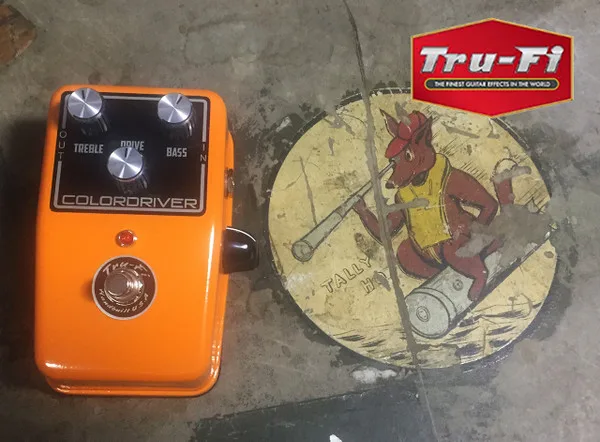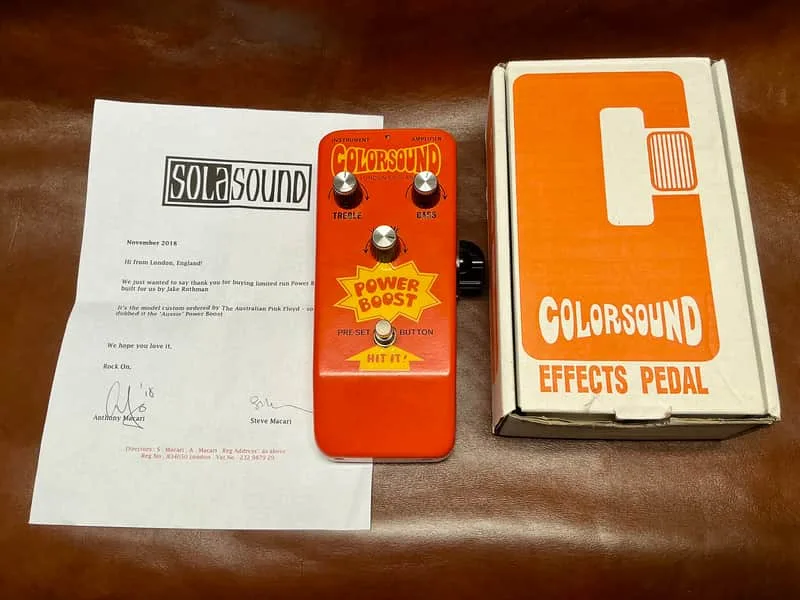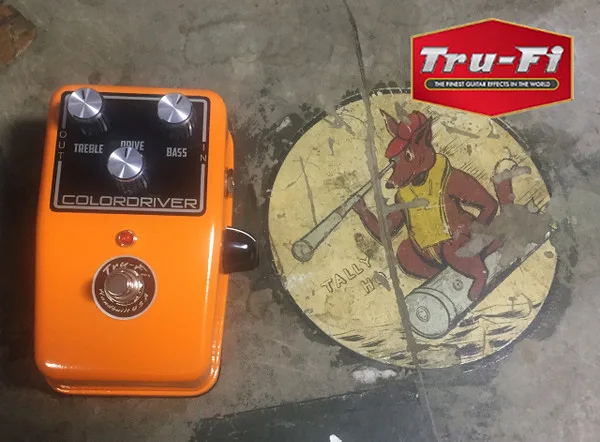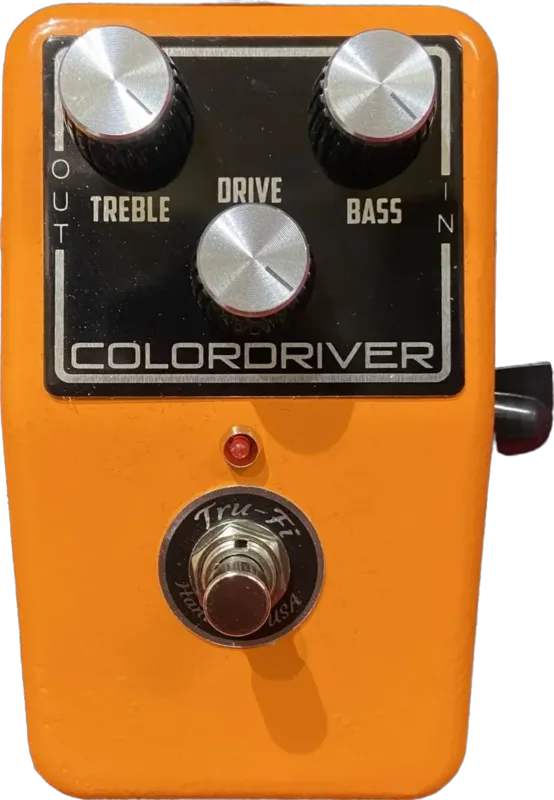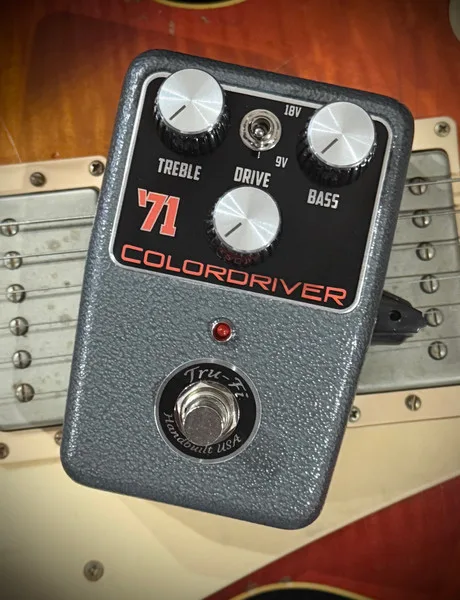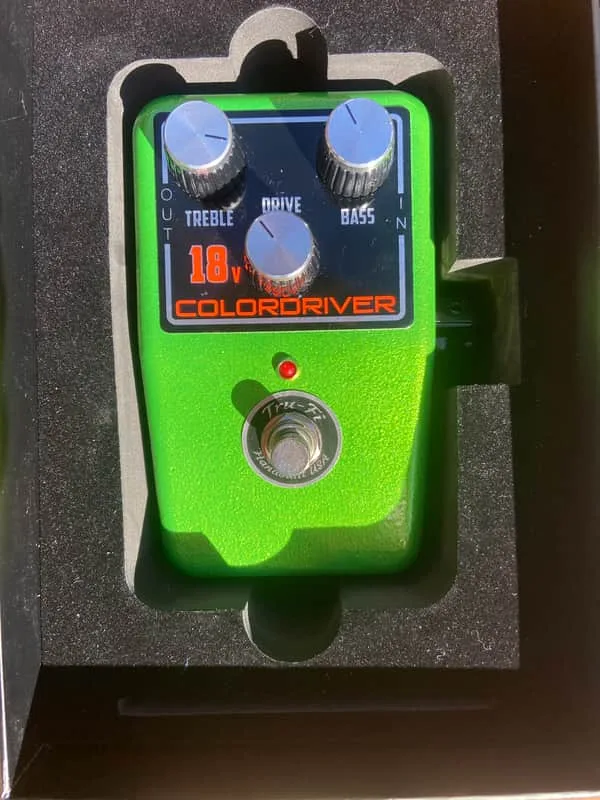


The Tru-Fi Colordriver 18V is an overdrive/fuzz pedal made in the USA and inspired by the Colorsound Power Boost, the 18V boost circuit from 196912. It is a recreation of that design: Delicious Audio's Paolo De Gregorio calls it "a true Power Boost replica done to the correct BC184 Transistors"1. It runs on a normal 9V supply, with the voltage increased inside the pedal to 18V, so no dedicated 18V supply is needed1.
From the Power Boost to the Overdriver
The Colordriver's family tree starts with the Colorsound Power Boost of 1969 and the Colorsound Overdriver of 1971, which Guitar.com's Richard Purvis describes as "essentially 18V and 9V versions of the same circuit"2. The 18V Power Boost uses the same topography as the Overdriver but runs at 18V, as builder Zach of Tagboardeffects puts it4. In 1971, Colorsound changed the Power Boost to the 9V Overdriver, ending that 18V design until Tru-Fi's recreation5. Aion FX notes the Overdriver was itself an updated version of the circuit, a third revision from 19726.
The Overdriver saw variations and reissues over the years, some with slight modifications to the circuit or enclosure design, according to Tru-Fi's own history article3. One example: in 1996 a reissue Overdriver was created that incorporated a volume pot on the output, though it included a resistor preventing it from going to zero volume5.
The 18V version versus the orange Colordriver
Tru-Fi makes the Colordriver in more than one version, and the difference comes down to voltage and parts1:
- The 18V version gives a tad more headroom and transparency than the orange Colordriver1
- The 18V uses different transistors, so the tone is a bit different1
- The 18V is available in a series of different colors1
Tru-Fi also builds other Colordriver variants, including the Tru-Fi Colordriver 9V version, the Tru-Fi Mini '69 ColorDriver, the Tru-Fi ColorDriver '71 Mini and the Tru-Fi Mini '71 Colordriver.
Controls and design
The pedal keeps its control layout simple. The main control is the gain, and a master volume sits on the side of the pedal so you can dial down the level for whatever use you desire, as De Gregorio explains1. The enclosure is half the size of the original, a touch bigger than a Boss pedal, and while unique it still hints at the original unit1.
As for what it sounds like, Delicious Audio describes it this way:
"You want killer Beck type overdrive crank the gain and push the master volume a ting over unity and watch your guitar"1
That is De Gregorio's description, not a measured verdict, but it places the pedal in the territory players associate with Jeff Beck-era boost-driven overdrive, in the same broad family as other overdrive pedals and fuzz pedals1.
Power and practical notes
Power is the one specification worth reading carefully, because the pedal's name can mislead1:
The Colordriver 18V runs on a standard 9V supply. The voltage is increased inside the pedal to 18V, so you do not need to run an 18V supply1.
The pedal is true bypass and includes an LED and a manual1. For players interested in the underlying circuit, Aion FX sells the Overdriver design as a DIY project called the Plasma64, and the earlier version of the circuit as the Nucleus64; the Tagboardeffects layout for the 18V Power Boost notes the original came with BC184L transistors but that any NPN silicon transistor should work4.
Videos
musictoyznetwork rasch
Alberto Barrero
Bibl Rocks - Guitars & Gear Show
Questions
Is the Tru-Fi Colordriver 18V true bypass?
Yes. Paolo De Gregorio of Delicious Audio describes the pedal as true bypass, and notes that it also includes an LED indicator and a manual. That means the pedal's circuit is taken completely out of the signal path when switched off, so it will not load down your guitar's signal when it is not in use.
What transistors does the Colordriver 18V use?
Delicious Audio describes the pedal as a true Power Boost replica done to the correct BC184 transistors. The original 18V Colorsound Power Boost came with BC184L transistors, though builder Zach of Tagboardeffects notes that any NPN silicon transistor can be used in that circuit.
What is the difference between the orange Colordriver and the 18V?
According to Delicious Audio, the 18V version gives a tad more headroom and transparency than the orange Colordriver, and it uses different transistors, so the tone is a bit different. The 18V is also available in a series of different colors.
Can I power the Colordriver 18V with a standard 9V supply?
Yes. Delicious Audio states that the unit runs on 9V but the voltage is increased inside to 18V, so you do not need to run a dedicated 18V supply. A standard 9V DC pedal supply is enough.
Where is the Tru-Fi Colordriver made?
The pedal is made in the USA, according to Delicious Audio's product page, which also describes it as an overdrive/fuzz inspired by the Colorsound Power Boost.
Sources (6)
- Tru-Fi COLORDRIVER Overdrive/Fuzz, Delicious Audio, 2020-06-15
- Tru-Fi Mini ’71 Colordriver review, Guitar.com, 2026-02-23
- The Colordriver Overdriver, Tru-Fi (tru-fi.com)
- Guitar FX Layouts: 18v Colorsound Power Boost, Tagboardeffects (tagboardeffects.blogspot.com), 2017-09-21
- Plasma Vintage Drive / Colorsound Overdriver, Aion FX, 2020-07-03
- Nucleus Vintage Boost / Colorsound Power Booster, Aion FX, 2020-07-03