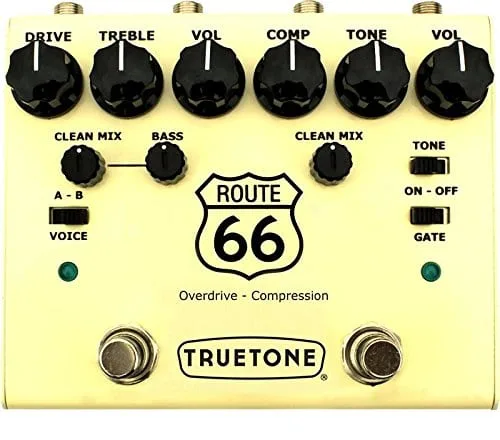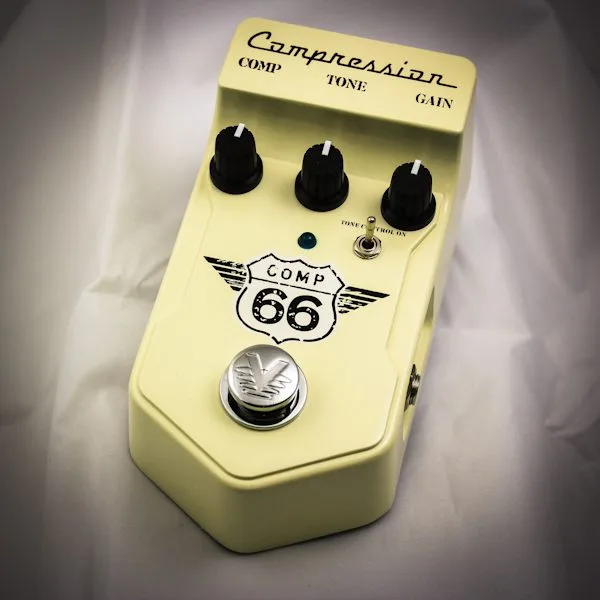

The Truetone Comp 66 is a compressor pedal that takes the compression circuit from the Route 66 and puts it in a single stompbox. Truetone says it was born from one of the most-requested products in the company's history: players who heard the compressor in the Route 66 wanted it on its own1. Premier Guitar's reviewers describe it the same way, as the compressor channel of Visual Sound's Route 66 stompbox offered as a single pedal2.
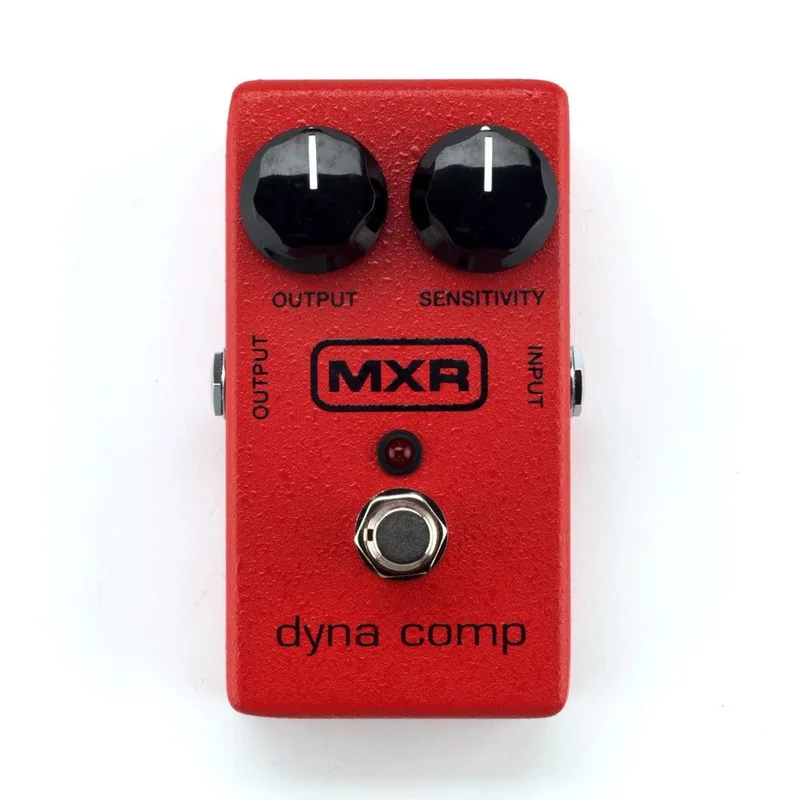
Truetone describes the pedal's character as Ross/Dyna-Comp style, saying the Comp 66 "delivers that Ross/Dyna-Comp character without the usual tradeoffs," with "remarkably low noise, high musicality, and equally at home on guitar or bass"1. For players new to that lineage, the Ross and MXR Dyna-Comp designs are the classic optical-style compressors that many pedal compressors trace back to.
Controls
| Control | What it does |
|---|---|
| Level | Sets the overall output level |
| Sustain | Sets the amount of compression |
| Tone Control | Switchable tone shaping that keeps the highs from dulling |
| Gain | Clean boost pre-amp ahead of the compression |
Truetone lists the controls as Level, Sustain, Tone Control (switchable), and Gain, with the Gain described as a clean boost pre-amp1. The Tone Control is the pedal's answer to a common compressor complaint: Truetone says a switchable Tone Control prevents compression from dulling your highs1. A mini toggle disengages the Tone control when you would rather hear the compression circuit on its own3.
Power
The Comp 66 runs on 9V DC with center pin negative polarity and draws 11 to 12mA1. That is a standard pedalboard supply arrangement, and the low current draw means it sits comfortably alongside other pedals on a shared supply.
Versions and history
The Comp 66 has appeared under two names. The original Visual Sound Comp 66 was reviewed by Vintage Guitar magazine in March 2009, where the reviewer noted that "Controls on the Comp 66 include Compression, Tone, and Gain, as well as a mini toggle that disengages the Tone control"3. The current version is covered on the Visual Sound V2 Comp 66 page, and the earlier Visual Sound Comp 66 page covers the original. The pedal's controls have stayed consistent across versions: compression amount, tone, gain, and the toggle that bypasses the tone circuit.
For more on how compressors like this sit in a signal chain, see the Compressor Pedals page.
Videos
Truetone
Questions
Is the Truetone Comp 66 the same compressor as in the Route 66?
Yes. Truetone says the Comp 66 was born from one of the most-requested products in the company's history: players who heard the compressor in the Route 66 wanted it as a pedal of its own. Premier Guitar's reviewers likewise describe it as the compressor channel of Visual Sound's Route 66 stompbox offered as a single pedal.
Can you use the Truetone Comp 66 with bass?
Truetone describes the Comp 66 as equally at home on guitar or bass, with remarkably low noise and high musicality. That makes it a candidate for bass players who want the classic Ross/Dyna-Comp style of compression without giving up low-end clarity.
What does the Gain knob do on the Truetone Comp 66?
The Gain knob is a clean boost pre-amp that runs ahead of the compression circuit. It lets you push more level into the compressor, so you can set the compression character with Sustain and then use Gain to bring the overall level up.
What power supply does the Truetone Comp 66 need?
The Comp 66 runs on 9V DC with center pin negative polarity and draws 11 to 12mA. That is a standard pedal supply, and the low current draw means it is easy to run from a shared pedalboard power supply.
What does the Tone Control do on a compressor pedal?
On the Comp 66, the Tone Control is switchable, and Truetone says it prevents compression from dulling your highs. Compression can flatten the top end of a signal, so the Tone Control lets you restore brightness, and a mini toggle disengages it when you want the circuit untouched.
Sources (3)
- V2 Comp 66, Truetone, 2026
- Stomp on This! 28 Stompboxes Reviewed, Premier Guitar, 2008-10-15
- Visual Sound’s Route 808, Visual Volume, and Comp 66, Vintage Guitar magazine, 2010-04-13