

The Tubesteader Lightkeeper V2 is a tube-based, all-analog boost/overdrive pedal, a compact update of the Lightkeeper preamp Tubesteader first released in 20211. It is voiced after the so-called "High Plate" design of the Dumble Overdrive Special, specifically the clean channel of those amps2. Inside is a genuine ECC83/12AX7 vacuum tube operating at 250VDC high voltage, which Delicious Audio says delivers "that classic warm, rich tone with gentle and natural compression"2.
The circuit operates as a pure analog, Class A audio pre-amp with no semiconductor or DSP in the signal path2. Guitar Pedal X's Stefan Karlsson described the V2 as "an incredibly exacting shrink-down of 2021's Dumble-style Lightkeeper Preamp"1.
A tube boost and overdrive voiced after a Dumble clean channel
The original Lightkeeper is an all-tube preamp based on the clean channel of the Dumble Overdrive Special "High Plate" design4. RockBoard's PedalPedia entry for the V1 describes the preamp as "all about bright clarity and articulation," with "a vintage Fender vibe but with tighter bass and more prominent mids, thanks to the Dumble-refined tone stack"4. It also notes the pedal "makes a great pedal platform and delivers the 'tube feel' to any ampless setup," which puts it in the same category as preamp pedals used straight into a interface or PA4.
Delicious Audio's Paolo De Gregorio called the V2 "no regular overdrive" and "a very impressive release" overall2. The V2 fits all of the original's controls in a smaller, compact enclosure2.
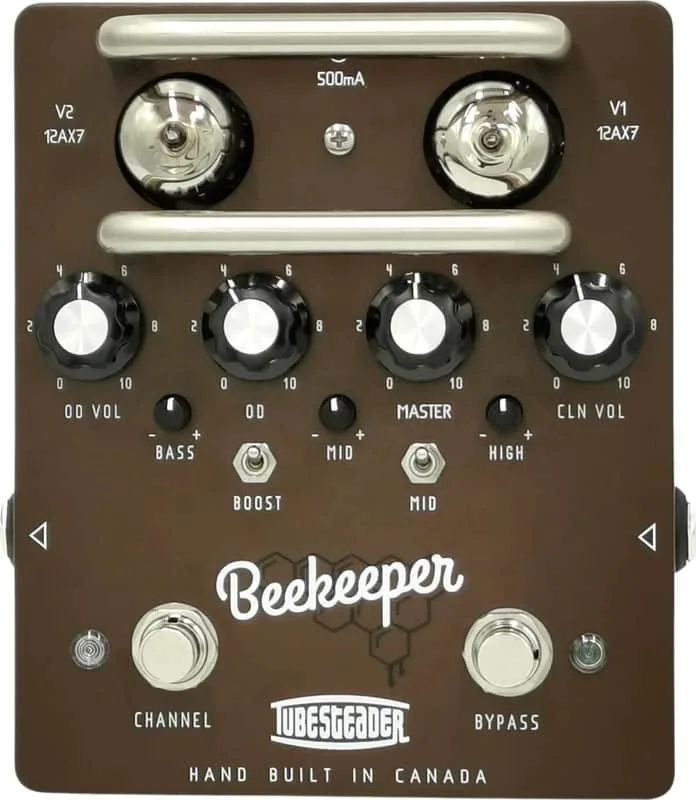
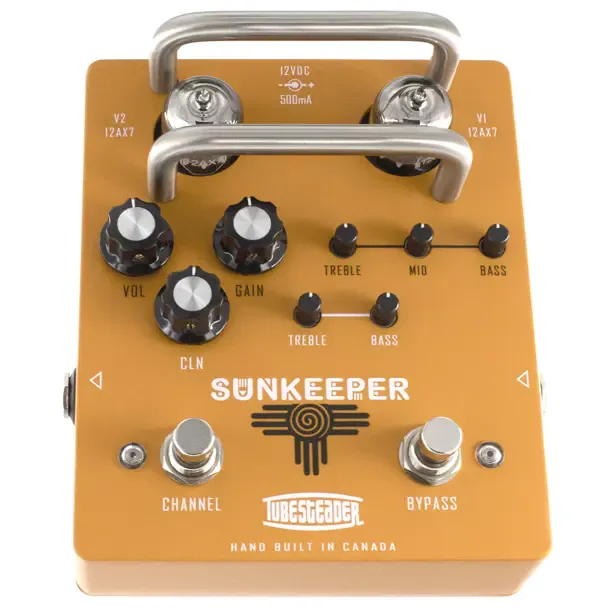
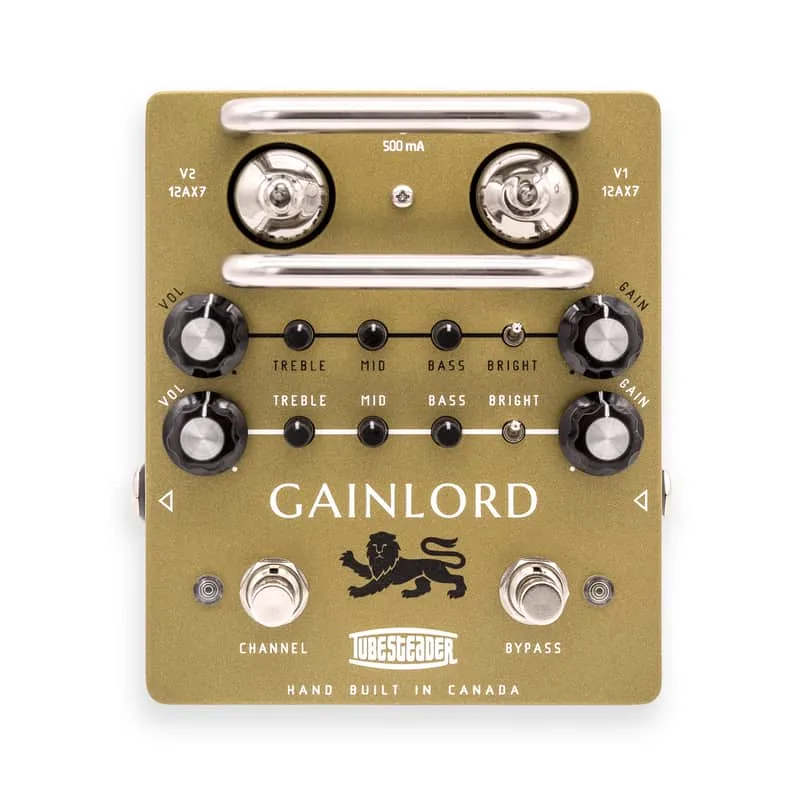
Tubesteader has built a range of tube pedals in this family, including the Beekeeper overdrive, the dual-channel Sunkeeper preamp, the ROY, and the dual-channel Gainlord Marshall-style preamp.
The controls
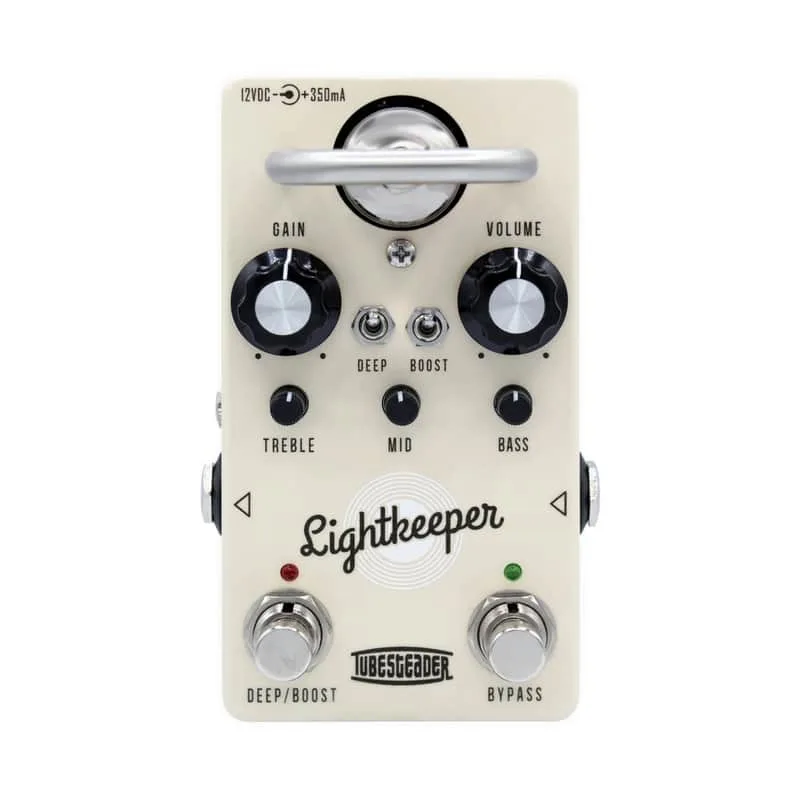
The V2 carries a full control set for both rhythm and lead sounds. Guitar Pedal X lists the controls as "Gain, Volume, Deep/Mids, Treble Boost, Treble, Mid and Bass," which "provide Rhythm and Lead options"1.
| Control | What it does |
|---|---|
| Gain | Gradually adds harmonic complexity and saturation, maintaining dynamics, peaking with a "fatter" but still clear and responsive overdrive at maximum2 |
| Volume | Sets the output level |
| Bass, Mid, High | Three EQ knobs shaping the tone2 |
| Deep/Mids | Rhythm and lead shaping option1 |
| Treble Boost | Rhythm and lead shaping option1 |
| Mid toggle | When set to "On," boosts the mids and also shifts the frequency of the pedal2 |
| Boost toggle | Works the same way as the Mid toggle but raises the overall volume2 |
The Gain knob is the heart of the pedal: Delicious Audio describes it as gradually adding harmonic complexity and saturation while "always maintaining your performance's dynamics," peaking at maximum with a "fatter" but still clear and responsive overdrive2.
Footswitchable Mid and Boost
The 3-way Mid and Boost controls are footswitchable, so you can set your base rhythm sound on the toggles and "reserve the footswitch boost/mid-punch for solos"2. The left footswitch can be assigned to either or both the Mid and Boost functions, which Delicious Audio calls "an ingenious tweak"2. The mid boost can also be assigned to the left footswitch when the pedal is in its FC position2.
For bigger boards, the pedal includes an External Switch port for connecting a remote switch to engage the Deep and Boost separately1.
Power: 12V, 350mA
The Lightkeeper V2 requires 12VDC at 350mA, which is boosted inside the pedal up to 280VDC for optimal performance of the 12AX7 vacuum tube3.
This pedal needs a 12VDC supply, and the 350mA draw is well above what most basic daisy-chain outputs provide, so plan on a dedicated output rated for the current. The original V1 drew 300mA at 12V DC center negative43, so the V2 asks for slightly more.
V1 versus V2
The V2 is the new, updated compact version of the Lightkeeper2. The practical differences for a player:
- Enclosure: V2 fits all the controls in a smaller, compact enclosure2.
- Current draw: V1 draws 300mA; V2 requires 350mA34.
- Circuit: Both are analog, tube-based designs; the V2 is described as a pure analog, Class A pre-amp with no semiconductor or DSP in the signal path24.
Guitar Pedal X frames the V2 as a shrink-down of the 2021 original rather than a redesign, so the voicing carries over1.
Videos
Tubesteader
Brett Kingman
Ambient Endeavors
Questions
Does the Lightkeeper V2 have a real tube inside?
Yes. It features a genuine ECC83/12AX7 vacuum tube operating at 250VDC high voltage, and the circuit is a pure analog, Class A audio pre-amp with no semiconductor or DSP in the signal path. The 12VDC you feed it is boosted inside the pedal up to 280VDC to run the tube properly.
What is the difference between the Lightkeeper V1 and V2?
The V2 is a smaller, compact enclosure that still fits all the controls of the original 2021 Lightkeeper preamp. Guitar Pedal X called it an exacting shrink-down of the earlier pedal. The V1 drew 300mA at 12V DC center negative, while the V2 requires 12VDC at 350mA.
Can I use a regular low-current supply with the Lightkeeper V2?
No. The Lightkeeper V2 requires 12VDC at 350mA, which is boosted inside the pedal up to 280VDC for the 12AX7 tube. The 350mA draw is beyond what most low-current outputs deliver, so it needs a dedicated 12V supply rated for the current.
What does the Dumble "High Plate" voicing mean?
The Lightkeeper is based on the clean channel of the Dumble Overdrive Special "High Plate" design. RockBoard's PedalPedia describes the V1 preamp as all about bright clarity and articulation, with a vintage Fender vibe but tighter bass and more prominent mids thanks to the Dumble-refined tone stack.
Can the Mid and Boost be switched remotely?
Yes. The left footswitch can be assigned to either or both the Mid and Boost functions, and there is an External Switch port for connecting a remote switch to engage the Deep and Boost separately, useful on a larger board.
Sources (4)
- Guitar Pedal X, Guitar Pedal X, 2024-02-15
- Tubesteader Lightkeeper V2 D-Style Boost/Overdrive, Delicious Audio, 2025-01-13
- Tubesteader Releases the Lightkeeper V2, Premier Guitar, 2024-03-11
- Lightkeeper V1 by Tubesteader, RockBoard PedalPedia, 2026