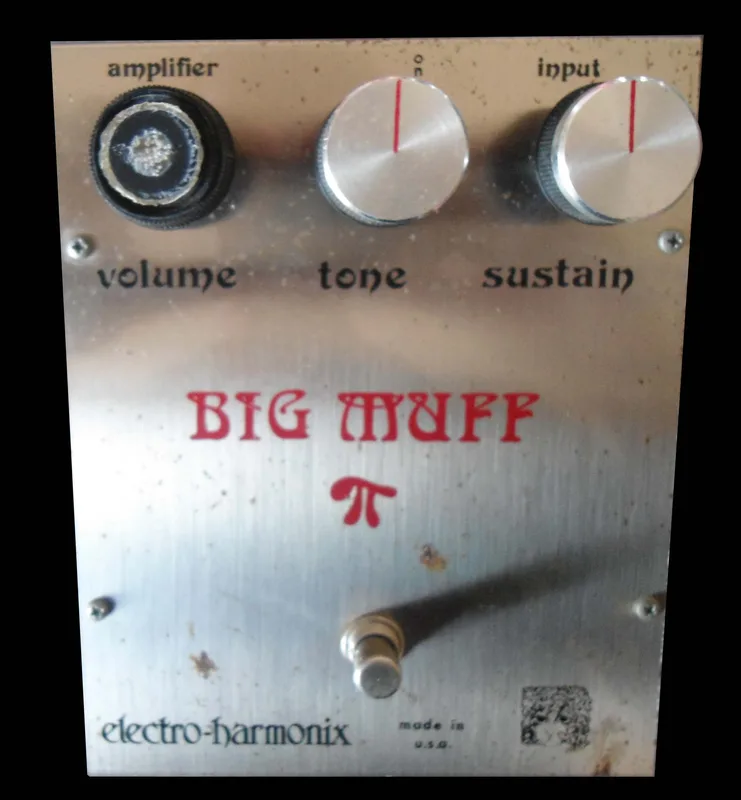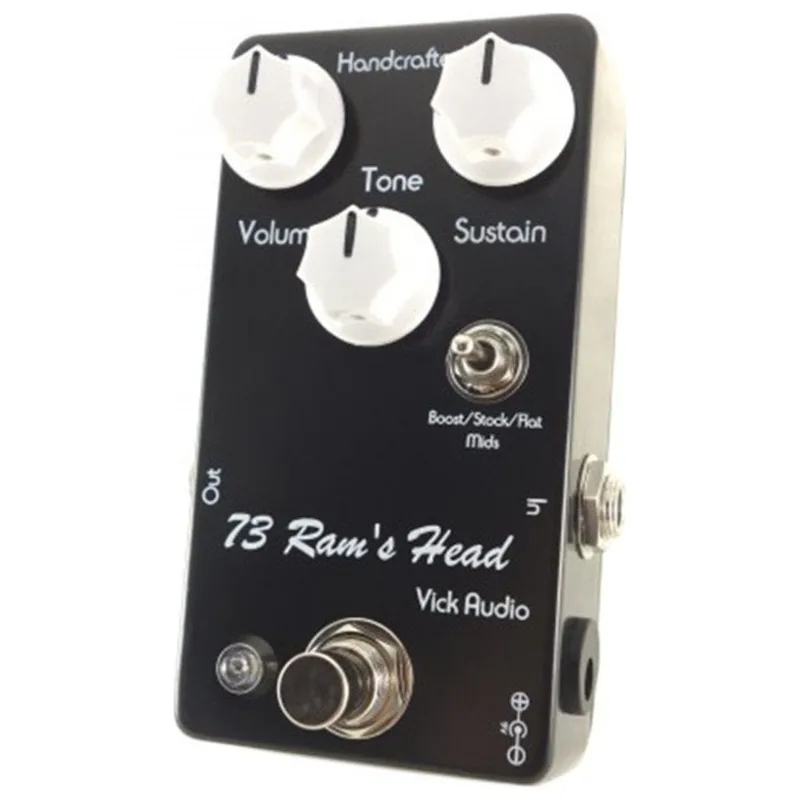


The Vick Audio 73 Ram's Head is a fuzz pedal that sets out to recreate the tones of the classic Big Muff Distortion, specifically the Ram's Head version that Electro-Harmonix built from 1973 to 197712. It is made by Vick Audio, a builder whose Ram's Head-style pedals are well regarded among fuzz players: gearnews.com called the '73 Ram's Head "one of his many muff clones that's quite revered in the world of fuzz"3.
The pedal is part of Vick Audio's Classic Reproduction Series and is hand-wired in the U.S.1. It carries the familiar three-knob Big Muff layout, true-bypass switching, and a list price of $129 as reviewed by Guitar World in October 20151.
A recreation of the '73 Ram's Head Big Muff
The original Ram's Head Big Muff was manufactured from 1973 to 19772, and the 1973 version in particular has a strong following. Electro-Harmonix itself describes the 1973 Violet Ram's Head as "highly coveted" and notes it was "heard on countless classic recordings and famous guitar solos"4. Kit Rae, who maintains one of the most detailed Big Muff histories, characterizes the early to mid 1970s Ram's Head sound as thick and dirty, and the 1973 circuit as having the classic Big Muff mid-scooped tone section56.
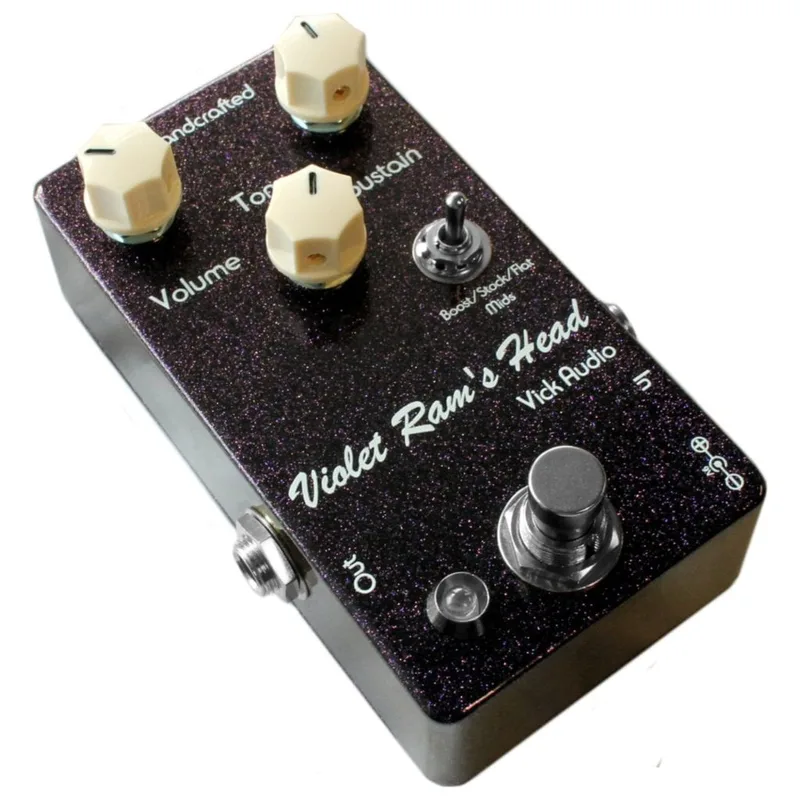
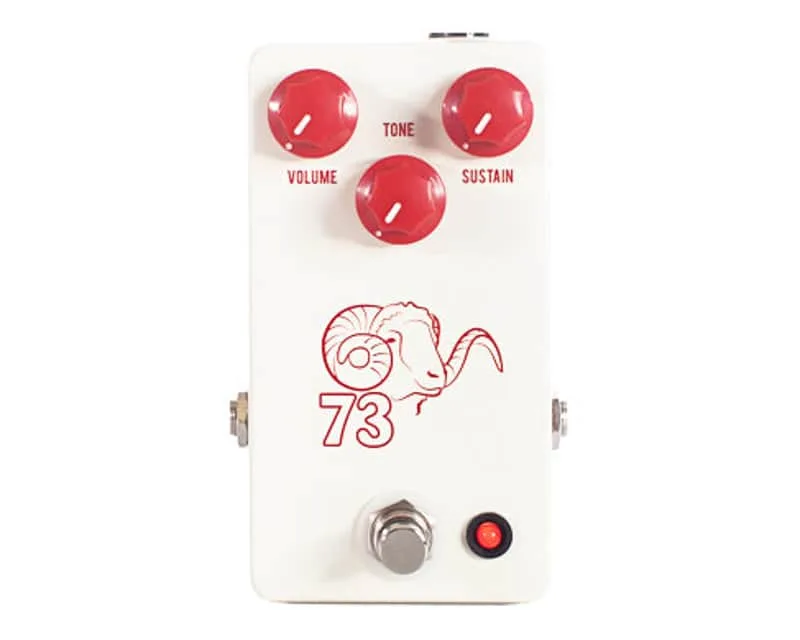
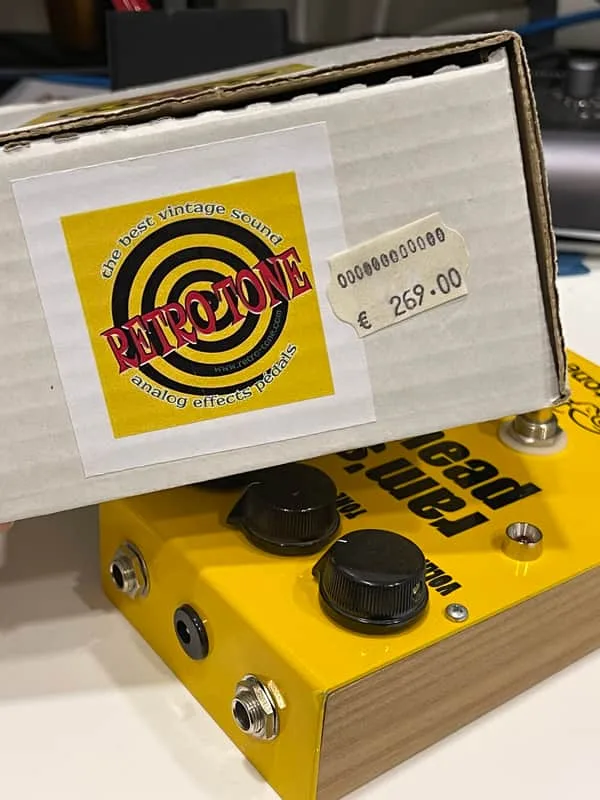
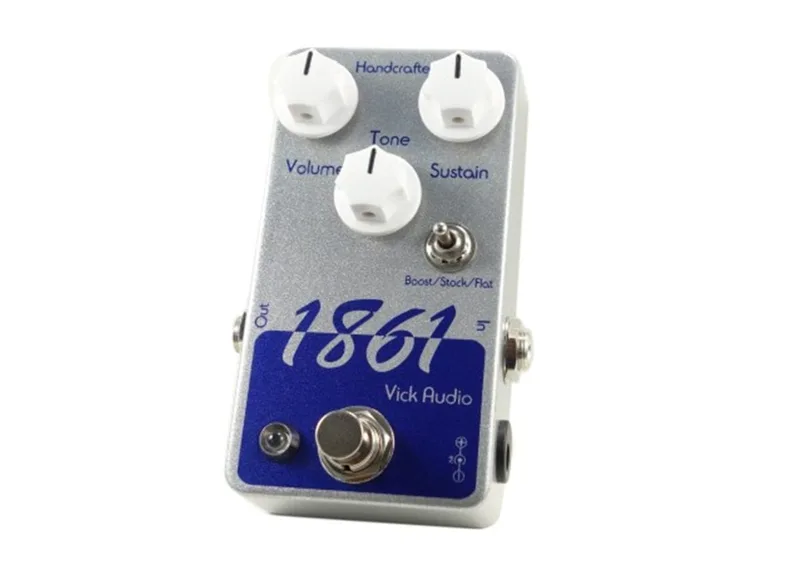
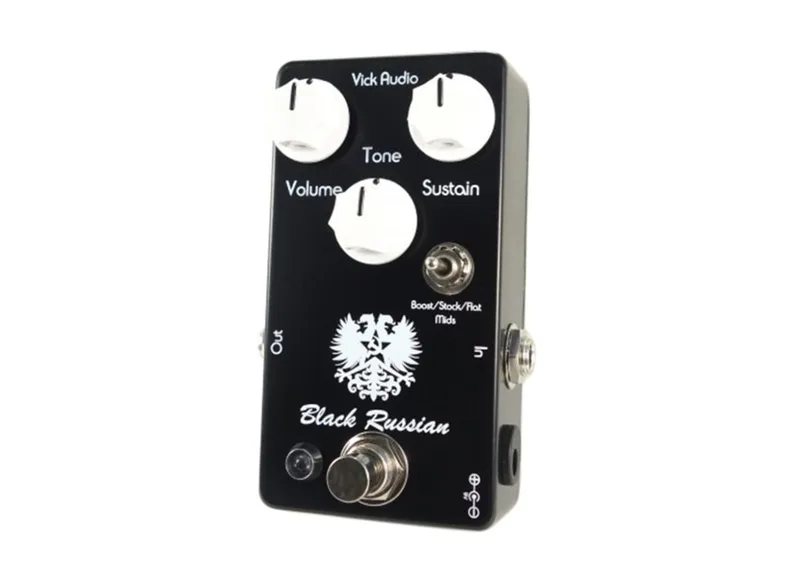
The Vick Audio 73 Ram's Head is one of several modern pedals built on that circuit. Others include the Vick Audio Violet Ram's Head, the JHS Pedals '73 Ram's Head Replica Fuzz, the Retro Tone Ram's Head V2, and Electro-Harmonix's own Ram's Head Big Muff Pi '73 reissue, released in 2019789. Vick Audio's own range also covers other Big Muff eras, including the 1861 Civil War-style fuzz and the Black Russian10.
The controls: Volume, Tone and Sustain
The pedal takes the already familiar three-knob design of Volume, Tone and Sustain1. For a player new to Big Muff-style circuits, here is what each knob does in that topology:
| Control | What it does |
|---|---|
| Volume | Sets the overall output level of the pedal |
| Tone | Tilts the balance between bass and treble, part of the classic mid-scooped Muff tone stack11 |
| Sustain | Sets the amount of fuzz and the length of sustain, the drive control of the circuit |
The three-knob layout is shared across most Ram's Head recreations, though some makers rename the controls: D-Sound's '73 Ram's Head Mini, for example, uses Level, Tone and Drive labels where the originals used Volume, Tone and Sustain12.
What reviewers said
Guitar World's Billy Voight reviewed the pedal in October 2015 and came away impressed with its sustain1:
"Plugged in, my first impression was 'sustain for days.'"
He also noted the pedal's improved noise floor compared with vintage units, and listed the true-bypass switching, Neutrik jacks and blue LED switch among its features1.
gearnews.com's Jef, writing about Vick Audio's later 1861 Tau Classic, offered his own view of the Ram's Head: "the '73 Ram's Head model I have tried is very useable"10. And in a 2024 roundup of mini Muff pedals, Guitar Pedal X's Stefan Karlsson compared D-Sound's compact version with Vick Audio's, calling the Vick Audio compact variety "fabulous" and the D-Sound "not quite as fabulous as say the Vick Audio compact variety, but close enough for most"11.
Kit Rae's independent review of the Stomp Under Foot '73 Ram's Head, a different maker's take on the same circuit, describes that sound family as "dark, scooped mid tones, smooth grit, and a thick bottom end," which gives a picture of what players are chasing with a 1973 Ram's Head build6.
Videos
Vick Audio
gilmourish
Franken Stomp
News
Questions
Is the Vick Audio 73 Ram's Head true bypass?
Yes. Guitar World's review of the pedal lists true-bypass switching among its features, alongside a bold blue LED switch and Neutrik input and output jacks. When the pedal is off, your signal passes through without a buffer in the path.
Where is the Vick Audio 73 Ram's Head made?
It is hand-wired in the U.S., according to Guitar World's 2015 review. The pedal is part of Vick Audio's Classic Reproduction Series, a line of recreations of vintage fuzz circuits.
What power supply does the Vick Audio 73 Ram's Head use?
It takes a Boss-style 9-volt power jack, the same barrel connector used by most modern pedals, so a standard 9V DC supply from any pedalboard power brick will run it. No battery or special supply is mentioned in the review.
How big is the Vick Audio 73 Ram's Head?
Guitar World measured it at approximately 4.25 by 2.25 inches, a compact enclosure that leaves room on a pedalboard. That is smaller than a vintage Big Muff enclosure and close to the footprint of a typical mini-plus pedal.
Sources (12)
- Gear Review: Vick Audio 73 Ram's Head Pedal, Guitar World, 2015-10-09
- The history of the big muff over time, anasounds.com, 2022-06-08
- Vick Audio Hypocenter: From Big Muff to Delay!, gearnews.com, 2016-07-30
- Ram's Head Big Muff Pi, Electro-Harmonix
- The Big Muff History of All Versions Part 1, Kit Rae (kitrae.net), 2024-04
- Big Muff Inspired Pedals and Clones, Kit Rae's Secret Guitar, Gear, and Music Page (kitrae.net), 2020
- David Gilmour Tone Building, Kit Rae (kitrae.net), 2019
- EHX Reissue the sought-after Ram’s Head Big Muff Pi, Guitar.com, 2019-10-15
- Best guitar effect pedals 2019: Our Top 6 by Strymon, ThorpyFX, EHX, Boss, Origin, Wampler, gearnews.com, 2019-12-27
- Vick Audio 1861 Tau Fuzz, gearnews.com, 2016-11-13
- Guitar Pedal X, Guitar Pedal X, 2024-06-21
- D-Sound Effects '73 Ram's Head Distortion, Pedal of the Day, 2019-08-21