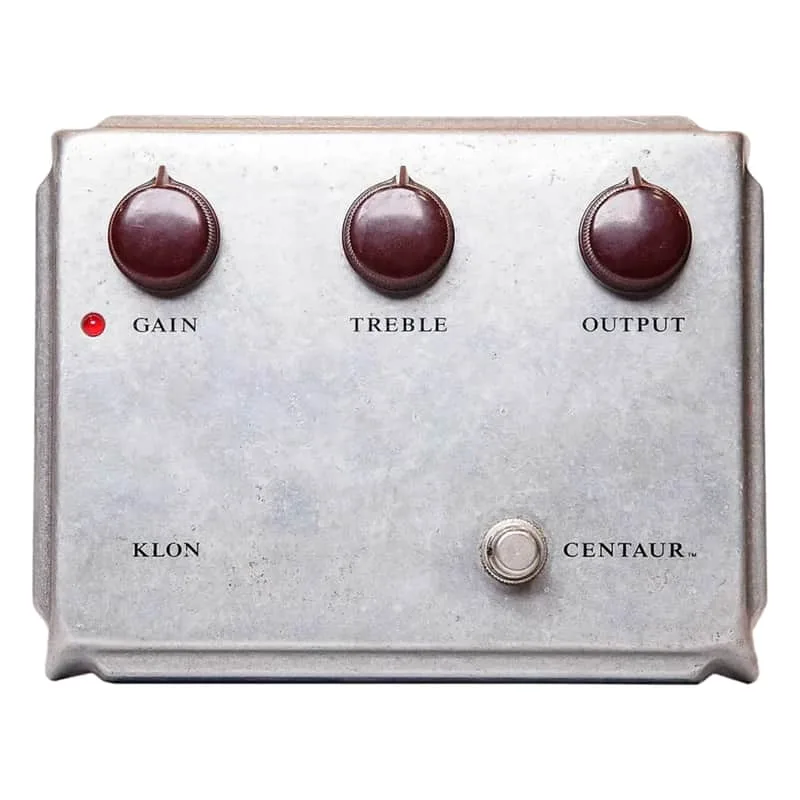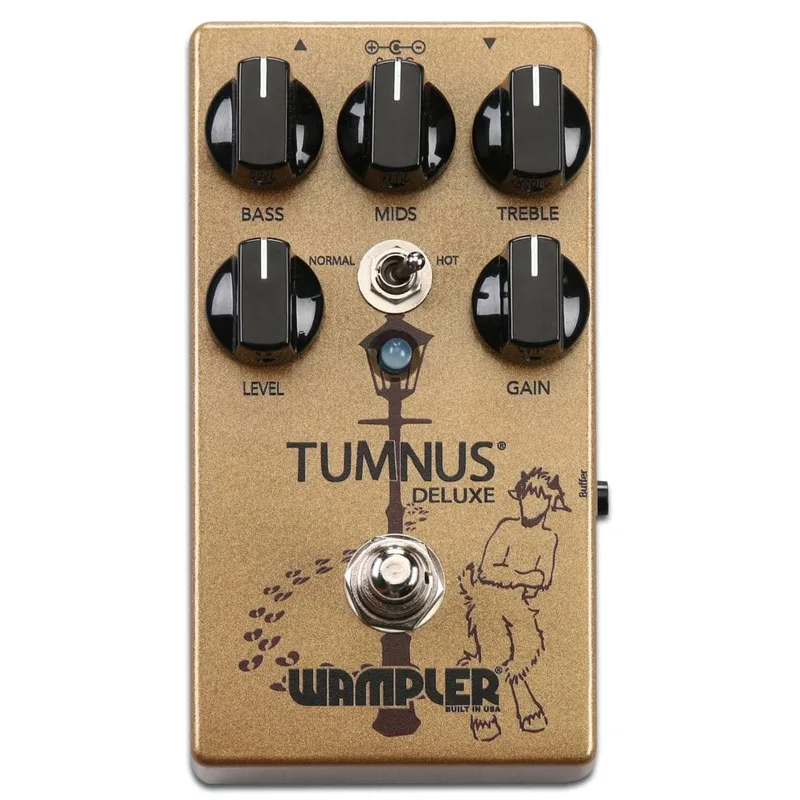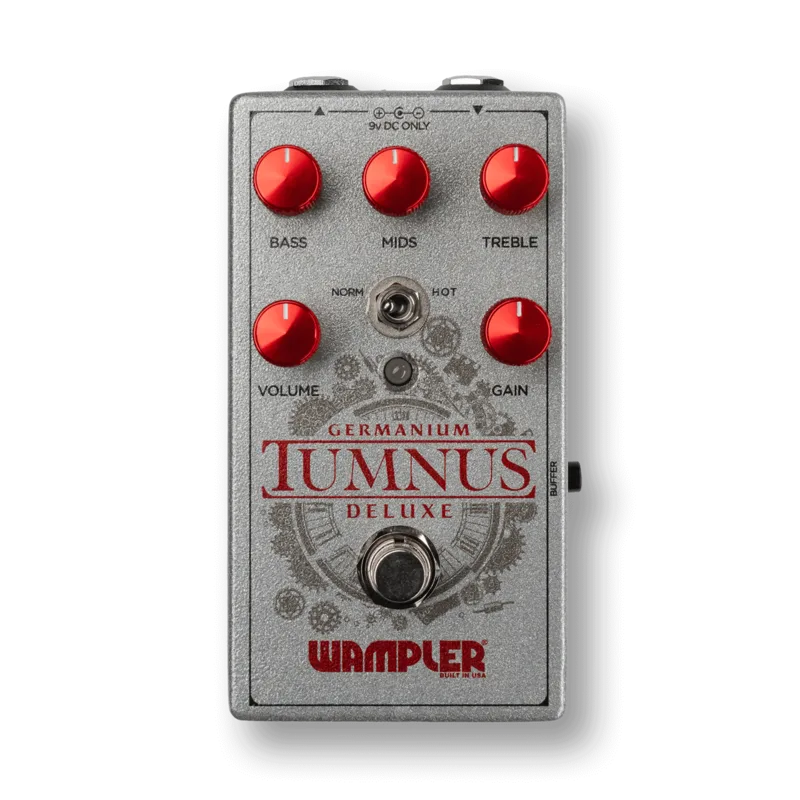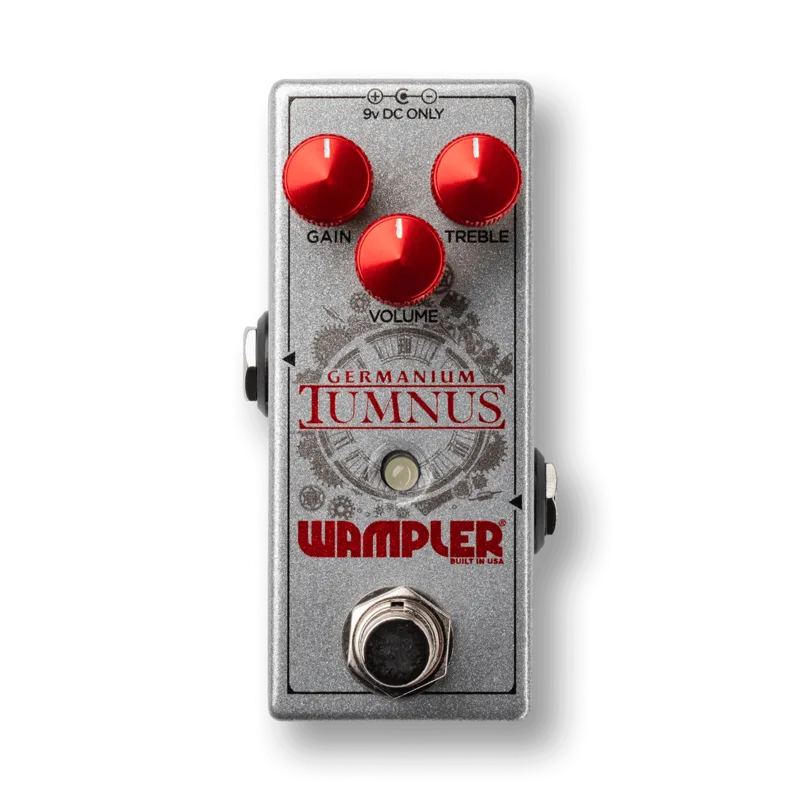


The Wampler Germanium Tumnus is a limited-edition overdrive and boost pedal from Wampler, a special version of the company's best-selling Tumnus, itself a mini take on the Klon Centaur. Where the standard Tumnus clips with silicon diodes, this edition swaps in vintage-specification germanium clipping diodes, the kind reportedly used in the original Klon, which Wampler says adds "vintage sizzle and extra bite to a classic pedal"1. Brian Wampler tracked down a small stash of the diodes and built a limited run from them1.
The pedal sold out fast and Wampler states plainly that once the diodes are gone, the pedal will be discontinued1. MusicRadar reported a resale market above 500 dollars after it sold out2, and on That Pedal Show Mick noted that secondhand units turn up on Reverb and eBay3.
A Tumnus with germanium clipping diodes
The Germanium Tumnus is the third variant of the Tumnus, one of Wampler's best-selling pedals6. The original Tumnus circuit is Brian Wampler's tribute to the Klon overdrive, but as Premier Guitar noted in its Klon-clone coverage, the standard Tumnus "employs surface-mount silicon diodes in lieu of germanium"7. The Germanium edition closes that gap: MusicRadar describes it as a mini version that "uses the germanium kind that were reportedly used in the Klon"8.
The run was limited by supply, not marketing. MusicRadar reported there is a limited supply of the diodes, hence the limited run8, and Wampler's own page says the pedal will be discontinued once the stash runs out1. The enclosure is a premium textured "Alien Silver" finish with anodized controls and premium red anodized knobs, in a very small form factor19.
The controls: Volume, Gain and Treble
Like the earlier Tumnus versions, the Germanium Tumnus keeps the control set to three knobs5:
| Control | What it does |
|---|---|
| Volume | Sets the output level |
| Gain | Sets the amount of drive, from clean boost to full overdrive |
| Treble | Sets the high-end content |
Premier Guitar described the streamlined three-knob layout as designed to let you quickly dial in tones, and gave a picture of the Gain control's range: around 9 o'clock for a smooth overdriven boost, at noon for a fuller-voiced, meaty drive, and full up for what the review called a brutal yet creamy overdriven tone4. Gearnews noted the pedal also has metal knobs, a step up from the standard mini's parts8.
Power: 9V DC only, 19mA
The Germanium Tumnus runs on a 9V power jack, DC supply only, with no battery connection inside1. Current draw is 19mA at 9V1, the figure Gearnews also cited at launch5.
No battery option means this pedal needs a spot on a power supply from day one. At 19mA it is light on current, so a single 9V output on most bricks will run it comfortably.
Bypass: buffered, like the Klon
The Germanium Tumnus is not true bypass. Premier Guitar's launch coverage states that "just like the original Klon, this pedal is not a 'true bypass'"4, and Gearnews reports the circuit uses the same bypass as the earlier Tumnus versions5. Players who want a choice in the matter get it on the Deluxe version below, which adds a buffer on/off toggle.
How it sounds compared with the regular Tumnus
Sound descriptions here come from Wampler and from named reviewers, not from this site. Wampler's page says the Germanium Tumnus "adds vintage sizzle and extra bite to a classic pedal," with an extra level of aggression1. On the Andertons side, Danish Pete found germanium offers a warmer feeling than silicon and that the pedal sounded more like the Klons to his ears; the Andertons duo concluded the Tumnus Germanium is the closer of the Wampler pedals to the real thing8.
On That Pedal Show, Mick compared it directly against the original gold-bodied Tumnus9:
"I really like it I I really really like the extra Edge and I'm pretty sure it does have extra Edge over the little gold"
He also noted it possibly has a tad less bottom end than the original9.
In the video, Mick demos the Germanium Tumnus alongside the J Rockett The Jeff, praises its very small form factor, and notes it has probably sold out, pointing secondhand buyers to Reverb and eBay93.
The Germanium Tumnus Deluxe
Wampler followed the sold-out mini with the Germanium Tumnus Deluxe, a limited edition Wampler describes as essentially the same circuit in a full-size pedal10. Guitar Pedal X called it Brian Wampler building his ultimate Klon, noting it uses USA-made crystal 1N34A germanium diodes, the choice Bill Finnegan made originally, where earlier Tumnus versions used different diodes11.
| Germanium Tumnus | Germanium Tumnus Deluxe | |
|---|---|---|
| Controls | Volume, Gain, Treble1 | Bass, Mids, Treble, Volume, Gain, plus Buffer push-button on side124113 |
| Bypass | Buffered, fixed4 | Buffered or true bypass, via side toggle10 |
| Battery | No1 | Yes; LED flashes 3 times when battery power is low10 |
| Power | 9V DC only, 19mA1 | 9V only, 80mA10 |
| Extra features | Metal knobs8 | Hot switch for more output and drive than most Klones10 |
| Edition | Limited edition, built from a small stash of vintage specification Germanium diodes1 | , |
Wampler says the Deluxe keeps the classic vocal-like tone and throaty response of the family while gaining "a meaner side"10. Guitar Pedal X's Stefan Karlsson, reviewing his own unit, called the Germanium Deluxe his favorite of the Tumnus family, with a slightly superior output profile, a richer, grittier texture and more harmonics than the standard editions14. He also noted a practical quirk: the Deluxe has a slightly lower output profile than the standard Tumnus editions, so the Volume control needs to be set higher for unity gain13.
Tumnus versus Germanium Tumnus
The core difference is the clipping diode. The standard Tumnus uses silicon diodes8; the Germanium Tumnus uses vintage-specification germanium1. Both are mini Klon-style overdrive and boost pedals with the same three controls14, both come from the same circuit family1, and both are built by Wampler in the USA1. The Germanium edition's metal knobs and Alien Silver finish set it apart visually18. Because the Germanium run is finished, the standard Tumnus remains the one to find new, while the Germanium versions live on the secondhand market at a premium23.
Videos
Andertons Music Co
Wampler Pedals
R.J. Ronquillo
News
Questions
Is the Wampler Germanium Tumnus true bypass?
No. Premier Guitar notes that, just like the original Klon Centaur, the Germanium Tumnus is not a true bypass pedal and runs a buffered signal path. Gearnews likewise reports that the circuit uses the same bypass arrangement as the earlier Tumnus versions. Players who want a switchable option should look at the Germanium Tumnus Deluxe, which adds a buffer on/off toggle.
Does the Germanium Tumnus take a battery?
No. Wampler's product page specifies a 9V power jack with DC supply only and no battery connection inside the pedal. It draws 19mA at 9V, so it needs an external power supply or an isolated output on a pedalboard power brick rather than a battery.
Is the Germanium Tumnus discontinued?
It is sold out, and Wampler states the pedal will be discontinued once the stash of vintage-spec germanium diodes is used up. It sold out quickly after release and developed a premium resale market, with MusicRadar reporting resale prices above 500 dollars. Secondhand units appear on Reverb and eBay.
How does the Germanium Tumnus sound compared to the regular Tumnus?
The original Tumnus clips with silicon diodes, while the Germanium edition uses vintage-spec germanium diodes. Wampler describes the result as vintage sizzle and extra bite, and on That Pedal Show Mick found it had extra edge over the gold-bodied Tumnus, possibly with a tad less bottom end. Danish Pete of Andertons called germanium a warmer feeling.
What is the Germanium Tumnus Deluxe?
A larger limited-edition sibling with essentially the same circuit, built around USA-made crystal 1N34A germanium diodes of the kind Bill Finnegan chose for the original Klon. It adds Bass, Mids and Treble controls, a hot switch for extra output and drive, a buffer on/off toggle, and a battery connection.
What is the difference between the Tumnus and the Germanium Tumnus?
The clipping diodes. The standard Tumnus uses silicon diodes, while the Germanium Tumnus is a limited run built from a small stash of vintage-specification germanium diodes Brian Wampler tracked down. Both are mini Klon-style overdrive and boost pedals with Volume, Gain and Treble controls; the Germanium edition also has metal knobs.
Sources (14)
- Germanium Tumnus, Wampler Pedals, 2026-05-27
- Brian Wampler explains why it's (mostly) a myth that the Klon is a 'transparent' sounding overdrive pedal, MusicRadar, 2024-01-10
- Wampler Tumnus Germanium & J Rockett The Jeff Effector Du Jour, That Pedal Show, 2024-03-05
- New Limited-Edition Germanium Tumnus by Wampler, Premier Guitar, 2023-12-07
- Wampler Tumnus Germanium, gearnews.com, 2023-12-07
- Wampler Germanium Tumnus, Delicious Audio, 2024-01-09
- Klon vs Klone: Top 5 Budget Pedals Compared, Premier Guitar, 2020-04-17
- Wampler has made a new version of its wonderful Tumnus overdrive pedal, MusicRadar, 2023-12-07
- Wampler Tumnus Germanium & J Rockett The Jeff Effector Du Jour, That Pedal Show (YouTube), 2024-03-05
- Germanium Tumnus Deluxe, Wampler Pedals (www.wamplerpedals.com), 2026-05-27
- Guitar Pedal X, Guitar Pedal X, 2024-07-26
- Guitar Pedal X, Guitar Pedal X, 2024-12-16
- Guitar Pedal X, Guitar Pedal X, 2024-08-05
- Guitar Pedal X, Guitar Pedal X, 2025-09-08