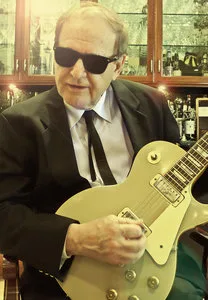
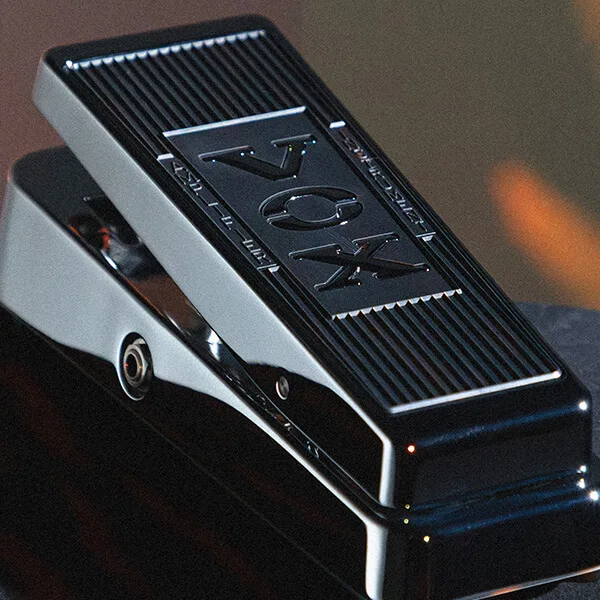
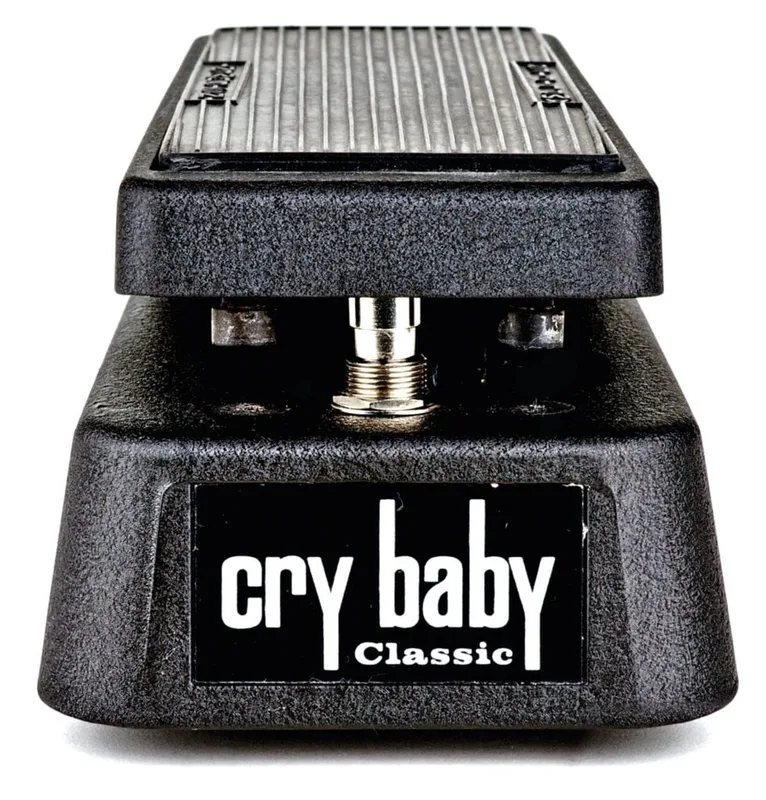
Del Casher is a guitarist whose name sits behind two pieces of gear history: the wah-wah pedal as guitarists know it, and the Ecco-Fonic tape echo. He worked for Vox as an artist demonstration guy, a Thomas Organ demonstrator and multi-instrumentalist who had already been featured on television shows like The Lawrence Welk Show and Green Acres12. He did not invent the wah circuit, but he asked for it to be put in a pedal, and he was the first guitarist recorded playing one13.
The wah itself came out of accident and cost-cutting. Vox says the effect was discovered during the design of the VOX Super Beatle amplifier in 19666. Thomas Organ engineer Brad Plunkett was assigned to find an inexpensive replacement for the amp's $4 Mid Range Boost transistorized switch, and he played with a 30 cent potentiometer, using it to adjust the tone instead2. The Wah-Wah pedal was invented in November 1966 by Lester Kushner and Brad Plunkett working at Warwick Electronics, a division of Whirlpool that owned Thomas Organ Company and Vox7.
Casher is often described as the wah's inventor, but the circuit itself was the work of Kushner and Plunkett at Warwick Electronics7. What Casher did was recognize it as a guitar effect and ask for it in a pedal form guitarists could play1.
Demonstrating effects for Vox
Casher's contribution was to see what the new circuit meant for guitarists. Guitar.com's Huw Price reports that Casher claims he suggested using a Vox organ volume pedal instead of a control knob so guitarists could use the effect while playing8. In JHS Pedals' telling of Casher's own account, the request was direct:
"So I said, 'Tell Brad that I want the breadboard put into a pedal.' So they had the breadboard put into a pedal at my request."
The effect needed a champion once it existed. As of 1967 it still wasn't a hit with guitar players, so Casher decided to cut a demo record to show how it worked on a guitar1. Not everyone was convinced along the way. JHS Pedals recounts that Casher was told by James Brown that the wah pedal was pointless and it wouldn't be cool, which, as the writer puts it, "just goes to show that even our heroes can be wrong occasionally"1.
The "Crybaby" demo record
Two recordings mark Casher as the first guitarist to record with the effect:
| Recording | Date | What it was |
|---|---|---|
| Vox promo record | February 1967 | Featured the original Brad Plunkett design prototype wah, built around Casher's playing4 |
| "Crybaby…" demo 45 | March 1967 | Showed the wah's range from blues to jazz, sitar to a tiger's growl2 |
Stompbox Book describes him as the Thomas Organ demonstrator who convinced Vox to record an album of him using the wah, becoming the first guitarist to be recorded using the company's newly minted effect3. The following month he went further on his own with the demo 45, recorded with session drummer Jimmy Troxell, laying the tracks quickly:
"I brought in Jimmy Troxell, who was one of the session players, a very great drummer... And I said, 'Jimmy, we're just going to lay 13 tracks down one after another after another."
The effect found its audience soon after:
- Eric Clapton used it on Cream's "Tales Of Brave Ulysses"2
- Jimi Hendrix used it on "Voodoo Child (Slight Return)"2
- Jimmy Page used it on Led Zeppelin's "Dazed And Confused"2
JHS Pedals notes that in a 2019 interview in Casher's living room, they asked him if he was aware that his creation ended up being used by guys like Jimi Hendrix and Eric Clapton1.
Echo design and the movable playback head
Before the wah, Casher was already working with tape echo. He advised Tubin on the Ecco-Fonic's movable playback head design, an idea he described to Vintage Guitar:
"If you make the playback head swing around in a cylindrical fashion, then your echo could be any speed you wanted."
The point of the swinging head was speed: the echo could be set to any speed while keeping the tape speed constant at 7.5 IPS to avoid wow and flutter5. Casher used the Ecco-Fonic for years in his studio and recorded with it all the time, including:
- a production with Frank Zappa around 19655
- the New Zoo Review television show for children in the 1970s, where he used it quite a lot because only four musicians were on the recording sessions5
He took the prototype to Las Vegas and then Japan in December 1959, performing with the Three Suns5. Alongside Casher, the Ecco-Fonic won the endorsements of country music star Hank Thompson and "Western Ranch Party" star Joe Maphis5.
The Japan trip produced a longer echo of its own. A roadie there who rented the Three Suns a Hammond B-3 and repeatedly tried to buy Casher's Ecco-Fonic turned out to be Mr. Kakehashi, president of Roland5. Vintage Guitar also credits Casher with an association with Roland's first guitar synth, alongside the Vox Wah-Wah and Elvis' Roustabout, pointing readers to Willie Moseley's interview in the January and February 1997 issue of VG for the full account5.
Questions
Who invented the wah-wah pedal?
The wah circuit was developed in November 1966 by Lester Kushner and Brad Plunkett at Warwick Electronics, a division of Whirlpool that owned Thomas Organ Company and Vox. Plunkett found the sound while looking for a cheap replacement for a Mid Range Boost switch on the Vox Super Beatle amp. Del Casher's role was to ask for that circuit to be housed in a pedal so guitarists could use it while playing.
Who was the first guitarist to record with a wah pedal?
Del Casher. He convinced Vox to record an album of him using the wah, and a February 1967 promo record featuring the original Brad Plunkett prototype wah was built around his playing. In March 1967 he cut a demo 45 titled "Crybaby…" showing the effect's range from blues to jazz, sitar to a tiger's growl.
What did Del Casher do for Vox?
He worked for Vox as an artist demonstration guy, a Thomas Organ demonstrator and multi-instrumentalist. He recognized the wah as a guitar effect, asked for the breadboard circuit to be put into a pedal, and cut demo records to show guitarists how it worked, since the effect was not a hit with players as of 1967.
Did Del Casher play on Elvis records?
Vintage Guitar magazine notes his association with Elvis' Roustabout among his credits, pointing readers to Willie Moseley's interview in the January and February 1997 issue for the details. The page's sources do not describe the recordings themselves.
Where can I watch the JHS interview with Del Casher?
JHS Pedals interviewed Del Casher in his living room in 2019 and asked him whether he knew his creation ended up being used by players like Jimi Hendrix and Eric Clapton. The interview appears on the JHS Pedals YouTube channel, which covers pedal history and modifications.
Did Del Casher play on The Lawrence Welk Show?
Yes. JHS Pedals describes him as a guitarist who was featured on TV shows like The Lawrence Welk Show and Green Acres before and alongside his work for Vox as an artist demonstration guy.
What was Del Casher's connection to Roland's first guitar synth?
Vintage Guitar links him to Roland's first guitar synth among his credits. The connection runs through Ikutaro Kakehashi: a roadie in Japan who repeatedly tried to buy Casher's Ecco-Fonic tape echo in 1959 later turned out to be Kakehashi, president of Roland.
Sources (8)
- HISTORY OF THE WAH PEDAL, JHS Pedals, 1967
- Cry, Baby!, Vintage Guitar magazine, 2015-12-09
- Vox Cry Baby, stompboxbook.com, 2019-04-27
- Teese Real McCoy RMC Wah Wah Pedals, Analog Man Vintage guitar effects (analogman.com), 2025
- The Roots of Echo, Vintage Guitar magazine, 2004-11-09
- The VOX Amps Wah Wah Pedal Story, Vox Amps (voxamps.com), 1966
- Dunlop CryBaby GCB-95 Cicuit Analysis, GuitarPCB, 1966
- All About… Wah, Guitar.com, 2015-11-30