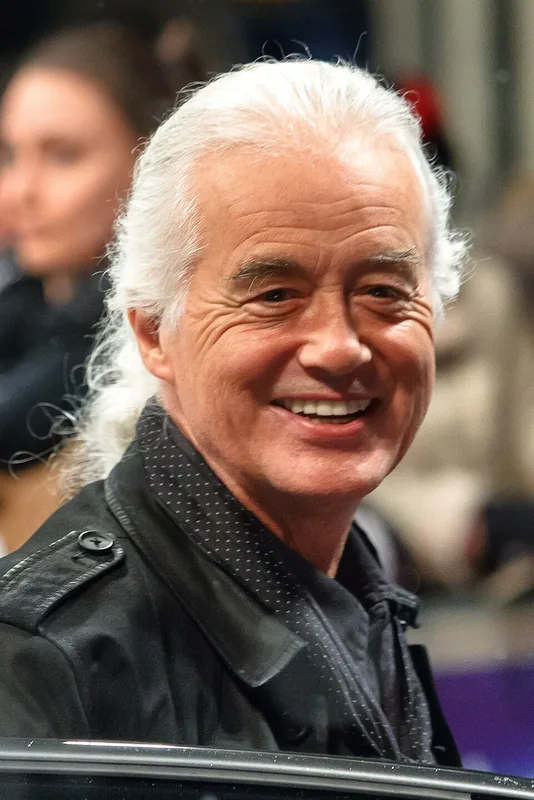
Jimmy Page is the guitarist and producer of Led Zeppelin, and one of the players most closely tied to fuzz pedals. His sound across the Yardbirds and Led Zeppelin was built less on a big pedalboard than on a handful of boxes: a homemade treble booster and Roger Mayer's first fuzz in the session years, Sola Sound Tone Benders through the late 1960s, a parked wah, and Eventide rack processors in the '70s and '80s. He is also celebrated as a producer; bassist Charlie Jones, who played with Page and Robert Plant, says "Jimmy is a great producer. He knows how to get the best out of musicians and how to present it."1
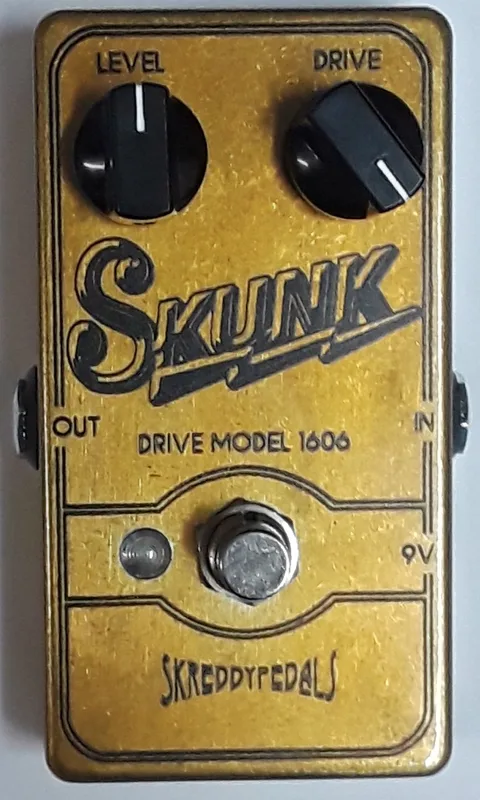
Much of the early sound came from small amps rather than pedals. Skreddy Pedals' page for its Supro-based pedal says Page recorded the legendary debut album with his "Dragon" Telecaster, which he calls "The Excalibur", plugged into a Sola Sound Tone Bender Mk 1.5 and a small Supro "Super" 1606 combo amplifier2. The same page says that sound is best recognized by "Communication Breakdown", and that legend has it he also used it on the solo to "Stairway to Heaven" after not finding a suitable sound from any of the larger amps available to him2. MusicRadar's review of a Supro reissue notes the brand's amps carry "a certain cachet, not least a Jimmy Page connection"3.
Page's rig changed era by era. The gear below follows the timeline: session years in the early 1960s, Yardbirds and early Led Zeppelin from 1966, and the rack-based rigs of the '70s and '80s.
The sound Jimmy Page is known for
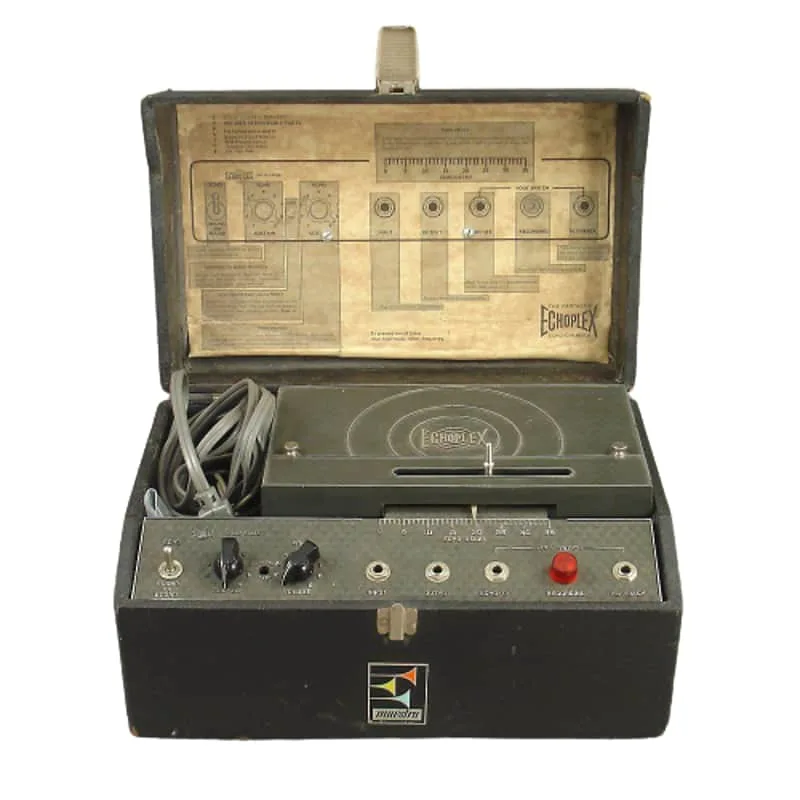
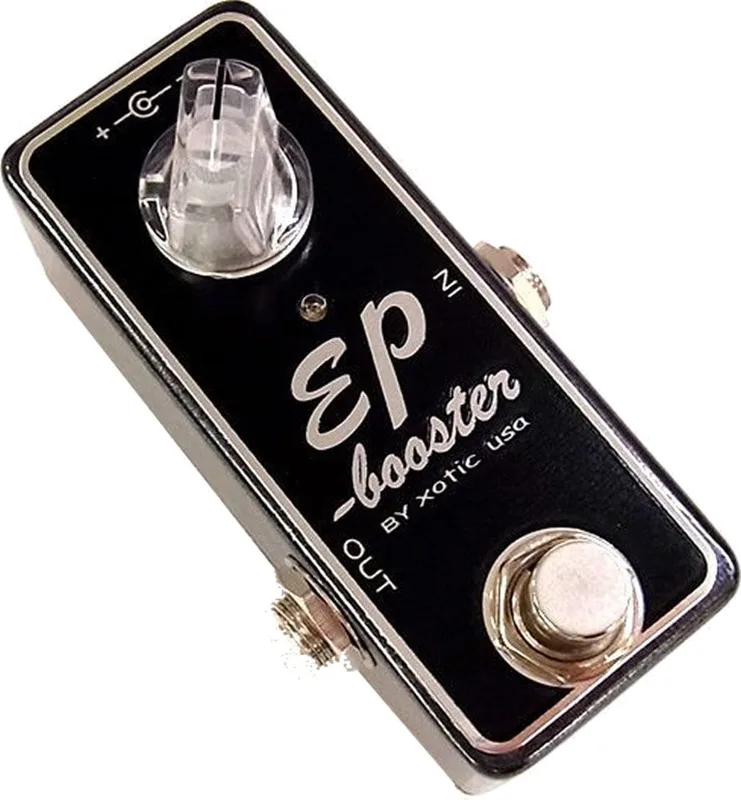
Page's recorded tone is associated with three things in particular: fuzz, small Supro amps, and the preamp of the Echoplex tape echo unit. Xotic's page for its EP Booster, which is based on that preamp, says it "captured the legendary Echoplex preamp sound made famous by players like Jimmy Page and Eddie Van Halen"4. JHS Pedals names Page among the players whose sixties Supro combos inspired its SuperBolt pedal5, and a Pedal of the Day review of that pedal says "If you want to sound like Jimmy Page, but can't afford that vintage amp, this is a great place to get that tone without hurting your wallet"6.
GuitarPCB's Zoso Tone Combo, a DIY dual-circuit board, is built around the same idea, combining two circuits "to capture the legendary sound of Jimmy Page"7, and the company's SuperDrive 70's project promises to recreate tones produced by Page, the Rolling Stones, Jimi Hendrix, Eric Clapton, David Gilmour, Stevie Ray Vaughan and Eric Johnson, all in one box8. Page himself cites Buddy Guy as a vital influence on his own groundbreaking recordings9.
Session years: the Roger Mayer treble booster and first fuzz
Page's earliest effect was a treble booster built by Roger Mayer. Mayer says he first started designing pedals in 1961, and that he "produced a Treble Booster that was tried and used by my friends including Jimmy Page who then played in local bands"10. Mayer had started building treble boosters and experimenting with guitar tones while still in school, before six years of university study in mechanical and electrical engineering11. Page later credited Mayer with supplying him initially with a fuzz box, and said of meeting him at Surbiton, "It was a pivotal moment for my sound"12.
The two were both interested in fuzz, which they had heard on a record Page played for Mayer: the Ventures' tune "The 2000 Pound Bee"13. Mayer first made pedals for Page in 196414, and in that year he built fuzz pedals for Page and "Big" Jim Sullivan11. Mayer's own account is direct:
"In 1964 I designed my first fuzz guitar effects pedal that was used by Jimmy Page and Big Jim Sullivan and featured on many early hit records."
Page has described the effect of Mayer's distortion box, which had an on/off switch so he could control the distortion and sustain, in his own words: it was phenomenal, and when he started taking it to sessions the other guitarists were blown away, while the guys doing the arrangements loved it13. He has called meeting Mayer at Surbiton, a suburb in South West London, "a pivotal moment for my sound"13. Not everything Mayer offered stuck: Page declined Mayer's octave-doubler with fuzz because "It was difficult to control in the studio from the guitar, so I said it wasn't for me"13. A Guitar.com history by Josh Scott says Page allegedly approached Mayer in 1964 to build a device replicating the Ventures' distorted sound, that it was rumored but not confirmed he used this pedal in the studio and touring with the Yardbirds, and that Mayer claims he had never seen a Maestro FZ-1 when he created it15. Page credits Mayer with supplying him initially with a fuzz box16.
Tone Benders with the Yardbirds and early Led Zeppelin
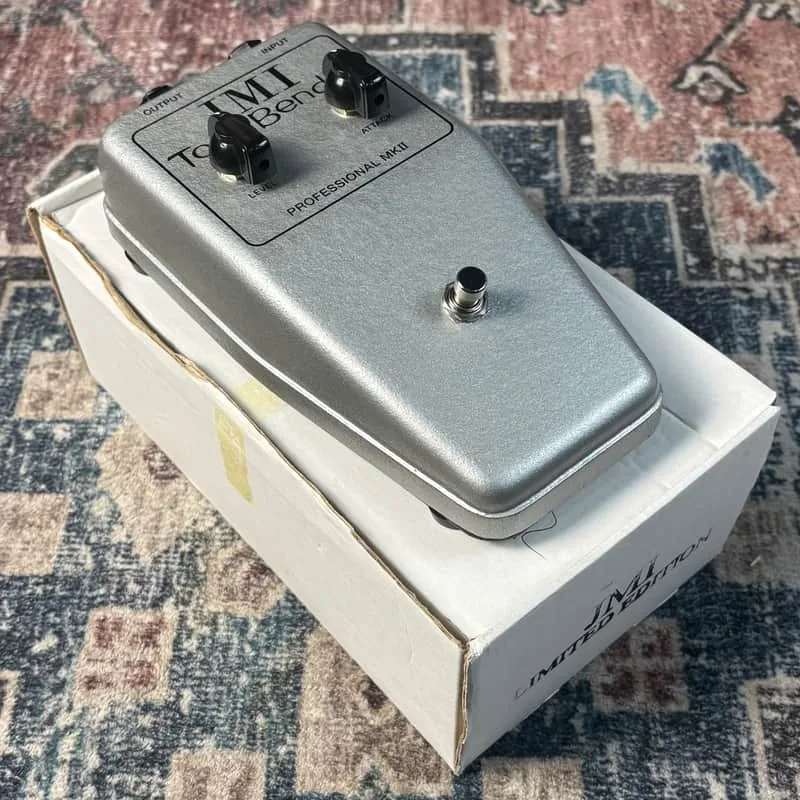
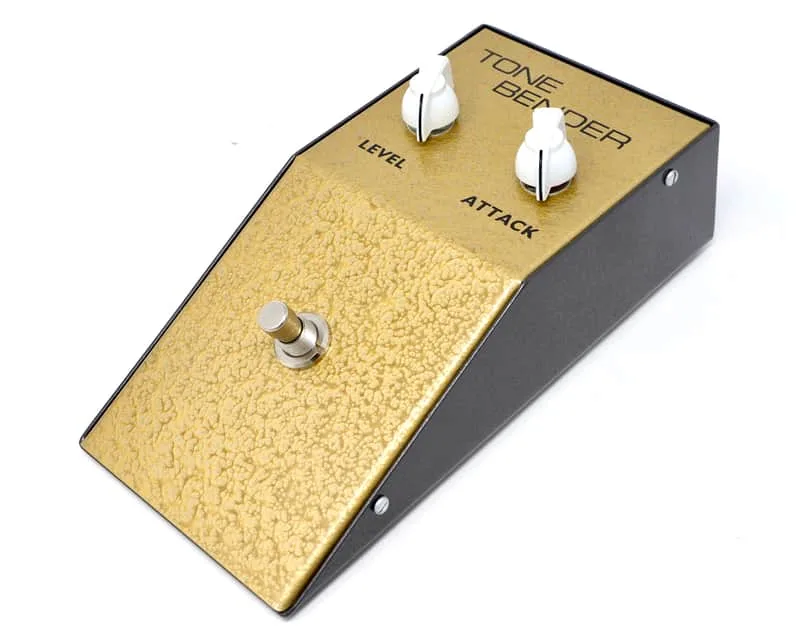
From the Yardbirds onward, Page's fuzz was a Tone Bender. Fuzzboxes.org notes that on several occasions during the Yardbirds years he was photographed using a Tone Bender in a very early cast aluminum enclosure, painted in an unusual gold finish16. The MkII followed: Premier Guitar's history of the Tone Bender says the most well known MkII user is Jimmy Page, who used one during his tenure on guitar with the Yardbirds and in the early Led Zeppelin years17, and that the MkII was famously used by Page, paired with a Telecaster and Supro amp17. A Sola Sound statement dated 2nd January 1967 details Page's acquisition of his Tone Bender MKII in December 196618. MusicRadar's Rob Laing says the MkII is "all over the first Led Zeppelin album too - just listen to Dazed And Confused"19, and GuitarPlayer's Dave Hunter writes that Page, who used a MkII, continued to slather Tone Bender fuzz all over his early recordings with Led Zeppelin20. Tru-fi's history adds that Page is often associated with the ToneBender, using it on classic tracks like "Whole Lotta Love"21.
| Era | Gear | Detail |
|---|---|---|
| Yardbirds years | Gold Tone Bender, cast aluminum enclosure | Photographed using it on several occasions16 |
| December 1966 | Tone Bender MKII | Acquired per Sola Sound statement of 2nd January 196718 |
| First Led Zeppelin album | Tone Bender Mk 1.5, Supro 1606 | Recorded the debut album with it2 |
| 1969 | Rotosound MkIII | Seen using the Rotosound three-knob version22 |
The MkII Page used had OC81D transistors, per MusicRadar's Jonathan Horsley23. The MkIII story continues into 1969: British Pedal Company's history says Page can be seen in 1969 using the Rotosound version of the three-knob tone bender22, and Premier Guitar adds that he was spotted deploying a Rotosound MkIII at the filming of the French TV show Tous En Scene, and that it is thought he used the Rotosound MkIII for some of the songs on Zep's BBC Sessions double album17. Rotosound's own page for its RFB1 fuzz, a reissue of that circuit, notes there is even a picture of Led Zeppelin's Jimmy Page playing one24.
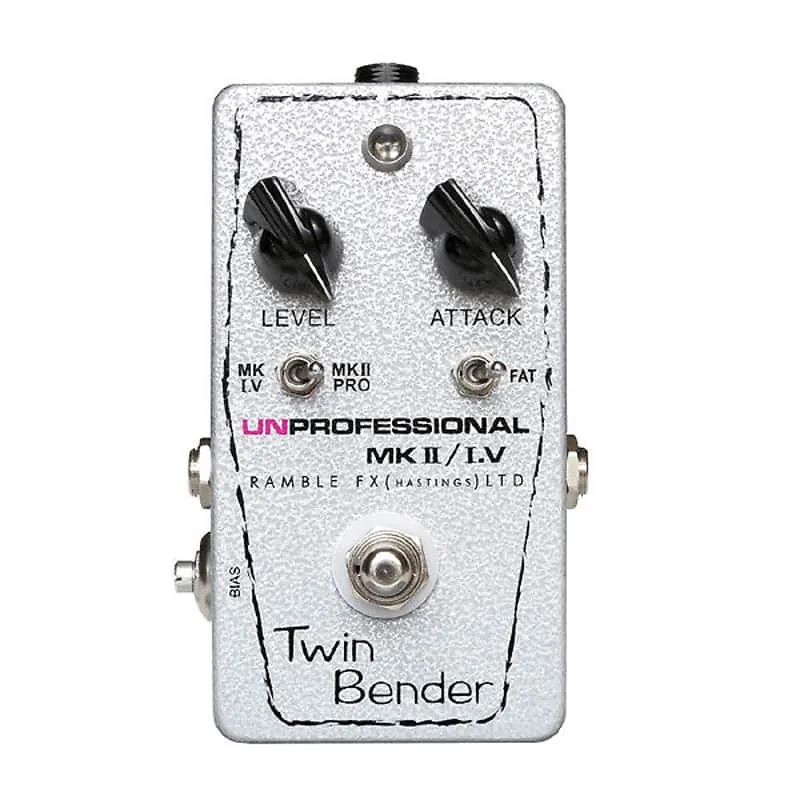
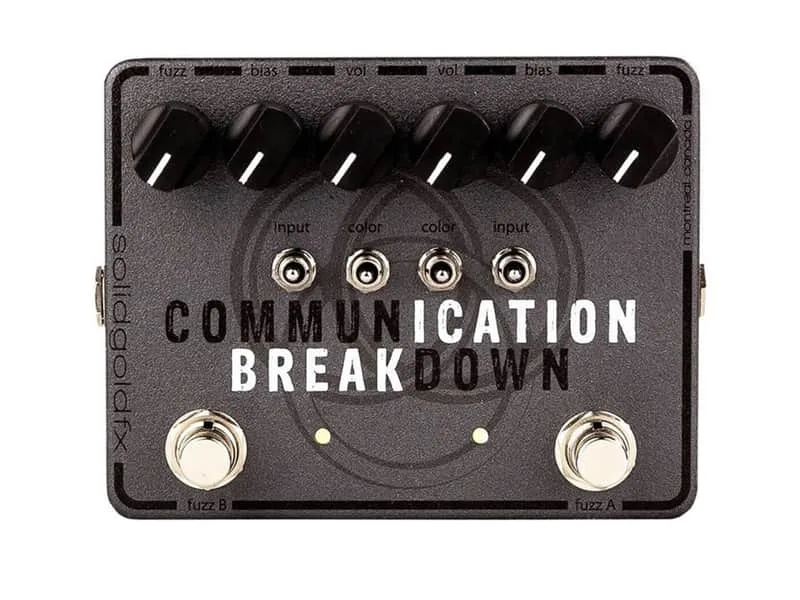
The MkII circuit has since been reproduced widely. ThroBak's Stone Bender MKII is described by its maker as a faithful tonal reproduction of the 3 germanium Sola Sound Tone Bender MKii Professional used by Jimmy Page and Jeff Beck2526, and Delicious Audio's page for the Ramble FX Twin Bender says it uses the same circuit of Sola Sound's legendary Tone Bender MKII Professional that Jimmy Page and many others made famous27. SolidGoldFX's Communication Breakdown fuzz, announced at NAMM 2020, takes its name from the song19.
Parked wah and Eventide in the '70s and '80s
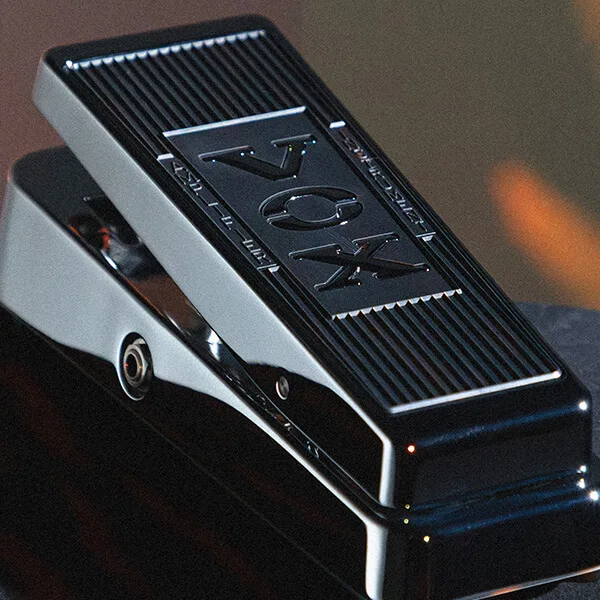
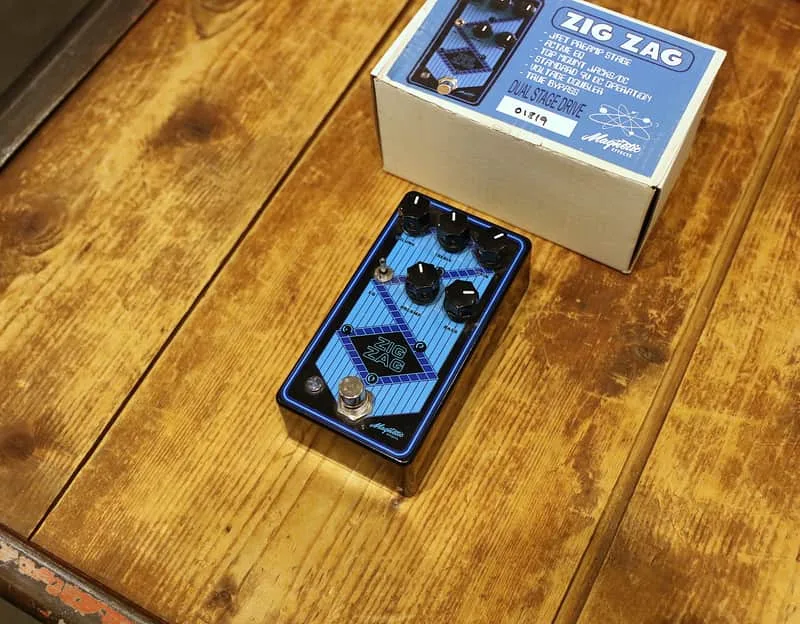
Page is one of the players associated with the fixed or parked wah sound, where the pedal is set in one position rather than swept. Premier Guitar's press release for Magnetic Effects' Zig Zag, a fixed wah filter pedal, says this sound "has been used in some of the most famous recordings of all time by great artists such as Jimi Hendrix, Jimmy Page, Mark Knopfler, Mick Ronson, Michael Schenker and Marc Bolan"28. Vox's own history of the wah names Page among the players of its Wah Wah pedal, alongside Eric Clapton, Jimi Hendrix, George Harrison and others29.
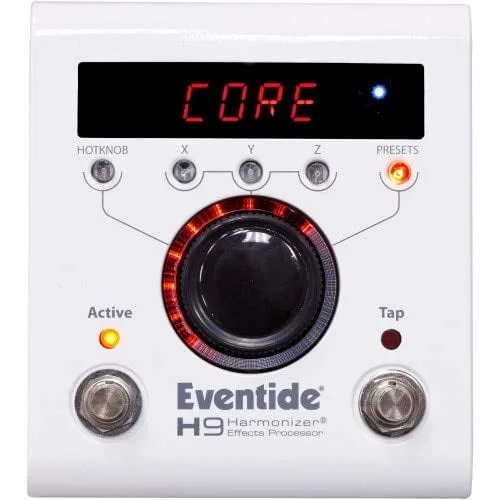
For pitch and studio processing, Page turned to Eventide rack units. MusicRadar's report on the H9 Core launch describes the H910 and H949 as "the prized studio processors used on stage by such luminaries as Frank Zappa, Jimmy Page, and Eddie VanHalen"30. Eventide Product Specialist Alan Chaput says Page, Brian May, Frank Zappa, Eddie Van Halen and Steve Vai all used Eventide gear in their rigs in the '70s and '80s, and that the company's PitchFuzz algorithm for the H9 "allows you to recreate some of the classic guitar sounds" of those artists31.
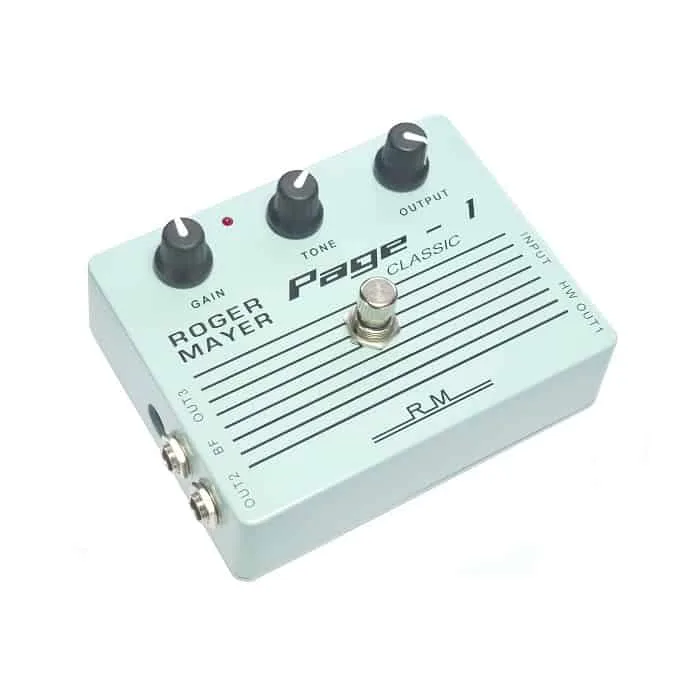
Roger Mayer Page 1 fuzz
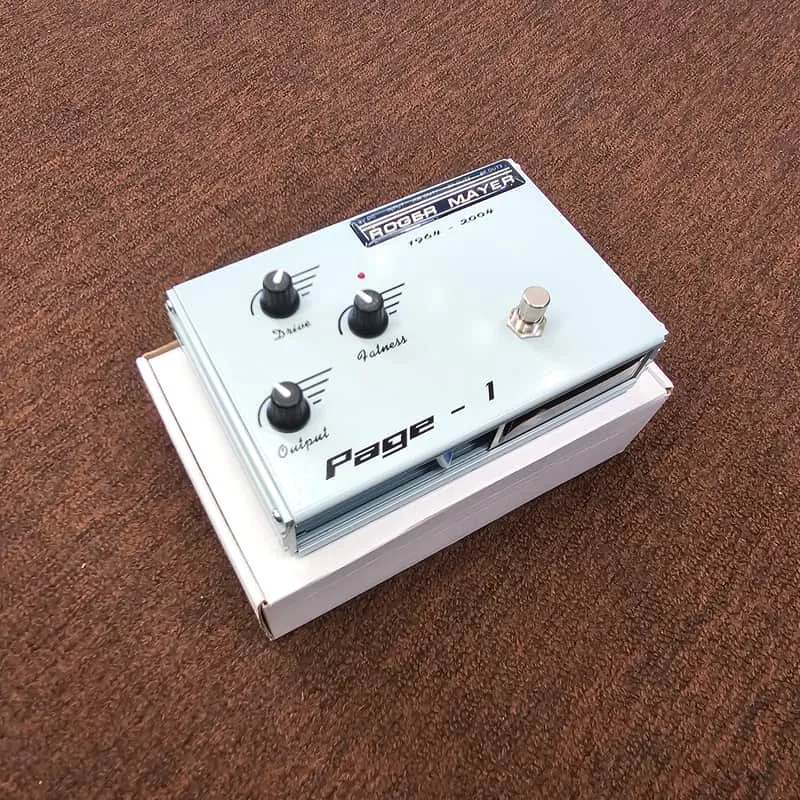
The Page 1 traces back to Mayer's first fuzz box. Mayer's own history page says he first started making guitar effects in 1964 for his friend Jimmy Page32. He describes designing his first fuzz guitar effects pedal that year, a unit "used by Jimmy Page and Big Jim Sullivan and featured on many early hit records"32. The Page 1 gives players a built version of the 1964 circuit that started Page's fuzz story.
Questions
What fuzz did Jimmy Page use on Led Zeppelin records?
He recorded the first Led Zeppelin album with a Sola Sound Tone Bender Mk 1.5 into a small Supro 1606 combo, and a Tone Bender MkII is all over that album, including "Dazed And Confused". He was later seen with a Rotosound MkIII in 1969, thought to have been used for some songs on the BBC Sessions album.
Did Jimmy Page use a Tone Bender MkII or MkIII?
Both. He used a MkII during his Yardbirds days and the early Led Zeppelin years, and acquired his MkII in December 1966. In 1969 he was seen using the Rotosound version of the three-knob Tone Bender MkIII, including at the filming of the French TV show Tous En Scene.
What treble booster did Jimmy Page use?
A treble booster built by Roger Mayer, who says he produced it in 1961 and that Page tried and used it while playing in local bands. Mayer first started making guitar effects in 1964 for his friend Jimmy Page, and Page credits Mayer with supplying his first fuzz box.
How did Jimmy Page get the fixed wah sound?
By parking a wah pedal in one position rather than sweeping it, a sound used on famous recordings by players including Jimmy Page, Jimi Hendrix, Mark Knopfler, Michael Schenker and Marc Bolan. Vox names Page among the players of its Wah Wah pedal.
What Eventide gear did Jimmy Page use?
The Eventide H910 and H949 rack processors, which MusicRadar describes as prized studio processors used on stage by Frank Zappa, Jimmy Page and Eddie Van Halen. Eventide's Alan Chaput says Page used Eventide gear in his rig in the '70s and '80s.
What fuzz did Jimmy Page use on Led Zeppelin records?
He recorded the first Led Zeppelin album with a Sola Sound Tone Bender Mk 1.5 into a small Supro 1606 combo, and a Tone Bender MkII is all over that album, including Dazed And Confused. He was later seen with a Rotosound MkIII in 1969, thought to have been used for some songs on the BBC Sessions album.
Did Jimmy Page use a Tone Bender MkII or MkIII?
Both. He used a MkII during his Yardbirds days and the early Led Zeppelin years, and acquired his MkII in December 1966. In 1969 he was seen using the Rotosound version of the three-knob Tone Bender MkIII, including at the filming of the French TV show Tous En Scene.
What treble booster did Jimmy Page use?
A treble booster built by Roger Mayer, who says he produced it in 1961 and that Page tried and used it while playing in local bands. Mayer first started making guitar effects in 1964 for his friend Jimmy Page, and Page credits Mayer with supplying his first fuzz box.
How did Jimmy Page get the fixed wah sound?
By parking a wah pedal in one position rather than sweeping it, a sound used on famous recordings by players including Jimmy Page, Jimi Hendrix, Mark Knopfler, Michael Schenker and Marc Bolan. Vox names Page among the players of its Wah Wah pedal.
What Eventide gear did Jimmy Page use?
The Eventide H910 and H949 rack processors, which MusicRadar describes as prized studio processors used on stage by Frank Zappa, Jimmy Page and Eddie Van Halen. Eventide's Alan Chaput says Page used Eventide gear in his rig in the '70s and '80s.
Sources (32)
- Reverberations: Bassist Charlie Jones (Part 1)-Robert Plant and Jimmy Page, BOSS (articles.boss.info), 2026-03-12
- Overdrive, Skreddy Pedals
- Supro 1303 Boost review, MusicRadar, 2017-06-03
- Xotic EP-Pro, Xotic California (xotic.us)
- SUPERBOLT V2, JHS Pedals
- JHS Pedals Superbolt Overdrive, www.pedal-of-the-day.com, 2015-07-17
- Zoso Tone Combo, GuitarPCB, 2026
- Untitled document, GuitarPCB.com, 2023
- Buddy Guy is a Dunlop Artist., Jim Dunlop
- Guitar Effects Pedals by Roger Mayer, Roger Mayer
- Classic Gear: Roger Mayer's Octavia Pedal, GuitarPlayer (www.guitarplayer.com), 2021-11-02
- Hot News, Roger Mayer (roger-mayer.co.uk)
- Roger Mayer on making effects for Page, Beck and Hendrix, Guitar Player (www.guitarplayer.com), 2025-07-21
- Jimmy Page talks about Roger Mayer bringing the distortion pedal into his life, MusicRadar, 2019-09-19
- Josh Scott: The deleted scenes of guitar history, Guitar.com, 2022-01-24
- Tone Bender 'MKI' players list • Fuzzboxes, fuzzboxes.org, 2026-02-22
- The Mighty Tone Bender Fuzz: A 50-Year Legacy, Premier Guitar, 2018-12-13
- Tone Bender MKII, stompboxes.co.uk, 1967-01-02
- NAMM 2020: SolidGoldFX releases the Communication Breakdown fuzz, MusicRadar, 2020-01-08
- The Sola Sound Tone Bender and the Early Evolution of the Fuzz Pedal, GuitarPlayer (www.guitarplayer.com), 2020-07-27
- The Sound of Rock, tru-fi.com
- Tone Bender History, britishpedalcompany.com, 1969
- The British Pedal Company launches limited edition King Of Fuzz Tone Bender to commemorate coronation of King Charles III with gnarly MKII fuzz, MusicRadar, 2023-06-02
- RFB1 Rotosound 'Fuzz' Guitar Effects Pedal • Rotosound Music Strings, Rotosound, 2025-06-27
- ThroBak Stone Bender guitar effects pedals, Tone Bender voiced., ThroBak Electronics, 2026
- ThroBak Stone Bender MKII, ThroBak Electronics, 2026
- Ramble FX Twin Bender Fuzz, Delicious Audio, 2023-08-31
- Magnetic Effects Releases the Zig Zag and Midphoria V2, Premier Guitar, 2019-07-24
- The VOX Amps Wah Wah Pedal Story, Vox Amps (voxamps.com), 2023-01-18
- NAMM 2014: Eventide launches H9 Core, MusicRadar, 2014-01-21
- Eventide Unveils the H9 PitchFuzz Algorithm, Premier Guitar, 2017-05-18
- Guitar Effects Pedals by Roger Mayer, Roger Mayer (roger-mayer.co.uk)
