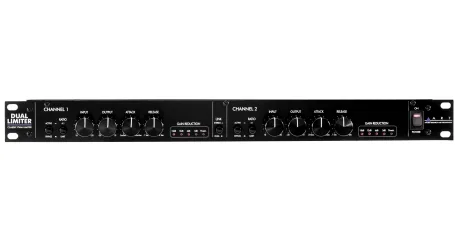

The ART Dual Limiter is a two-channel compressor and limiter in a single-space 19-inch rack chassis, made by Applied Research and Technology. Each channel can compress at a 4:1 ratio or limit at greater than 20:1, with variable attack and release, and the two channels can be used or bypassed independently or linked for stereo operation1.
What sets it apart from most dynamics units is its gain control circuit. Instead of a voltage controlled amplifier, the heart of the Dual Limiter is a PWM (pulse width modulation) gain control circuit2. ART describes the result this way:
"PWM compressors don't have the distortion artifacts that contribute to the signature character of other designs, providing extremely clean, transparent gain control."1
In other words, where many classic compressors add audible color as they work, this design aims to control level without that signature. ART calls the result a classic sounding compressor/limiter without the traditional noise and distortion artifacts2.
What it does
The Dual Limiter provides two channels of dynamics processing in a rack-mountable, all-steel enclosure designed for continuous professional use2. Setting the ratio switch to LIMIT holds the output level constant above the threshold, which is the behavior a limiter is chosen for: catching peaks rather than gently squeezing the whole signal2.
ART's stated applications are controlling the dynamic range of a signal, stereo mix and mastering work, and vocal and instrument levelling. For stereo mix and mastering, the manual notes that only 6 to 9 dB indicated on the compressor attenuation meter is required to maximize the level for digital recordings2.
The controls
Each channel gives you the controls you need to shape how the gain reduction behaves:
| Control | What it does |
|---|---|
| Input | Sets input gain; turning it clockwise lowers the threshold by adding gain to the input signal2 |
| Output | Adjusts the output level after gain reduction takes place, for make-up gain2 |
| Attack | Sets how fast the unit responds to level increases by reducing gain, shaping the front end of the dynamics envelope2 |
| Ratio switch | Selects 4:1 compression or greater than 20:1 limiting per channel1 |
| Link switch | Connects the gain reduction of the two channels together for stereo operation2 |
| Power switch | Turns the unit on and off2 |
The attack time is variable from 0.5 mSec. to 50 mSec., and release from 100 mSec. to 3 Sec.2. That spread covers both fast peak control and slow, leveler-style gain riding.
Power and connections
The rear panel carries balanced XLR and 1/4" TRS active balanced inputs and outputs, plus a Detector Loop jack for sidechaining1. Balanced wiring follows the standard convention: XLR pin 2 hot, pin 3 cold, pin 1 ground, and 1/4" tip hot, ring cold, sleeve ground2.
The unit runs on an internal power supply, not a wall wart or battery. US units are specified at 105 to 125 VAC / 60 Hz with a 1/2A fuse and draw under 15W; export units are configured for the country of destination12.
The Dual Limiter has a passive hardwire bypass, so the bypass works even if the power is off. The signal runs from the input jacks to the output jacks with no processing when the channel is bypassed3.
Detector loop and stereo linking
The Detector Loop is a 1/4-inch TRS jack with tip as input, ring as output and sleeve as ground2. Because it breaks out the detector (sidechain) signal, you can insert processing there, such as an equalizer tuned to make the unit react more to some frequencies than others.
It also enables gentler slopes. Patching a channel's output into its own Detector Loop input produces a slope of 2:1 when the front switch is set to LIMIT and 1.15:1 when set to 4:1, alongside the standard 4:1 or greater than 20:1 slopes2. That gives you four effective ratios from one channel.
For stereo ducking of a stereo music source, the manual says to depress the LINK switch and make sure the Channel 2 Detector Loop jack has a shorting plug or the same mic signal inserted2. Link mode connects the gain reduction of the two channels together so they track as a pair for stereo operation2.
Specifications
| Specification | Value |
|---|---|
| Frequency response | 10Hz to 30kHz (+/- 1dB)1 |
| Maximum input level | +20 dBu1 |
| Maximum output level | +20 dBu1 |
| Input impedance | 20k ohms1 |
| Output impedance | 150 ohms2 |
| Overall gain | +40dB max2 |
| Dynamic range | >105dB (20-20kHz)2 |
| Equivalent input noise | -97 dBu (20-20 kHz)1 |
| THD | 0.03% (typical) @ 0 dBm out1 |
| Input level range | Line level, -30dBm to +20dBm2 |
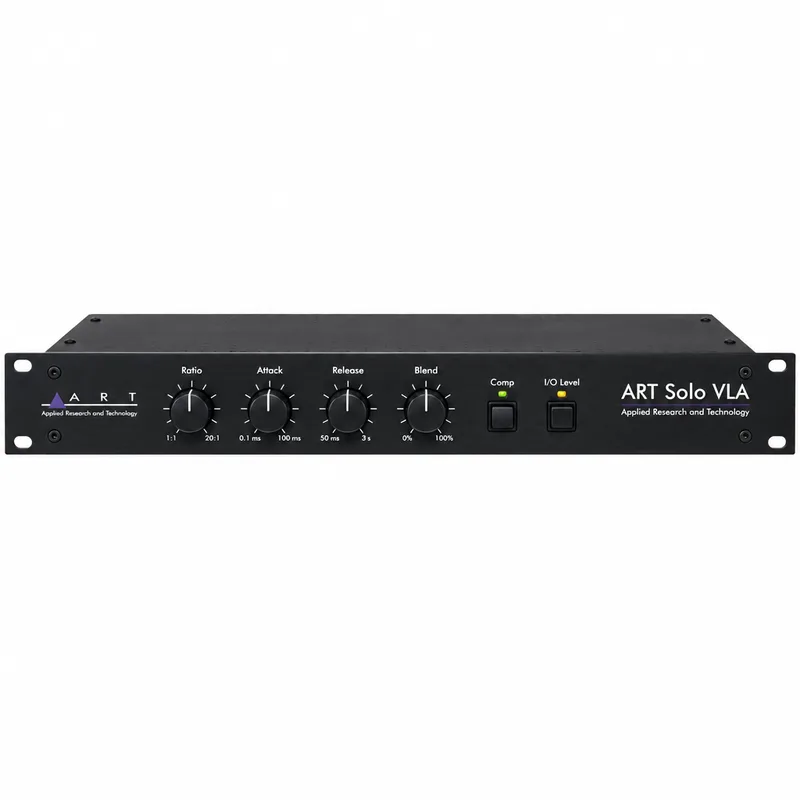
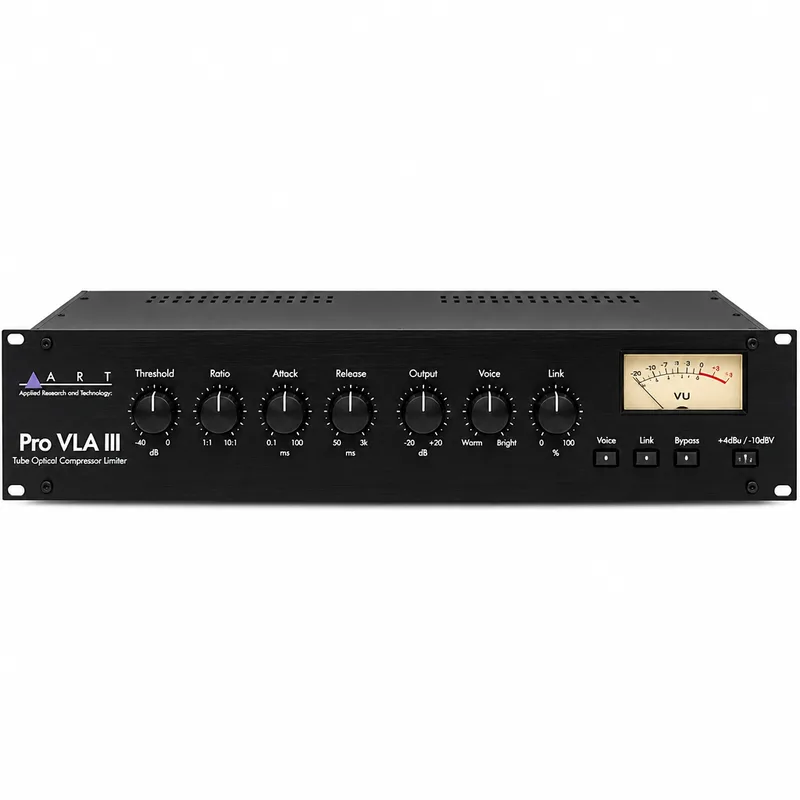
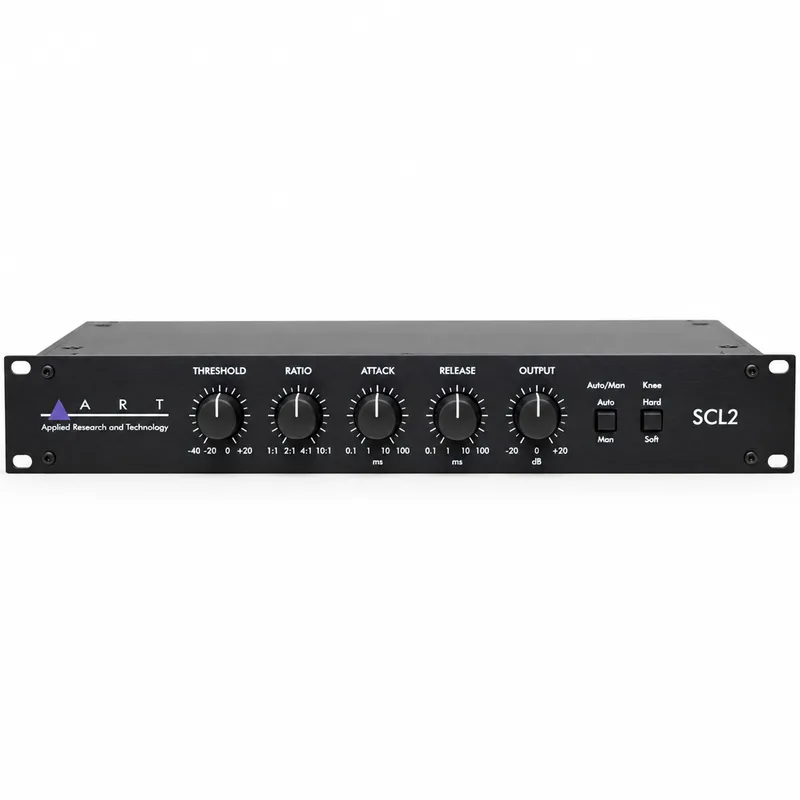
The inputs are designed for line level signals ranging from -30dBm to +20dBm2, which is the key thing a guitarist needs to know: this is a studio line level device, not something a passive guitar pickup can drive directly. A preamp or line level source in front of it is needed. Players looking for ART compression at instrument level can look at the company's other rack designs, including the ART Solo VLA, the ART Pro VLA III and the ART SCL2.
Warranty
ART warrants the Dual Limiter to the original purchaser in the United States against defects in workmanship and materials for three years from the date of purchase, covering parts and labor2. The warranty excludes misuse, abuse, unauthorized alterations or repairs, and is void if the serial number is altered, defaced or removed. Units purchased outside the United States are serviced by an authorized ART distributor2.
Videos
Twin Creek Audio
Questions
Is the ART Dual Limiter good for guitar?
It is a studio rack unit rather than a guitar pedal. Its inputs are designed for line level signals ranging from -30dBm to +20dBm, so a guitar would need a preamp or other line level source in front of it. ART positions it for stereo mix and mastering work and for vocal and instrument levelling, not for a pedalboard.
Does the ART Dual Limiter bypass work with the power off?
Yes. The Dual Limiter has a passive hardwire bypass, which means the bypass works even if the power is off. The signal then runs from the input jacks straight to the output jacks with no processing.
What does PWM compression mean?
PWM stands for pulse width modulation. Instead of reducing gain with a voltage controlled amplifier, the circuit rapidly switches the signal on and off and varies the width of those pulses to control level. ART says PWM compressors avoid the distortion artifacts that give other designs their signature character, giving extremely clean, transparent gain control.
What is the detector loop jack on the ART Dual Limiter for?
It is a sidechain insert. The 1/4-inch TRS jack carries the detector signal in on the tip and out on the ring, so you can patch an equalizer into the detector path or feed it another signal. Patching a channel's output into its own detector loop input changes the effective slope to 2:1 or 1.15:1.
What warranty does ART give on the Dual Limiter?
ART warrants the unit to the original purchaser in the United States against defects in workmanship and materials for three years from the date of purchase, covering parts and labor. The warranty excludes misuse, abuse and unauthorized alterations or repairs, and is void if the serial number is altered, defaced or removed. Units bought outside the United States are serviced by an authorized ART distributor.
Sources (3)
- DUAL LIMITER 2-Channel PWM Compressor / Limiter, ART Pro Audio
- Microsoft Word, Applied Research and Technology, 2017-07-24
- 256MAN.QXD, ART (Applied Research & Technology, Inc.), 2025